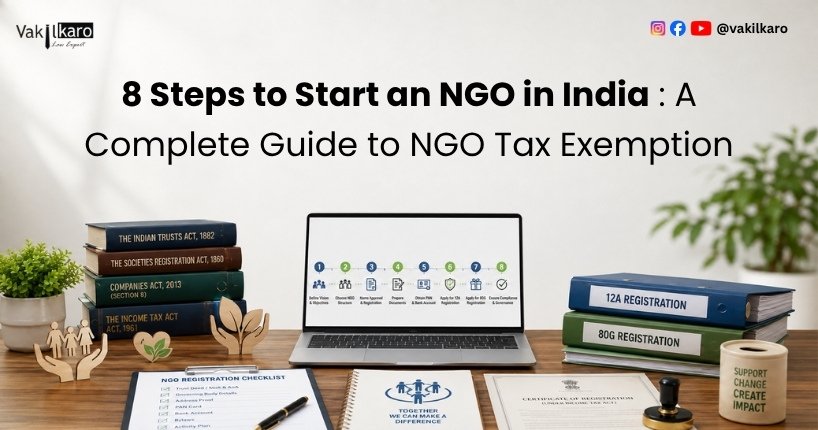
Starting an NGO in India involves several key steps, including deciding the type of NGO, drafting necessary documents, and completing registration. One can choose between Trust, Society, or Section 8 Company registration, with Section 8 being a popular choice due to its credibility and structured governance. Registration with the Income Tax Department for 12A and 80G is crucial for tax exemptions and to allow donors to claim deductions. Ensuring compliance with tax laws, proper documentation, and filing annual returns are essential for smooth operations. Understanding these processes ensures successful setup and operation of the NGO in India.
Key Takeaways
- How to Start an NGO in India: A Step-by-Step Guide Starting an NGO in India requires careful planning and understanding of legal and tax requirements.
- In this blog, we will guide you through the step-by-step process of setting up an NGO in India, including how to apply for tax exemptions under Section 12A and 80G of the Income Tax Act, 1961.
- 12A Registration: Under Section 12A of the Income Tax Act, 1961, charitable trusts and NGOs are eligible for tax exemption on their income, provided they are used exclusively for charitable purposes.
- By following the eight steps outlined in this blog, you can successfully start an NGO and benefit from tax exemptions under Section 12A and 80G.
- For expert guidance in how to start an NGO in India, consider consulting professionals who can help you navigate the complex registration and tax processes, ensuring that your organization operates smoothly and efficiently.
How to Start an NGO in India: A Step-by-Step Guide
Starting an NGO in India requires careful planning and understanding of legal and tax requirements. The process involves several steps that ensure the organization is legally compliant, eligible for tax exemptions, and set up for long-term success.
The first step in establishing an NGO is deciding the structure. NGOs can be registered under three main categories: Trust, Society, or Section 8 Company Registration Trust registration is governed by the Indian Trusts Act, 1882, requiring at least two trustees. Society registration, under the Societies Registration Act, 1860, needs a minimum of seven members. However, Section 8 Company registration under the Companies Act, 2013, is often preferred due to its organized governance structure, legal protection, and credibility.
Once the structure is decided, the next step is preparing the necessary documents. These include the Memorandum of Association (MOA) and Articles of Association (AOA) for Section 8 Companies, a Trust Deed for Trust registration, or Society bylaws for Society registration. Additional documents such as PAN and Aadhaar of members and proof of the office address are also required.
After the documentation is complete, the registration process begins. For Trusts, submit the Trust Deed to the local Sub-Registrar office. Societies must file their application with the Registrar of Societies in the respective state, while Section 8 Companies can register through the Ministry of Corporate Affairs (MCA) portal.
To ensure tax benefits, NGOs must apply for 12A and 80G registration with the Income Tax Department. 12A registration exempts the NGO from income tax, while 80G allows donors to claim deductions on their contributions.
Maintaining proper financial records, filing annual returns, and adhering to tax laws are essential for the smooth functioning of the NGO. By following these steps, you can successfully set up and operate an NGO in India while complying with all legal and financial regulations.
Starting a non-governmental organization (NGO) in India is not only a step toward addressing societal issues but also a powerful way to make a positive impact on communities. NGOs are often the driving force behind crucial initiatives in areas such as education, healthcare, poverty alleviation, environmental conservation, and social justice. By establishing an NGO, you can be part of a movement that brings about real and lasting change in people's lives.
In India, NGOs have a significant role to play in bridging gaps where government initiatives may fall short. Whether you're aiming to improve literacy rates, provide healthcare services to underprivileged communities, or protect the environment, forming an NGO is one of the most effective ways to organize resources, mobilize support, and implement impactful programs. However, establishing an NGO involves much more than just a passionate desire to help. It requires adherence to legal processes, proper documentation, and meeting specific regulatory requirements to ensure its success and sustainability.
To ensure that your NGO operates smoothly, receives funding, and enjoys the benefits available under the Indian legal framework, it is essential to follow the correct registration and tax procedures. Understanding the intricacies of NGO registration and the steps involved will help avoid any legal challenges in the future. Additionally, complying with the tax laws of India will ensure that your NGO remains eligible for certain exemptions, enabling it to maximize resources for its cause.
In this blog, we will guide you through the step-by-step process of setting up an NGO in India, including how to apply for tax exemptions under Section 12A and 80G of the Income Tax Act, 1961. We will also explore the different types of NGO registration options available in India, including Section 8 company registration, Trust registration, and Society registration. Each type of registration comes with its own set of legal benefits and tax advantages, which can help your NGO operate more effectively and efficiently.
Step 1: Define Your NGO's Mission and Objectives
The first and most crucial step in starting an NGO is to define its mission, objectives, and the specific cause it will address. The mission statement is the guiding star of your NGO—it represents the purpose and overarching goals that will shape the organization’s identity and direction. Whether your focus is on education, healthcare, environmental protection, or poverty alleviation, the mission will help in streamlining efforts toward a defined outcome and measurable impact.
Defining the mission is not just about creating an aspirational statement but about forming a solid foundation for the NGO’s activities. The mission should clearly articulate the problem the NGO seeks to solve and the change it aims to bring about. For example, if the goal is to improve literacy rates in rural areas, the mission should specify how the NGO plans to achieve this—whether through establishing schools, providing educational materials, or conducting teacher training programs.
In addition to a strong mission, setting specific objectives is essential for any NGO to be effective. These objectives should align with the overall mission and be set using the SMART criteria—Specific, Measurable, Achievable, Relevant, and Time-bound. This means that each goal should be clear, achievable within a set timeframe, measurable to track progress, and relevant to the overarching mission of the NGO. For instance, if the mission is to provide healthcare in underprivileged areas, objectives could include providing medical camps for 500 people within the first year or offering free medical check-ups every quarter.
A clear mission and well-defined objectives also have practical implications during the registration process and for securing funding. When applying for NGO registration or tax exemptions, government bodies, donors, and potential partners will look for a concrete and focused mission. A compelling and clearly defined mission helps demonstrate that the NGO will have a tangible impact, which is critical for approval during registration and when applying for tax exemptions such as Section 12A and 80G under the Income Tax Act.
Ultimately, a well-articulated mission serves as the cornerstone of your NGO, influencing every decision and action from its founding to its long-term success. It helps define the NGO’s strategy, ensures it stays focused on its cause, and provides transparency to stakeholders about the organization’s intentions.
Step 2: Choose the Right Structure for Your NGO
When setting up an NGO in India, selecting the appropriate legal structure is critical to ensuring the effective functioning and sustainability of your organization. In India, NGOs can be registered under three primary legal structures: Trust, Society, and Section 8 Company. Each of these structures has distinct legal implications, benefits, and requirements, so it is essential to choose the one that best aligns with the mission, objectives, and operations of your NGO.
- Trust Registration
The Trust registration is governed by the Indian Trusts Act, 1882 and it is a suitable choice for organizations that intend to promote charitable, educational, religious, or other charitable causes. To form a Trust, a minimum of two trustees is required, and the organization must have a Trust deed outlining its objectives and governance. This structure is often chosen by individuals or groups looking to manage resources and execute philanthropic activities for specific charitable purposes. Trusts offer more flexibility in management and can be easier to form than other structures, making it a popular choice for smaller, community-focused NGOs. However, it is essential for the trustees to manage the trust responsibly and ensure that the funds are used exclusively for the charitable purposes specified in the trust deed. The primary advantage of Trust registration is its simplicity and ease of operation, but it may not offer the same level of transparency and governance as a Society or Section 8 Company.
- Society Registration
Governed by the Societies Registration Act, 1860 this structure is suitable for NGOs that intend to carry out activities in areas like education, cultural promotion, or scientific research. To establish a Society, a minimum of seven members is required, and the NGO must operate as a non-profit organization. The Society registration process is typically more formal than that of a Trust, and the management is carried out by a governing body, which typically includes a president, secretary, and treasurer. This structure is ideal for NGOs focused on promoting cultural and educational activities, and it offers a well-defined governance system with greater transparency. It also allows for easier collaborations and partnerships due to its established legal framework. Societies are generally favored for large-scale activities and those aiming to involve the community in the management of the organization.
- Section 8 Company Registration
The Section 8 Company registration is regulated under the Companies Act, 2013 and is suitable for NGOs focused on social welfare, such as those working in the fields of healthcare, poverty alleviation, environmental conservation, and more. This registration type is especially ideal for organizations that require a well-organized, professional structure with a strong governance framework. A Section 8 company Registration is a non-profit entity, meaning that its profits cannot be distributed to its members but must be reinvested in the social objectives of the organization. The registration process is more complex compared to Trusts and Societies, as it involves applying to the Registrar of Companies (RoC), but it provides several advantages in terms of transparency, accountability, and credibility. NGOs registered as Section 8 companies are more likely to gain funding from both domestic and international sources due to the credibility and governance structure they offer. Additionally, Section 8 companies are eligible for tax exemptions under Section 12A and 80G of the Income Tax Act which can help in attracting donations and providing financial relief.
When deciding how to set up an NGO in India, the choice of structure should be based on the organization's objectives, size, and long-term vision. For smaller, community-based initiatives, a Trust registration may be appropriate due to its simplicity. However, for larger, more formalized organizations aiming to have a significant impact, registering as a Society or Section 8 company would be a better fit. While Trusts are often more flexible in their operations, they might not offer the same level of governance or transparency as the other two structures. Societies are ideal for organizations that want to involve the community in decision-making and activities, while Section 8 companies offer the most structured and transparent setup, often required by large donors or international funding agencies.
It is important to weigh the advantages and legal obligations of each structure before making your decision. Each type of registration comes with its own set of compliance requirements, governance responsibilities, and funding opportunities. Consulting with legal professionals experienced in NGO registration and management can help you determine which structure will best meet your organization’s needs and objectives.
Step 3: Choose a Name for Your NGO
Choosing the right name for your NGO is an essential step in the registration process, as it reflects the identity and purpose of the organization. The name you select will be used on all official documents, websites, promotional materials, and in communication with stakeholders, making it an integral part of your brand and mission. A carefully thought-out name can help create a strong first impression and garner support for your cause. Here’s how you can go about choosing the perfect name for your NGO:
- Reflect Your Mission and Activities
The name should ideally reflect the core mission and values of your NGO. For instance, if your NGO works on education and literacy, incorporating terms like “Education,” “Literacy,” or “Learning” can help potential supporters and beneficiaries understand what your organization focuses on. It is crucial to ensure that the name aligns with your NGO’s objectives, as this can help you build a brand that resonates with your target audience and communicates the purpose of your work effectively.
- Unique and Memorable
The name should be unique and easy to remember. This will not only help with recognition but also make it easier for people to find your NGO online or refer others to it. A memorable name makes it simpler for potential donors, volunteers, and partners to identify and recall your organization. It’s advisable to avoid overly complicated or long names, as they can be hard to remember or may cause confusion.
- Avoid Similar Names
Before finalizing a name, it’s important to check if the name you have chosen is already in use. This is particularly crucial if you are registering your NGO as a Section 8 company, as it must have a unique name that does not resemble the name of another existing company or organization. You can search the Ministry of Corporate Affairs (MCA) and the Registrar of Companies (RoC) databases to ensure that the name you choose isn’t already taken.
- Compliance with Legal Guidelines
When registering an NGO as a Section 8 company, the name must be approved by the Registrar of Companies (RoC). The RoC ensures that the name complies with the guidelines set forth by the Ministry of Corporate Affairs (MCA). These guidelines specify that the name should not be similar to an existing company or trademark and should not violate public policy or mislead the public about the activities or purpose of the NGO. It’s advisable to carefully review the MCA’s naming rules to avoid any legal complications during the registration process.
- Consider Future Growth and Expansion
When choosing a name, think about how it might affect your NGO’s future growth and expansion. While you may have a local focus initially, your organization may scale up to a national or international level. Choosing a name that is not overly specific to a particular geographic area or issue will help in the long run if you decide to expand or diversify your activities.
- Check for Trademark Availability
It is important to ensure that the name of your NGO is available for trademark registration This will protect your brand and prevent other organizations from using your name or a similar one, which could cause confusion. Checking the trademark registry will help you avoid potential legal battles or the risk of losing your organization’s identity. Registering a trademark will also add credibility to your NGO and help establish a unique brand in the public eye.
- Domain Name and Social Media Handles
In the digital age, having an online presence is essential for your NGO. When selecting a name, also check if the corresponding domain name and social media handles (e.g., Facebook, Twitter, Instagram) are available. Securing a domain and social media accounts that align with your NGO’s name will make it easier to build your online presence and connect with your audience.
Choosing the right name for your NGO is a significant step in the process of setting up your organization. It plays a key role in shaping your NGO’s identity, establishing its presence, and ensuring legal compliance. By selecting a unique, memorable name that accurately represents your mission and complies with legal guidelines, you can lay the foundation for a strong, successful NGO.
Step 4: Draft the NGO’s Constitution or Trust Deed
Once the name is finalized, the next step in how to set up an NGO in India is to draft the governing documents. These documents outline the rules and regulations that will govern the NGO. The documents required vary based on the structure you choose:
- For a Trust: A Trust Deed needs to be drafted, which specifies the objectives of the trust, the powers and duties of the trustees, and how the income will be used for charitable purposes.
- For a Society: A Memorandum of Association (MOA) and Rules and Regulations are required. The MOA defines the objectives of the society, while the Rules and Regulations lay down the internal governance structure.
- For a Section 8 Company: A Memorandum of Association (MOA) and Articles of Association (AOA) need to be drafted. These documents outline the company’s objectives, governance structure, and operational rules.
It is important to ensure that the documents clearly define the NGO’s charitable purpose, as this will be vital when applying for tax exemptions and government grants.
Step 5: Register the NGO
Once you have chosen the structure and drafted the necessary documents, the next step is to complete the registration process. The registration process varies based on the structure chosen:
- Trust Registration: To register a charitable trust, submit the Trust Deed to the local Sub-Registrar office. The trust must also comply with the Indian Trusts Act, 1882, and must have at least two trustees.
- Society Registration: To register a society, file the application with the Registrar of Societies in your state. The application must include the Memorandum of Association (MOA) and Rules and Regulations, along with the signatures of at least seven members.
- Section 8 Company Registration: This type of registration is done through the Ministry of Corporate Affairs (MCA) portal. The process involves filing the necessary documents, including the MOA and AOA, and submitting them for approval by the Registrar of Companies (RoC).
Once the registration is completed, the NGO will receive a registration certificate, making it a legal entity in India.
Step 6: Apply for 12A and 80G Registration for Tax Exemptions
One of the most significant benefits of setting up an NGO in India is the availability of tax exemptions. To avail of these tax benefits, NGOs must apply for 12A and 80G registrations.
- 12A Registration: Under Section 12A of the Income Tax Act, 1961, charitable trusts and NGOs are eligible for tax exemption on their income, provided they are used exclusively for charitable purposes. 12A registration certifies that the NGO is operating for charitable purposes and is eligible for tax-free income under Section 11.
- 80G Registration: Section 80G of the Income Tax Act allows donors to claim tax deductions on donations made to charitable organizations. If your NGO is registered under Section 80G, donors can reduce their taxable income by claiming deductions on their donations.
Both 12A and 80G registrations are crucial for NGOs seeking to maximize their impact and attract donations. These registrations help boost credibility and make it easier to raise funds from both individuals and corporations.
Step 7: Open a Bank Account for Your NGO
Once your NGO is registered and has obtained 12A and 80G registrations, you will need to open a bank account in the name of the organization. This account will be used to receive donations, manage funds, and carry out financial transactions.
When opening the bank account, you will need to provide the registration certificate, 12A and 80G registration certificates, and other documents required by the bank. It is advisable to have a separate bank account for the NGO to ensure transparency and proper accounting of funds.
Step 8: Comply with Legal and Tax Regulations
After successfully setting up an NGO in India, it is essential to maintain compliance with ongoing legal and tax regulations. This includes:
- Filing Annual Returns: All registered NGOs are required to file their income tax returns annually, even if they are tax-exempt. Annual returns must include a statement of income and expenditure, as well as details of donations received.
- Maintaining Books of Accounts: NGOs must maintain accurate and up-to-date records of their income, expenses, and donations. Proper accounting is essential to ensure transparency and to comply with legal and tax regulations.
- FCRA Compliance: If your NGO receives foreign funding, it must comply with the Foreign Contribution Regulation Act (FCRA) to ensure that foreign donations are received and utilized legally.
Conclusion
Setting up an NGO in India is a rewarding and impactful venture that can bring positive change to society. By following the eight steps outlined in this blog, you can successfully start an NGO and benefit from tax exemptions under Section 12A and 80G. Whether you choose to register as a Trust, Society, or Section 8 Company, ensuring legal compliance and tax efficiency is crucial for the long-term success and sustainability of your NGO.
Once your NGO is operational, remember to maintain proper documentation, adhere to tax regulations, and continue to focus on your core mission to serve society. With the right legal structure and registration, your NGO can create a lasting impact, receive funding, and work towards a better future for all.
For expert guidance in how to start an NGO in India, consider consulting professionals who can help you navigate the complex registration and tax processes, ensuring that your organization operates smoothly and efficiently.
Why Choose Vakilkaro for NGO Registration and Legal Services?
Vakilkaro is a trusted name when it comes to providing comprehensive legal and compliance services, making it an ideal partner for setting up your NGO in India. Here’s why you should consider Vakilkaro for your NGO registration and other legal needs:
- Expert Guidance
Vakilkaro offers expert legal advice tailored to your specific requirements. Whether you are looking to understand how to start an NGO, set up a Section 8 company, or register a Trust or Society, their team of professionals can guide you through the entire process, ensuring all legal formalities are completed accurately and efficiently.
- End-to-End Services
Setting up an NGO involves multiple steps, from choosing the right structure to drafting the trust deed or memorandum of association. Vakilkaro provides end-to-end services, helping you with everything from defining your NGO's mission and objectives to the registration process, ensuring compliance with all necessary regulations and tax laws like 12A and 80G registrations.
- Tax Exemption Expertise
Understanding the nuances of tax exemptions for NGOs can be complicated. Vakilkaro has specialized expertise in securing 12A and 80G registration for your NGO, helping you unlock tax benefits that will provide long-term financial relief. With Vakilkaro’s support, you can ensure your NGO remains compliant with tax regulations and qualifies for various exemptions.
- Timely and Cost-Effective
Vakilkaro is known for its timely delivery and cost-effective solutions. Setting up an NGO can often involve lengthy legal processes. Vakilkaro ensures that all steps are completed promptly, reducing any delays in registration. Moreover, their transparent pricing ensures you know exactly what to expect in terms of costs.
- Trust and Credibility
With a strong reputation for reliability and professionalism, Vakilkaro has helped numerous NGOs, start-ups, and businesses navigate complex legal frameworks. Their expertise in handling NGO registration and related services ensures your organization is legally sound and well-positioned for growth and impact.
- Continuous Support
Vakilkaro offers ongoing support even after the registration process. Whether you need assistance with annual compliance, filing returns, or securing additional legal documentation, they provide continuous support to ensure your NGO’s smooth operation.
In conclusion, Vakilkaro is the one-stop solution for all your NGO-related legal services, ensuring that your organization complies with Indian laws while focusing on its core mission to serve society. With their team of legal experts, you can rest assured that the process of setting up and running your NGO will be hassle-free and efficient.
Official External Resources
Use these primary/official sources to verify rules, forms, fees, timelines and regulatory updates before publication.
Frequently asked questions
8 Steps to Start an NGO in India: A Complete Guide to NGO Tax Exemption+
How to Start an NGO in India: A Step-by-Step Guide Starting an NGO in India requires careful planning and understanding of legal and tax requirements. By following the eight steps outlined in this blog, you can successfully start an NGO and benefit from tax exemptions under Section 12A and 80G.
