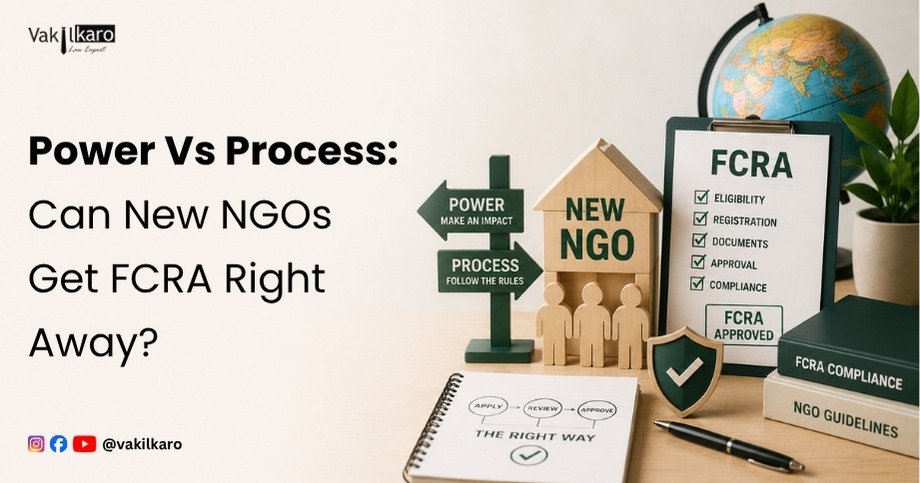
New NGOs often look to foreign funding to support their initiatives, but under India’s Foreign Contribution (Regulation) Act (FCRA), 2010, permanent registration isn’t immediately available. NGOs—whether through Section 8 company registration, trust, or society formation—must operate for a minimum of three years and spend at least ₹10 lakhs on core activities to qualify. Instead, they can apply for FCRA Prior Permission for specific projects with defined foreign donors. Meanwhile, obtaining 12A and 80G registration boosts credibility and transparency, helping build a foundation for future FCRA eligibility and sustainable social impact.
Key Takeaways
- New NGOs often look to foreign funding to support their initiatives, but under India’s Foreign Contribution (Regulation) Act (FCRA), 2010, permanent registration isn’t immediately available.
- Ultimately, while new NGOs cannot get permanent FCRA registration right away, following the path of prior permission and establishing a solid track record with 12A and 80G support paves the way for long-term success and eligibility for permanent FCRA status in the future.
- One of the most frequently asked questions by new NGOs is: Can we apply for FCRA registration immediately after registering our organization?
- In the sections ahead, we’ll explore why this distinction exists and how new NGOs can strategically prepare for full FCRA registration in the future.
- Step-by-Step Roadmap for New NGOs Get Legally Registered Register your NGO as a Section 8 company, society, or trust, depending on your preferred legal structure.
Can a New NGO Apply for FCRA Right After Registration? Here’s What You Need to Know
Starting an NGO is a powerful step toward creating social impact, and for many new organizations, accessing foreign funding is a crucial goal. However, under the Foreign Contribution (Regulation) Act (FCRA), 2010, newly registered NGOs—whether formed via Section 8 company registration, NGO registration under the Societies Registration Act, or as a trust—cannot apply for permanent FCRA registration immediately after incorporation.
The reason is simple: the law mandates that an NGO must have a proven track record of at least three years of active operations before it can qualify for permanent FCRA registration. During this period, the organization should have spent a minimum of ₹10 lakhs on its core activities, not including administrative expenses. Additionally, audited financial statements for those three years are required to demonstrate proper fund management and operational accountability.
For new NGOs that haven't yet reached this milestone, there is an alternative option—FCRA Prior Permission. This route allows newly formed NGOs to legally receive foreign contributions for a specific purpose from a specific donor. It’s ideal when there’s a committed donor willing to fund a particular project. To apply, the NGO must be legally registered, have a clear project plan, and obtain a formal commitment letter from the foreign donor.
Even though 12A and 80G registrations are not mandatory for FCRA applications, they significantly improve the NGO’s credibility. 12A provides income tax exemption, and 80G allows donors to claim tax deductions. These registrations reflect financial transparency and build trust with donors and authorities.
Ultimately, while new NGOs cannot get permanent FCRA registration right away, following the path of prior permission and establishing a solid track record with 12A and 80G support paves the way for long-term success and eligibility for permanent FCRA status in the future.
Establishing a Non-Governmental Organization (NGO) is often driven by a deep desire to bring about positive change in society. Whether it's improving education, healthcare, the environment, or human rights, NGOs play a vital role in shaping a more equitable world. For many newly formed NGOs in India, especially those registered as a Section 8 company, a society, or a trust, foreign contributions represent a significant and sometimes essential source of funding to implement their programs effectively.
However, accessing foreign funds is not as simple as it may seem. The process is strictly regulated under the Foreign Contribution (Regulation) Act, 2010—commonly known as FCRA. This legislation was enacted to ensure that foreign donations are received and utilized in a transparent, accountable, and lawful manner, thereby safeguarding national interests.
One of the most frequently asked questions by new NGOs is: Can we apply for FCRA registration immediately after registering our organization? It’s a fair and important question, especially when international partnerships or funding opportunities present themselves early on. The answer, however, is no—at least not for permanent registration under the FCRA. The law requires NGOs to meet specific eligibility criteria before they can qualify for permanent FCRA registration.
This often comes as a surprise to enthusiastic founders who are eager to scale their impact through foreign aid. The rationale behind this restriction is to ensure that only experienced, well-functioning, and compliant NGOs are entrusted with the responsibility of managing international funds over the long term.
But this doesn’t mean new NGOs are completely shut out from receiving foreign donations. The FCRA provides an alternate route—FCRA Prior Permission—which allows eligible new organizations to access foreign contributions for specific projects. In the sections ahead, we’ll explore why this distinction exists and how new NGOs can strategically prepare for full FCRA registration in the future.
Understanding the FCRA Framework: A Gateway to Responsible Foreign Funding
The Foreign Contribution (Regulation) Act, 2010—commonly referred to as the FCRA—is a critical piece of legislation that governs how NGOs, charitable trusts, societies, and Section 8 companies in India can legally receive and use foreign donations. This framework was introduced by the Indian government to ensure that foreign contributions are channeled into genuine developmental activities and not misused in ways that could harm national interests or compromise internal security.
At its core, the FCRA aims to promote transparency, accountability, and proper utilization of foreign funds. It sets clear boundaries to ensure that the money flowing into the country is used ethically and in line with the objectives of the registered organization. NGOs that fail to comply with FCRA provisions risk suspension or cancellation of their registration, which can severely limit their ability to operate, especially if they depend on international funding.
Under the FCRA, there are two main pathways through which NGOs can receive foreign contributions:
- FCRA Permanent Registration: This is meant for well-established NGOs that have been operational for at least three years. To qualify, an organization must show a consistent record of social work and financial transparency, including a minimum expenditure of ₹10 lakhs on core activities over three years (excluding administrative costs), and provide audited financial statements for each of those years.
- FCRA Prior Permission: This route is specifically designed for newly formed NGOs that are not yet eligible for permanent registration. It allows them to receive foreign contributions from a specific donor for a clearly defined project and purpose. This is a one-time, project-specific approval rather than a blanket permission for ongoing foreign funding.
Both routes serve different purposes and come with their own sets of rules, responsibilities, and application processes. While permanent registration offers long-term access to foreign funding, prior permission acts as a stepping stone for new NGOs to begin their journey while building a credible track record for future eligibility.
Why a New NGO Cannot Apply for FCRA Permanent Registration Immediately?
An NGO—whether formed through Section 8 company registration, NGO registration under the Societies Registration Act, or as a trust—cannot apply for FCRA permanent registration immediately after registration because of the following mandatory conditions:
- Operational Track Record: The NGO must have been in active operation for at least three years.
- Minimum Program Spending: The organization should have spent a minimum of ₹10 lakhs on its core activities in the past three financial years, excluding administrative expenses.
- Audited Financial Statements: The NGO must provide audited financial accounts for each of these three years.
This system is designed to filter out dormant or untested entities and ensure that only well-established, responsible NGOs receive ongoing access to foreign funds.
So, for a newly established NGO—even one with a valid Section 8 company registration or any other form of NGO registration—it must build up its operational history before becoming eligible for permanent FCRA registration.
The Alternative: FCRA Prior Permission
Fortunately, FCRA Prior Permission provides a way for new NGOs to legally receive foreign contributions. This route is ideal when:
- A specific foreign donor has committed to funding a particular project.
- The donation is a one-time or occasional contribution.
- The NGO is newly registered and does not yet meet the three-year eligibility rule.
To apply for prior permission, the NGO must:
- Be legally registered (as a Section 8 company, trust, or society).
- Have a commitment letter from the foreign donor, specifying the purpose, amount, and project details.
- Submit a detailed project proposal and supporting documentation.
Although more restrictive than permanent registration, this route allows new NGOs to access international funding legally and responsibly.
Role of 12A and 80G Registration in the Process
While 12A and 80G registration are not direct prerequisites for FCRA approval, they greatly enhance the NGO’s financial and legal credibility:
- 12A Registration: Offers income tax exemption on the organization’s income.
- 80G Registration: Allows donors (both domestic and foreign) to claim tax deductions for their donations.
Having these certifications strengthens the NGO’s case when applying for prior permission and demonstrates financial transparency and a commitment to regulatory compliance.
Furthermore, 12A and 80G certification makes it easier to attract both local and international donors by showing that the organization adheres to Indian financial laws and is transparent about fund utilization.
Step-by-Step Roadmap for New NGOs
- Get Legally Registered
Register your NGO as a Section 8 company, society, or trust, depending on your preferred legal structure.
- Apply for 12A and 80G Certification
Secure these registrations to ensure income tax exemption and offer benefits to your donors.
- Find a Foreign Donor
Identify and secure a committed foreign donor for a specific project or activity.
- Prepare Your Documentation
Draft a detailed project proposal, obtain a signed commitment letter from the donor, and gather all legal and financial records.
- Apply for FCRA Prior Permission
File your application online through the FCRA portal, attaching all required documents, including your registration certificate, project plan, and donor letter.
- Open an FCRA Bank Account
Upon approval, open an account at the designated branch of the State Bank of India in New Delhi to receive foreign contributions.
- Build a Track Record
Begin executing your programs, maintaining proper accounts and reports. This will help you become eligible for permanent FCRA registration after three years.
Compliance and Transparency Are Key
Foreign funding is not just about acquiring resources—it’s about trust. Whether you operate as a trust, society, or Section 8 company, maintaining accountability is essential. FCRA compliance requires:
- Filing annual returns (Form FC-4).
- Maintaining separate books of accounts for foreign contributions.
- Avoiding use of funds for activities not approved under your FCRA status.
Failure to comply can lead to cancellation of your FCRA license and legal consequences.
Building Toward Permanent FCRA Registration
The real journey begins after getting prior permission. Your next goal should be to:
- Execute the project successfully and document everything.
- Maintain clean and audited financial records.
- Continue activities that align with your NGO’s mission.
- Keep stakeholders informed and involved.
After three years, you can apply for FCRA permanent registration, provided you meet all the eligibility conditions.
Your Section 8 company registration, NGO registration, and valid 12A and 80G certification will strengthen your FCRA application by showcasing your legal and financial commitment.
Final Thoughts
Starting an NGO is an inspiring first step—but sustaining and scaling your impact requires legal foresight. While you cannot apply for FCRA permanent registration immediately after registering your NGO, the FCRA prior permission route allows you to begin your journey with international funding, one project at a time.
Combining your legal status—whether through Section 8 company registration, NGO registration, or trust—with 12A and 80G registration positions your NGO as a credible and compliant entity. Over time, this foundation will enable you to qualify for full-fledged FCRA registration, empowering you to expand your work and create lasting change.
Why Choose Vakilkaro for NGO and Legal Services
Vakilkaro is your trusted partner for all legal needs related to NGO registration, Section 8 company formation, 12A & 80G registration, and FCRA compliance. Here's why:
- Expert Legal Guidance: Specialists in NGO laws, FCRA regulations, and tax exemptions.
- Complete Support: From registration to documentation, audits, and FCRA applications.
- Transparent & Affordable: Clear pricing, no hidden charges, and timely delivery.
- Digital Convenience: Online tracking, easy uploads, and expert consultations.
- More Than Just NGOs: Business registration, GST, trademark, tax filing & more.
Vakilkaro—Legal made simple, reliable, and affordable.
Official External Resources
Use these primary/official sources to verify rules, forms, fees, timelines and regulatory updates before publication.
Frequently asked questions
Power Vs Process: Can New NGOs Get FCRA Right Away?+
New NGOs often look to foreign funding to support their initiatives, but under India’s Foreign Contribution (Regulation) Act (FCRA), 2010, permanent registration isn’t immediately available. Ultimately, while new NGOs cannot get permanent FCRA registration right away, following the path of prior permission and establishing a solid track record with 12A and 80G support paves the way for long-term success and eligibility for permanent FCRA status in the future.
