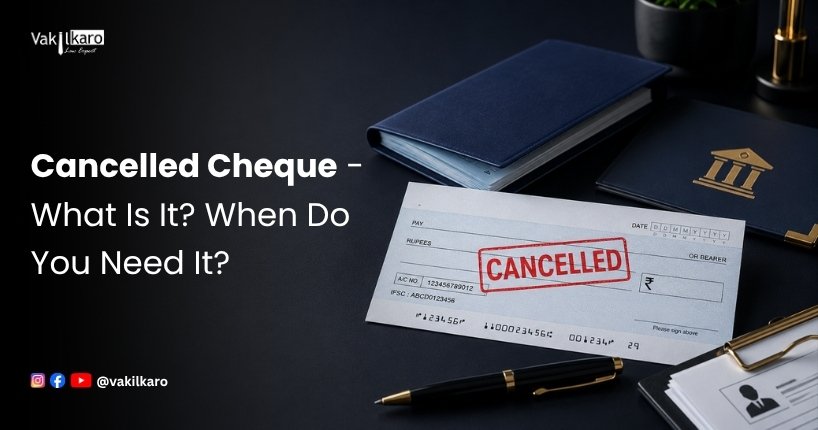
A cancelled cheque is a vital financial document used for banking, tax filing, and business transactions. Though it does not authorize payments, it serves as proof of account details for income tax filing, online payment, and tax refunds. A cheque is cancelled by drawing two diagonal lines across it and writing "CANCELLED" between them. It is commonly required for e-filing, checking tax return status, loan applications, and investment verification. Taxpayers can use it for seamless tax compliance while businesses utilize it for payroll and tax payments. Keeping it secure ensures safe transactions and hassle-free financial and taxation processes.
Key Takeaways
- When filing income tax returns, taxpayers often need to provide bank details, and a cancelled cheque serves as a verification tool.
- A cancelled cheque is widely required in financial transactions, including income tax filing, tax refund claims, e-filing, online payment setup, loan applications, and investment registrations.
- Income Tax-Related Transactions When filing income tax returns, taxpayers often need to provide bank details, and a cancelled cheque can serve as proof.
- Companies setting up online payment gateways need to submit a cancelled cheque as proof of their banking details.
- Businesses applying for services for business, such as vendor payments, supplier transactions, and tax compliance, need a cancelled cheque.
Understanding Cancelled Cheques: Importance and Uses
A cancelled cheque is a crucial financial document that serves as proof of an individual’s bank account details. Although it does not authorize any transactions, it is widely used for tax filing, online payments, tax refunds, and various banking and business purposes. To cancel a cheque, two diagonal lines are drawn across it, and the word "CANCELLED" is written between the lines. This ensures that the cheque cannot be misused while still providing necessary details such as the account number, IFSC code, and bank name.
One of the most common uses of a cancelled cheque is for income tax-related transactions. Taxpayers may need to submit it while filing income tax returns, verifying bank details for tax refunds, or checking their tax return status. It is also used when calculating tax liabilities using a tax calculator. E-filing and electronic payment systems often require a cancelled cheque to confirm banking information for smooth processing.
Businesses also rely on cancelled cheques for financial transactions, payroll processing, and tax filings Employers may request it when setting up direct salary deposits, while companies use it to register for services for business, vendor payments, and tax compliance. Loan applications, mutual fund investments, and credit approvals also require a cancelled cheque to verify the applicant’s bank account details.
Ensuring the security of a cancelled cheque is essential. It should not be signed to prevent fraudulent use, and individuals should only share it for legitimate purposes. By understanding the significance of a cancelled cheque in tax filing, income tax compliance and financial transactions, individuals and businesses can streamline their financial activities, ensure accurate tax return filings, and facilitate seamless banking operations.
A cancelled cheque is an essential financial document widely used in banking and financial transactions. While it does not authorize any payments, it serves as an official proof of an individual’s or business’s bank account details. This document contains crucial information such as the account holder’s name, account number, bank name, branch address, and IFSC code, which are required for various financial processes.
One of the primary uses of a cancelled cheque is in income tax-related transactions. When filing income tax returns, taxpayers often need to provide bank details, and a cancelled cheque serves as a verification tool. It is also required when claiming a tax refund, as the Income Tax Department needs to confirm the correct account for refund disbursements. Additionally, e-filing of tax returns often mandates submitting a cancelled cheque for authentication.
In addition to tax-related purposes, a cancelled cheque is commonly used for online payments and electronic transactions. When setting up automated payments for services like loan EMIs, mutual fund SIPs, or insurance premium payments, banks require a cancelled cheque to ensure the correct account is linked. It is also necessary when registering for direct salary deposits, opening a Demat account, or processing business transactions that involve bank verification.
For businesses, a cancelled cheque plays a crucial role in financial documentation. It is often required when applying for business loans, setting up vendor payments, or subscribing to financial services. It also helps verify banking details when applying for GST registration corporate tax filing, or other compliance-related activities.
Understanding the significance of a cancelled cheque helps individuals and businesses streamline their financial activities, simplify tax filing, and ensure seamless banking operations while complying with income tax regulations.
What Is a Cancelled Cheque?
A cancelled cheque is a standard cheque from an individual’s or business’s chequebook that has been marked as invalid for transactions. It is identified by two diagonal lines drawn across the cheque with the word "CANCELLED" written between them. Importantly, the cheque is not signed, which prevents it from being used to withdraw money or authorize payments. While it cannot be used for financial transactions, it serves as an important document for verifying banking details.
Despite its cancellation, the cheque contains crucial banking information that institutions and organizations require for various financial processes. It includes:
- Account Holder’s Name: Confirms the identity of the person or business to whom the bank account belongs.
- Bank Name: Specifies the financial institution managing the account.
- Branch Address: Identifies the specific bank branch where the account is maintained.
- Account Number: Serves as a unique identifier for the bank account.
- IFSC Code: A unique code used for electronic transactions such as NEFT, RTGS, and IMPS payments.
A cancelled cheque is widely required in financial transactions, including income tax filing, tax refund claims, e-filing, online payment setup, loan applications, and investment registrations. It acts as a proof of banking details, ensuring that transactions are processed correctly. Understanding the purpose and proper use of a cancelled cheque helps individuals and businesses avoid financial errors and ensures seamless banking operations.
When Do You Need a Cancelled Cheque?
A cancelled cheque is required for several financial and tax-related purposes. Some of the common uses include:
Income Tax-Related Transactions
- When filing income tax returns, taxpayers often need to provide bank details, and a cancelled cheque can serve as proof.
- For verifying details related to tax refunds and checking tax return status.
- Required when using a tax calculator to compute income tax liability and estimate refunds.
- In case of discrepancies in electronic filing (e-filing), banks may request a cancelled cheque for validation.
Tax Payment and Refunds
- Many taxpayers use a tax calculator to determine the tax payable and make online payments.
- Refunds issued by the income tax department are credited to the bank account linked with the taxpayer’s tax return. A cancelled cheque helps verify this account.
- For businesses filing their income tax CA (Chartered Accountant) reports, banks require a cancelled cheque as supporting documentation.
Setting Up Electronic Payments
- Many people use electronic filing for financial transactions, requiring a cancelled cheque to link their bank account.
- Companies setting up online payment gateways need to submit a cancelled cheque as proof of their banking details.
- When registering for auto-debit services like EMIs, mutual fund SIPs, insurance premium payments, or investments, financial institutions often request a cancelled cheque.
Loan Applications and Credit Card Processing
- A cancelled cheque is mandatory when applying for loans such as home loans, car loans, personal loans, or business loans.
- It helps banks verify the account holder’s details to ensure that the tax return status and financial records match their submitted documents.
- Loan providers may check tax return tax return records to assess the applicant’s financial stability before approval.
KYC Compliance and Investment Accounts
- Financial institutions require a cancelled cheque for Know Your Customer (KYC) verification when opening a Demat account, mutual fund account, or investment portfolio.
- A cancelled cheque helps verify banking details for income tax CA filings related to capital gains and investment profits.
Employer and Business Transactions
- Companies may request a cancelled cheque when processing salary payments through direct deposit.
- Businesses applying for services for business, such as vendor payments, supplier transactions, and tax compliance, need a cancelled cheque.
- When paying taxes or setting up direct tax deductions for employees, businesses may require cancelled cheques as proof.
How to Get a Cancelled Cheque?
- Take a blank cheque from your chequebook.
- Draw two diagonal lines across it.
- Write the word "CANCELLED" in between the lines.
- Do not sign the cheque to prevent unauthorized use.
How a Cancelled Cheque Helps with Tax Filings and Compliance?
Using a cancelled cheque can simplify tax-related processes, including:
- Filing Tax Returns Efficiently
When filing income tax returns, taxpayers often use a tax calculator to determine liabilities.
A cancelled cheque helps link the taxpayer’s bank account for tax refunds and checking income tax status.
- Checking Tax Return Status
Taxpayers can use a calculator on tax return portals to estimate their refunds.
A cancelled cheque is used to verify bank details when checking tax return status.
- Paying Taxes and Receiving Refunds
Many taxpayers use an income tax calculator to assess their tax dues and make online payment.
A cancelled cheque helps link accounts for electronic filing and direct tax deposit setups.
- Business Tax Filings
Businesses can use services for business to process GST payments, payroll, and tax income tax filings.
E-filing of tax returns requires valid bank details, which can be confirmed using a cancelled cheque.
- Loan and Credit Approvals
Lenders check an applicant’s income tax CA records and tax return status before approving loans.
A cancelled cheque ensures that funds are credited or debited from the correct account.
Image
How to Ensure Your Cancelled Cheque Is Safe?
- Do not sign the cheque to prevent fraud.
- Do not share unnecessary banking details with unauthorized individuals.
- Use only for valid purposes, such as tax filings, business transactions, and investment verification.
- Keep a record of cancelled cheques submitted for future reference.
Conclusion
A cancelled cheque is a vital document that plays a significant role in various financial and tax-related activities. Though it cannot be used for making payments, it serves as an official proof of banking details, ensuring that transactions are processed correctly and securely. Whether an individual is filing income tax returns, applying for a tax refund, setting up an online payment method, or automating financial transactions, a cancelled cheque is often required to validate banking information.
For taxpayers, a cancelled cheque simplifies the process of tax filing and electronic filing (e-filing) by linking bank details with the Income Tax Department. It also helps in tracking tax return status, ensuring that refunds are credited to the correct account. Businesses also rely on cancelled cheques for various financial operations, such as payroll processing, vendor payments, investment verifications, and loan approvals.
By utilizing tools like a tax calculator, individuals and businesses can accurately assess their tax liabilities and ensure compliance with income tax regulations. This helps in avoiding errors while filing returns and estimating refunds. Additionally, maintaining proper documentation, including cancelled cheques, simplifies financial transactions and enhances security in banking processes.
Understanding the importance of a cancelled cheque allows individuals to streamline their income tax compliance, tax return management, and financial transactions effectively. Keeping track of key documents ensures smoother interactions with financial institutions, tax authorities, and service providers, ultimately contributing to a hassle-free financial experience.
Why Choose Vakilkaro for Legal and Financial Services?
Vakilkaro is a trusted provider of legal, financial, and taxation services, offering expert solutions to businesses and individuals. With a team of experienced professionals, Vakilkaro ensures seamless compliance, hassle-free documentation, and personalized assistance for various legal and financial requirements.
Comprehensive Range of Services
Vakilkaro offers a wide array of services, including:
✔ Company Registration – Private Limited Company Registration LLP, OPC, and more.
✔ Trademark & Intellectual Property Protection – Registration, licensing, and compliance.
✔ Taxation Services – GST registration GST return filing, income tax filing, and tax compliance.
✔ Legal Documentation – Drafting contracts, agreements, and compliance documents.
✔ Business Licenses & Compliance – FSSAI, MSME, and other regulatory approvals.
✔ Microfinance & RBI Licenses – Assistance with Section 8 microfinance company registration
Why Vakilkaro?
✅ Expert Guidance: A team of experienced legal and financial professionals ensures error-free documentation and compliance.
✅ Time-Efficient Process: Vakilkaro simplifies complex legal and tax procedures, ensuring quick approvals and seamless processing.
✅ Affordable & Transparent Pricing: Cost-effective services with no hidden charges make legal and financial compliance accessible to all.
✅ End-to-End Support: From registration and compliance to dispute resolution, Vakilkaro provides comprehensive support at every stage.
✅ Digital & Hassle-Free Services: Online filing, e-filing support, and tax calculation tools enhance user convenience.
Choosing Vakilkaro ensures that individuals and businesses receive expert assistance, reliable compliance solutions, and a stress-free experience in handling their legal and financial obligations.
Official External Resources
Use these primary/official sources to verify rules, forms, fees, timelines and regulatory updates before publication.
Frequently asked questions
Cancelled Cheque - What Is It? When Do You Need It?+
When filing income tax returns, taxpayers often need to provide bank details, and a cancelled cheque serves as a verification tool. Income Tax-Related Transactions When filing income tax returns, taxpayers often need to provide bank details, and a cancelled cheque can serve as proof.
