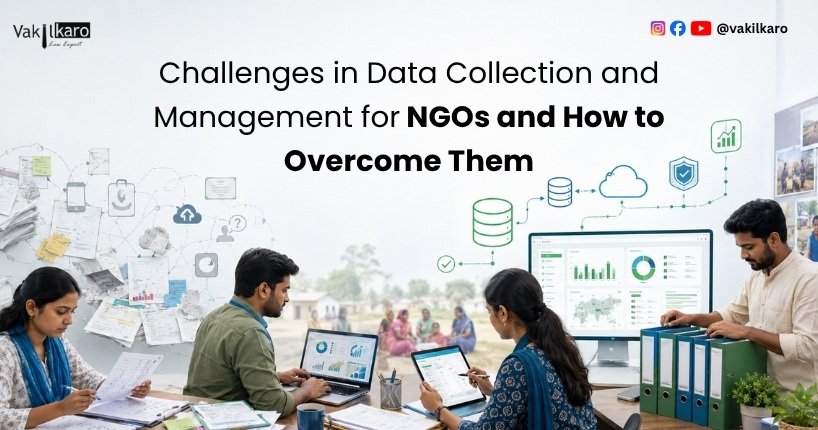
Overcoming Data Collection and Management Challenges for NGOs Data collection and management are essential for NGOs to effectively track their programs, demonstrate impact, and maintain accountability. For NGOs in India, adhering to proper legal frameworks such as NGO registration, Section 8 company registration, and securing 12A and 80G registrations not only helps ensure legal compliance but can also play a pivotal role in addressing some of the data collection and management challenges.
Data collection and management are crucial for NGOs to track progress, measure impact, and ensure accountability. However, NGOs often face challenges such as limited resources, inconsistent data quality, and difficulties in integrating data across multiple projects. To address these issues, NGOs can adopt standardized data collection frameworks, leverage cost-effective technology, and invest in staff training. Legal frameworks like NGO registration, Section 8 company registration, and 12A/80G certifications not only ensure compliance but also help build credibility and secure funding. By improving data practices and aligning with legal standards, NGOs can enhance their effectiveness and transparency.
Key Takeaways
- Data collection and management are crucial for NGOs to track progress, measure impact, and ensure accountability.
- Overcoming Data Collection and Management Challenges for NGOs Data collection and management are essential for NGOs to effectively track their programs, demonstrate impact, and maintain accountability.
- For NGOs in India, adhering to proper legal frameworks such as NGO registration, Section 8 company registration, and securing 12A and 80G registrations not only helps ensure legal compliance but can also play a pivotal role in addressing some of the data collection and management challenges.
- In this blog, we explore the key challenges NGOs face in data collection and management and discuss potential solutions while linking them to the benefits of legal registration.
- By investing in sound data management practices and aligning them with these legal frameworks, NGOs can position themselves for success and strengthen their ability to make a meaningful difference.
Overcoming Data Collection and Management Challenges for NGOs
Data collection and management are essential for NGOs to effectively track their programs, demonstrate impact, and maintain accountability. However, these organizations often face several challenges that can hinder their ability to collect and manage data efficiently. Issues such as limited resources, inconsistent data quality, and difficulties in integrating data from various projects are commonly encountered by NGOs.
One of the most significant challenges is the lack of standardized frameworks for data collection. NGOs operate in diverse regions, each with unique needs, making it difficult to implement a uniform system. To address this, NGOs should develop clear and context-specific data collection frameworks. These frameworks should define the types of data to be collected, the methods of collection, and the frequency. This ensures consistency in data collection, regardless of location, and enhances the reliability of data for monitoring and reporting purposes.
Additionally, many NGOs operate with limited budgets and resources, which can make it difficult to invest in advanced data management tools. In such cases, NGOs can adopt cost-effective solutions such as open-source software or cloud-based platforms. Investing in staff training and capacity-building programs can also improve data management practices within resource constraints.
Data security and privacy are another major concern, particularly for NGOs working in sensitive sectors such as health or human rights. Ensuring compliance with data protection regulations is crucial to maintaining the trust of beneficiaries and donors. NGOs can adopt best practices such as encryption and restricted access to sensitive data, as well as educating staff on data protection principles.
Legal frameworks such as NGO registration, Section 8 company registration, and 12A and 80G registration can provide crucial support for addressing these challenges. These registrations ensure regulatory compliance, enhance transparency, and open doors to additional funding opportunities. By aligning their data management practices with legal standards, NGOs can improve their operational efficiency and build credibility, ultimately increasing their impact on the communities they serve.
Non-Governmental Organizations (NGOs) play an instrumental role in addressing social issues and driving impactful change. To effectively track their initiatives, measure their impact, and communicate results to stakeholders, data collection and management are vital. However, NGOs often face several challenges in collecting, managing, and utilizing data. These challenges can hinder the ability to monitor progress, report to donors, and ensure the accountability of operations.
For NGOs in India, adhering to proper legal frameworks such as NGO registration, Section 8 company registration, and securing 12A and 80G registrations not only helps ensure legal compliance but can also play a pivotal role in addressing some of the data collection and management challenges. In this blog, we explore the key challenges NGOs face in data collection and management and discuss potential solutions while linking them to the benefits of legal registration.
Lack of Clear Data Collection Frameworks
One of the major challenges that NGOs face is the absence of a standardized data collection framework. Many NGOs operate in diverse geographical areas, working with different communities, which can make it challenging to design a uniform system for data collection.
Solution: Developing clear, context-specific data collection frameworks can help mitigate this issue. The framework should outline the types of data to be collected, the methods for collection, and the frequency of collection. Having clear guidelines helps to ensure that data is collected consistently, regardless of location or team.
Legal Relevance: For NGOs that have successfully undergone NGO registration or Section 8 company registration, establishing clear data management policies can help demonstrate organizational transparency to donors, government bodies, and partners. Compliance with these frameworks is often part of the ongoing 12A and 80G certifications.
Limited Resources and Capacity
NGOs often work with limited resources and face budgetary constraints, which can make it difficult to invest in robust data collection systems and technologies. This lack of investment may result in inefficiencies in the data collection process and unreliable data.
Solution: NGOs can consider leveraging cost-effective and scalable solutions, such as open-source software and cloud-based platforms, to collect, store, and analyze data. Additionally, NGOs can invest in capacity-building programs that train staff and volunteers on data management practices. Collaboration with external partners and data specialists can also be a viable solution to mitigate resource constraints.
Legal Relevance: NGOs that have achieved Section 8 company registration or hold 12A and 80G registration are eligible to access specific funding opportunities that can be used for capacity building. These funds can be directed towards strengthening the NGO's data collection and management processes, ensuring more reliable operations in the long term.
Inconsistent Data Quality and Reliability
Inconsistent data quality is a significant challenge for many NGOs. Without proper validation, data collected from the field can be incomplete, inaccurate, or not up to required standards, compromising the overall quality of data analysis and reporting.
Solution: Establishing data quality control mechanisms such as regular audits, data validation checks, and providing staff with training on data collection methods can help improve data accuracy. This will ensure that the data collected from different areas is reliable and actionable.
Legal Relevance: When applying for NGO registration, Section 8 company registration, or 12A and 80G registration, one of the criteria often assessed is the organization's ability to maintain transparency and accountability. Accurate data collection and management practices are a key aspect of fulfilling this requirement. Legal certifications make it easier for NGOs to secure donor trust by proving their commitment to proper data management.
Data Security and Privacy Concerns
NGOs working in sensitive sectors—such as health, education, or human rights—often collect personal or sensitive data from their beneficiaries. This raises concerns regarding data security and the privacy of individuals. A breach of data can have serious consequences, including loss of trust and legal repercussions.
Solution: NGOs must adopt best practices in data security, including encryption, restricted access to sensitive information, and the use of secure platforms for data storage and sharing. It is also crucial for NGOs to educate their staff and partners on data protection principles and ensure compliance with local laws regarding data privacy.
Legal Relevance: Adhering to data privacy regulations is not just a matter of ethical responsibility—it also has legal implications. For NGOs with Section 8 company registration and 12A and 80G status, complying with data protection regulations becomes a requirement, as any data breach can affect the reputation of the NGO and its ability to maintain legal certifications.
Difficulty in Data Integration Across Different Projects and Departments
NGOs often run multiple programs simultaneously, with various teams working on different aspects of the same issue. The data from these programs may be stored in silos, making it challenging to integrate them for comprehensive reporting and analysis.
Solution: To address this challenge, NGOs can adopt integrated data management systems that can bring together data from various projects and departments. Cloud-based platforms or centralized data storage systems are particularly effective in promoting data integration.
Legal Relevance: For NGOs with Section 8 company registration, centralized data management becomes even more important, as maintaining efficient data systems is an essential aspect of governance and transparency. Additionally, such integrations improve operational efficiency and ease of reporting, which is crucial for continued compliance with 12A and 80G registration criteria.
Insufficient Monitoring and Evaluation Systems
Monitoring and evaluation (M&E) are critical for assessing the impact of NGO projects, but many organizations face difficulties in establishing efficient M&E systems. Without proper tracking mechanisms, it becomes difficult for NGOs to demonstrate the effectiveness of their initiatives to donors, stakeholders, or regulatory bodies.
Solution: NGOs should establish clear M&E frameworks that allow for real-time tracking of project outcomes and facilitate ongoing improvements. These frameworks should be adaptable to different types of projects, ensuring that progress can be assessed consistently.
Legal Relevance: For NGOs undergoing Section 8 company registration or 12A and 80G registration, demonstrating effective M&E systems can help in the renewal process. It shows that the NGO is committed to continuous improvement and accountability, which is a critical aspect of long-term donor relationships.
Language and Cultural Barriers
In India, where NGOs often work with diverse communities across different regions, language and cultural barriers can make data collection challenging. Misunderstanding local customs, language nuances, or traditions may lead to inaccurate or biased data.
Solution: NGOs can address these barriers by hiring local staff who are familiar with the community's culture and language. In addition, it is important to engage with local communities to ensure that data collection methods are culturally sensitive and appropriate. Training local partners on data collection processes can also be beneficial.
Legal Relevance: NGOs that are legally registered under the NGO registration process or hold 12A and 80G registrations are more likely to be scrutinized for their efforts to inclusively represent marginalized communities. By addressing cultural and language barriers, NGOs demonstrate their commitment to ethical and comprehensive data management.
Limited Data Literacy Among Staff and Volunteers
Data literacy refers to the ability to understand, interpret, and use data effectively. A lack of data literacy among staff and volunteers can result in poorly executed data collection processes and inaccurate data analysis.
Solution: NGOs should prioritize training programs that focus on building data literacy among their staff and volunteers. This can include workshops, online courses, or partnerships with educational institutions to provide specialized training on data collection and management.
Legal Relevance: NGOs with Section 8 company registration and valid 12A and 80G certifications should consider data literacy as part of their governance and compliance strategies. Demonstrating that all staff are properly trained in data collection and management reflects the NGO’s commitment to transparency and professionalism, which is essential for maintaining legal standing.
Limited Access to Technology and Infrastructure
In remote or underdeveloped regions, NGOs often face infrastructure challenges that make it difficult to collect data electronically. Lack of reliable internet access, electricity, or technological resources can limit an NGO's ability to gather real-time data effectively.
Solution: NGOs can explore low-cost technology solutions, such as mobile-based data collection platforms, offline tools, or manual data collection processes that can later be digitized. Partnerships with tech organizations or CSR initiatives can also provide NGOs with access to the necessary infrastructure.
Legal Relevance: NGOs that have completed their NGO registration and Section 8 company registration may be eligible for funding opportunities from government agencies, CSR initiatives, or foreign donors. Leveraging these opportunities can provide the necessary resources to overcome infrastructure-related data management issues.
NGO Darpan: Enhancing Transparency and Access for NGO Registration in India
NGO Darpan is an online platform developed by the NITI Aayog, Government of India, to facilitate the registration and management of Non-Governmental Organizations (NGOs) in India. It serves as a comprehensive database for NGOs, enabling them to register and maintain their profile in a standardized manner. This platform provides a unique ID to NGOs, ensuring transparency and credibility. It is particularly relevant for NGOs that wish to apply for government grants and collaborate with various ministries, as the registration on NGO Darpan is often a prerequisite for accessing financial support and participating in government schemes. Additionally, it offers NGOs a centralized space to update their activities and key information, enhancing their visibility and accountability. In essence, NGO Darpan plays a vital role in the formalization and recognition of NGOs in India, making them eligible for a wide range of government programs and fostering a streamlined approach to NGO operations and governance.
Conclusion
Data collection and management are essential components of effective NGO operations, ensuring transparency, accountability, and impact. However, as outlined, NGOs face numerous challenges in this area, ranging from resource constraints and data quality issues to the complexities of regulatory compliance. By adopting robust systems, leveraging technology, building staff capacity, and addressing cultural and language barriers, NGOs can mitigate these challenges and improve their data practices.
Legal structures such as NGO registration, Section 8 company registration, and 12A and 80G registration are crucial for maintaining an NGO’s legitimacy and ensuring compliance with governmental and donor requirements. By investing in sound data management practices and aligning them with these legal frameworks, NGOs can position themselves for success and strengthen their ability to make a meaningful difference.
If you're an NGO seeking guidance on establishing a data management framework or need support with legal registration and compliance, partnering with Vakilkaro can provide you with the legal expertise needed to ensure transparency, accountability, and sustainability. Let us help you navigate the complexities of NGO registration, Section 8 company registration, and 12A and 80G certifications so you can focus on making a positive impact.
Why Choose Vakilkaro for Your NGO and Legal Services
When it comes to navigating the complex world of NGO registration, legal compliance, and data management, choosing the right partner can make all the difference. Vakilkaro offers expert legal services designed to support NGOs through every stage of their journey, from registration to ensuring ongoing compliance with laws and regulations. Here’s why you should consider Vakilkaro for your NGO’s legal needs:
- Comprehensive Legal Expertise
Vakilkaro’s team of professionals is well-versed in the legal complexities surrounding NGO registration, Section 8 company registration, and obtaining 12A and 80G certifications. Whether you are a new organization or looking to renew or expand your legal certifications, Vakilkaro provides end-to-end support to ensure you meet all regulatory requirements.
- Tailored Solutions for NGOs
Vakilkaro understands that every NGO is unique, with different needs and goals. That’s why they offer personalized advice and services tailored to the specific challenges faced by your NGO. From data management and compliance strategies to operational improvements, Vakilkaro helps optimize your NGO’s internal processes while ensuring legal compliance.
- Support with Funding and Financial Transparency
One of the significant benefits of 12A and 80G registration is the tax exemption for donors, which increases donor confidence and funding opportunities. Vakilkaro helps you navigate the complexities of these registrations, ensuring that your NGO is eligible to receive tax-deductible donations and access government grants and CSR funding.
- Efficiency and Time-Saving
Vakilkaro’s streamlined processes make the registration and compliance journey faster and more efficient. By partnering with Vakilkaro, your NGO can focus on its core mission while leaving the legal complexities to the experts, saving both time and resources.
- Ongoing Legal Support
Vakilkaro doesn’t just help with initial registration but offers continuous legal support. Whether it’s legal updates, compliance advice, or issues related to reporting, you can rely on Vakilkaro for ongoing guidance to ensure your NGO operates smoothly and legally.
By partnering with Vakilkaro, NGOs can focus on their mission while ensuring they meet all legal and operational standards, making a lasting and sustainable impact.
Official External Resources
Use these primary/official sources to verify rules, forms, fees, timelines and regulatory updates before publication.
Frequently asked questions
Challenges in Data Collection and Management for NGOs and How to Overcome Them+
Overcoming Data Collection and Management Challenges for NGOs Data collection and management are essential for NGOs to effectively track their programs, demonstrate impact, and maintain accountability. For NGOs in India, adhering to proper legal frameworks such as NGO registration, Section 8 company registration, and securing 12A and 80G registrations not only helps ensure legal compliance but can also play a pivotal role in addressing some of the data collection and management challenges.