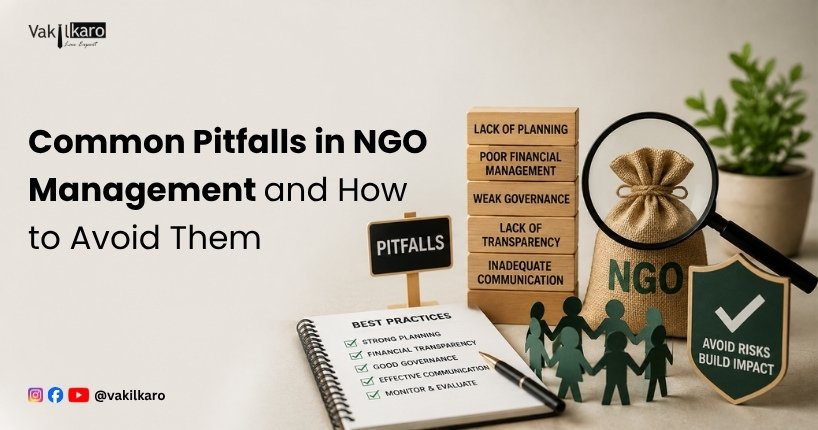
Non-Governmental Organizations (NGOs) are instrumental in addressing societal and developmental challenges. However, managing an NGO effectively—whether it holds general NGO registration or is structured under Section 8 company registration—requires strategic oversight and legal compliance. Registrations like 12A and 80G are crucial for tax exemptions and donor confidence. Yet, many NGOs struggle with poor leadership, financial mismanagement, weak fundraising, and non-compliance. These pitfalls can hinder growth and sustainability. This blog explores common NGO management challenges and how to avoid them by strengthening governance, leveraging technology, and maintaining transparency—while ensuring continued compliance with 12A, 80G, and Section 8 company registration norms.
Key Takeaways
- This blog explores common NGO management challenges and how to avoid them by strengthening governance, leveraging technology, and maintaining transparency—while ensuring continued compliance with 12A, 80G, and Section 8 company registration norms.
- Navigating Challenges: Key Mistakes to Avoid in NGO Management Non-Governmental Organizations (NGOs) play a vital role in tackling social, economic, and environmental issues.
- This blog aims to shed light on the most common errors in NGO management and provide practical insights on how to navigate them effectively.
- However, one of the most common pitfalls in NGO management is the presence of weak or uncommitted leadership teams and boards.
- Poor Documentation and Reporting One of the most underestimated yet highly damaging pitfalls in NGO management is poor documentation and reporting.
Navigating Challenges: Key Mistakes to Avoid in NGO Management
Non-Governmental Organizations (NGOs) play a vital role in tackling social, economic, and environmental issues. Whether an NGO is registered under general NGO registration or operates as a Section 8 company, effective management is crucial to ensure long-term success and credibility. Additionally, maintaining compliance with legal registrations such as 12A and 80G is essential, not only for securing tax exemptions but also for building donor trust.
Despite noble intentions, many NGOs fall into common traps that limit their growth and impact. One major issue is the absence of a clear mission and vision. Without a well-defined purpose, it's difficult to align programs, measure success, or attract stakeholders. Weak governance and untrained leadership are also common, particularly in Section 8 companies where legal obligations for oversight are more stringent. Effective boards and leadership teams are necessary for strategic direction and regulatory compliance.
Financial mismanagement can be particularly damaging, especially for NGOs that rely on their 12A and 80G registration to encourage donations. Transparent accounting systems, regular audits, and adherence to financial norms are key to maintaining trust. Similarly, inadequate fundraising strategies and overreliance on single income sources can put an NGO at risk. Diversifying funding and promoting tax benefits through 12A and 80G can help stabilize income streams.
Other common pitfalls include poor documentation, ineffective communication, limited stakeholder engagement, and underuse of digital tools. These issues can be addressed through better planning, capacity building, and consistent branding. Highlighting legal registrations such as Section 8, 12A, and 80G in communications can also reinforce credibility.
In conclusion, successful NGO management requires a combination of strategic planning, transparency, and adherence to legal norms. Avoiding these common pitfalls will strengthen your NGO’s impact, sustainability, and donor confidence.
Non-Governmental Organizations (NGOs) are often at the forefront of creating positive change in society. They address a wide array of pressing issues—ranging from poverty alleviation and education to environmental protection and healthcare. Their impact is especially significant in a country like India, where grassroots engagement and social innovation are critical. However, running an NGO is not without its challenges. Effective management is key to ensuring that these organizations deliver on their intended missions while maintaining transparency, trust, and legal compliance.
Regardless of whether an NGO is formed through a general NGO registration process or as a Section 8 company under the Companies Act, having a structured approach to operations is essential. A Section 8 company registration in particular, comes with specific legal and governance obligations that must be adhered to strictly. Additionally, many NGOs aim to secure 12A and 80G registration from the Income Tax Department. These certifications not only provide tax exemptions to the NGO but also allow donors to claim deductions on their contributions—making them critical tools for fundraising and credibility.
Unfortunately, even with good intentions, many NGOs fall prey to avoidable mistakes such as poor financial management, weak leadership, lack of compliance, and ineffective communication strategies. These missteps can undermine their efforts, limit their reach, and even jeopardize their legal standing. Therefore, it is crucial for NGOs—especially those operating under formal legal frameworks like Section 8 company registration and those with 12A and 80G registration—to proactively identify and address these pitfalls.
This blog aims to shed light on the most common errors in NGO management and provide practical insights on how to navigate them effectively. By understanding these challenges, NGOs can build more sustainable, impactful, and compliant organizations that stand the test of time.
Lack of Clear Mission and Vision
One of the most foundational elements for any successful Non-Governmental Organization (NGO) is a well-defined mission and vision. These are not just statements for the website—they act as the guiding compass that shapes every decision, initiative, and interaction. When an NGO lacks clarity in its mission and vision, it becomes vulnerable to confusion, misalignment of activities, and diluted impact. Donors, partners, volunteers, and even internal team members may struggle to understand the organization’s true purpose, which ultimately hinders growth and long-term sustainability.
A mission defines what the NGO seeks to accomplish, while the vision provides a long-term picture of why those goals matter. Without these core elements, NGOs can drift into projects that don’t align with their values or goals, creating inefficiencies and reducing their ability to track progress or measure success. For example, an NGO with Section 8 company registration is expected to operate with a defined charitable or not-for-profit objective as mandated by law. Lack of clarity in mission can not only confuse stakeholders but also create challenges in fulfilling the legal obligations associated with such a structure.
How to Avoid:
The first step is to articulate a precise mission and vision during the initial NGO registration process. These should be crafted thoughtfully, reflecting the core values and objectives of the organization. Once established, all activities—from project planning to communication—should align with these principles. Regular reviews of the mission and vision should also be conducted to ensure they remain relevant as the NGO evolves. This is especially important for organizations that have obtained 12A and 80G registration, as aligning with a clear mission enhances donor trust and ensures that funds are being used in line with their intended purpose.
Weak Governance and Leadership
Strong governance and effective leadership are the backbone of any successful NGO. However, one of the most common pitfalls in NGO management is the presence of weak or uncommitted leadership teams and boards. Many NGOs operate with founders or board members who are passionate but may lack the administrative or strategic expertise needed to run an organization effectively. This gap can lead to poor decision-making, lack of accountability, operational inefficiencies, and even legal non-compliance.
For NGOs registered under frameworks such as Section 8 company registration, governance is not just good practice—it’s a legal requirement. Section 8 companies are expected to operate with a board of directors who are responsible for maintaining oversight, ensuring transparency, and guiding the organization’s strategic direction. Weak leadership in such settings can lead to violations of compliance norms and misuse of resources, both of which damage credibility and could even result in cancellation of registration.
Furthermore, NGOs that have acquired 12A and 80G registration—which provide tax exemptions for both the NGO and its donors—must meet additional governance standards. These registrations often require periodic reporting, financial accountability, and clear documentation of activities. A leadership team that does not understand or fulfill these responsibilities can jeopardize these vital certifications.
How to Avoid:
To mitigate this risk, NGOs should aim to build a strong, diverse, and skilled board of directors. Individuals with backgrounds in finance, law, social work, and communication can offer balanced perspectives and ensure well-rounded decision-making. Regular training sessions and workshops should be conducted to educate board members and leadership staff on compliance obligations, especially those related to 12A and 80G registration. A well-informed board not only strengthens internal operations but also boosts external credibility with donors, regulators, and stakeholders.
Financial Mismanagement
Financial mismanagement is one of the most serious and common challenges faced by NGOs, regardless of their size or scope of work. Poor financial practices not only endanger the sustainability of the organization but also significantly damage its reputation and credibility. For NGOs that rely heavily on donations—particularly those holding 12A and 80G registration for tax exemption benefits—any financial irregularity can lead to the loss of donor trust and potential disqualification from tax benefits.
Mismanagement may manifest in various forms, including inadequate budgeting, failure to maintain proper accounting records, misuse of funds, lack of financial planning, and delayed reporting. In some cases, even well-meaning NGOs make mistakes due to a lack of financial literacy or oversight. These issues can attract scrutiny from regulators and donors alike, and in worst-case scenarios, lead to penalties or loss of Section 8 company registration.
For organizations registered as Section 8 companies under the Companies Act, there are legal mandates to maintain separate bank accounts, keep detailed records of income and expenditure, and ensure that funds are used strictly for the charitable objectives stated during registration. These norms are further tightened when the NGO enjoys 12A and 80G registration, which requires a higher level of transparency and periodic reporting to the Income Tax Department.
How to Avoid:
To prevent financial mismanagement, NGOs should implement robust financial systems. This includes maintaining a clear chart of accounts, using accounting software, and establishing financial policies for expenditure, procurement, and audits. Regular internal audits and annual external audits should be conducted to ensure compliance. Appointing a qualified financial officer or outsourcing to a professional accountant can also help ensure adherence to all financial disclosure norms. Transparent financial management not only protects the NGO legally but also builds donor confidence and long-term sustainability.
Inadequate Fundraising Strategies
One of the most frequent pitfalls in NGO management is an over-reliance on a single source of funding. Whether it’s depending solely on one donor, a specific grant, or a recurring event, such narrow fundraising strategies can pose a serious risk. If that singular stream dries up—due to shifting donor priorities, economic downturns, or administrative delays—the entire organization may face financial instability or even shutdown.
NGOs, whether registered under the standard NGO registration framework or as a Section 8 company, need a proactive and diversified approach to fundraising to ensure their sustainability. Sole dependency not only limits the scope of growth but also undermines resilience in times of crisis. For organizations that hold 12A and 80G registration, there's an additional opportunity to leverage these credentials to encourage individual and corporate contributions, thanks to the tax benefits they offer to donors.
How to Avoid:
To overcome this pitfall, NGOs must diversify their fundraising strategies. This includes tapping into multiple revenue streams such as:
- Grants from government bodies, international organizations, or foundations
- Individual donors through digital campaigns, monthly giving programs, or community events
- Corporate Social Responsibility (CSR) partnerships, particularly for those with Section 8 company registration, as this structure is preferred by many corporations for CSR collaborations
- Fundraising events, both offline and online, to engage the public and raise awareness along with resources
- Crowdfunding platforms that allow NGOs to reach a broader audience
Additionally, NGOs should prominently highlight their 12A and 80G registration status in all fundraising materials—websites, social media, brochures, and donation portals. This reassures donors that their contributions are eligible for tax exemptions, making them more likely to give. A strategic, varied fundraising approach not only secures immediate funds but also builds a resilient financial foundation for long-term impact.
Non-Compliance with Legal Requirements
One of the most critical pitfalls in NGO management is failing to comply with legal and statutory obligations. Non-compliance not only exposes the organization to financial penalties and regulatory scrutiny but also risks suspension or cancellation of key registrations—such as Section 8 company registration, NGO registration, and the valuable 12A and 80G registration statuses. Beyond the legal consequences, such lapses significantly undermine donor trust, which is vital for sustaining funding and operations.
NGOs are expected to uphold transparency, accountability, and good governance. This includes timely filings of annual returns, financial statements, and activity reports with the relevant authorities such as the Registrar of Companies (for Section 8 companies), the Income Tax Department, and other regulatory bodies. Failure to submit these documents within stipulated timelines can lead to suspension of operations, deactivation of PAN/TAN, and ineligibility to receive foreign or domestic donations.
How to Avoid:
To steer clear of legal trouble, NGOs must prioritize compliance as a core part of their organizational management:
- Keep a compliance calendar: Maintain a detailed calendar with reminders for important deadlines—such as income tax return filings, renewal dates for 12A and 80G certificates, and submission of annual reports to the Ministry of Corporate Affairs (for Section 8 companies).
- Assign responsibility: Designate a compliance officer or team to manage legal documentation, filings, and audits. Outsourcing to legal professionals or consultants is also a wise option, especially for smaller NGOs.
- Regular audits and reviews: Conduct periodic internal audits and compliance reviews to ensure that all documentation is in place and legal formalities are fulfilled on time.
- Stay informed: Legal frameworks and tax laws change periodically. Subscribe to updates from credible sources or seek guidance from legal advisors to stay current on NGO-related regulations.
Maintaining compliance with Section 8 company registration, NGO registration, and 12A/80G provisions not only protects the organization legally but also strengthens its credibility in the eyes of donors, partners, and beneficiaries.
Poor Documentation and Reporting
One of the most underestimated yet highly damaging pitfalls in NGO management is poor documentation and reporting. Many NGOs, despite carrying out meaningful work, fail to systematically record their activities, finances, and outcomes. This lack of proper documentation compromises transparency and accountability, which are essential for maintaining donor trust and credibility.
For NGOs operating under Section 8 company registration or other forms of NGO registration, effective record-keeping isn’t just a best practice—it’s a legal requirement. Furthermore, poor documentation can lead to complications in renewing or maintaining 12A and 80G registration, both of which are crucial for availing tax exemptions and encouraging donor contributions.
When documentation is weak or inconsistent, it becomes difficult to demonstrate impact, justify expenses, or comply with statutory audits. Donors, government authorities, and CSR partners expect clear, verifiable records of how funds are utilized. Without this, the NGO may not only lose current supporters but also struggle to attract new ones.
How to Avoid:
To avoid falling into the trap of poor documentation and reporting, NGOs should incorporate structured and routine processes into their operations:
- Maintain detailed records: Keep thorough project reports outlining objectives, activities, outcomes, and lessons learned. These reports should be easily accessible for audits and donor reviews.
- Track financials accurately: Maintain up-to-date financial statements, donor receipts, and fund utilization certificates. Segregate expenses by project and funding source to meet compliance standards under Section 8 company registration rules.
- Document impact: Conduct and record regular impact assessments. Use metrics and data to showcase your NGO’s effectiveness, which also supports renewals of 12A and 80G registration.
- Standardize reporting: Create templates and formats for all reports—whether for internal use, donor submissions, or statutory filings—to ensure consistency and efficiency.
- Digitize documentation: Use digital tools and cloud storage to organize documents securely and make access easier for authorized personnel.
Incorporating a robust documentation and reporting culture not only supports legal and tax compliance but also strengthens your NGO’s reputation and operational integrity.
Ineffective Communication
Effective communication is a critical pillar of successful NGO management. Even if an organization is doing exceptional work on the ground—empowering communities, addressing social challenges, or delivering sustainable impact—it may still struggle to gain traction or support if its efforts are not communicated properly. Poor communication limits visibility, undermines donor confidence, and can result in missed opportunities for collaboration and funding.
This issue is particularly relevant for NGOs registered under legal frameworks such as Section 8 company registration or through standard NGO registration processes. These NGOs often rely on public goodwill, donor contributions, and CSR partnerships, all of which are influenced by how effectively the organization communicates its mission, work, and impact.
Moreover, NGOs holding 12A and 80G registration must showcase transparency and social return on investment to maintain donor trust. If the public and stakeholders are unaware of the organization’s eligibility for tax-exempt donations or its legal credibility, they may hesitate to engage or contribute.
How to Avoid:
To avoid the pitfall of ineffective communication, NGOs must build a proactive and strategic approach that strengthens stakeholder engagement and builds public trust:
- Develop a communication plan: Outline what messages you want to deliver, who your target audience is (donors, beneficiaries, partners, etc.), and which platforms you will use (newsletters, blogs, social media, events).
- Leverage digital channels: Use social media platforms like Facebook, Instagram, LinkedIn, and Twitter to share success stories, behind-the-scenes efforts, and real-time updates. Include visuals, infographics, and videos for stronger engagement.
- Regular updates: Share progress through monthly newsletters or quarterly impact reports. Clearly mention your Section 8 company registration and your eligibility for 12A and 80G registration, which strengthens your credibility.
- Annual reports: Publish detailed annual reports that combine financial data with program achievements. Highlight how donor contributions were used and the tangible impact they created.
- Maintain brand consistency: Use consistent messaging, branding, and tone across all channels to create a trustworthy and recognizable image of your NGO.
By implementing a robust communication strategy that highlights both your impact and legal compliance, your NGO can strengthen relationships with stakeholders, attract more support, and build long-term sustainability.
Lack of Monitoring and Evaluation (M&E)
Monitoring and Evaluation (M&E) are critical components of effective NGO management. Without a robust M&E system in place, an NGO cannot accurately assess the progress or impact of its initiatives. This creates a significant blind spot—making it difficult to identify what’s working, what needs improvement, or how resources are being utilized. For NGOs with Section 8 company registration, NGO registration, or those holding 12A and 80G registration, the absence of M&E can also hinder reporting obligations and transparency, which are vital for building donor confidence and maintaining compliance.
M&E systems help track the success of ongoing projects, gauge the efficiency of resource use, and ensure accountability at every level. In today’s donor-driven landscape, stakeholders expect clear, data-backed evidence of impact. Without monitoring metrics and evaluation frameworks, NGOs risk losing both financial and community support.
How to Avoid:
To overcome this challenge, NGOs should embed M&E practices into the very structure of program design and implementation:
- Develop KPIs (Key Performance Indicators): Establish measurable and specific indicators for each program or activity. These could include the number of beneficiaries served, changes in behavior or outcomes, funds utilized per beneficiary, or community satisfaction scores.
- Collect data consistently: Use tools like surveys, interviews, and digital platforms to gather both qualitative and quantitative data on project activities.
- Review performance regularly: Schedule monthly or quarterly review meetings to evaluate progress against targets. Analyze what strategies are yielding results and identify areas for improvement.
- Use insights for decision-making: M&E should not be a formality. Apply insights to refine programs, allocate resources more effectively, and enhance overall strategy.
- Document findings: Maintain clear reports of evaluations and improvements, especially for NGOs seeking to retain or renew their 12A and 80G registration. These records demonstrate accountability and effectiveness to donors, CSR partners, and regulatory bodies.
A strong M&E framework not only strengthens your NGO’s internal decision-making but also enhances its credibility and long-term sustainability.
High Staff Turnover
One of the major challenges faced by NGOs, especially those with limited resources or operating under frameworks like Section 8 company registration or general NGO registration, is high staff turnover. This refers to the frequent loss and replacement of employees, which can severely affect the continuity, morale, and effectiveness of the organization. Many NGOs struggle to retain skilled professionals due to budget constraints, limited career growth opportunities, and the emotionally demanding nature of nonprofit work.
High turnover can lead to disruption in program delivery, increased recruitment and training costs, and a loss of institutional knowledge. For NGOs maintaining 12A and 80G registration, consistent staffing is also important for ensuring smooth documentation, compliance, and communication with donors and government bodies. When experienced personnel leave, it often leads to delays in key processes such as financial reporting or impact evaluation—directly affecting the organization’s credibility and donor relationships.
How to Avoid:
- Build a Positive Work Culture: Foster an environment that values teamwork, respect, and open communication. Employees who feel heard and appreciated are more likely to stay, even when financial rewards are modest.
- Offer Training and Development: Invest in regular training sessions, workshops, and capacity-building programs. This not only enhances staff skills but also gives them a sense of career progression. In the long run, it supports operational excellence—especially in areas like compliance with 12A and 80G registration and proper governance under Section 8 company registration.
- Recognize and Reward Contributions: Regularly acknowledge the efforts of team members through non-monetary incentives such as certificates, internal awards, shoutouts in newsletters, or social media appreciation posts.
- Provide Work-Life Balance: Flexible work arrangements and a healthy work-life balance can be key to retaining employees, especially in emotionally intensive sectors like education, healthcare, or rural development.
- Create Growth Paths: Even in a resource-constrained setting, offering leadership opportunities, job rotations, or mentoring programs can keep staff motivated and engaged.
By focusing on people-centric practices, NGOs can significantly reduce turnover, build a strong internal culture, and improve the overall effectiveness of their mission-driven work.
Ignoring Stakeholder Engagement
One of the most critical yet often overlooked aspects of effective NGO management is stakeholder engagement. Stakeholders—including beneficiaries, donors, government agencies, corporate partners, volunteers, and the general public—form the backbone of an NGO’s support system. Failing to engage them can lead to mistrust, apathy, and even loss of crucial funding or partnerships. This is particularly concerning for organizations operating under NGO registration or Section 8 company registration, where stakeholder trust and collaboration are vital for long-term impact and credibility.
When NGOs ignore the voices and feedback of their stakeholders, they risk becoming disconnected from the very communities they aim to serve. Similarly, donors may become disengaged if they feel their contributions are not acknowledged or if they lack visibility into the results their support has achieved. For NGOs with 12A and 80G registration, regular communication about the tax-exempt status and responsible utilization of funds is essential to maintaining donor trust and encouraging continued support.
How to Avoid:
- Involve Stakeholders in Planning: Include beneficiaries and local partners in program design and implementation. This ensures that interventions are grounded in real community needs and fosters a sense of ownership among those being served.
- Encourage Feedback: Create channels—such as surveys, feedback forms, or community meetings—where stakeholders can share their opinions and suggestions. Incorporate this feedback into program adjustments where feasible.
- Regular Updates: Keep stakeholders informed through newsletters, social media updates, and annual reports. Highlight key achievements, challenges, upcoming plans, and legal credentials like your 12A and 80G registration, and Section 8 company registration status.
- Celebrate Contributions: Publicly acknowledge donors, volunteers, and partners. Thank-you messages, spotlight features, and success stories that include stakeholder involvement can strengthen relationships and foster loyalty.
- Transparent Communication: Be open about both successes and setbacks. Transparent communication helps build lasting trust, particularly with institutional donors and corporate CSR partners who require accountability and legal compliance.
In summary, stakeholder engagement is not a one-time task but an ongoing process. By actively nurturing these relationships and maintaining transparency—especially around compliance credentials like NGO registration, Section 8 company registration, and 12A/80G registration—NGOs can build a resilient support network that amplifies their impact and ensures sustainability.
Not Leveraging Technology
In an increasingly digital world, the failure to embrace technology is one of the most significant missed opportunities for NGOs. Many nonprofit organizations still rely on outdated manual processes for communication, fundraising, record-keeping, and donor engagement, which can hinder efficiency and scalability. Whether your organization operates under NGO registration or is formally recognized through Section 8 company registration, leveraging the right technological tools is vital for improving transparency, expanding reach, and achieving greater impact.
Technology can revolutionize how an NGO functions—from how it communicates with stakeholders to how it manages projects and reports outcomes. For example, donor management systems like Customer Relationship Management (CRM) tools can help track donor history, send personalized communications, and boost retention. Similarly, digital accounting software ensures financial compliance, simplifies audits, and supports the stringent reporting requirements necessary for maintaining 12A and 80G registration.
Moreover, online fundraising platforms and donation gateways can help organizations tap into a broader base of individual contributors. When your NGO’s website clearly showcases your Section 8 company registration status and 12A/80G registration, it reinforces legal credibility and reassures donors that their contributions are both secure and tax-exempt.
How to Avoid:
- Invest in Digital Tools: Start with essential systems like CRMs, accounting software (like Tally or Zoho Books), and cloud-based project management tools. These improve efficiency and accountability across departments.
- Upgrade Your Website: Your website should be modern, mobile-friendly, and feature key compliance details such as Section 8 company registration, NGO registration, and 12A/80G registration prominently. Add online donation options and impact reports.
- Utilize Social Media and Email Marketing: Platforms like Facebook, Instagram, LinkedIn, and Mailchimp can be powerful for donor engagement and awareness-building.
- Adopt Data-Driven Decision Making: Use analytics tools to track program success, donor behavior, and campaign performance. This insight can guide better strategic planning.
- Train Your Team: Ensure staff and volunteers are equipped to use these tools effectively. Training is critical for maximizing the value of digital investments.
By integrating technology thoughtfully, NGOs can not only optimize internal operations but also build trust, reach new audiences, and ultimately increase their ability to drive social change.
No Crisis Management Plan
One of the most overlooked aspects of NGO management is preparing for unforeseen challenges. Crises such as natural disasters, sudden funding withdrawals, cyber-attacks, or legal complications can severely disrupt operations—especially for organizations lacking a well-thought-out crisis management plan. For NGOs registered under Section 8 company registration or operating with NGO registration, the absence of such a plan not only threatens continuity but can also impact legal compliance and donor trust, particularly if the organization holds critical tax-exempt statuses like 12A and 80G registration.
Many NGOs operate on limited resources and tight budgets, leaving little room for error. A crisis, if not properly managed, can paralyze activities, delay project implementation, or even lead to permanent closure. For instance, a sudden fund freeze might prevent salary disbursal or halt community programs, which in turn could affect reporting obligations and donor confidence. In such scenarios, having a strategic plan in place ensures resilience and helps protect the organization's reputation and legal standing.
How to Avoid:
- Develop a Comprehensive Crisis Management Plan: This should outline potential risks (financial, operational, legal, reputational), assess their impact, and define clear action steps for each scenario. Include contingency planning for fundraising challenges, data breaches, and leadership vacuums.
- Build Financial Reserves: Set aside emergency funds equivalent to at least three to six months of operating costs. This buffer can help maintain essential functions during times of uncertainty.
- Establish Legal Support: Ensure your organization has access to legal counsel, especially if you operate under Section 8 company registration, where adherence to statutory requirements is strict. Legal readiness helps address notices or litigation swiftly.
- Create an Emergency Communication Plan: Develop a communication protocol to inform stakeholders—employees, volunteers, donors, and regulatory authorities—about the situation and the NGO’s action steps. Transparency is crucial to maintaining trust, particularly when highlighting the continuation of compliance with 12A and 80G registration.
- Train Your Team: Conduct mock drills and provide basic crisis response training. Staff should know who to contact, how to access emergency resources, and how to respond calmly and efficiently.
- Review and Update Regularly: Crisis management plans should be living documents. Review them annually or after any major change in operations or leadership.
Incorporating crisis preparedness into your NGO’s strategic framework not only safeguards your mission but also strengthens your long-term sustainability. A well-prepared organization is better positioned to respond quickly and responsibly while preserving legal and donor credibility.
Inefficient Use of Volunteers
Volunteers are often the lifeblood of an NGO, bringing energy, skills, and a strong commitment to social causes. However, when not managed effectively, volunteers can unintentionally become more of a burden than a benefit. Many NGOs, especially smaller ones or those newly formed under Section 8 company registration or general NGO registration, lack a structured volunteer management system. This results in confusion, reduced productivity, and even negative experiences that can harm the organization’s reputation.
Volunteers may join with great enthusiasm but can quickly become disengaged if their roles are unclear or their contributions go unacknowledged. Without a proper orientation or understanding of the NGO’s mission, even well-meaning individuals may unintentionally disrupt operations or misrepresent the organization. This can be particularly damaging for NGOs that rely on their 12A and 80G registration to attract donors and maintain public trust, as volunteer actions often reflect the organization’s credibility.
How to Avoid:
- Define Clear Volunteer Roles: Before accepting new volunteers, identify specific needs within your organization. Create role descriptions outlining responsibilities, time commitments, required skills, and reporting structure. This ensures that volunteers understand how they can contribute meaningfully and prevents role duplication or confusion.
- Provide Proper Orientation and Training: New volunteers should receive an introduction to the NGO’s mission, programs, legal status (such as Section 8 company registration, NGO registration, or tax exemptions under 12A and 80G), and operational guidelines. This helps them represent the organization professionally and align their efforts with its goals.
- Assign a Volunteer Coordinator: A designated coordinator can manage volunteer schedules, offer support, and serve as a point of contact. This ensures accountability and smooth communication.
- Recognize and Appreciate Contributions: Acknowledging volunteer efforts through certificates, public recognition, or thank-you posts on social media boosts morale and encourages continued involvement.
- Leverage Volunteers for Outreach: Volunteers can be excellent ambassadors. Encourage them to share their experiences on social media and mention your NGO’s legal credentials—like 80G eligibility for tax-deductible donations—to increase your reach and credibility.
- Gather Feedback and Improve: Regularly seek feedback from volunteers to improve the experience and identify potential areas of improvement in your engagement strategy.
When managed efficiently, volunteers become powerful advocates and operational assets, helping NGOs expand their impact without significantly increasing costs. A structured approach to volunteer management also enhances the overall professionalism and legitimacy of your organization, which is essential when operating under formal legal registrations.
Overdependence on Founders
Many NGOs in India are born out of the passion and vision of a single individual or a small group of founders. While this commitment is admirable and often essential in the early stages, an overdependence on founders can pose serious challenges in the long run. Founder-led NGOs that do not invest in building a sustainable leadership structure risk becoming stagnant or collapsing if the founder steps back, falls ill, or leaves the organization for any reason.
This issue becomes particularly significant for NGOs operating under formal legal frameworks such as Section 8 company registration or those holding NGO registration, where compliance and strategic decision-making require continuity and institutional knowledge. Without a strong leadership pipeline, these NGOs may struggle to meet compliance obligations, manage donor relations, or maintain their 12A and 80G registration status—factors that directly impact their credibility and fundraising potential.
How to Avoid:
- Establish a Succession Plan: Start by identifying key leadership roles and responsibilities. Develop a formal succession plan outlining how leadership transitions will be handled in case of emergencies, planned retirements, or organizational growth.
- Build a Second Line of Leadership: Invest in training and mentoring promising team members who can take on leadership roles over time. This can include program managers, finance heads, or communications leads who gradually assume greater responsibility.
- Delegate Strategically: Avoid centralizing all decision-making with the founder. Delegate key functions such as donor communication, project management, and compliance to other qualified team members. This not only distributes workload but also empowers others and fosters a culture of shared responsibility.
- Create an Active Board of Directors: For NGOs with Section 8 company registration, the board plays a crucial role in governance. Ensure the board is not merely symbolic but actively contributes to strategic planning and oversight.
- Document Institutional Knowledge: Encourage founders and senior staff to document processes, project methodologies, legal compliance steps (like filing for 12A and 80G registration), and stakeholder relationships. This helps ensure that vital knowledge remains within the organization, even as individuals move on.
- Promote a Culture of Collective Ownership: Cultivate an organizational identity that goes beyond the founder. Engage team members, volunteers, and stakeholders in shaping the mission, values, and long-term vision of the NGO.
Addressing overdependence on founders not only strengthens internal systems but also enhances the organization's image in the eyes of donors, grant-makers, and regulatory authorities. It sends a strong message that the NGO is built for sustainability and is capable of fulfilling its mission—regardless of individual personalities. This kind of structural resilience is especially important for legally registered entities aiming to maintain and leverage their 80G and 12A status for long-term impact.
Ignoring Branding and Public Image
In the nonprofit world, branding is more than just a logo or a color palette—it's about how your NGO is perceived by donors, beneficiaries, partners, and the public at large. Unfortunately, many NGOs underestimate the power of branding and public image, believing that their good work alone will speak for itself. While dedication to a cause is commendable, in today’s competitive funding landscape, a well-defined and consistent brand can make the difference between being noticed or overlooked.
A strong brand builds trust, credibility, and recognition, which are vital for securing donations, forming partnerships, and expanding your outreach. This is especially important for NGOs operating under formal legal structures such as those with Section 8 company registration, or those with NGO registration that have also obtained 12A and 80G registration for tax-exemption benefits. Highlighting these legal credentials as part of your brand not only reassures potential donors of your legitimacy but also distinguishes your NGO from less transparent organizations.
How to Avoid:
- Develop a Clear Brand Identity: Define your NGO’s mission, vision, values, and tone of voice. Make sure these are reflected consistently across all materials—whether it's your website, brochures, or social media.
- Consistent Visual Elements: Use consistent colors, logos, and fonts across platforms. This creates a visual identity that becomes familiar and trustworthy to your audience over time.
- Communicate Legal Status Clearly: Publicize your Section 8 company registration, NGO registration, and tax exemption status under 12A and 80G in your email signatures, donation pages, and digital campaigns. This adds a layer of legal credibility and encourages donor confidence.
- Tell Impact Stories Effectively: Showcase real stories of change with compelling visuals, testimonials, and data. Link these stories back to your mission and legal compliance to demonstrate accountability.
- Be Present and Active Online: Maintain regularly updated social media profiles, a user-friendly website, and active engagement with your community. An outdated or poorly maintained online presence can hurt your brand image.
- Media and PR Outreach: Don’t shy away from approaching media outlets or participating in public forums to share your work. Positive coverage builds public recognition and stakeholder trust.
- Train Your Team on Branding: Ensure that everyone—from staff to volunteers—understands your brand values and how to communicate them effectively. This helps maintain a unified voice across all touchpoints.
Investing in branding is not about commercializing your mission—it’s about clearly communicating your purpose, professionalism, and impact to those who can support your cause. A well-managed brand supported by strong legal credentials like 12A, 80G, and Section 8 registration becomes a powerful asset in achieving long-term sustainability and scale.
Conclusion
NGO management involves navigating a complex landscape of regulations, people, and purpose. Avoiding these common pitfalls requires strategic planning, strong leadership, and continuous learning. Whether your organization is newly formed or well-established, staying compliant with legal frameworks like Section 8 company registration, maintaining NGO registration, and ensuring valid 12A and 80G registration will significantly enhance your effectiveness and credibility.
With the right management practices and an unwavering commitment to transparency, NGOs can overcome challenges and make a lasting impact in their communities.
Why Choose Vakilkaro for NGO and Other Legal Services
Vakilkaro stands out as a trusted legal service provider dedicated to simplifying complex legal processes for individuals, startups, NGOs, and businesses. When it comes to managing legal compliance for Non-Governmental Organizations—whether you're pursuing NGO registration, Section 8 company registration, or applying for 12A and 80G registration—Vakilkaro offers end-to-end support that ensures transparency, accuracy, and timely execution.
Here’s why Vakilkaro is the preferred choice:
✅ Expertise in NGO Legal Frameworks
Vakilkaro specializes in NGO-related services, with a deep understanding of the nuances of Section 8 company registration, 12A & 80G registration, FCRA compliance, trust and society registration, and more. Their experienced legal team ensures your organization meets all statutory requirements and remains compliant.
✅ Comprehensive Legal Solutions
Beyond NGOs, Vakilkaro offers a broad range of legal services including company incorporation, GST registration, trademark filing, income tax filing, labor law compliance, and more—making it a one-stop solution for all legal needs.
✅ Affordable and Transparent Pricing
Vakilkaro provides quality legal services at competitive rates, with no hidden charges. Packages are designed to suit the needs of small organizations and startups without compromising on quality.
✅ Personalized Support
Clients receive dedicated assistance from legal experts who offer personalized consultation and guidance through every step of the process—whether it's documentation, form submission, or follow-ups with government departments.
✅ Technology-Driven Efficiency
Vakilkaro uses smart technology to streamline processes, ensuring quicker turnaround times, minimal paperwork, and hassle-free communication with clients across India.
✅ Trusted by Thousands
With a proven track record and a growing base of satisfied clients, Vakilkaro is recognized for its reliability, integrity, and client-centric approach.
Whether you are forming a new NGO or require help managing ongoing legal compliance, Vakilkaro is your go-to partner for trustworthy, timely, and professional legal solutions.
Official External Resources
Use these primary/official sources to verify rules, forms, fees, timelines and regulatory updates before publication.
Frequently asked questions
Common Pitfalls in NGO Management and How to Avoid Them+
This blog explores common NGO management challenges and how to avoid them by strengthening governance, leveraging technology, and maintaining transparency—while ensuring continued compliance with 12A, 80G, and Section 8 company registration norms. This blog aims to shed light on the most common errors in NGO management and provide practical insights on how to navigate them effectively.
