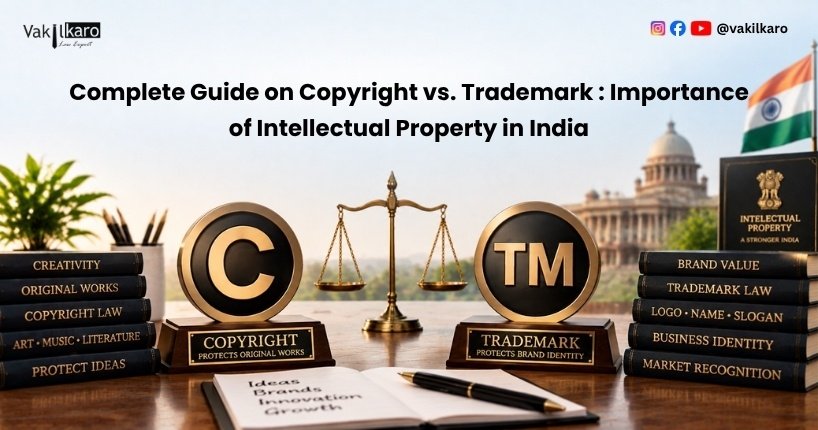
In today’s digital economy, protecting your creative and brand identity is crucial. This guide explores the key differences between copyright and trademark, their legal significance, and the benefits of securing both. Copyright safeguards original content like books, software, and websites, while trademarks protect brand elements such as names, logos, and slogans. Learn about the full copyright registration process in India, including fees, eligibility, and how to apply online. Whether you're a writer, developer, or entrepreneur, registering your intellectual property enhances credibility and legal protection. Platforms like Vakilkaro can simplify this process and help you secure your creative rights effectively.
Key Takeaways
- Understanding the distinction between copyright and trademark registration is essential for creators, developers, and entrepreneurs who want to protect their intellectual property.
- Vakilkaro simplifies and streamlines the entire process of copyright and trademark registration.
- Key Benefits of Trademark: Prevents others from using similar marks Builds customer trust and brand value Legal protection for marketing identity An intangible business asset Unlike copyright, a trademark must be registered under the Trademarks Act, 1999 in India for full protection.
- Trademark: Key Differences Feature Copyright Trademark Protects Original work of authorship Brand names, logos, slogans Law Copyright Act, 1957 Trademarks Act, 1999 Registration Optional but beneficial Mandatory for full rights Validity Lifetime of creator + 60 years 10 years, renewable indefinitely Governing Body Copyright Office Trademark Registry Both serve vital roles.
- Begin your India copyright registration or trademark process today—and let platforms like Vakilkaro handle the complexities while you focus on what you do best: creating, innovating, and growing.
Safeguarding Creativity and Brand Identity in the Digital Age: Copyright vs. Trademark
In the fast-paced digital economy, securing your creative assets and brand identity is more important than ever. Understanding the distinction between copyright and trademark registration is essential for creators, developers, and entrepreneurs who want to protect their intellectual property. This guide outlines the fundamental differences between the two legal tools and highlights the benefits of registering both.
Copyright protection applies to original works such as books, music, software, and websites. It grants the creator exclusive rights to reproduce, distribute, and display their work. On the other hand, trademarks are designed to protect brand identifiers like names, logos, taglines, and symbols that distinguish a business or product in the market. While copyright safeguards content, trademarks protect the identity and reputation of a brand.
In India, the process of copyright registration involves specific steps including determining eligibility, paying government-prescribed fees, and submitting an application through the official online portal. Registration strengthens legal claims in case of infringement and provides documented proof of ownership, which can be crucial in legal disputes or business negotiations.
For entrepreneurs, developers, and writers, securing both copyright and trademark not only ensures legal protection but also boosts credibility with clients, investors, and the public. It communicates professionalism and shows a commitment to safeguarding one’s intellectual efforts.
Navigating the registration process can seem complex, but platforms like Vakilkaro offer professional assistance to simplify and streamline the procedure. They help individuals and businesses complete the required documentation and ensure compliance with legal standards, making it easier to secure creative and brand rights efficiently.
In summary, registering your intellectual property is a vital step toward protecting your work and establishing a strong, reputable brand presence in today’s competitive digital environment.
In today’s digital and highly competitive world, intellectual property (IP) has become the backbone of innovation, creativity, and brand development. For writers, designers, entrepreneurs, and business owners alike, understanding how to protect intellectual efforts is essential not just for legal safety, but also for long-term business success. Two of the most critical forms of IP protection are copyright and trademark, each serving distinct but equally important purposes.
Copyright safeguards original expressions of ideas—such as books, songs, software, websites, and other creative works. It grants creators exclusive rights to use, reproduce, and share their content. Trademarks, on the other hand, protect the identity of a brand by securing unique elements like names, logos, taglines, and symbols. While copyright protects the work itself, trademarks guard the commercial identity under which the work is sold or promoted.
Understanding the scope and registration process for both forms of protection in India is vital. Copyright registration in India involves determining the eligibility of the work, paying a government fee, and filing an application through the official online system. Similarly, trademark registration includes conducting a trademark search, filing the application, and undergoing a verification and publication process.
Navigating these legal procedures can be complex and time-consuming, especially for those unfamiliar with legal formalities. That’s where platforms like Vakilkaro become invaluable. Vakilkaro simplifies and streamlines the entire process of copyright and trademark registration. From expert consultation to document preparation and submission, Vakilkaro ensures compliance with Indian IP laws while offering affordable and efficient services. Their expertise helps individuals and businesses secure their intellectual property with confidence and minimal hassle.
By leveraging professional support from Vakilkaro, creators and entrepreneurs can focus on innovation and growth while ensuring their ideas and brand assets are legally protected in the marketplace.
What is Copyright?
Copyright is a legal right granted to creators of original works. These include literary, artistic, musical, dramatic, cinematographic, software, and web-based content. Once a work is created and fixed in a tangible form, it automatically receives copyright protection under Indian law.
Key Rights Under Copyright:
- Right to reproduce the work
- Right to distribute copies
- Right to perform or display publicly
- Right to make derivative works
Copyright applies automatically upon creation, but opting for copyright registration gives creators a legal edge during disputes and enhances the commercial value of the work.
What is a Trademark?
A trademark protects brand identity—logos, names, slogans, and distinctive signs used in commerce. It distinguishes one business’s goods or services from another’s. Trademark registration gives you exclusive rights to use a particular symbol, logo, or name in your business domain.
Key Benefits of Trademark:
- Prevents others from using similar marks
- Builds customer trust and brand value
- Legal protection for marketing identity
- An intangible business asset
Unlike copyright, a trademark must be registered under the Trademarks Act, 1999 in India for full protection.
Copyright vs. Trademark: Key Differences
Feature Copyright Trademark
Protects Original work of authorship Brand names, logos, slogans
Law Copyright Act, 1957 Trademarks Act, 1999
Registration Optional but beneficial Mandatory for full rights
Validity Lifetime of creator + 60 years 10 years, renewable indefinitely
Governing Body Copyright Office Trademark Registry
Both serve vital roles. While copyright protects creativity, trademarks secure commercial reputation.
Works Eligible for Copyright Registration in India
To make the most of India copyright registration, it’s essential to know what can be copyrighted:
- Books, articles, poems (literary works)
- Paintings, drawings, graphics (artistic works)
- Music and sound recordings
- Movies and documentaries (cinematographic films)
- Computer programs and software
- Website content and source code
Website copyright registration is increasingly popular as it safeguards content, design, layout, and code from plagiarism or unauthorized use.
Benefits of Copyright Registration
Though copyright arises automatically, copyright registration benefits include:
- Official legal proof of ownership
- Stronger protection in case of infringement
- Right to sue and claim compensation
- Simplifies licensing and royalty contracts
- Public record of the creator's rights
- Supports SEO & DMCA notices for digital content
Copyright Registration Process in India
The copyright registration process in India is governed by the Copyright Rules, 2013. Here's a breakdown:
Step-by-Step Copyright Registration Procedure in India:
- File an Online Application
Use Form XIV through the official portal (copyright.gov.in)
- Choose the Category of Work
Select from literary, musical, artistic, cinematographic, software, etc.
- Pay the Prescribed Fee
Fees differ based on the type of work. (See section below for details)
- Upload Necessary Documents
Includes author ID, NOC (if applicable), and the soft copy of the work
- Diary Number Issued
A unique tracking number is provided upon submission
- Mandatory Waiting Period
A 30-day period allows for objections or clarifications
- Registrar Examination
The Copyright Office reviews the application
- Issuance of Copyright Registration Certificate
If all is clear, you receive the official certificate
This entire copyright registration process can take between 2–3 months, depending on objections or completeness of documents.
Copyright Registration Process Flowchart
Copyright Registration Flow in India:
- Application Filing
- Fee Payment
- Diary Number Generation
- 30-Day Waiting Period
- Examination by Registrar
- Approval or Query
- Certificate Issued
This copyright registration process flowchart helps creators visualize the journey from submission to protection.
Online Copyright Registration: Simplifying IP Protection
The Indian government now enables online copyright registration, offering a more convenient and transparent process. It supports creators in remote areas, saves time, and reduces manual errors.
Steps for Online Copyright Registration:
- Create a user ID on the copyright.gov.in portal
- Fill out Form XIV and select the work category
- Upload work and supporting documents
- Pay the required fee
- Track application using your diary number
Online copyright registration is ideal for content creators, software developers, and website owners.
Copyright Registration Fees in India
The fee for copyright registration in India varies based on the work:
Type of Work Fee (INR)
Literary Work (books, blogs) 500
Artistic Work (logos, designs) 500
Musical Work 2,000
Software / Computer Programs 2,000
Cinematographic Films 5,000
The cost of copyright registration in India may also include consultancy or legal documentation charges, usually between INR 1,500 to 10,000.
Copyright Registration Certificate: What It Includes
Once approved, the copyright registration certificate will include:
- Registration Number
- Diary Number
- Owner and Author Details
- Nature of Work
- Date of Registration
This certificate serves as a strong legal document in enforcing your rights.
Website Copyright Registration
A growing trend is website copyright registration. It protects:
- Written content (blogs, descriptions)
- Layout and user interface (UI/UX)
- Source code (HTML, CSS, JavaScript)
- Multimedia (images, audio, video)
With online plagiarism on the rise, this is vital for bloggers, tech startups, e-commerce platforms, and digital marketers.
Trademark and Copyright Registration: Do You Need Both?
Yes, often businesses require both trademark registration and copyright registration for full protection.
Example:
- Trademark protects your business name/logo.
- Copyright protects your website content and product designs.
Having both adds layers of legal protection and enhances the overall brand value.
Government Copyright Registration Support
The Indian government actively promotes government copyright registration by:
- Offering online platforms
- Providing fee concessions in some cases
- Making legal amendments to stay current with digital IP trends
- Publishing public databases of registered works
This simplifies the Indian copyright registration ecosystem, making it creator-friendly.
Copyright Registration for Creators and Startups
For authors, musicians, developers, designers, and businesses, copyright registration in India offers:
- Secure monetization through licensing
- Defense against infringement
- Legal proof for court cases
- Boost to brand credibility
- Support in international filings
How Vakilkaro Can Help
Vakilkaro, a trusted legal-tech platform, simplifies your journey with:
- Expert consultation on copyright and trademark protection
- Complete support for online copyright registration
- Documentation preparation and submission
- Regular updates on application status
- Support in case of objections or legal disputes
Vakilkaro ensures a hassle-free copyright registration procedure in India, saving time and ensuring compliance.
Conclusion
In a world where digital content, branding, and creativity are at the heart of business and expression, understanding the difference between copyright and trademark is essential. Whether you're an artist, entrepreneur, startup founder, or corporate innovator, securing your intellectual property is a must.
With copyright registration in India, you protect your creations. With trademark registration, you safeguard your brand.
Don't wait until your work is copied or misused. Begin your India copyright registration or trademark process today—and let platforms like Vakilkaro handle the complexities while you focus on what you do best: creating, innovating, and growing.
Official External Resources
Use these primary/official sources to verify rules, forms, fees, timelines and regulatory updates before publication.
Frequently asked questions
Complete Guide on Copyright vs. Trademark: Importance of Intellectual Property in India+
Understanding the distinction between copyright and trademark registration is essential for creators, developers, and entrepreneurs who want to protect their intellectual property. Trademark: Key Differences Feature Copyright Trademark Protects Original work of authorship Brand names, logos, slogans Law Copyright Act, 1957 Trademarks Act, 1999 Registration Optional but beneficial Mandatory for full rights Validity Lifetime of creator + 60 years 10 years, renewable indefinitely Governing Body Copyright Office Trademark Registry Both serve vital roles.
