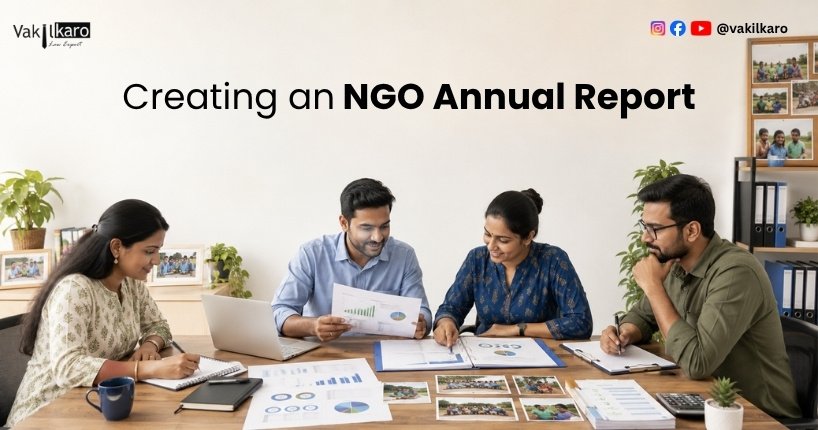
An annual report is more than a summary document—it narrates your NGO’s journey, showcases impact, and sets the tone for future growth. Whether functioning under a Section 8 company registration or a registered society/trust with valid NGO registration, crafting a compelling, compliant annual report is essential. It builds trust with stakeholders, donors, and authorities, and demonstrates your commitment to transparency and impact.
NGOs holding 12A and 80G registration benefit further, as the annual report supports regulatory compliance and helps retain donor confidence. This report is not just about numbers—it tells a story of transformation and purpose.
Key Takeaways
- Whether functioning under a Section 8 company registration or a registered society/trust with valid NGO registration, crafting a compelling, compliant annual report is essential.
- Whether your organization operates under a Section 8 company registration or as a registered trust or society with full NGO registration, preparing a comprehensive and well-designed annual report is crucial.
- For any Non-Governmental Organization, especially those functioning under a Section 8 company registration, a registered trust, or a society with formal NGO registration, the annual report serves as a key communication tool that narrates the organization’s journey with clarity and integrity.
- This guide will walk you through the step-by-step process of creating an effective NGO annual report.
- Conclusion Creating a compelling NGO annual report isn’t just a regulatory obligation—it’s a strategic tool for growth, trust, and impact.
Crafting an Impactful NGO Annual Report: A Path to Trust and Growth
An annual report serves as a powerful storytelling tool that reflects an NGO’s mission, achievements, and vision for the future. It is far more than a compliance document—it is an opportunity to engage donors, stakeholders, and beneficiaries by showcasing the real-world impact of your work. Whether your organization operates under a Section 8 company registration or as a registered trust or society with full NGO registration, preparing a comprehensive and well-designed annual report is crucial.
For NGOs with 12A and 80G registration, the annual report plays a dual role. It not only fulfills regulatory and tax compliance requirements but also reassures donors that their contributions are being managed responsibly and ethically. The presence of 12A and 80G status also boosts your credibility, making it easier to attract grants, CSR partnerships, and long-term donor relationships.
A well-crafted annual report typically includes key highlights of the year, financial summaries, impact stories, donor acknowledgments, governance details, and future goals. It should clearly reflect the NGO’s registration status, including Section 8 company registration details, and compliance with tax exemptions through 12A and 80G registration.
In today’s digital age, presentation matters. Using visuals, infographics, and real-life stories can make your report more engaging and easier to digest. Additionally, maintaining consistency in branding and publishing both digital and print versions ensures maximum outreach and accessibility.
Ultimately, your annual report should be a reflection of your NGO’s values, impact, and aspirations. With proper planning, data collection, and alignment to legal frameworks, it becomes a vital tool not only for compliance but also for building trust and expanding your reach. A thoughtful report can transform perceptions and open doors to new opportunities for your NGO’s mission-driven growth.
An annual report is not just a formality—it is a reflection of an NGO’s purpose, progress, and plans. It encapsulates the work done over the past year, the communities impacted, the lessons learned, and the vision that lies ahead. For any Non-Governmental Organization, especially those functioning under a Section 8 company registration, a registered trust, or a society with formal NGO registration, the annual report serves as a key communication tool that narrates the organization’s journey with clarity and integrity.
Crafting a comprehensive and well-structured annual report is essential for building transparency, credibility, and trust among all stakeholders—including beneficiaries, donors, board members, regulatory bodies, and the wider public. It allows your organization to present financial accountability, showcase program impact, and communicate future strategies in a cohesive and accessible manner. By including data-driven insights, personal stories, and visual elements, NGOs can transform their annual report into a compelling piece that not only informs but also inspires.
For NGOs that have obtained 12A and 80G registration, the annual report holds even more significance. These registrations not only provide tax benefits to the NGO and its donors but also require a higher level of financial disclosure and reporting standards. A well-prepared annual report is crucial for maintaining these registrations, meeting legal obligations, and instilling confidence in donors regarding the ethical use of funds.
This guide will walk you through the step-by-step process of creating an effective NGO annual report. From understanding its components and legal frameworks to integrating design and communication strategies, this blog will equip you with the knowledge and tools to craft a report that reflects the strength, sincerity, and social impact of your organization.
Why is an Annual Report Important for NGOs?
Before getting into the step-by-step creation process, it is crucial to understand the purpose and significance of an annual report for NGOs. More than a year-end summary, an annual report serves as a strategic communication and compliance tool that strengthens your organization’s reputation and relationships.
First and foremost, an annual report fosters accountability. By outlining how funds were received and utilized over the year, NGOs demonstrate their commitment to ethical and responsible resource management. This is especially important for organizations that operate under Section 8 company registration or have received donations under 12A and 80G registration, where financial transparency is a legal and ethical requirement.
Next, the report enhances transparency. A well-documented annual report allows stakeholders—including donors, volunteers, beneficiaries, government authorities, and the general public—to gain a clear and honest understanding of the NGO’s activities and performance. It helps dispel doubts, answer questions, and ultimately build long-term trust.
The report also plays a key role in fulfilling regulatory compliance. For NGOs registered as Section 8 companies, submitting annual filings and reports is mandatory under the Companies Act, 2013. Similarly, organizations with 12A and 80G registration must maintain detailed financial records and disclose fund utilization To retain their tax-exempt status and remain eligible for government and corporate partnerships.
Beyond compliance, an annual report is a powerful fundraising tool. It showcases your success stories, the impact you’ve made, and the reach of your programs—all of which are vital for attracting new donors, CSR partners, and grant-making institutions. It reflects your capacity for program execution and responsible stewardship of funds.
Lastly, it serves as a means of impact documentation, capturing milestones, case studies, and community transformations. This not only validates your efforts but also helps in setting goals for future growth.
Pre-Preparation: Laying the Foundation
Creating an annual report requires collaboration between departments—finance, programs, HR, and communications. Here's how to start:
a. Assign a Team
Create a cross-functional team to gather data, write content, and design the report. NGOs with Section 8 company registration usually have structured teams, making it easier to divide responsibilities.
b. Review Previous Reports
Analyze last year’s report for structure, tone, and data quality. Identify what worked and what didn’t.
c. Outline Objectives
Define the purpose of this year’s report. Are you focusing on impact, transparency, future goals, or all three?
Key Components of an NGO Annual Report
Each NGO’s report will be unique, but the following elements are generally expected, especially if you’re registered under 12A and 80G or as a Section 8 company:
I. Cover Page and Title
- Include NGO name, logo, tagline, year of report.
- Mention Section 8 company registration or trust/society registration details for authenticity.
II. Letter from the Founder/Chairperson
This introductory note offers a personal reflection on the organization’s journey, growth, and future vision.
III. About the Organization
Include:
- Vision and mission
- Core values
- Year of NGO registration
- Section 8 company registration number (if applicable)
- 12A and 80G certificate numbers
This section helps readers understand your legal identity, purpose, and governance model.
IV. Key Highlights of the Year
A snapshot of your achievements:
- Number of beneficiaries reached
- Major campaigns
- New partnerships
- Milestones achieved Use infographics to make this section more engaging.
V. Program Summaries
Each program should have:
- Objectives
- Implementation strategies
- Geographic areas covered
- Quantitative and qualitative impact Include community stories, testimonials, and case studies to humanize your efforts.
Tip: Section 8 companies often have M&E systems in place, making it easier to report structured outcomes.
VI. Financial Summary
One of the most critical sections—this builds donor and stakeholder confidence.
Include:
- Income and expenditure statement
- Sources of funding (donations, grants, CSR)
- Fund utilization breakdown
Ensure this section is in line with your 12A and 80G registration obligations. Proper accounting will also support renewal and audits.
VII. Governance and Compliance
Detail your governance structure:
- Board of directors/trustees list
- Key management personnel
- Roles and responsibilities
- Attendance record of board meetings
Add information about:
- Section 8 company registration under the Companies Act, 2013
- Validity of 12A and 80G registration
- FCRA registration (if applicable)
VIII. Donor and Partner Acknowledgments
Recognize individual donors, corporate partners, grant agencies, and CSR partners. This shows appreciation and encourages continued support.
If your donors received 80G tax benefits, acknowledge this and reinforce the legitimacy of your 80G registration.
IX. Auditor’s Report
Include a certified statement from your auditor. This is crucial for compliance under:
- Income Tax Act for 12A registration
- Companies Act for Section 8 companies
Ensure the report includes:
- Audited financial statements
- Observations and recommendations
X. Future Plans and Strategic Goals
End with a forward-looking section that outlines:
- Expansion plans
- Fundraising targets
- Innovations or pilot projects
- Capacity-building strategies
This forward-thinking approach encourages investors and donors to support your journey ahead.
Legal and Regulatory Checklist
To maintain credibility and ensure seamless operations, the annual report must fulfill certain legal obligations, especially for NGOs with various registrations:
a. Section 8 Company Registration Compliance
- Report in accordance with Companies Act, 2013
- Hold regular board meetings and AGMs
- File MGT-7, AOC-4 annually
b. 12A and 80G Registration Compliance
- File income tax returns (Form ITR-7)
- Ensure donor receipts and tax certificates are accurate
- Submit reports to income tax authorities as required
c. Other Compliances
- FCRA filing (for international donations)
- NGO Darpan registration update
- GST filing (if applicable)
Design and Communication
A visually compelling report ensures better engagement.
a. Use Visuals and Infographics
Infographics simplify complex data. Use graphs for finances, timelines for projects, and maps for reach.
b. Consistent Branding
Use your NGO’s brand colors, fonts, and tone throughout the report. Ensure your Section 8 company registration number, 12A and 80G registration details, and contact info are placed in the footer or last page.
c. Print and Digital Versions
While physical copies are great for meetings and presentations, a digital report helps with online sharing, donor outreach, and website uploads.
Distribution Strategy
Once finalized, circulate your report through multiple channels:
- Website Upload: Include a downloadable PDF.
- Email Campaign: Send to donors, stakeholders, CSR partners.
- Social Media Highlights: Share key snippets across platforms.
- Annual Meetings: Present at AGMs or donor meetings.
Best Practices for Creating an Effective Annual Report
- Be Transparent: Don’t shy away from challenges. Acknowledge them and explain mitigation efforts.
- Be Donor-Focused: Show how their money was used, and what impact it created.
- Be Story-Driven: Use real stories from the field to make your report human and relatable.
- Keep It Short: Even though comprehensive, avoid verbosity. Stick to relevant details.
- Be Timely: Ensure your report is published within the first quarter of the new financial year.
Common Mistakes to Avoid
- Missing compliance data (especially for Section 8 company or 12A/80G-registered NGOs)
- Overloading with jargon or technical language
- Poor design and layout
- Not updating legal or registration numbers
- Ignoring donor follow-up post-report distribution
Leveraging the Annual Report for Fundraising
Once your annual report is ready, it becomes an asset in:
- Grant Proposals: Attach it to applications for context and credibility.
- CSR Pitch Decks: Show corporate partners your professional reporting and governance.
- Online Campaigns: Extract impact highlights for newsletters and appeals.
- Accreditations & Awards: Use it to apply for sector recognitions or government schemes.
Conclusion
Creating a compelling NGO annual report isn’t just a regulatory obligation—it’s a strategic tool for growth, trust, and impact. Whether your organization functions under a Section 8 company registration, or you’ve secured 12A and 80G registration, your report reflects your NGO’s credibility and readiness to scale.
A well-structured, transparent, and visually engaging report not only satisfies statutory compliance but also becomes a cornerstone for fundraising, partnerships, and strategic planning. Start with a strong foundation—gather accurate data, collaborate with your team, adhere to legal norms, and present your story with authenticity.
In a sector built on trust and transparency, a great annual report speaks louder than words—let yours be your NGO’s proudest achievement of the year.
Why Choose Vakilkaro for NGO Legal Services and More?
When it comes to managing the legal and regulatory requirements of running an NGO, choosing the right legal partner is crucial. Vakilkaro stands out as a trusted and efficient platform that offers end-to-end legal services tailored to the unique needs of NGOs, Section 8 companies, trusts, and societies. Here's why Vakilkaro should be your go-to legal partner:
Expertise in NGO-Specific Legal Frameworks
Vakilkaro has deep experience in NGO registration, Section 8 company registration, and acquiring 12A and 80G registration—the essential foundations for tax exemption and donor credibility. Our team understands the intricacies of nonprofit compliance and ensures your organization meets every statutory requirement with precision.
Complete Legal Solutions Under One Roof
Whether you're just starting out or looking to expand, Vakilkaro offers a wide range of services—drafting of legal documents, annual compliance filings, FCRA registration, GST registration, intellectual property protection, and much more. This makes it easy to manage all your legal needs from a single, dependable source.
Transparency and Affordability
Vakilkaro believes in transparent pricing with no hidden charges. You get reliable, professional services at cost-effective rates—ideal for NGOs that operate on limited budgets but cannot afford to compromise on legal accuracy.
Time-Saving and Hassle-Free
From document collection to application submission and follow-ups, Vakilkaro handles everything for you. This saves your team valuable time and effort, allowing you to focus on your NGO’s mission and impact.
Personalized Support
Each NGO has a different structure and objective. Vakilkaro assigns dedicated legal advisors who understand your needs and provide tailor-made solutions—from Section 8 formation to renewal of 80G certificates and more.
Trusted by Hundreds of NGOs
Vakilkaro has successfully assisted numerous NGOs across India in securing registrations, maintaining compliance, and navigating complex legal challenges. Our growing client base is a testament to our reliability and excellence.
Official External Resources
Use these primary/official sources to verify rules, forms, fees, timelines and regulatory updates before publication.
Frequently asked questions
Creating an NGO Annual Report+
For any Non-Governmental Organization, especially those functioning under a Section 8 company registration, a registered trust, or a society with formal NGO registration, the annual report serves as a key communication tool that narrates the organization’s journey with clarity and integrity. This guide will walk you through the step-by-step process of creating an effective NGO annual report.
