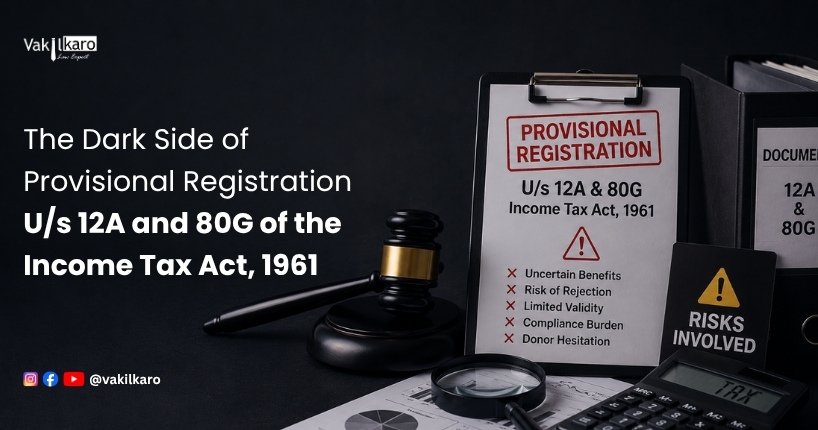
Non-Governmental Organizations (NGOs) play a crucial role in addressing social and economic issues. To support them, the government provides tax exemptions under Section 12A and 80G of the Income Tax Act, 1961. These provisions enable NGOs to receive tax benefits and attract donors by offering deductions on their taxable income. However, the introduction of provisional registration under 12A and 80G has led to compliance burdens, uncertainty over tax exemptions, and risks of rejection. NGOs now face complex documentation, frequent re-registration, and financial risks. To overcome these challenges, NGOs must ensure timely tax filing, proper documentation, and expert legal guidance.
Key Takeaways
- To support them, the government provides tax exemptions under Section 12A and 80G of the Income Tax Act, 1961.
- To support their work, the government offers tax benefits through Section 12A and 80G of the Income Tax Act, 1961.
- To support their activities, the Indian government provides tax exemptions under Section 12A and 80G Registration of the Income Tax Act, 1961.
- Understanding Section 12A and 80G Registration Section 12A registration allows NGOs to claim tax exemptions on their income, ensuring that their funds are utilized for charitable purposes rather than being taxed.
- Conclusion: A Need for Reform While 12A and 80G registration under the Income Tax Act, 1961 aims to support NGOs, the introduction of provisional registration has created significant operational and financial risks.
Challenges of Provisional Registration Under Section 12A and 80G
Non-Governmental Organizations (NGOs) play a significant role in tackling social and economic challenges in India. To support their work, the government offers tax benefits through Section 12A and 80G of the Income Tax Act, 1961. These provisions grant tax exemptions to NGOs and encourage donations by allowing donors to claim deductions on their taxable income. However, the recent introduction of provisional registration under these sections has created new obstacles, making compliance more difficult for NGOs.
Under the provisional registration system, NGOs initially receive temporary approval for three years before they can apply for permanent registration. This has led to increased administrative burdens, as organizations must go through multiple rounds of documentation and approvals. Additionally, there is uncertainty regarding tax exemptions, as NGOs that fail to secure permanent registration may be liable to pay taxes on past income. This creates financial instability and complicates long-term planning.
Another major concern is the impact on fundraising. Since provisional registration does not guarantee permanent approval, potential donors, especially corporate contributors, may hesitate to donate. If an NGO Registration loses its tax-exempt status, past donations might become ineligible for tax deductions, discouraging further contributions. This uncertainty makes it harder for NGOs to sustain their initiatives.
To navigate these challenges, NGOs must focus on timely tax filing, maintaining accurate financial records, and seeking expert assistance from tax professionals. Keeping up with changing regulations and ensuring proper compliance can help organizations avoid risks and secure their tax benefits.
While the intent behind provisional registration is to streamline approvals, the current system has placed additional pressure on NGOs. A more transparent and simplified process is needed to ensure that charitable organizations can operate efficiently without facing unnecessary bureaucratic hurdles.
Non-Governmental Organizations (NGOs) play a vital role in addressing various social and economic issues. To support their activities, the Indian government provides tax exemptions under Section 12A and 80G Registration of the Income Tax Act, 1961. These provisions allow NGOs to benefit from tax exemptions and encourage donors to contribute by offering deductions on their taxable income. However, with the introduction of provisional registration under 12A and 80G registration, many NGOs face unforeseen challenges, compliance burdens, and risks of cancellation. While these sections aim to promote charitable activities, the dark side of provisional registration often goes unnoticed.
Understanding Section 12A and 80G Registration
Section 12A registration allows NGOs to claim tax exemptions on their income, ensuring that their funds are utilized for charitable purposes rather than being taxed. On the other hand, 80G registration enables donors to claim deductions on their donations, making NGOs more attractive for fundraising. This dual benefit helps NGOs sustain their activities while providing tax relief to contributors.
However, the introduction of provisional registration under income tax taxation has introduced compliance complexities that have affected numerous NGOs across India. Before diving into the dark side of provisional registration, let’s explore the registration process and its implications.
The Provisional Registration System: A Boon or Bane?
Under the Taxation Act, the government introduced provisional 12A and 80G registration to streamline NGO approvals. While earlier, NGOs could receive permanent registration under taxation income tax, they are now first granted provisional registration for three years. After this period, they must apply for permanent registration and prove their charitable activities to income tax authorities.
The major challenges of provisional registration include:
- Uncertainty Over Tax Exemptions: NGOs receive tax exemption only for the provisional period. If they fail to obtain permanent registration later, they may be forced to pay tax on past income.
- Burden of Multiple Registrations: NGOs must repeatedly apply for tax filing approvals, increasing administrative work.
- Risk of Rejection: Authorities often reject applications for permanent registration due to minor procedural errors, leading to loss of tax benefits.
- Lack of Transparency in Approval: Many NGOs report delays and arbitrary rejections, making it difficult to plan finances.
Compliance Challenges for NGOs
The state tax return and income tax return filing process have become more complex under taxation income tax laws. NGOs are now required to maintain detailed records and submit extensive documentation, including:
- Annual tax return tax filings
- Financial statements proving charitable activities
- Utilization of funds reports
- Donor details and transaction proofs
Failure to comply with these tax laws results in loss of tax-exempt status, forcing NGOs to pay tax on their income.
The Impact of Provisional Registration on Donations
One of the biggest drawbacks of provisional 12A and 80G registration is its impact on donor confidence. Since NGOs only have temporary approval, donors are often skeptical about making large contributions. If an NGO fails to obtain permanent 12A and 80G registration, its past donations may lose tax-exempt status, affecting both the NGO and the donors.
Effects on Corporate Donations
Corporate donors rely on 80G registration for tax deductions. However, the uncertainty surrounding provisional registration discourages companies from donating, fearing that their tax exemption might be revoked later. This affects NGO funding and restricts their ability to serve their communities.
Financial Risks and Taxation Burdens
The introduction of provisional registration has also increased financial risks for NGOs. Without permanent income tax exemption, NGOs must prepare for potential tax liabilities, including:
- Taxable income assessments based on fund utilization.
- Denial of tax exemption for minor compliance issues.
- Taxation on unused or accumulated funds, which were previously exempt.
For NGOs that rely on donations, these taxation burdens can lead to severe financial instability.
Problems in Section 8 Company Registration and Provisional 12A/80G
Many NGOs prefer Section 8 company registration as it provides a more structured legal framework. However, even Section 8 companies must undergo provisional 12A and 80G registration, exposing them to the same risks. If these organizations fail to meet compliance standards, they may face taxation income tax assessments and potential legal penalties.
Case Studies of NGOs Affected
- XYZ NGO (Delhi) – Lost 12A tax exemption due to delayed tax return filings, leading to financial crises.
- ABC Foundation (Mumbai) – Received provisional 80G registration, but lost permanent approval due to minor documentation errors, leading to donor withdrawals.
- Helping Hands Trust (Kolkata) – Faced legal scrutiny and forced to pay tax on donations received during the provisional period.
These cases highlight the dark side of provisional registration, making it difficult for NGOs to operate smoothly.
How NGOs Can Overcome These Challenges
To avoid risks associated with provisional 12A and 80G registration, NGOs should adopt the following strategies:
- Timely Tax Filing: NGOs must ensure all tax return tax return filings are completed on time.
- Proper Documentation: Maintain accurate financial records, donor details, and utilization reports.
- Seek Expert Assistance: Consulting a CA income tax expert can help navigate complex registration requirements.
- Stay Updated on Tax Laws: Regularly check updates on income tax ca, tax brackets, and other regulatory changes.
Conclusion: A Need for Reform
While 12A and 80G registration under the Income Tax Act, 1961 aims to support NGOs, the introduction of provisional registration has created significant operational and financial risks. The lack of transparency, multiple re-registrations, and taxation uncertainties have made it difficult for NGOs to sustain themselves.
The government must reconsider these provisions and provide simpler, long-term registration processes for NGOs. Until then, NGOs must adopt proactive tax compliance measures to avoid losing their tax-exempt status and continue their charitable work effectively.
By addressing these tax and tax return challenges, India’s non-profit sector can thrive without bureaucratic hurdles. NGOs should seek legal assistance to ensure smooth section 8 company registration, NGO registration, and tax compliance to sustain their social impact for years to come.
Why Choose Vakilkaro for 12A & 80G Registration and Other Legal Services?
Vakilkaro is a trusted legal service provider specializing in NGO registration, tax compliance, and corporate legal solutions. Whether you need assistance with Section 12A and 80G registration, Section 8 company registration, or any other tax and compliance matters, Vakilkaro offers expert guidance to ensure a seamless process.
Expertise in NGO Registration & Compliance
Vakilkaro’s team of experienced professionals understands the complexities of income tax laws, tax exemptions, and compliance under the Income Tax Act, 1961. They help NGOs navigate provisional 12A and 80G registration, ensuring they meet all regulatory requirements to secure tax benefits.
Hassle-Free Documentation & Filing
Vakilkaro simplifies the tax filing process, handling paperwork, documentation, and compliance checks to avoid errors that could lead to application rejection or loss of tax benefits. From state tax return filings to maintaining accurate financial records, their experts ensure NGOs remain fully compliant.
Assistance in Tax Planning & Exemptions
With a deep understanding of taxation income tax brackets, Vakilkaro helps NGOs and businesses maximize their tax exemptions and benefits. Their team ensures timely tax return filings, minimizing risks related to tax liabilities and penalties.
Support for Corporate & Business Legal Needs
Beyond NGOs, Vakilkaro provides comprehensive legal services, including private limited company registration, LLP formation, GST compliance, trademark registration and more. Their expertise makes them a one-stop solution for businesses and non-profits alike.
Personalized & Affordable Services
Vakilkaro offers customized legal solutions at competitive prices, ensuring cost-effective and professional assistance tailored to your needs.
With Vakilkaro, NGOs and businesses can focus on their core mission while ensuring seamless legal and tax compliance.
Official External Resources
Use these primary/official sources to verify rules, forms, fees, timelines and regulatory updates before publication.
Frequently asked questions
The Dark Side of Provisional Registration U/s 12A and 80G of the Income Tax Act, 1961+
To support their work, the government offers tax benefits through Section 12A and 80G of the Income Tax Act, 1961. To support their activities, the Indian government provides tax exemptions under Section 12A and 80G Registration of the Income Tax Act, 1961.
