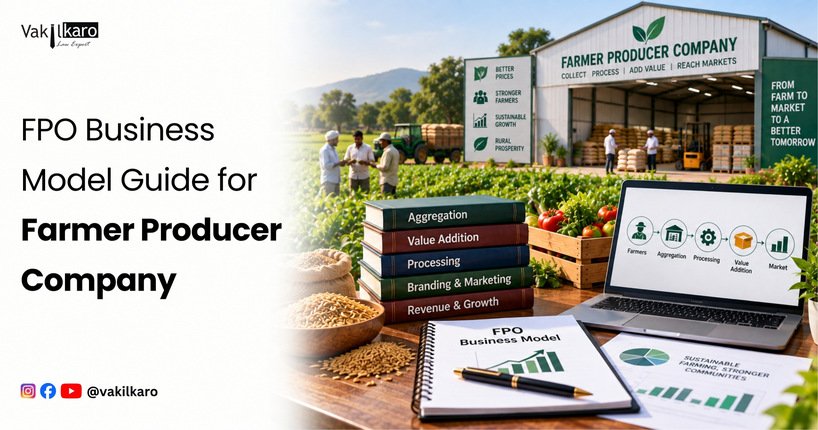
| Particular | Details |
|---|---|
| Business Model | Farmer Producer Organisation (FPO) Business Model |
| Applicable To | Farmer Producer Company |
| Primary Objective | Sustainable Producer-Led Business Development |
| Core Activities | Procurement, Input Supply, Value Addition & Marketing |
| Revenue Source | Producer Business Activities |
| Importance | Financial Sustainability & Organised Growth |
What is an FPO Business Model?
Registering a Farmer Producer Company is only the first step.
The long-term success of an FPO depends upon its ability to operate through a structured and sustainable business model.
Professional FPOs generally focus on:
- Collective Procurement
- Input Supply
- Market Linkages
- Value Addition
- Financial Planning
- Producer Services
- Organised Governance
A clearly defined business model helps transform a registered Producer Company into a sustainable producer-led enterprise.
An FPO Business Model is the framework through which a Farmer Producer Company plans, manages and expands its business activities for the collective benefit of its producer members.
It explains:
- How the organisation creates value
- How products move from producers to markets
- How revenue is generated
- How operational costs are managed
- How long-term sustainability is achieved
A professionally designed business model aligns business activities with the objectives of the Producer Company.
Typical Features of an FPO Business Model
- Producer-Centric Operations
- Collective Procurement
- Input Supply
- Product Aggregation
- Value Addition
- Organised Marketing
- Financial Sustainability
- Professional Governance
FPO Business Model Summary Table
Why is an FPO Business Model Important?
Many newly registered Producer Companies struggle not because of incorporation issues, but because they begin operations without a structured business model.
A professionally planned business model supports:
- Sustainable Revenue
- Better Financial Planning
- Producer Participation
- Organised Operations
- Business Expansion
- Long-Term Institutional Development
Planning the business model before operations begin significantly improves organisational stability.
Supports Sustainable Revenue
A structured business model identifies how the Producer Company intends to generate income while serving producer members.
Professional planning helps create sustainable revenue streams rather than relying on one-time opportunities.
Improves Business Planning
A clear business model enables management to plan:
- Procurement
- Marketing
- Working Capital
- Infrastructure
- Human Resources
Business planning reduces operational uncertainty.
Strengthens Producer Participation
When members understand how the Producer Company creates value, they are more likely to actively participate in:
- Procurement
- Marketing
- Governance
- Business Development
Active participation strengthens organisational performance.
Encourages Long-Term Growth
A professionally designed business model supports expansion into:
- Processing
- Packaging
- Branding
- Storage
- Export
- Digital Marketing
Growth becomes more sustainable when supported by organised planning.
Core Components of an FPO Business Model
A professionally managed Producer Company generally builds its business around several interconnected components.
These commonly include:
- Producer Members
- Procurement System
- Input Supply
- Product Aggregation
- Value Addition
- Marketing
- Financial Management
- Governance
Each component contributes towards creating a sustainable producer-owned enterprise.
Producer Members
Producer Members form the foundation of the business model.
They contribute products, participate in governance and collectively support business operations.
Procurement
Collective procurement enables the organisation to aggregate agricultural produce from producer members.
Organised procurement improves operational efficiency.
Input Supply
Many Producer Companies support members by facilitating access to agricultural inputs according to their approved business activities.
Professional input management strengthens producer productivity.
Value Addition
Processing, grading, sorting and packaging may improve the market value of agricultural produce.
Value addition strengthens business competitiveness.
Marketing
Professional marketing helps Producer Companies connect with:
- Wholesale Buyers
- Retail Markets
- Institutional Buyers
- Processing Industries
- Export Markets (where applicable)
Organised marketing improves long-term business opportunities.
Financial Management
Professional financial systems support:
- Revenue Management
- Cost Control
- Working Capital Planning
- Business Sustainability
Financial discipline strengthens organisational stability.
Benefits Overview
A professionally designed FPO Business Model generally provides several long-term advantages.
Major benefits include:
- Sustainable Business Growth
- Better Producer Income
- Organised Operations
- Improved Market Access
- Financial Stability
- Strong Governance
- Long-Term Institutional Development
Vakilkaro Insight
Many Farmer Producer Companies begin operations immediately after registration without developing a clear business strategy.
Professionally managed FPOs first design a structured business model covering procurement, marketing, finance and governance before expanding operations.
This approach helps reduce operational uncertainty and supports sustainable producer-led enterprise development.
Founder Decision Box
Before Finalising Your FPO Business Model, Ask:
- Have we clearly identified our producer members?
- What products will the FPO handle?
- How will revenue be generated?
- Who are our target buyers?
- Have we planned working capital requirements?
- Does the business model support long-term sustainability?
FPO Business Model Journey
Identify Producer Members
↓
Define Business Activities
↓
Plan Procurement System
↓
Develop Marketing Strategy
↓
Establish Financial Model
↓
Strengthen Governance
↓
Build a Sustainable Producer Enterprise
Why Choose Vakilkaro?
Vakilkaro provides complete advisory for developing sustainable FPO Business Models together with Farmer Producer Company Registration.
Our services include:
- Producer Company Registration
- Business Model Development
- Procurement Planning
- Governance Framework Design
- Business Expansion Strategy
- Financial Planning Support
- Compliance Advisory
- Long-Term Institutional Development
Our experts help farmer groups build professionally managed Producer Companies supported by practical, scalable and sustainable business models.
Procurement Model
Procurement is one of the core business activities of a Farmer Producer Company (FPC).
Under a structured procurement model, eligible producer members collectively supply their produce to the Producer Company, which then undertakes grading, storage, processing or marketing according to its business strategy.
Professional procurement systems generally improve:
- Collection Efficiency
- Quality Management
- Inventory Planning
- Market Access
- Business Scale
Procurement Planning
Professional Producer Companies generally define:
- Procurement Seasons
- Product Categories
- Collection Centres
- Procurement Procedures
- Documentation Standards
Proper planning improves operational efficiency.
Collection Centres
Many Producer Companies establish collection points where producer members deliver agricultural produce.
Collection centres generally support:
- Product Aggregation
- Quality Inspection
- Record Management
- Logistics Planning
Procurement Documentation
Professional organisations generally maintain records relating to:
- Producer Details
- Product Quantity
- Product Quality
- Procurement Date
- Payment Information
Proper documentation strengthens governance.
Input Supply Model
Many Producer Companies support members by facilitating access to agricultural inputs required for production.
Depending on the approved business activities and applicable legal framework, this may include:
- Seeds
- Fertilisers
- Crop Nutrition Products
- Farm Equipment
- Irrigation Materials
- Agricultural Inputs
Organised input supply may improve production efficiency and strengthen producer relationships.
Benefits of Organised Input Supply
A structured input supply model may help:
- Improve Product Quality
- Reduce Procurement Costs
- Support Timely Availability
- Strengthen Member Participation
Professional planning supports better resource management.
Value Addition Model
Value addition helps increase the commercial value of agricultural produce before it reaches the market.
Professional Producer Companies may undertake value-added activities consistent with their approved objects.
Examples include:
- Cleaning
- Sorting
- Grading
- Packaging
- Processing
- Labelling
- Branding
Value addition may improve product competitiveness and market acceptance.
Importance of Value Addition
Professional value addition generally supports:
- Better Market Value
- Product Differentiation
- Improved Quality
- Business Growth
- Producer Income Enhancement
Value addition should be planned according to business feasibility and applicable legal requirements.
Marketing Model
Marketing is one of the most important components of an FPO Business Model.
Professional Producer Companies generally develop structured marketing strategies to connect producers with suitable buyers.
Marketing channels may include:
- Wholesale Markets
- Retail Buyers
- Institutional Buyers
- Food Processing Companies
- Export Markets (where applicable)
- Digital Marketplaces
Organised marketing generally improves market reach.
Marketing Strategy
Professional organisations generally define:
- Target Buyers
- Product Positioning
- Pricing Strategy
- Distribution Channels
- Customer Relationships
A structured strategy improves long-term business sustainability.
Revenue Sources
A professionally managed Producer Company generally identifies multiple lawful revenue sources rather than depending on a single activity.
Revenue may arise from:
- Procurement Services
- Product Sales
- Value Addition
- Processing Activities
- Input Supply
- Service Charges
- Other Approved Producer Activities
The exact revenue model should always align with the company's constitutional documents and applicable legal framework.
Cost Structure
Every business model should clearly identify its cost structure.
Professional Producer Companies generally plan for:
- Procurement Costs
- Operational Expenses
- Transportation
- Storage
- Processing
- Administration
- Marketing
- Compliance
Understanding costs supports better financial planning.
Business Planning Framework
A professionally managed Producer Company generally develops a structured business planning framework before commencing operations.
Business planning typically includes:
Producer Base
Clearly identify:
- Number of Members
- Products
- Production Capacity
- Geographic Coverage
Products
Define:
- Primary Products
- Seasonal Products
- Value-Added Products
Clear product planning supports market development.
Target Markets
Professional organisations identify:
- Local Markets
- Wholesale Markets
- Institutional Buyers
- Processing Industries
- Export Opportunities (where applicable)
Market planning supports business growth.
Infrastructure
Business planning generally considers:
- Collection Centres
- Warehouses
- Processing Units
- Transport
- Digital Systems
Infrastructure planning supports operational efficiency.
Financial Planning
Professional business plans generally include:
- Revenue Estimates
- Cost Estimates
- Working Capital Planning
- Cash Flow Planning
Financial planning supports sustainability.
Risk Considerations
Professional FPOs generally evaluate operational risks while designing the business model.
Examples include:
- Market Risk
- Weather Risk
- Price Fluctuations
- Supply Chain Disruptions
- Quality Risk
- Operational Risk
Identifying risks early supports better business planning.
Common Business Model Mistakes
Many Producer Companies face operational challenges because of weak business planning.
Common mistakes include:
- Depending on a Single Revenue Source
- No Market Research
- Weak Procurement Planning
- Inadequate Working Capital Planning
- Poor Cost Estimation
- Weak Governance Structure
- Lack of Member Participation
Professional planning significantly reduces these risks.
Founder Business Model Checklist
Before implementing an FPO Business Model, ensure:
✔ Producer Members Identified
✔ Business Activities Finalised
✔ Procurement System Planned
✔ Input Supply Strategy Prepared
✔ Marketing Plan Ready
✔ Revenue Sources Identified
✔ Cost Structure Estimated
✔ Infrastructure Planned
✔ Risk Assessment Completed
✔ Professional Review Completed
Vakilkaro Expert Insight
Many Farmer Producer Companies begin operations with enthusiasm but without a structured business model.
Professionally managed FPOs generally design their business around:
- Producer Needs
- Market Demand
- Financial Sustainability
- Governance
- Long-Term Growth
A well-designed business model reduces operational uncertainty, strengthens financial discipline and creates a scalable producer-owned enterprise capable of long-term success.
Benefits of a Strong FPO Business Model
A professionally designed FPO Business Model provides much more than a roadmap for business operations.
It helps a Farmer Producer Company build a sustainable organisation by improving producer participation, financial planning, market access and long-term institutional development.
A structured business model enables the Producer Company to grow systematically while remaining focused on the interests of its producer members.
Improves Producer Income
One of the primary objectives of an FPO Business Model is to strengthen the economic position of producer members.
Professional business planning generally supports:
- Better Market Prices
- Collective Selling
- Lower Input Costs
- Value Addition
- Business Expansion
Improved planning helps create long-term economic opportunities for producer members.
Strengthens Financial Sustainability
A professionally designed business model generally focuses on multiple revenue streams rather than depending upon a single business activity.
Financial sustainability supports:
- Stable Operations
- Better Cash Flow
- Organised Growth
- Reduced Financial Risk
Long-term financial planning strengthens institutional stability.
Improves Organisational Efficiency
A structured business model clearly defines:
- Procurement Procedures
- Marketing Strategy
- Financial Systems
- Operational Responsibilities
- Governance Framework
Clearly defined systems improve organisational efficiency.
Supports Business Expansion
A scalable business model allows the Producer Company to expand into:
- Additional Producer Members
- New Products
- Value Addition
- Processing
- Warehousing
- Export Opportunities
- Digital Marketing
Expansion becomes more organised when supported by structured planning.
Enhances Institutional Credibility
Professional business planning improves confidence among:
- Producer Members
- Buyers
- Financial Institutions
- Government Authorities
- Development Agencies
Institutional credibility supports long-term partnerships.
Business Growth Strategy
Professional Producer Companies generally plan business growth in phases.
Growth should be gradual, organised and supported by governance.
Phase 1 – Build Producer Base
Initially, organisations generally focus on:
- Producer Member Mobilisation
- Governance Framework
- Procurement Planning
- Basic Operations
Strong foundations support future expansion.
Phase 2 – Strengthen Business Operations
Professional organisations generally improve:
- Procurement Systems
- Marketing
- Financial Management
- Quality Control
- Member Services
Operational efficiency supports sustainable growth.
Phase 3 – Value Addition
As the Producer Company grows, opportunities may include:
- Processing
- Packaging
- Branding
- Product Standardisation
- Business Diversification
Value addition improves long-term competitiveness.
Phase 4 – Market Expansion
Professional organisations may gradually expand into:
- Institutional Markets
- Wholesale Buyers
- Retail Chains
- Digital Commerce
- Export Markets (where applicable)
Expansion should always be supported by proper financial planning.
Financial Sustainability
A sustainable Producer Company requires more than good sales.
Professional organisations generally focus on balanced financial management.
Key components include:
- Revenue Planning
- Expense Management
- Working Capital
- Cash Flow Monitoring
- Financial Reporting
- Internal Controls
Financial discipline supports long-term institutional success.
Revenue Diversification
Professional Producer Companies generally avoid dependence on a single revenue source.
Diversified revenue may include:
- Procurement Services
- Product Sales
- Processing
- Input Supply
- Service Charges
- Other Approved Business Activities
Diversification generally improves financial resilience.
Cost Control
Effective cost management generally includes:
- Procurement Cost Monitoring
- Administrative Control
- Inventory Management
- Transportation Planning
- Resource Optimisation
Professional cost control strengthens profitability.
Working Capital Planning
Adequate working capital supports:
- Procurement Activities
- Business Continuity
- Timely Payments
- Seasonal Operations
Working capital planning should be reviewed periodically.
Common Business Model Mistakes
Many Producer Companies experience operational challenges because of weak strategic planning.
Common examples include:
- No Written Business Plan
- Weak Procurement Network
- Overdependence on One Buyer
- No Value Addition Strategy
- Poor Cash Flow Planning
- Weak Cost Control
- Limited Market Research
- Lack of Member Engagement
- Inadequate Governance
- Delayed Financial Reporting
Professional planning significantly reduces these risks.
Best Practices for Sustainable Growth
Professionally managed Producer Companies generally adopt the following practices.
Focus on Producer Needs
Every business decision should support the long-term interests of producer members.
Member-centric planning strengthens participation.
Build Strong Market Relationships
Professional organisations generally establish long-term relationships with:
- Buyers
- Retailers
- Processors
- Exporters
- Financial Institutions
Strong partnerships improve business stability.
Invest in Technology
Technology may improve:
- Procurement Management
- Inventory Tracking
- Financial Reporting
- MIS
- Producer Communication
Digital systems improve operational efficiency.
Develop Leadership
Professional organisations continuously strengthen:
- Board Leadership
- Management Team
- Member Participation
- Organisational Capacity
Leadership development supports long-term institutional growth.
Monitor Performance
Professional organisations generally review:
- Procurement Performance
- Sales
- Financial Results
- Member Participation
- Business Growth
Regular review supports continuous improvement.
Founder Business Model Checklist
Before implementing the FPO Business Model, ensure:
✔ Producer Base Established
✔ Procurement Model Ready
✔ Marketing Strategy Finalised
✔ Revenue Sources Diversified
✔ Cost Structure Planned
✔ Working Capital Estimated
✔ Financial Controls Established
✔ Governance Framework Implemented
✔ Growth Strategy Defined
✔ Professional Review Completed
Practical FPO Business Workflow
Build Producer Base
↓
Organise Procurement
↓
Develop Market Linkages
↓
Generate Revenue
↓
Strengthen Financial Management
↓
Expand Business Operations
↓
Build a Sustainable Producer Enterprise
Vakilkaro Expert Recommendation
Many Farmer Producer Companies focus heavily on registration while giving comparatively little attention to business planning.
Professionally managed FPOs understand that registration creates the legal entity, but the business model determines whether the organisation succeeds.
Successful Producer Companies consistently focus on:
- Strong Procurement Systems
- Sustainable Revenue
- Producer Participation
- Financial Discipline
- Value Addition
- Market Expansion
- Technology Adoption
- Good Governance
- Continuous Business Improvement
A professionally designed business model transforms a registered Producer Company into a sustainable producer-owned enterprise capable of creating long-term value for its members.
Frequently asked questions
What is an FPO Business Model?+
An FPO Business Model is the structured framework through which a Farmer Producer Company creates value for its producer members by organising procurement, input supply, value addition, marketing and other approved producer-related business activities.
Why is a Business Model important for an FPO?+
A business model helps the Producer Company: • Generate Sustainable Revenue • Improve Producer Income • Plan Business Activities • Strengthen Financial Stability • Support Long-Term Growth
Does every Producer Company need a Business Model?+
Yes. A professionally designed business model helps the Producer Company operate efficiently and achieve its long-term objectives.
What are the main components of an FPO Business Model?+
A typical business model generally includes: • Producer Members • Procurement • Input Supply • Value Addition • Marketing • Revenue Planning • Financial Management • Governance
Can an FPO have multiple business activities?+
Yes. A Producer Company may undertake multiple producer-related activities, provided they are permitted under its constitutional documents and the applicable legal framework.
What is collective procurement?+
Collective procurement refers to the organised collection or purchase of agricultural produce or inputs through the Producer Company for the benefit of its members.
Why is value addition important?+
Value addition may improve: • Product Quality • Market Value • Buyer Acceptance • Business Growth Professional planning helps maximise long-term benefits.
How does an FPO generate revenue?+
Revenue generally depends on the approved business activities of the Producer Company and may arise from procurement, processing, input supply, marketing and other lawful producer-related operations.
Why is market linkage important?+
Strong market linkages help Producer Companies connect with buyers, improve product reach and create better business opportunities.
Can an FPO export products?+
Where permitted by its approved objects and the applicable legal framework, a Producer Company may undertake export-related business activities.
Why is working capital important?+
Working capital supports: • Procurement • Payments • Inventory • Daily Operations • Business Continuity Professional financial planning helps ensure adequate working capital.
Can technology improve the FPO Business Model?+
Yes. Technology may improve: • Procurement • Inventory • Accounting • Marketing • MIS • Producer Communication Technology should always support good governance.
What is the biggest mistake while designing an FPO Business Model?+
One of the most common mistakes is depending on a single revenue source without planning for long-term financial sustainability.
Should an FPO prepare a Business Plan?+
Yes. A business plan supports: • Financial Planning • Market Analysis • Business Expansion • Operational Management Professional planning improves long-term success.
Can Vakilkaro help prepare an FPO Business Model?+
Yes. Vakilkaro provides assistance for: • Business Model Design • Producer Company Registration • Governance Planning • Business Expansion Strategy • Compliance Advisory
Why is governance important in an FPO Business Model?+
Strong governance supports: • Transparency • Better Decision-Making • Financial Discipline • Sustainable Growth
Should business performance be reviewed regularly?+
Yes. Professional organisations generally monitor: • Procurement • Revenue • Expenses • Member Participation • Business Growth Regular review supports continuous improvement.
Can an FPO diversify its business model?+
Yes. Subject to its constitutional documents and the applicable legal framework, a Producer Company may diversify its business activities over time.
Why should founders seek professional business planning advice?+
Professional guidance helps: • Reduce Operational Risks • Improve Financial Planning • Build Sustainable Revenue • Strengthen Governance • Support Long-Term Growth
What is the biggest benefit of a professionally designed FPO Business Model?+
A strong business model creates a sustainable producer-owned enterprise by combining organised procurement, market access, financial discipline and professional governance to improve long-term producer prosperity. Common Myths Many founders misunderstand how an FPO Business Model works. "Registration itself creates a successful FPO." Incorrect. Registration creates the legal entity. A sustainable business model creates long-term organisational success. "An FPO needs only one source of income." Incorrect. Professionally managed Producer Companies generally diversify their revenue sources to improve financial stability. "Marketing is the only important business activity." Incorrect. Successful FPOs generally focus on: • Procurement • Input Supply • Value Addition • Marketing • Financial Management • Governance "Business planning is needed only once." Incorrect. Professional organisations periodically review and improve their business model according to changing operational requirements and market conditions. "Only large Producer Companies need professional business planning." Incorrect. Business planning benefits Producer Companies of every size by improving financial management, governance and long-term sustainability. Vakilkaro Expert Opinion Many Farmer Producer Companies begin with a strong vision but without a structured business strategy. Professionally managed FPOs understand that a successful business model combines: • Producer Participation • Procurement Efficiency • Market Access • Financial Sustainability • Governance • Continuous Business Improvement The strongest Producer Companies regularly review their business model, adapt to changing market conditions and continuously invest in better governance and operational systems. Related Guides Foundation Guides • Producer Member Guide • Share Capital Guide • PAN, GST & Business Bank Account Guide • MOA Guide • AOA Guide Growth Guides • Business Expansion Guide • Government Schemes Guide • Digital FPO Guide Compliance Guides • Annual Compliance Guide • Accounting Guide • Governance Guide Schema Recommendation Implement: • FAQ Schema • Article Schema • Breadcrumb Schema • Organization Schema Developer Notes • Place the FPO Business Model Summary Table within the running main content after the relevant explanatory H2 section. • Apply FAQ Schema to all FAQs. • Highlight the Founder Business Model Checklist as a visual callout. • Display the Business Model Workflow as a process diagram. • Internally link to the Farmer Producer Company Registration Service Page, Producer Member Guide, Share Capital Guide, Business Expansion Guide, Government Schemes Guide, Accounting Guide, and Governance Guide to strengthen topical authority.
