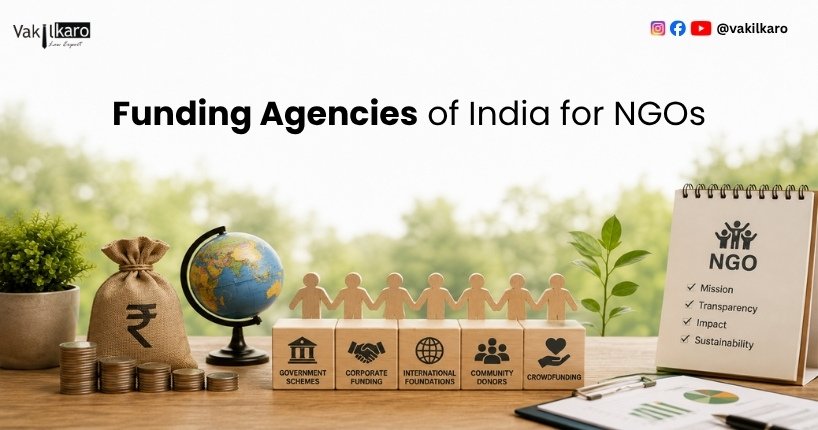
NGOs in India play a vital role in addressing social and economic challenges, but financial support is crucial for their sustainability. Various funding agencies offer NGO grants in India, including government schemes, CSR contributions, and international donors. To access these funds, NGOs must comply with legal requirements such as NGO registration, Section 8 Company Registration, and 12A and 80G registration for credibility and tax benefits. Key funding agencies include NABARD, the National CSR Hub, and international organizations like the Ford Foundation. By securing grants strategically, NGOs can sustain impactful projects in education, healthcare, rural development, and environmental conservation.
Key Takeaways
- Securing Funding for NGOs in India: Key Agencies and Legal Compliance Non-Governmental Organizations (NGOs) in India play an essential role in addressing social, environmental, and economic challenges.
- NGOs seeking grants must follow a structured process—identifying relevant funding agencies, ensuring legal compliance, preparing detailed project proposals, and maintaining transparency in fund utilization.
- This guide will explore the various funding agencies available, the necessary legal frameworks, and how NGOs can successfully secure financial support to maximize their impact.
- By identifying and collaborating with the right funding agencies, NGOs can access a wide range of NGO grants India, including government grants, corporate social responsibility (CSR) contributions, international donor funding, and philanthropic support.
- To maximize their impact, NGOs must stay informed about available grants for NGOs and actively engage with funding agencies, corporate donors, and international organizations.
Securing Funding for NGOs in India: Key Agencies and Legal Compliance
Non-Governmental Organizations (NGOs) in India play an essential role in addressing social, environmental, and economic challenges. However, sustaining their operations and executing impactful projects require adequate financial support. Various funding agencies provide NGO grants in India, enabling organizations to work effectively in areas such as education, healthcare, women empowerment, and rural development. To access these funds, NGOs must meet legal requirements such as NGO registration Section 8 Company Registration, and 12A and 80G registration, which enhance their credibility and make them eligible for tax benefits and corporate funding.
Several funding agencies in India offer financial aid to NGOs. The National CSR Hub, established by the Indian Institute of Corporate Affairs (IICA), facilitates CSR funding for NGOs working on community development projects. NABARD (National Bank for Agriculture and Rural Development) provides grants to NGOs engaged in rural development, microfinance, and self-help group initiatives. The Department of Science & Technology (DST) funds NGOs working on innovation, technology, and sustainable energy solutions. Additionally, the Central Social Welfare Board (CSWB) supports organizations working for women’s empowerment, child welfare, and social justice.
Apart from domestic funding, several international organizations provide NGO grants India, including the Ford Foundation, Bill & Melinda Gates Foundation, and UNICEF, which support projects in healthcare, education, and poverty alleviation. NGOs seeking grants must follow a structured process—identifying relevant funding agencies, ensuring legal compliance, preparing detailed project proposals, and maintaining transparency in fund utilization.
By securing grants from funding agencies and ensuring proper legal compliance, NGOs in India can achieve long-term financial sustainability. Proper NGO registration, Section 8 Company Registration and obtaining 12A and 80G registration help NGOs attract funding and expand their impact, driving positive change in society.
Non-Governmental Organizations (NGOs) in India play a pivotal role in addressing various social, environmental, and economic challenges. They work in diverse fields, including education, healthcare, women’s empowerment, rural development, disaster relief, and environmental conservation. These organizations aim to uplift underprivileged communities, provide essential services, and advocate for social justice. However, despite their noble intentions and impactful initiatives, NGOs often face significant challenges in securing the financial resources necessary to sustain and expand their operations.
Adequate financial support is crucial for the successful implementation of an NGO’s mission. Securing funds for NGOs in India ensures that organizations can continue their work, reach a broader audience, and create long-term, sustainable solutions for pressing social issues. Various funding agencies provide NGO grants to support different types of non-profits, enabling them to carry out projects efficiently. These grants may come from government bodies, corporate organizations, international donor agencies, private foundations, or even crowdfunding platforms. However, obtaining such funds requires thorough planning, transparency, and compliance with legal regulations.
To access financial aid from funding agencies, NGOs must adhere to specific legal requirements. NGO registration, whether as a Trust, Society, or Section 8 Company, establishes the organization’s credibility and enhances its chances of securing funding. Section 8 Company Registration is particularly advantageous, as it provides NGOs with a structured legal framework and facilitates corporate partnerships under Corporate Social Responsibility (CSR) funding. Additionally, obtaining 12A and 80G registration is essential for tax exemptions and attracting donors, as these certifications enable contributors to claim tax benefits on their donations.
Understanding the different funding options, the process of applying for NGO grants India, and the importance of legal compliance is crucial for NGOs looking to scale their operations. This guide will explore the various funding agencies available, the necessary legal frameworks, and how NGOs can successfully secure financial support to maximize their impact.
Understanding NGO Grants
NGO grants are essential financial resources provided by various entities, including government bodies, corporate organizations, international agencies, and philanthropic institutions, to support the work of non-governmental organizations (NGOs). These grants enable NGOs to carry out initiatives that focus on crucial areas such as education, healthcare, women’s empowerment, rural development, environmental conservation, poverty alleviation, and social justice. Without adequate financial backing, many NGOs struggle to implement their programs effectively or expand their reach to serve more beneficiaries.
In India, NGOs can secure funding from multiple sources. Government schemes and grants are among the most reliable options, as various ministries and agencies allocate funds to support non-profits working on social development projects. Corporate Social Responsibility (CSR) contributions also play a significant role, as companies are legally required to allocate a portion of their profits toward social initiatives, often in collaboration with NGOs. Additionally, international donor agencies, such as the United Nations, World Bank, and philanthropic organizations like the Bill & Melinda Gates Foundation, provide substantial financial assistance to NGOs working in critical areas like public health and human rights. Private foundations and trusts further contribute by funding grassroots organizations, while crowdfunding and individual philanthropy allow NGOs to raise funds directly from the public through online platforms and fundraising campaigns.
To access these grants, NGOs must comply with legal regulations and have the appropriate registrations in place. Section 8 Company Registration is widely preferred because it provides NGOs with a formal legal structure, making them eligible for corporate partnerships and government funding. Additionally, obtaining 12A and 80G registration is crucial, as it grants tax exemptions to NGOs and encourages donors by allowing them to claim tax deductions on their contributions. By maintaining legal compliance and establishing credibility, NGOs can increase their chances of securing sustainable funding and continuing their mission to create a positive social impact.
Key Funding Agencies for NGOs in India
Several funding agencies in India provide financial support to NGOs, helping them execute their social initiatives. These agencies operate across different sectors, such as education, healthcare, environmental conservation, rural development, and social justice. NGOs that have completed Section 8 Company Registration along with 12A and 80G registration, are in a stronger position to secure funding. Here are some of the most prominent funding sources available to NGOs in India:
National CSR Hub
The National CSR Hub, established by the Indian Institute of Corporate Affairs (IICA), serves as a bridge between corporate entities and NGOs seeking funding. Under the Corporate Social Responsibility (CSR) mandate, companies are required to allocate a portion of their profits to social initiatives. NGOs engaged in education, healthcare, rural development, and environmental protection can apply for CSR funds through this platform. Having Section 8 Company Registration and 12A and 80G registration increases an NGO’s credibility, making them more likely to receive CSR grants.
NABARD (National Bank for Agriculture and Rural Development)
NABARD is a key funding agency that supports NGOs working in agriculture, rural development, and financial inclusion. It offers grants to NGOs involved in microfinance programs, self-help groups (SHGs), and rural entrepreneurship development. NGOs engaged in projects related to sustainable agriculture, rural employment, and community-based financial initiatives can seek funding from NABARD to expand their impact.
Department of Science & Technology (DST)
DST provides funding to NGOs focused on science, technology, and innovation. This includes support for organizations working in renewable energy, rural technology development, STEM education, and scientific research aimed at improving the quality of life in underserved communities. NGOs promoting innovative technological solutions for social problems can apply for DST grants.
Central Social Welfare Board (CSWB)
CSWB is an important government body that funds NGOs engaged in women’s empowerment, child welfare, and social justice. NGOs working in areas such as legal aid for women, shelter homes for victims of abuse, education for underprivileged children, and social rehabilitation programs can receive financial assistance through CSWB grants.
Ministry of Environment, Forest and Climate Change (MoEFCC)
MoEFCC provides grants to NGOs focused on environmental conservation, afforestation, pollution control, and wildlife protection. These funds support initiatives that promote sustainable practices, climate change mitigation, and biodiversity conservation. NGOs involved in ecological preservation, waste management, and green energy solutions can access MoEFCC grants to expand their projects.
International Funding Agencies
Several international organizations offer NGO grants India, providing financial assistance for social and economic development projects. Some of the most prominent global funding agencies include:
- Ford Foundation – Supports NGOs working on democracy, human rights, and economic development.
- Bill & Melinda Gates Foundation – Focuses on funding NGOs engaged in healthcare, education, and poverty alleviation.
- UNICEF & WHO – Provide grants to NGOs working in child welfare, public health, and disaster relief.
By securing funding from these national and international sources, NGOs can scale their operations, enhance their impact, and continue their mission of social service. However, to maximize their chances of receiving funds, NGOs must ensure proper NGO registration, Section 8 Company Registration, and 12A and 80G registration, which not only boost credibility but also provide tax benefits and attract more donors.
How to Apply for NGO Grants in India
Applying for NGO grants in India involves a structured process that requires thorough research, proper documentation, and strategic communication with funding agencies. NGOs must take the right steps to increase their chances of securing financial support from both national and international funding agencies. Here’s a detailed guide on how NGOs can successfully apply for grants:
Identify Relevant Funding Agencies
The first step is to research and identify funding agencies that align with the NGO’s mission and area of work. Different funding agencies specialize in various sectors such as education, healthcare, rural development, women empowerment, environmental conservation, and financial inclusion. NGOs should explore opportunities from government schemes, CSR initiatives, international donor agencies, private foundations, and crowdfunding platforms. Choosing the right funding agency ensures that the NGO’s proposal matches the donor’s objectives, increasing the likelihood of approval.
Ensure Proper Legal Documentation
To be eligible for funding, NGOs must have the necessary legal registrations and approvals. Registering under Section 8 Company Registration is one of the most preferred legal structures for NGOs as it enhances credibility and facilitates corporate funding access. Additionally, obtaining 12A and 80G registration is crucial, as these registrations provide tax exemptions and attract more donors by offering tax benefits on contributions. Proper legal documentation not only ensures compliance with regulations but also reassures funding agencies of the NGO’s legitimacy.
Prepare a Detailed Project Proposal
A well-structured project proposal is key to securing NGO grants India. The proposal should clearly define the objectives, expected impact, target beneficiaries, execution strategy, and project duration. It must also include a detailed budget breakdown, explaining how the funds will be utilized efficiently. Many funding agencies require NGOs to demonstrate measurable outcomes, so the proposal should include a monitoring and evaluation plan to track progress. A compelling, data-backed proposal increases the chances of approval.
Meet Eligibility Criteria
Each funding agency has specific eligibility criteria, including sector focus, geographic area of operation, legal status, past experience, and financial transparency. NGOs must carefully review the requirements and ensure that they meet all necessary conditions before applying. Failure to comply with the eligibility criteria may lead to rejection, so it’s essential to tailor the application accordingly.
Submit Applications and Follow Up
Once the application is submitted, NGOs should maintain regular communication with the funding agencies. Many organizations require periodic progress reports to ensure transparency in fund utilization. NGOs must be proactive in following up on their applications, responding to queries, and providing additional information when required. Maintaining a professional and transparent relationship with donors can lead to long-term funding opportunities.
By following these steps, NGOs can successfully apply for and secure grants for NGOs, ensuring sustainable financial support for their social initiatives. A well-prepared and legally compliant NGO stands a higher chance of receiving funding from both government and private donors.
Conclusion
Securing funds for NGOs in India is essential for ensuring the sustainability and success of social initiatives. NGOs play a crucial role in addressing various social, environmental, and economic challenges, but to drive meaningful impact, they require consistent financial support. By identifying and collaborating with the right funding agencies, NGOs can access a wide range of NGO grants India, including government grants, corporate social responsibility (CSR) contributions, international donor funding, and philanthropic support.
Proper NGO registration is a fundamental step in the funding process, as it enhances credibility and allows organizations to apply for official grants. Registering under Section 8 Company Registration is particularly beneficial, as it offers legal recognition and simplifies access to corporate funding. Additionally, obtaining 12A and 80G registration is critical, as these registrations provide tax benefits to donors, making NGOs more attractive to potential contributors. Adhering to regulatory frameworks ensures compliance with government policies and increases trust among stakeholders.
To maximize their impact, NGOs must stay informed about available grants for NGOs and actively engage with funding agencies, corporate donors, and international organizations. Strategic partnerships, transparent financial management, and well-structured project proposals are key factors in securing long-term funding. By continuously working towards financial sustainability, NGOs can effectively implement their projects, expand their reach, and make a lasting difference in society.
Ultimately, NGOs should approach funding as an ongoing process, leveraging all available resources and maintaining strong relationships with donors and funding institutions. With proper planning, compliance, and engagement, NGOs can secure the necessary financial support to continue their mission of social service and community development efficiently.
Why Choose Vakilkaro for NGO and Other Legal Services?
Vakilkaro is a trusted legal services provider offering comprehensive solutions for NGOs and businesses in India. Whether you need assistance with NGO registration, Section 8 Company Registration, 12A and 80G registration, or securing CSR funding, Vakilkaro simplifies the process with expert guidance and end-to-end support.
With a team of experienced legal professionals, Vakilkaro ensures hassle-free registration, compliance with government regulations, and timely approvals, making it easier for NGOs to access funds for NGOs in India and apply for NGO grants India. Their services also cover trademark registration GST compliance corporate legal documentation, and financial advisory, making them a one-stop solution for legal and business needs.
Vakilkaro stands out due to its transparent pricing, personalized consultation, and commitment to customer satisfaction. Their expertise in navigating complex legal frameworks ensures that NGOs and businesses remain compliant while focusing on their core objectives. Choosing Vakilkaro means partnering with professionals who prioritize efficiency, accuracy, and long-term success. Whether you are starting an NGO, expanding your business, or seeking funding support, Vakilkaro provides reliable and cost-effective legal solutions tailored to your needs.
Official External Resources
Use these primary/official sources to verify rules, forms, fees, timelines and regulatory updates before publication.
Frequently asked questions
Funding Agencies of India for NGOs+
NGOs seeking grants must follow a structured process—identifying relevant funding agencies, ensuring legal compliance, preparing detailed project proposals, and maintaining transparency in fund utilization. This guide will explore the various funding agencies available, the necessary legal frameworks, and how NGOs can successfully secure financial support to maximize their impact.
