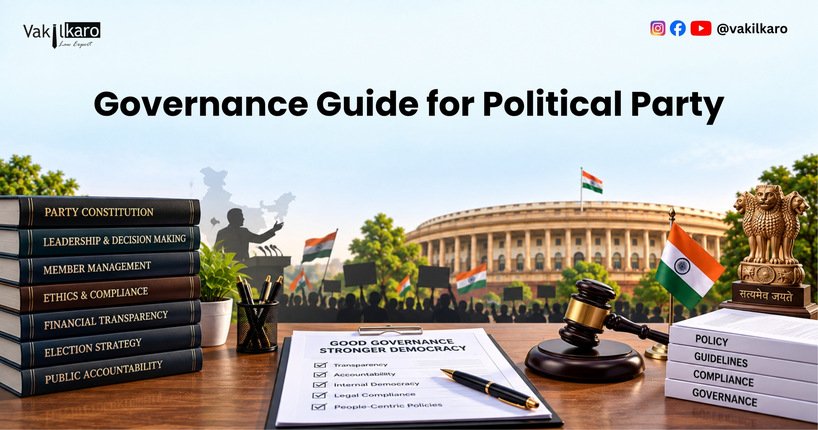
| Particular | Details |
|---|---|
| Topic | Political Party Governance |
| Objective | Organised Leadership & Administration |
| Core Areas | Leadership, Committees, Policies, Accountability |
| Governance Tools | Constitution, Meetings, Documentation |
| Benefits | Transparency & Organisational Stability |
| Long-Term Goal | Sustainable Political Organisation |
What is Political Party Governance?
Good governance is one of the most important factors that determines the long-term success of a political organisation.
Professional governance generally helps:
- Improve Leadership
- Strengthen Accountability
- Improve Decision-Making
- Support Organisational Growth
- Build Public Confidence
Governance should become an integral part of the political party's organisational culture.
Political Party Governance refers to the organisational framework through which the political party functions.
Professional governance generally includes:
- Leadership
- Office Bearers
- Internal Policies
- Committee System
- Decision-Making
- Accountability
Governance ensures that organisational activities are conducted systematically and transparently.
Governance Summary Table
Why Governance is Important?
Professional governance generally helps:
- Improve Organisational Discipline
- Reduce Administrative Confusion
- Strengthen Leadership
- Improve Public Trust
- Support Long-Term Institutional Development
Strong governance generally results in stronger political organisations.
Leadership Framework
Professional political organisations generally establish:
- President
- Vice-President
- General Secretary
- Treasurer
- Executive Committee
- Advisory Committees
Clearly defined responsibilities improve organisational efficiency.
Internal Democracy
Professional governance generally promotes:
- Leadership Participation
- Transparent Decision-Making
- Organisational Accountability
- Member Involvement
Internal democracy strengthens institutional legitimacy.
Governance Components
Professional governance generally includes:
- Constitution
- Leadership Structure
- Committee System
- Meetings
- Documentation
- Financial Oversight
- Compliance
- Organisational Policies
Benefits of Good Governance
Professional governance generally provides:
- Better Leadership
- Organisational Stability
- Improved Accountability
- Better Decision-Making
- Stronger Public Confidence
Vakilkaro Insight
Many political organisations focus only on public activities.
However, successful political parties generally invest heavily in internal governance, leadership development and organisational discipline.
Strong governance creates sustainable political institutions.
Founder Checklist
Before building the governance system, ensure:
✔ Constitution Finalised
✔ Leadership Structure Established
✔ Office Bearers Selected
✔ Committee Structure Planned
✔ Decision-Making Process Defined
✔ Internal Policies Prepared
✔ Documentation System Ready
✔ Financial Oversight Established
✔ Compliance Planning Completed
✔ Professional Governance Review Conducted
Governance Journey
Define Governance Structure
↓
Appoint Leadership
↓
Establish Committees
↓
Develop Internal Policies
↓
Implement Governance Systems
↓
Continuous Review & Improvement
Why Choose Vakilkaro?
Vakilkaro assists political organisations with:
- Governance Planning
- Constitution Drafting
- Leadership Framework
- Documentation
- Compliance Advisory
- Organisational Structuring
- Long-Term Governance Support
Our experts help build professionally governed political organisations capable of sustainable long-term growth.
Understanding Political Party Governance
Political Party Governance is the system through which the organisation is managed, supervised and administered.
A professionally managed political party establishes clear governance structures before expanding its public activities.
Professional governance generally focuses on:
- Leadership
- Accountability
- Internal Democracy
- Decision-Making
- Documentation
- Organisational Discipline
Strong governance creates long-term organisational stability.
Step 1 – Establish the Governance Framework
The first step is creating a governance structure that clearly defines how the organisation will function.
Professional governance generally includes:
- Leadership Structure
- Office Bearers
- Executive Committee
- Advisory Committees
- Reporting Structure
- Internal Policies
A well-defined governance framework reduces organisational confusion.
Step 2 – Define Leadership Responsibilities
Every office bearer should have clearly documented responsibilities.
Professional governance generally defines:
- Authority
- Duties
- Reporting Responsibilities
- Decision-Making Powers
- Accountability Standards
Clearly documented responsibilities improve administrative efficiency.
Step 3 – Appoint Office Bearers
Professional political organisations generally appoint office bearers according to the Party Constitution.
Typical office bearers include:
- President
- Vice-President
- General Secretary
- Treasurer
- National Executive Members
- State Office Bearers
Leadership appointments should follow transparent organisational procedures.
Step 4 – Establish Committees
Committees improve governance by distributing responsibilities.
Professional political organisations generally establish:
- Executive Committee
- Finance Committee
- Membership Committee
- Disciplinary Committee
- Election Committee
- Policy Committee
- Media & Communication Committee
Committees improve decision-making and organisational coordination.
Step 5 – Develop Internal Policies
Professional governance requires documented organisational policies.
Policies generally cover:
- Membership
- Leadership
- Financial Administration
- Communication
- Documentation
- Ethics
- Discipline
Written policies create consistency throughout the organisation.
Step 6 – Define Decision-Making Procedures
Professional organisations generally establish structured decision-making systems.
These generally include:
- Executive Decisions
- Committee Decisions
- General Body Decisions
- Emergency Decisions
Clearly documented procedures improve transparency.
Step 7 – Promote Internal Democracy
Internal democracy is one of the most important elements of political governance.
Professional organisations generally encourage:
- Leadership Participation
- Transparent Elections
- Voting Procedures
- Member Representation
Internal democracy strengthens organisational legitimacy.
Step 8 – Governance Documentation
Professional organisations generally maintain governance records including:
- Constitution
- Governance Policies
- Office Bearer Register
- Committee Records
- Meeting Minutes
- Organisational Resolutions
Good documentation strengthens governance continuity.
Leadership Structure
A professionally managed political party generally establishes multiple leadership levels.
National Level
- National President
- National Executive
- National Committees
State Level
- State President
- State Executive
- State Committees
District Level
- District Leadership
- District Committees
Local Level
- Local Units
- Booth-Level Leadership
- Grassroots Volunteers
Clearly defined hierarchy improves administration.
Decision-Making Framework
Professional governance generally encourages structured decision-making.
Decision-making may generally involve:
- Consultation
- Committee Review
- Voting
- Resolution
- Documentation
Structured governance reduces administrative disputes.
Accountability Framework
Professional governance generally promotes accountability through:
- Clearly Defined Responsibilities
- Reporting Systems
- Performance Reviews
- Documentation
- Internal Monitoring
Accountability improves organisational discipline.
Governance Documentation
Professional political organisations generally preserve:
- Party Constitution
- Meeting Minutes
- Governance Policies
- Committee Reports
- Leadership Records
- Membership Registers
Accurate documentation supports long-term governance.
Common Governance Mistakes
Many political organisations experience governance challenges because organisational systems are weak.
Common mistakes generally include:
- Undefined Leadership Roles
- Weak Committee Structure
- Poor Decision-Making
- Missing Documentation
- Weak Internal Democracy
- Poor Communication
- Delayed Governance Reviews
- Missing Accountability Systems
- Weak Organisational Policies
- No Professional Governance Planning
Professional governance significantly reduces these risks.
Governance Checklist
Before implementing the governance framework, ensure:
✔ Leadership Structure Finalised
✔ Office Bearers Appointed
✔ Committees Established
✔ Internal Policies Approved
✔ Decision-Making Process Defined
✔ Accountability Framework Implemented
✔ Governance Documentation Organised
✔ Meeting Procedures Established
✔ Internal Democracy Strengthened
✔ Professional Governance Review Conducted
Best Practices
Professionally managed political organisations generally:
- Clearly define leadership responsibilities.
- Conduct regular executive meetings.
- Preserve accurate governance records.
- Maintain committee-based administration.
- Promote internal democracy.
- Review governance periodically.
- Document every major organisational decision.
- Maintain transparent reporting systems.
- Develop future leadership.
- Seek professional governance advisory whenever required.
Vakilkaro Expert Insight
Many political organisations believe governance simply means appointing office bearers.
In reality, governance is a complete organisational system.
Professional governance combines:
- Leadership
- Internal Democracy
- Documentation
- Accountability
- Committee Structure
- Organisational Policies
Political parties that establish structured governance from the beginning are generally more transparent, stable and capable of sustainable long-term growth.
Benefits of Strong Political Party Governance
Governance is the foundation of every successful political organisation.
A political party may have a strong ideology and public support, but without an organised governance framework, long-term institutional growth becomes difficult.
Professional governance generally helps strengthen:
- Leadership
- Transparency
- Accountability
- Organisational Discipline
- Public Confidence
- Long-Term Sustainability
Good governance transforms a political organisation into a professionally managed institution.
Strong Leadership Structure
One of the biggest benefits of professional governance is the development of a clearly defined leadership structure.
Professional governance generally helps:
- Define Leadership Roles
- Clarify Responsibilities
- Improve Decision-Making
- Reduce Administrative Confusion
A structured leadership framework improves organisational efficiency.
Better Accountability
Professional governance establishes accountability throughout the organisation.
Clearly defined responsibilities generally help:
- Improve Performance
- Reduce Conflicts
- Strengthen Leadership
- Improve Organisational Discipline
Accountability creates trust among members.
Organisational Stability
Political organisations should remain stable regardless of changes in leadership.
Professional governance generally supports:
- Leadership Continuity
- Institutional Memory
- Organisational Growth
- Administrative Stability
Strong governance helps organisations survive leadership transitions.
Improved Decision-Making
Professional governance establishes a structured decision-making process.
Major organisational decisions are generally taken through:
- Leadership Consultation
- Committee Review
- Internal Discussion
- Organised Voting
- Recorded Resolutions
Structured decisions improve transparency.
Strong Internal Democracy
Internal democracy is one of the defining characteristics of a professionally governed political party.
Professional governance generally encourages:
- Transparent Leadership Selection
- Member Participation
- Organised Elections
- Democratic Decision-Making
Internal democracy strengthens organisational legitimacy.
Better Committee Management
Professional committee systems generally improve:
- Work Distribution
- Administrative Efficiency
- Leadership Coordination
- Organisational Monitoring
Committees reduce excessive dependence on a single individual.
Better Documentation
Governance requires organised documentation.
Professional organisations generally maintain:
- Constitution
- Meeting Minutes
- Leadership Records
- Committee Reports
- Membership Registers
- Governance Policies
Documentation supports long-term organisational continuity.
Better Communication
Professional governance generally improves communication between:
- National Leadership
- State Units
- District Units
- Local Units
- Members
- Volunteers
Clear communication strengthens organisational coordination.
Better Financial Governance
Governance also includes financial accountability.
Professional organisations generally establish:
- Accounting Systems
- Banking Procedures
- Financial Reviews
- Internal Controls
- Budget Monitoring
Financial governance improves public confidence.
Organisational Discipline
Professional governance encourages disciplined organisational functioning.
This generally includes:
- Defined Procedures
- Leadership Accountability
- Compliance Monitoring
- Organised Administration
Discipline strengthens institutional credibility.
Better Public Confidence
Citizens generally place greater trust in political organisations that demonstrate:
- Good Governance
- Transparent Leadership
- Internal Democracy
- Financial Accountability
- Organised Administration
Public confidence supports long-term political growth.
Leadership Development
Professional governance creates opportunities for future leaders.
Political organisations generally strengthen:
- Youth Leadership
- Women's Leadership
- Regional Leadership
- Grassroots Leadership
Leadership development supports institutional continuity.
Long-Term Institutional Growth
Governance helps political parties develop into long-term institutions.
Professional governance generally supports:
- Organisational Expansion
- Leadership Continuity
- Better Administration
- Sustainable Growth
Strong governance creates stronger institutions.
Practical Challenges
Although governance provides significant organisational benefits, implementation requires continuous effort.
Common challenges generally include:
- Leadership Conflicts
- Weak Documentation
- Poor Communication
- Delayed Decision-Making
- Weak Committee Performance
- Inadequate Accountability
Professional governance systems help reduce these challenges.
Common Governance Mistakes
Many political organisations experience governance issues because proper systems are never implemented.
Common mistakes generally include:
- Undefined Leadership Roles
- Weak Internal Democracy
- Poor Documentation
- Missing Committee Structure
- Weak Accountability
- Delayed Governance Reviews
- Poor Communication
- Weak Financial Oversight
- Lack of Organisational Policies
- No Professional Governance Advisory
Professional governance planning significantly reduces these risks.
Best Practices
Professionally managed political organisations generally:
- Clearly define leadership responsibilities.
- Conduct regular governance reviews.
- Preserve governance documentation.
- Maintain transparent decision-making.
- Strengthen committee systems.
- Encourage member participation.
- Promote accountability.
- Maintain financial transparency.
- Develop future leadership.
- Continuously improve governance systems.
Founder Governance Checklist
Before expanding organisational activities, ensure:
✔ Leadership Structure Clearly Defined
✔ Office Bearers Performing Assigned Roles
✔ Committees Functioning Properly
✔ Internal Democracy Strengthened
✔ Governance Policies Updated
✔ Documentation Organised
✔ Financial Governance Established
✔ Accountability Systems Operational
✔ Leadership Development Programme Prepared
✔ Professional Governance Review Conducted
Vakilkaro Expert Insight
Many political organisations focus heavily on public campaigns while neglecting internal governance.
However, long-term political success generally depends upon:
- Strong Leadership
- Internal Democracy
- Transparent Decision-Making
- Organised Documentation
- Financial Accountability
- Institutional Discipline
Professional governance transforms a political party from a temporary political group into a sustainable democratic institution.
Political parties that invest in governance generally become more transparent, more stable and better prepared for long-term organisational growth.
Frequently asked questions
What is Political Party Governance?+
Political Party Governance refers to the system through which a political party is managed, administered and supervised. It generally includes: • Leadership Structure • Office Bearers • Internal Democracy • Committee System • Decision-Making • Accountability • Organisational Policies Strong governance helps build a stable political organisation.
Why is governance important for a political party?+
Professional governance generally helps: • Improve Leadership • Strengthen Accountability • Improve Transparency • Build Public Confidence • Support Long-Term Organisational Growth Good governance is essential for sustainable political organisations.
What is a governance framework?+
A governance framework is the organisational structure that defines: • Leadership Roles • Responsibilities • Reporting Structure • Decision-Making Process • Internal Controls It provides the foundation for efficient administration.
Can Vakilkaro help establish governance systems?+
Yes. Vakilkaro provides assistance with: • Governance Planning • Constitution Drafting • Leadership Framework • Documentation • Compliance Advisory • Organisational Structuring
Who are Office Bearers?+
Office Bearers are the individuals responsible for managing the political party according to the Party Constitution. Typical office bearers include: • President • Vice-President • General Secretary • Treasurer Professional governance clearly defines their responsibilities.
Why should leadership responsibilities be documented?+
Clearly documented responsibilities generally help: • Improve Accountability • Reduce Confusion • Strengthen Governance • Improve Administrative Efficiency Documentation supports effective leadership.
Why are committees important?+
Professional committee systems generally help: • Distribute Responsibilities • Improve Decision-Making • Strengthen Governance • Improve Coordination Committees support organised administration.
What committees may be established?+
Professional political organisations may establish: • Executive Committee • Finance Committee • Membership Committee • Election Committee • Disciplinary Committee • Policy Committee Committee structure depends upon organisational requirements.
What is internal democracy?+
Internal democracy generally refers to transparent organisational processes for: • Leadership Selection • Member Participation • Voting • Decision-Making Internal democracy strengthens organisational legitimacy.
Why is accountability important?+
Professional accountability generally improves: • Leadership Performance • Organisational Discipline • Public Confidence • Governance Quality Accountability supports institutional credibility.
Should governance policies be documented?+
Yes. Professional organisations generally prepare written governance policies covering: • Leadership • Meetings • Committees • Membership • Financial Administration Written policies improve consistency.
Why are meeting procedures important?+
Meeting procedures generally help: • Improve Transparency • Record Decisions • Strengthen Accountability • Improve Governance Proper meeting records support organisational continuity.
Should governance records be maintained?+
Yes. Professional organisations generally preserve: • Meeting Minutes • Office Bearer Records • Committee Reports • Governance Policies • Organisational Resolutions Documentation strengthens governance.
Can governance improve decision-making?+
Yes. Professional governance generally establishes structured decision-making systems that improve: • Leadership Coordination • Organisational Planning • Administrative Efficiency
Why should leadership be reviewed periodically?+
Regular leadership reviews generally help: • Improve Performance • Strengthen Accountability • Develop Future Leaders • Improve Governance Continuous review supports institutional growth.
Can governance improve public confidence?+
Yes. Political organisations that maintain transparent governance generally inspire greater confidence among: • Citizens • Members • Volunteers • Public Institutions
Should governance include financial oversight?+
Yes. Professional governance generally includes: • Financial Monitoring • Banking Oversight • Accounting Review • Internal Controls Financial governance strengthens accountability.
Why should political parties maintain governance documentation?+
Professional documentation generally supports: • Organisational Continuity • Governance • Accountability • Compliance Accurate records improve long-term administration.
Can governance reduce organisational disputes?+
Yes. Clearly defined leadership responsibilities, documented procedures and transparent decision-making generally reduce internal conflicts.
What is the biggest benefit of good governance?+
Professional governance generally creates: • Better Leadership • Organisational Stability • Stronger Accountability • Improved Transparency • Long-Term Institutional Growth
Should governance systems be reviewed regularly?+
Yes. Professional organisations generally review governance systems periodically to improve: • Leadership • Policies • Procedures • Organisational Efficiency
Why should leadership succession be planned?+
Leadership succession generally helps: • Maintain Organisational Continuity • Reduce Administrative Disruption • Develop Future Leaders • Strengthen Institutional Stability
Can governance improve communication?+
Yes. Professional governance generally improves communication between: • Leadership • Members • Committees • Volunteers Clear communication strengthens organisational coordination.
What are the common governance mistakes?+
Common mistakes generally include: • Undefined Leadership Roles • Weak Internal Democracy • Missing Documentation • Poor Communication • Weak Committee Structure • No Governance Reviews Professional governance planning significantly reduces these risks.
Why should governance and compliance work together?+
Governance establishes organisational rules, while compliance ensures that those rules are followed consistently. Together they strengthen: • Transparency • Accountability • Organisational Stability
Can governance improve organisational growth?+
Yes. Professional governance generally supports: • Better Planning • Leadership Development • Membership Growth • Long-Term Institutional Development
Should governance training be provided?+
Yes. Professional organisations generally provide governance training to: • Office Bearers • Committee Members • Administrative Teams • Volunteers Training improves organisational performance.
Can Vakilkaro review governance systems?+
Yes. Vakilkaro assists with reviewing: • Governance Framework • Leadership Structure • Organisational Policies • Committee Systems • Governance Documentation Professional review improves governance quality.
Why should governance be continuously improved?+
Political organisations evolve over time. Continuous governance improvement generally helps: • Strengthen Leadership • Improve Accountability • Modernise Administration • Support Organisational Growth
Why choose Vakilkaro for Governance advisory?+
Vakilkaro provides comprehensive assistance including: • Governance Planning • Constitution Drafting • Leadership Structuring • Committee Framework Development • Documentation • Compliance Advisory • Organisational Development • Long-Term Governance Support Our experts help political organisations establish transparent, accountable and professionally managed governance systems. Common Myths "Governance only means appointing leaders." Incorrect. Professional governance also includes policies, committees, decision-making, documentation, accountability and internal democracy. "Internal democracy is only required during elections." Incorrect. Professional political organisations generally promote internal democratic practices throughout their organisational functioning. "Governance is only important for large political parties." Incorrect. Strong governance benefits political organisations of every size. "Committees create unnecessary administration." Incorrect. Professionally structured committees improve efficiency by distributing responsibilities and strengthening decision-making. "Professional governance advice is unnecessary." Incorrect. Professional governance planning generally improves organisational stability, leadership quality and long-term institutional growth. Related Guides Foundation Guides • Political Party Registration Service Page • [Election Commission](https://www.eci.gov.in/political-party-registration) Registration Guide • Party Constitution Guide • Documents Required Guide • Founding Members Guide • Legal Framework Guide Growth Guides • Benefits Guide • Donation & Funding Guide • Digital Political Party Guide Compliance Guides • Annual Compliance Guide • Accounting & Audit Guide Schema Recommendation Implement: • FAQ Schema • Article Schema • Breadcrumb Schema • Organization Schema Developer Notes • Place the Governance Summary Table within the running main content after the relevant explanatory H2 section. • Apply FAQ Schema to all FAQs. • Highlight the Governance Checklist as a visual callout. • Display the Governance Journey as a process diagram. • Internally link to the Political Party Registration Service Page, Election Commission Registration Guide, Party Constitution Guide, Annual Compliance Guide, Accounting & Audit Guide, Legal Framework Guide, and Digital Political Party Guide.
