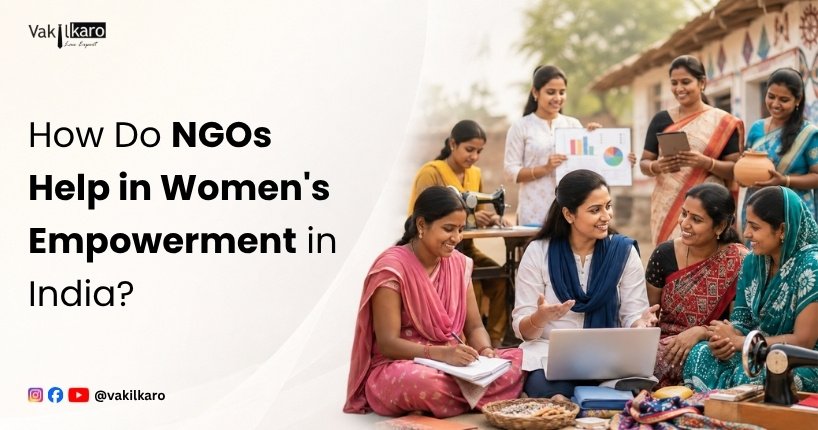
NGOs in India play a vital role in women's empowerment by addressing education, healthcare, legal rights, economic independence, and social justice. They provide access to education, vocational training, healthcare, and legal aid, empowering women to overcome societal barriers and become self-sufficient. NGOs also promote entrepreneurship through microfinance programs, enabling women to achieve financial independence. With legal frameworks like Section 8 company registration, NGO registration, and 12A and 80G certifications, these organizations ensure transparency and accountability, attracting donations and support. Through their efforts, NGOs contribute significantly to a more equitable and empowering environment for women in India.
Key Takeaways
- Legal frameworks like NGO registration, Section 8 company registration, and certifications such as 12A and 80G registration help ensure that NGOs are legally recognized and able to receive funding and support, thereby increasing their capacity to implement long-term, impactful programs for women’s empowerment.
- Section 8 companies are incorporated under the Companies Act, 2013, and are particularly beneficial for those NGOs that want to focus on promoting charitable activities such as women’s rights, education, and empowerment.
- Legal Aid and Advocacy for Women's Rights The fight for legal rights and protections is another area where NGOs in India are significantly impacting women’s empowerment.
- By partnering with government bodies, NGOs also help raise awareness about important legal frameworks such as the Protection of Women from Domestic Violence Act and the Sexual Harassment of Women at Workplace Act.
- Section 8 company registration is particularly important for NGOs that want to engage in economic empowerment programs for women.
The Role of NGOs in Empowering Women in India
Non-Governmental Organizations (NGOs) in India have been instrumental in empowering women, addressing a wide range of issues that affect their lives. These organizations play a significant role in breaking societal barriers, enabling women to access opportunities that promote independence and equality. From providing education and healthcare to offering legal protection and economic empowerment, NGOs are central to fostering change and supporting women in realizing their full potential.
One of the key areas where NGOs have made a substantial impact is in education and skill development. Many NGOs run programs that focus on providing girls and women with access to formal education and vocational training. These programs help women acquire skills, build confidence, and become self-sufficient, thereby improving their social and economic standing. By supporting government initiatives and establishing schools and learning centers, especially in rural areas, NGOs help to ensure that education is accessible to those who may otherwise be excluded due to socio-cultural norms or poverty.
In addition to education, NGOs are also critical in the healthcare sector. They offer reproductive health services, prenatal care, and mental health counseling, particularly in underserved areas. These services ensure that women can access the care they need, empowering them to make informed decisions about their health and well-being. Moreover, many NGOs engage in awareness campaigns on topics such as sexual and reproductive health, helping women gain knowledge about their rights and health options.
Furthermore, NGOs contribute significantly to women's legal empowerment. They provide legal aid to women facing gender-based violence and help them navigate the legal system. They also advocate for women's rights by working to raise awareness about existing legal protections and helping women understand how to use legal frameworks to protect themselves.
Through Section 8 company registration, NGO registration, and certifications like 12A and 80G, these organizations ensure compliance, transparency, and accountability, attracting support from donors. Overall, NGOs have a transformative role in creating a more equitable society for women in India.
Non-Governmental Organizations (NGOs) have been a driving force in India’s progress, particularly in the area of women’s empowerment. These organizations address a wide spectrum of challenges that women face, working tirelessly to bring about social change and create opportunities for women to thrive in society. In India, where gender inequality has historically been prevalent, NGOs have been instrumental in providing a platform for women to overcome the barriers of limited access to education, healthcare, economic opportunities, and legal protection.
The role of NGOs in empowering women is multi-dimensional, encompassing initiatives that span across education, healthcare, legal aid, economic independence, and social advocacy. NGOs are not only directly involved in implementing programs and services that cater to these needs but also act as key players in raising awareness and advocating for policy changes that improve the lives of women. For instance, NGOs work to address the root causes of gender-based violence, promote women’s health, ensure access to education, and encourage women to become financially independent through skill development and entrepreneurial programs.
In addition to their direct impact on women’s lives, NGOs also play a crucial role in supporting and complementing government initiatives aimed at promoting gender equality. Through collaborative efforts, these organizations help extend the reach of government programs by mobilizing communities, running awareness campaigns, and implementing specific interventions that cater to marginalized women, particularly in rural areas.
The operational framework of NGOs is also vital to their effectiveness. Transparency, legal compliance, and accountability are crucial to ensuring that these organizations function in the best interests of women and the community. Legal frameworks like NGO registration, Section 8 company registration, and certifications such as 12A and 80G registration help ensure that NGOs are legally recognized and able to receive funding and support, thereby increasing their capacity to implement long-term, impactful programs for women’s empowerment. This blog will explore the various ways in which NGOs contribute to empowering women in India and how their legal structure supports their mission of creating a more equitable society.
Understanding Women's Empowerment
Women’s empowerment is a transformative process that enables women to gain control over their lives and decisions, allowing them to exercise their rights, access opportunities, and shape their future. Empowerment is not only about the ability to make choices but also about having the resources and support systems that enable those choices to translate into meaningful change. It involves giving women the tools they need to achieve economic independence, make informed decisions about their health and well-being, participate in political and social structures, and pursue education and career opportunities.
At its core, women’s empowerment is about fostering an environment in which women can thrive on equal footing with men. It is about creating societal structures that facilitate women's active participation in social, economic, and political spheres. Empowerment spans multiple dimensions, including education, healthcare, economic freedom, political representation, and legal rights. The goal is to ensure that women have the agency to make decisions about their lives and contribute to the broader community. In a broader sense, women’s empowerment leads to a more inclusive and progressive society.
In India, women’s empowerment has historically been hindered by deeply ingrained cultural and societal norms that often place women in subordinate roles. Gender inequality has manifested in several ways, including restricted access to education, healthcare, economic resources, and political representation. Socio-cultural barriers like child marriage, dowry systems, and patriarchal traditions have often limited women’s freedom and opportunities. The lack of adequate legal protection for women in many cases further exacerbates these challenges.
However, Non-Governmental Organizations (NGOs) have played a crucial role in challenging these entrenched barriers. By working at the grassroots level, NGOs focus on dismantling the systems that perpetuate gender inequality. They provide educational resources, create awareness, offer healthcare services, advocate for women’s legal rights, and facilitate economic empowerment initiatives. Through these efforts, NGOs help women break free from traditional constraints and build a future where they can make independent choices and lead fulfilling lives.
NGOs and Legal Structure in India
Before diving into the specific ways NGOs contribute to women’s empowerment, it is important to understand their legal framework in India. NGOs in India can be registered as Trusts, Societies, or Section 8 Companies. While all three serve as a way to organize and legitimize their operations, Section 8 company registration is increasingly popular for NGOs due to its more rigorous and transparent governance structure. Section 8 companies are incorporated under the Companies Act, 2013, and are particularly beneficial for those NGOs that want to focus on promoting charitable activities such as women’s rights, education, and empowerment.
These entities must comply with registration laws such as NGO registration 12A and 80G certifications, which provide tax benefits and exemptions to donors and the organization. NGOs that wish to attract donations must provide proof of these certifications, which can significantly increase their credibility and attract more support from individual and corporate donors.
NGOs Providing Education and Skill Development for Women
One of the most important areas where NGOs contribute to women’s empowerment is through education and skill development. Many NGOs focus on providing women, especially in rural areas, with access to education. This includes both formal education as well as vocational training programs, which enable women to acquire skills that are crucial for their personal and professional development.
NGOs play a vital role in supporting government educational schemes, such as the Beti Bachao Beti Padhao program, by running awareness campaigns, offering scholarships, and building schools in underserved areas. Additionally, many NGOs have established schools and learning centers specifically aimed at girls, who often face the greatest barriers to education due to socio-cultural norms, child marriage, and poverty.
By offering education and skills training, NGOs help women break the cycle of poverty and increase their access to economic opportunities. Through programs that teach women how to become self-reliant through skills like tailoring, carpentry, computer skills, and entrepreneurship, NGOs empower women to become financially independent and contribute to their communities’ economies.
Healthcare and Reproductive Rights
Access to healthcare and reproductive rights is another critical area where NGOs are working to empower women in India. In rural and remote areas, women often face limited access to basic healthcare services. NGOs have stepped in to bridge this gap by providing health education, reproductive health services, and supporting maternal health initiatives.
Organizations like the Seva Mandir and The Rural Development Trust offer healthcare services such as prenatal care, safe childbirth, vaccinations, and mental health counseling. They also run awareness campaigns on sexual and reproductive health, helping women understand their rights, prevent diseases, and make informed decisions regarding family planning and reproductive health.
NGOs also work to combat the stigma surrounding menstruation and reproductive health by conducting workshops, providing sanitary products, and encouraging open discussions about health, which are crucial to women’s well-being.
Legal Aid and Advocacy for Women's Rights
The fight for legal rights and protections is another area where NGOs in India are significantly impacting women’s empowerment. Many NGOs focus on providing legal aid and advocacy for women facing gender-based violence, such as domestic violence, sexual harassment, and human trafficking. These organizations offer legal representation, counsel, and assist with filing complaints, thereby helping women navigate complex legal systems.
By partnering with government bodies, NGOs also help raise awareness about important legal frameworks such as the Protection of Women from Domestic Violence Act and the Sexual Harassment of Women at Workplace Act. In some cases, NGOs help to promote the implementation of laws protecting women, while in others, they offer training to women on how to use legal recourse to protect their rights.
For instance, the NGO Jagori works to empower women through self-help groups, advocacy, and legal literacy programs that inform women of their rights under Indian law. Furthermore, NGOs assist women in accessing government welfare schemes like the One-Stop Centres for women affected by violence, ensuring they have support during the legal process.
Economic Independence and Entrepreneurship
Economic independence is a critical factor in women’s empowerment. NGOs have been instrumental in facilitating financial independence for women by encouraging them to start small businesses, form women’s self-help groups (SHGs), and participate in microfinance schemes.
Through microfinance programs, NGOs provide women with small loans or grants to set up businesses, allowing them to generate income and become financially independent. This not only helps women uplift their families but also contributes to the overall economic development of the community. By providing business training, marketing assistance, and networking opportunities, NGOs play a key role in supporting women’s entrepreneurship.
Section 8 company registration is particularly important for NGOs that want to engage in economic empowerment programs for women. This registration ensures that the NGO is legally compliant and transparent, which helps build trust with donors, especially when facilitating programs aimed at improving women’s financial independence. Additionally, having a clear, formal legal structure ensures that any funding raised for economic programs is used appropriately and effectively.
Social and Cultural Advocacy
NGOs also contribute to women’s empowerment through cultural and social advocacy. They work to challenge deep-rooted gender biases and cultural norms that perpetuate gender inequality. Many NGOs are involved in campaigns that address issues such as child marriage, dowry practices, and gender-based violence.
These organizations often collaborate with the media to raise awareness and create public discourse around women’s rights. They run campaigns, organize protests, and publish research to bring attention to the pressing social issues women face. NGOs also create safe spaces for women to discuss their issues and find solidarity, which is crucial for building a collective movement toward gender equality.
NGO Registration and Financial Transparency
For NGOs to operate effectively, ensuring transparency and accountability is crucial. NGO registration is a foundational step that ensures the legitimacy of an organization. By registering as a Trust, Society, or Section 8 Company, NGOs can gain the legal recognition needed to operate and access public and private funding.
For NGOs focusing on women’s empowerment, being properly registered under 12A and 80G registration is essential. These registrations provide tax exemptions for the NGO, ensuring that the donations they receive are used for charitable purposes and that donors can claim tax benefits for their contributions. Donors are more likely to contribute to NGOs that have these certifications because it ensures that their funds are being used appropriately and for the intended purpose.
Conclusion
NGOs in India have become vital players in the women’s empowerment movement, addressing challenges related to education, healthcare, legal rights, economic independence, and social justice. By providing access to education, facilitating healthcare services, supporting legal initiatives, and promoting economic independence, NGOs help women overcome the barriers that have traditionally held them back in Indian society.
Moreover, legal frameworks such as NGO registration, Section 8 company registration, and 12A and 80G registration ensure that these NGOs are transparent, accountable, and capable of attracting support from donors and partners. As NGOs continue their important work, they will undoubtedly play an even greater role in shaping a future where women in India are empowered to make choices, pursue their dreams, and thrive in a society that values gender equality.
By working together with government initiatives and community support, NGOs are helping to build an India where women have the freedom and opportunity to reach their full potential. With the continued support of organizations like these, the dream of women’s empowerment in India can become a reality.
Why Choose Vakilkaro for Women's Empowerment and Other Legal Services
When it comes to navigating the complex legal landscape, whether it’s for NGO registration, women’s empowerment initiatives, or any other legal service, Vakilkaro stands out as a trusted partner. Here’s why you should consider Vakilkaro for these services:
Expert Legal Guidance
Vakilkaro offers expert legal advice tailored to your specific needs. Whether you are setting up an NGO focused on women’s empowerment, registering a Section 8 company, or obtaining the necessary certifications like 12A and 80G, Vakilkaro’s experienced professionals provide reliable legal guidance throughout the process. This ensures compliance with all legal requirements, helping your organization run smoothly and effectively.
Comprehensive Services
Vakilkaro provides a wide range of legal services, including:
- NGO Registration: Vakilkaro simplifies the process of registering an NGO, whether it’s as a Trust, Society, or Section 8 company, ensuring that you meet all statutory requirements.
- Section 8 Company Registration: For those looking to establish a charitable organization, Vakilkaro helps you navigate the Section 8 company registration process, ensuring transparency and legal compliance.
- 12A and 80G Registration: Vakilkaro assists in obtaining 12A and 80G certifications, which are crucial for NGOs that want to benefit from tax exemptions and attract donor support.
Transparency and Accountability
Vakilkaro is committed to ensuring that all legal processes are completed with the utmost transparency and accountability. This is especially important for NGOs, as legal structures like Section 8 companies require strict compliance with the Companies Act, 2013. Vakilkaro ensures that your NGO’s operations adhere to the highest legal standards, which builds trust with donors and other stakeholders.
Streamlined Processes
Vakilkaro understands that setting up an NGO or securing legal certifications can be overwhelming. Their team streamlines the entire process, from documentation to filings, making it easier and faster for you to get your organization up and running. This is especially valuable when time is of the essence, such as when launching projects aimed at empowering women.
Support for Long-Term Success
Vakilkaro goes beyond just registration and certifications. They offer continuous support for NGOs, assisting with compliance, renewals, and reporting requirements, ensuring that your organization remains in good legal standing. This ongoing support is vital for sustaining long-term operations and growth, especially for initiatives that focus on women’s empowerment and other social causes.
Specialized Expertise
Vakilkaro’s legal team has experience working with NGOs, social enterprises, and organizations focused on women’s rights and empowerment. This specialized knowledge allows them to offer tailored services that address the unique challenges faced by such organizations. Whether you’re looking to build a solid legal foundation for your NGO or navigate complex regulatory requirements, Vakilkaro provides expert solutions that align with your goals.
In summary, choosing Vakilkaro means partnering with a legal service provider that understands your mission, provides personalized support, and ensures that your organization remains legally compliant and positioned for success. Whether you are focusing on women’s empowerment or any other social cause, Vakilkaro is the trusted partner you need to make a lasting impact.
Official External Resources
Use these primary/official sources to verify rules, forms, fees, timelines and regulatory updates before publication.
Frequently asked questions
How Do NGOs Help in Women's Empowerment in India?+
Legal frameworks like NGO registration, Section 8 company registration, and certifications such as 12A and 80G registration help ensure that NGOs are legally recognized and able to receive funding and support, thereby increasing their capacity to implement long-term, impactful programs for women’s empowerment. Section 8 companies are incorporated under the Companies Act, 2013, and are particularly beneficial for those NGOs that want to focus on promoting charitable activities such as women’s rights, education, and empowerment.
