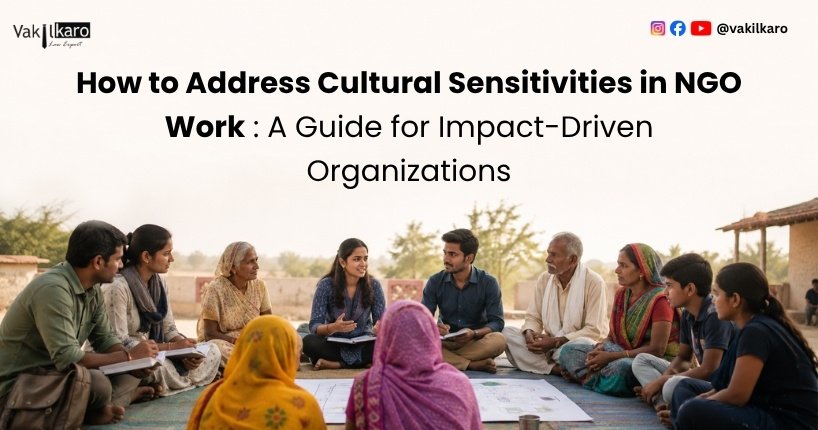
In India’s culturally rich and diverse landscape, NGOs play a crucial role in addressing social and economic disparities. However, real impact goes beyond funding and passion—it requires cultural understanding and sensitivity. NGOs registered under Section 8 company registration or those holding 12A and 80G registrations must engage with communities respectfully, adapting their programs to local customs, languages, and values. Cultural sensitivity fosters trust, enhances participation, and ensures sustainable outcomes. This blog explores practical strategies to embed cultural awareness in NGO work, helping organizations become more inclusive, effective, and aligned with both community needs and donor expectations.
Key Takeaways
- This blog explores practical strategies to embed cultural awareness in NGO work, helping organizations become more inclusive, effective, and aligned with both community needs and donor expectations.
- Cultural Sensitivity in NGO Work: A Key to Sustainable Impact In a country as diverse as India, NGOs serve as essential bridges between marginalized communities and developmental resources.
- Most importantly, we will offer actionable insights and strategies to help NGOs integrate cultural awareness into every layer of their mission-driven work.
- Some strategies include: Regular community meetings in local languages Open-door feedback mechanisms Involving beneficiaries in decision-making Transparency in finances and impact metrics Honoring local customs during meetings or events Organizations with 12A and 80G registration should also ensure that donor engagement respects the same cultural values.
- When it comes to navigating the complex legal landscape of NGO formation, compliance, and cultural alignment in development work, Vakilkaro stands out as a trusted partner.
Cultural Sensitivity in NGO Work: A Key to Sustainable Impact
In a country as diverse as India, NGOs serve as essential bridges between marginalized communities and developmental resources. However, meaningful change isn’t just about securing funding or implementing projects—it’s about understanding and respecting the unique cultural landscape of each community. India’s mosaic of languages, traditions, customs, and belief systems means that a one-size-fits-all approach rarely works in the development sector.
To drive real, lasting impact, NGOs must adopt a culturally sensitive mindset. This involves more than awareness—it requires proactive engagement with local norms, practices, and values. When NGOs genuinely listen to communities and incorporate cultural nuances into their planning, they are more likely to earn trust, boost participation, and deliver interventions that resonate deeply.
Organizations that operate under Section 8 company registration, or those with 12A and 80G registration, have a greater responsibility and opportunity to uphold these values. Their formal structure and compliance frameworks demand transparency, accountability, and inclusivity. Donors and CSR funders increasingly favor NGOs that demonstrate cultural competence, as it often leads to more effective and sustainable results.
Embedding cultural sensitivity into the core of NGO operations—through local hiring, community-based research, and inclusive program design—not only strengthens relationships but also enhances the credibility and legitimacy of the organization. Whether addressing health, education, livelihoods, or gender issues, aligning with community values and traditions significantly improves outcomes.
Ultimately, cultural sensitivity is not a barrier but a powerful catalyst for transformation. For NGOs, especially those backed by strong legal compliance and recognized registrations, embracing cultural diversity is both a strategic asset and a moral imperative. It allows them to become true partners in development, co-creating change that is respectful, impactful, and enduring.
India is a land of extraordinary cultural, linguistic, and social diversity. From bustling urban metros to remote rural villages, the values, customs, and daily practices of communities can differ dramatically. In this vast and varied landscape, NGOs serve as critical agents of change—working tirelessly to address gaps in education, healthcare, livelihoods, gender equality, and more. However, achieving meaningful and lasting impact goes far beyond simply identifying needs and delivering services. It requires a thoughtful, culturally sensitive approach that honors the identities, beliefs, and lived experiences of the communities being served.
In development work, cultural sensitivity is not an optional extra—it is a fundamental requirement. Programs that fail to account for cultural dynamics may face resistance, low participation, or even outright rejection, regardless of how well-funded or well-intentioned they are. Conversely, interventions rooted in local traditions and designed in collaboration with community members are far more likely to succeed, scale, and sustain over time.
This is especially true for NGOs that have formal legal status under NGO registration or Section 8 company registration, and those that benefit from 12A and 80G registration. These regulatory frameworks not only enable NGOs to access tax exemptions and CSR funds but also place them in a position of trust and accountability. Donors, government agencies, and beneficiaries increasingly expect organizations to demonstrate cultural competence as part of their ethical and operational standards.
In this blog, we delve into why cultural sensitivity is a cornerstone of effective NGO work. We will explore how it strengthens program design, builds trust, enhances donor confidence, and leads to more inclusive and equitable outcomes. Most importantly, we will offer actionable insights and strategies to help NGOs integrate cultural awareness into every layer of their mission-driven work.
Why Cultural Sensitivity Matters in NGO Work?
Cultural sensitivity is the cornerstone of ethical, effective, and impactful development work. It involves more than simply being aware of differences—it calls for a deep understanding, appreciation, and respectful engagement with the values, customs, traditions, and social norms that shape a community’s identity. For NGOs working in India—a country renowned for its vast cultural diversity—this awareness is not just beneficial, it is absolutely essential.
India is home to more than 2,000 distinct ethnic groups, hundreds of languages and dialects, and a wide spectrum of religious, social, and regional identities. Within such a diverse environment, cultural practices vary not only from state to state but also from one village to another. This complexity poses both a challenge and an opportunity for NGOs. A well-intentioned project, no matter how technically sound, can fail if it is perceived as culturally intrusive or insensitive. On the other hand, culturally aligned interventions are far more likely to be welcomed, embraced, and sustained by the community.
Take, for example, a health campaign promoting menstrual hygiene. In many conservative or patriarchal communities, menstruation remains a taboo topic. A campaign that fails to account for these sensitivities and charges in with unfamiliar messaging or visuals may provoke discomfort or backlash. But when the same initiative is introduced through culturally appropriate language, led by local female champions, and integrated with traditional community settings, it has a far higher chance of success. Likewise, education programs that overlook existing gender roles or fail to engage key decision-makers within families can encounter roadblocks that derail even the most well-funded efforts.
NGOs that are formally structured under Section 8 company registration or other NGO registration models often operate across multiple regions. These organizations have the additional responsibility—and opportunity—to model inclusive, community-centered approaches. Cultural sensitivity not only helps them adapt their programs to fit the local context but also enhances organizational credibility and trust within the communities they serve.
Moreover, in the eyes of donors—especially those providing CSR support or international funding—cultural sensitivity is increasingly viewed as a marker of program quality and ethical practice. NGOs with 12A and 80G registration benefit from being able to offer tax incentives to donors, but they must also demonstrate that their approaches are inclusive, equitable, and community-led. A culturally sensitive NGO is more likely to attract and retain donor support, because it signals an understanding of ground realities and a commitment to doing development with communities, not to them.
Ultimately, cultural sensitivity enables NGOs to:
- Build deeper community trust and social capital
- Reduce friction and resistance to behavioral or systemic changes
- Improve program participation, retention, and outcomes
- Design interventions that are sustainable and owned by the community
- Strengthen their standing with donors and partners who prioritize inclusive and locally-driven models
In essence, embracing cultural sensitivity is not just about doing good—it’s about doing good well.
Step-by-Step Guide to Addressing Cultural Sensitivities
Start with Community-Centered Research
Before launching any intervention, invest time in understanding the community's cultural, historical, and social context. This includes:
- Language and dialects spoken
- Local festivals and rituals
- Gender roles and family dynamics
- Power hierarchies and caste equations
- Religious practices and taboos
- Indigenous knowledge systems
NGOs—whether newly formed or long-established under Section 8 company registration or other legal frameworks—should prioritize Participatory Rural Appraisals (PRA), community surveys, and informal interviews. Local engagement allows teams to co-create solutions that reflect the community’s values rather than imposing external models.
Recruit Locally and Build Diverse Teams
Representation matters. Hiring from within the community ensures that your organization speaks the same cultural and linguistic language as the people it aims to serve.
NGOs with formal NGO registration often find that local staff can navigate unwritten social codes and power dynamics far more effectively than outsiders. This not only facilitates smoother program delivery but also reduces the risk of cultural missteps.
Moreover, for organizations with 12A and 80G registration, demonstrating inclusive hiring practices can be a key point of differentiation when applying for donor funding—especially from CSR foundations and international agencies that value community ownership.
Design Culturally Responsive Programs
Once insights are gathered, the next step is to design interventions that are culturally appropriate. This could include:
- Using local stories or folklore in educational materials
- Engaging respected community leaders in awareness campaigns
- Adapting dress codes or timings based on cultural norms
- Creating safe spaces for women and marginalized groups
- Offering gender-segregated services when necessary
NGOs under Section 8 company registration have the flexibility to adopt such nuanced approaches while still maintaining organizational professionalism. The ability to enter into tailored contracts or MOUs with local institutions (e.g., temples, self-help groups, panchayats) adds another layer of contextual adaptation.
Build Trust through Consistent and Respectful Engagement
Communities need to trust your intent before they can accept your programs. This trust is built over time through consistent, respectful engagement. Some strategies include:
- Regular community meetings in local languages
- Open-door feedback mechanisms
- Involving beneficiaries in decision-making
- Transparency in finances and impact metrics
- Honoring local customs during meetings or events
Organizations with 12A and 80G registration should also ensure that donor engagement respects the same cultural values. For instance, site visits from donors should be carefully planned to avoid festivals, harvest seasons, or periods of religious observance.
Avoid Cultural Tokenism
It’s not enough to add superficial elements like traditional attire or folk music to program events. True cultural sensitivity involves deep listening, genuine consultation, and adaptability. It means rethinking your program if it doesn’t align with local priorities—even if it is well-funded.
NGOs with Section 8 company registration often have the operational flexibility to pivot programs based on feedback, unlike more rigid government-led initiatives. Use this to your advantage. Iterate continuously, and make space for authentic community voices to lead.
The Role of Section 8 Company Registration
Operating as a Section 8 company under the Companies Act, 2013 offers NGOs a distinct advantage when it comes to cultural sensitivity:
- It allows a corporate-style governance structure, promoting better accountability in community engagement.
- Section 8 companies can enter into legally binding partnerships with local organizations, enabling them to adapt to regional cultural needs.
- Their formal registration enhances trust among local institutions such as municipal bodies, schools, and religious groups.
When cultural tensions arise, a legally registered entity with a clear organizational structure often finds it easier to mediate, resolve, and adapt.
Importance of 12A and 80G Registration
Having 12A and 80G registration does more than provide tax benefits. These registrations signal to communities and donors that the NGO:
- Operates transparently
- Is eligible for CSR and philanthropic support
- Undergoes regular audits and compliance reviews
Culturally sensitive programming—especially when documented and monitored—can be a persuasive part of impact reports submitted to CSR donors or government agencies. It shows that the NGO is not only solving problems but doing so in a way that uplifts, respects, and preserves cultural identity.
Addressing Common Cultural Challenges in the Field
Navigating Religious Diversity
In regions where multiple faiths coexist, NGOs must be careful not to appear biased. Training staff on religious neutrality and ensuring representation from various faith groups can help avoid conflict and build inclusive programming.
Gender Norms and Restrictions
In patriarchal societies, working with women and girls may require approval from male family members. Culturally sensitive NGOs often begin by engaging the entire family unit and slowly shifting norms through dialogue rather than confrontation.
Caste Dynamics
In many parts of India, caste discrimination continues to shape access to services. NGOs must adopt affirmative action in their outreach, ensuring that marginalized castes are not excluded—intentionally or unintentionally—from program benefits.
Language Barriers
Translation is not just about converting words—it’s about conveying meaning. NGOs should invest in high-quality, culturally adapted translations for all materials. Employing local interpreters and community mobilizers is a must.
The Role of Donors and Stakeholders in Promoting Cultural Sensitivity
Donors—especially those funding NGOs with 12A and 80G registration—have an important role to play in encouraging cultural awareness. They can:
- Prioritize funding for programs that demonstrate community involvement
- Require impact metrics that include indicators of cultural appropriateness
- Support training and capacity-building in cultural competence
- Promote inclusion and diversity within NGO leadership
Organizations with Section 8 company registration are often better positioned to meet these expectations due to their corporate governance structures and built-in reporting systems.
Conclusion
Cultural sensitivity is not an obstacle to development; it is the foundation for meaningful, respectful, and sustainable change. For NGOs—whether operating under a trust, society, or Section 8 company registration—addressing cultural sensitivities is not optional. It is a strategic and ethical necessity.
By embedding cultural competence into hiring, program design, community engagement, and impact measurement, NGOs position themselves as true partners in development. Moreover, it increases their appeal to donors, enhances compliance with 12A and 80G registration, and ultimately drives deeper, more lasting change.
In a country as diverse as India, one size does not fit all. But with humility, openness, and a commitment to learning, NGOs can become powerful catalysts for inclusive progress—one culturally grounded step at a time.
Why Choose Vakilkaro for NGO and Legal Services?
When it comes to navigating the complex legal landscape of NGO formation, compliance, and cultural alignment in development work, Vakilkaro stands out as a trusted partner. Whether you're looking to establish a non-profit through Section 8 company registration, complete your NGO registration, or secure 12A and 80G registration for tax exemption and donor eligibility, Vakilkaro offers end-to-end support tailored to your organization’s unique mission and goals.
✅ 1. Expertise in NGO Laws and Compliance
Vakilkaro has a specialized legal team with deep expertise in India’s NGO regulatory framework. From drafting Memorandums of Association to filing with ROC, Income Tax Department, and navigating FCRA Registration (if applicable), Vakilkaro ensures 100% compliance and accurate documentation—so you can focus on impact, not paperwork.
✅ 2. Hassle-Free, Transparent Process
Legal work can be intimidating. Vakilkaro simplifies it. With a transparent pricing structure, dedicated case managers, and online processing capabilities, the entire journey—from consultation to registration—is made smooth, reliable, and stress-free.
✅ 3. One-Stop Solution for All Legal Needs
Apart from NGO-related services, Vakilkaro also provides:
- Company registration (Private Limited, LLP, OPC)
- Trademark registration and IP protection
- GST, PAN, and TAN services
- Income tax filings and financial compliance
- Drafting MOUs, contracts, and other legal agreements
- FCRA registration and foreign funding compliance
✅ 4. Personalized Legal Support
Every organization is different. Vakilkaro assigns legal experts who understand your sector—whether it's education, healthcare, women empowerment, or rural development. You receive guidance that’s not just legal but strategic, especially when aligning your operations with cultural and regulatory expectations.
✅ 5. Boost Donor & CSR Credibility
Vakilkaro ensures that your 12A and 80G registrations are filed with precision, increasing your credibility with CSR donors and philanthropic foundations. They also help prepare documentation that supports cultural sensitivity, governance practices, and donor reporting standards.
✅ 6. Affordable, Reliable, and Quick
Vakilkaro prides itself on offering premium legal services at affordable prices—without compromising on speed or professionalism. Most applications are completed and filed within days, ensuring your NGO or company can begin operations promptly.
Official External Resources
Use these primary/official sources to verify rules, forms, fees, timelines and regulatory updates before publication.
Frequently asked questions
How to Address Cultural Sensitivities in NGO Work: A Guide for Impact-Driven Organizations+
This blog explores practical strategies to embed cultural awareness in NGO work, helping organizations become more inclusive, effective, and aligned with both community needs and donor expectations. Cultural Sensitivity in NGO Work: A Key to Sustainable Impact In a country as diverse as India, NGOs serve as essential bridges between marginalized communities and developmental resources.
