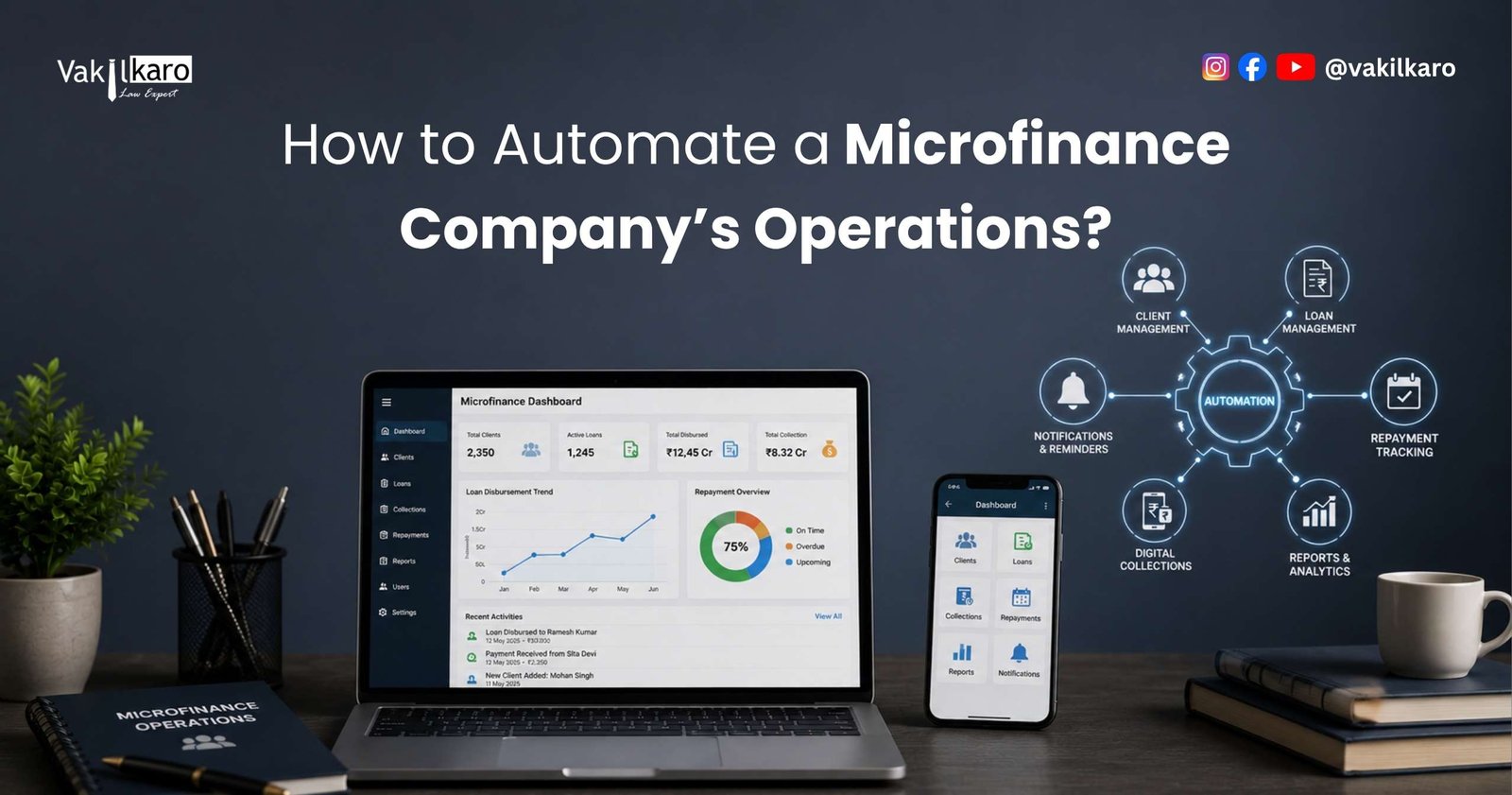
Automating microfinance operations is crucial for improving efficiency, reducing costs, and ensuring compliance. Whether managing a Section 8 microfinance company or an NBFC, automation streamlines loan processing, customer management, and financial reporting. Key benefits include faster loan approvals, enhanced data security, and improved customer experience. Digital tools like AI-powered credit scoring, automated compliance tracking, and cloud-based accounting optimize operations. Implementing automation requires assessing current processes, integrating systems, and training employees. Additionally, automating microfinance company registration and NBFC registration operations simplifies documentation and regulatory adherence. Embracing automation enables microfinance companies to scale efficiently while maintaining transparency and compliance.
Key Takeaways
- Additionally, automating microfinance company registration and NBFC registration operations simplifies documentation and regulatory adherence.
- Moreover, automating microfinance company registration and NBFC registration operations simplifies documentation and regulatory procedures.
- We will also explore how digital transformation can simplify microfinance company registration and improve the efficiency of automating an NBFC registration’s operations.
- Features to Include: AI-driven risk assessment Transaction anomaly detection Automated fraud alerts Steps to Implement Automation in a Microfinance Company Step 1: Assess Current Operations Begin by evaluating your existing processes and identifying areas that need automation.
- Whether managing a Section 8 microfinance company, completing microfinance company registration, or automating an NBFC registration’s operations, leveraging technology leads to sustainable growth and operational excellence.
Enhancing Microfinance Operations Through Automation
Automating the operations of a microfinance company is essential for increasing efficiency, cutting costs, and maintaining regulatory compliance. Whether managing a Section 8 microfinance company or a registered Non-Banking Financial Company (NBFC), leveraging automation can streamline loan processing, customer management, and financial reporting, ultimately improving overall productivity.
One of the key advantages of automation is the acceleration of loan approvals. Traditional manual processing is time-consuming and prone to human errors. By integrating AI-powered credit scoring systems and digital loan application platforms, microfinance companies can evaluate borrower eligibility more accurately and approve loans faster. This not only enhances customer satisfaction but also ensures better risk management.
Data security and compliance are also critical aspects of microfinance operations. Automated compliance tracking systems help ensure adherence to legal regulations, minimizing the risk of penalties. Cloud-based accounting software facilitates real-time financial reporting and reduces errors, improving transparency in financial transactions. Additionally, automated fraud detection tools analyze transaction patterns to identify suspicious activities, preventing potential financial risks.
Automation also plays a vital role in customer relationship management. Digital CRM systems allow microfinance companies to track customer interactions, send automated payment reminders, and provide seamless communication via chatbots and mobile notifications. This enhances the overall customer experience by making loan applications, repayments, and inquiries more accessible and efficient.
Moreover, automating microfinance company registration and NBFC registration operations simplifies documentation and regulatory procedures. Online submission portals, AI-based verification, and automated compliance checks reduce paperwork and processing delays, ensuring a hassle-free registration process.
Embracing automation enables microfinance companies to scale their operations while maintaining efficiency, security, and regulatory compliance. By integrating advanced digital solutions, microfinance institutions can enhance service delivery, minimize risks, and build a sustainable, technology-driven financial ecosystem.
Microfinance companies serve as a vital financial bridge for small businesses, entrepreneurs, and individuals who lack access to traditional banking services. These institutions provide essential financial support, including microloans, savings accounts, and credit facilities, enabling economic growth at the grassroots level. However, managing a microfinance company comes with its own set of challenges, including high operational costs, manual inefficiencies, and stringent regulatory compliance requirements. To overcome these hurdles and scale operations effectively, automating key business processes is becoming increasingly necessary.
The demand for microfinance services continues to rise as more individuals and businesses seek financial assistance outside conventional banking channels. With this growing demand, manual handling of loan applications, customer records, and compliance documentation can become overwhelming and error-prone. Automation offers a strategic solution by digitizing and streamlining these processes, ensuring faster loan approvals, reducing administrative burdens, and enhancing overall efficiency. Whether operating a Section 8 microfinance company or a registered Non-Banking Financial Company (NBFC), leveraging advanced technology can improve workflow, enhance customer experience, and ensure regulatory adherence.
This blog will delve into the essential steps to automating microfinance operations, covering critical aspects such as loan origination and processing, customer relationship management (CRM), regulatory compliance, financial reporting, and fraud prevention. We will also explore how digital transformation can simplify microfinance company registration and improve the efficiency of automating an NBFC registration’s operations. By adopting automation tools such as AI-driven risk assessment, digital payment integrations, and cloud-based accounting systems, microfinance institutions can operate more efficiently while maintaining financial transparency and security.
Through automation, microfinance companies can not only streamline their services but also expand their reach, reduce operational costs, and strengthen their position in the financial sector. Embracing technology-driven solutions is the key to achieving long-term growth and sustainability in the competitive microfinance landscape.
Benefits of Automating a Microfinance Company
Increased Efficiency
Manual processes are time-consuming and prone to errors. Automation eliminates redundant tasks, speeds up approvals, and enhances accuracy in loan disbursement and collection.
Cost Reduction
By automating operations, microfinance companies can significantly cut administrative costs, reduce paperwork, and optimize resources.
Regulatory Compliance
Automation ensures that all transactions and reporting processes comply with regulatory requirements, including those specific to Section 8 microfinance companies and NBFCs.
Enhanced Customer Experience
Customers benefit from quick loan approvals, seamless transactions, and better access to financial services through digital platforms.
Data Security and Fraud Prevention
Automated systems provide enhanced data security, reducing the risk of fraud and ensuring transparency in financial transactions.
Key Areas to Automate in a Microfinance Company
Loan Origination and Processing
Automating loan origination simplifies the application, evaluation, and approval process. A loan management system (LMS) integrated with artificial intelligence (AI) can assess creditworthiness, verify documents, and approve loans within minutes.
Features to Include:
- Digital loan applications
- AI-based credit scoring
- Document verification via OCR (Optical Character Recognition)
- Automated loan disbursement
Customer Relationship Management (CRM)
A CRM system helps manage customer interactions, track inquiries, and maintain a database of existing clients. It also enhances communication through automated emails, SMS alerts, and mobile app notifications.
Features to Include:
- Customer profiling and segmentation
- Automated reminders for loan payments
- Chatbots for customer support
Accounting and Financial Management
Automating accounting processes ensures accurate financial reporting and compliance with NBFC and microfinance company regulations. Cloud-based accounting software can track transactions, generate financial statements, and reconcile accounts automatically.
Features to Include:
- Digital ledger maintenance
- Automated reconciliation with bank statements
- Tax calculation and filing
Compliance and Regulatory Reporting
A Section 8 microfinance company must adhere to strict regulatory guidelines. Automating compliance reporting reduces human errors and ensures timely submission of reports.
Features to Include:
- Auto-generation of compliance reports
- GST and RBI compliance tracking
- Audit trails and real-time monitoring
Loan Collection and Repayment Automation
Automated loan collection reduces defaults and improves recovery rates. Digital payment gateways enable customers to make payments through various modes, such as UPI, net banking, and mobile wallets.
Features to Include:
- Auto-debit for EMIs
- Digital payment integrations
- Automated reminders for due payments
Risk Management and Fraud Detection
Automated risk management tools analyze transaction patterns and identify potential fraud cases. Machine learning algorithms help predict risky borrowers, ensuring better risk mitigation.
Features to Include:
- AI-driven risk assessment
- Transaction anomaly detection
- Automated fraud alerts
Steps to Implement Automation in a Microfinance Company
Step 1: Assess Current Operations
Begin by evaluating your existing processes and identifying areas that need automation. Consider factors like loan volume, customer interactions, and compliance requirements.
Step 2: Choose the Right Technology
Select a technology stack that aligns with your business needs. Cloud-based microfinance software, AI-powered chatbots, and digital payment gateways are essential for a seamless automation experience.
Step 3: Integrate Systems
Ensure smooth integration of all systems, including CRM, loan management, accounting, and compliance platforms. API-based integrations help in real-time data exchange between different systems.
Step 4: Train Employees
Employee training is crucial to successfully implementing automation. Conduct workshops to educate staff about new digital tools and ensure they can efficiently operate the automated systems.
Step 5: Monitor and Optimize
Regularly monitor automated systems and gather feedback from employees and customers. Optimize processes based on performance analytics and technological advancements.
How to Automate an NBFC Registration’s Operations
Automating the NBFC registration process offers significant advantages by streamlining documentation, minimizing delays, and ensuring strict adherence to Reserve Bank of India (RBI) guidelines. The traditional manual registration process involves extensive paperwork, multiple verification steps, and prolonged approval timelines, making it time-consuming and prone to human errors. By integrating digital tools and automation software, financial institutions can expedite the registration process, reduce operational bottlenecks, and enhance overall efficiency.
One of the key benefits of automation in NBFC registration is the seamless handling of documentation. Digital platforms enable applicants to submit all required documents online, eliminating the need for physical paperwork and in-person visits. Cloud-based document management systems ensure secure storage, easy retrieval, and real-time tracking of application progress. Automated verification tools, such as AI-driven identity verification and Optical Character Recognition (OCR) technology, can quickly validate submitted documents, reducing the risk of errors and fraud.
Automation also plays a crucial role in regulatory compliance. RBI has stringent guidelines for NBFC registration, including net owned funds requirements, fit and proper criteria for directors, and anti-money laundering (AML) measures. An automated system can track compliance requirements, send reminders for necessary filings, and generate regulatory reports in real time. This proactive approach reduces the chances of non-compliance, ensuring that all necessary regulatory submissions are completed on time without manual intervention.
By leveraging automation, NBFCs can significantly reduce the time taken for registration, enhance transparency in the approval process, and maintain compliance with RBI’s evolving regulations. Ultimately, this digital transformation not only accelerates business establishment but also fosters a more efficient and structured financial ecosystem, enabling NBFCs to focus on their core operations and serve customers more effectively.
Key Steps:
- Online Document Submission – Use cloud-based portals for submitting registration documents digitally.
- Automated Verification – Implement AI-based systems to verify documents and applicant details.
- Compliance Tracking – Use automation to ensure adherence to RBI regulations and timely report submissions.
- Digital KYC and AML Compliance – Automate KYC and Anti-Money Laundering (AML) checks to prevent fraudulent activities.
- AI-Powered Decision Making – Leverage AI to analyze financial data and make faster approval decisions.
Conclusion
Automation is revolutionizing the microfinance industry by optimizing operations, reducing costs, and ensuring regulatory compliance. As microfinance institutions play a critical role in providing financial services to underserved communities, adopting digital solutions becomes essential to meet growing demand and regulatory expectations. Whether managing a Section 8 microfinance company, completing microfinance company registration, or automating an NBFC registration’s operations, leveraging technology leads to sustainable growth and operational excellence.
One of the most significant advantages of automation in microfinance is the improvement in efficiency. AI-powered loan management systems streamline the lending process by automating credit assessment, document verification, and loan disbursement. This reduces the time taken for approvals and minimizes errors caused by manual processing. Additionally, digital Customer Relationship Management (CRM) platforms help institutions manage customer interactions effectively, providing seamless communication through automated notifications, reminders, and chatbots.
Compliance is another critical area where automation proves beneficial. Microfinance companies must adhere to various legal and financial regulations, including RBI guidelines, anti-money laundering (AML) measures, and tax compliance. Automated compliance tracking tools help businesses generate regulatory reports, monitor transactions in real-time, and ensure timely submissions, thereby reducing the risk of penalties or non-compliance.
Furthermore, risk management tools powered by artificial intelligence can analyze customer data, detect potential fraud, and predict credit risk, enabling microfinance companies to make informed decisions. Digital payment gateways and automated loan collection mechanisms also improve repayment rates, ensuring better financial stability for the company.
As the financial landscape becomes increasingly digital, embracing automation is no longer optional but a necessity for staying competitive. By integrating advanced technologies, microfinance companies can enhance customer experience, scale operations efficiently, and achieve long-term sustainability in an evolving market.
Vakilkaro is a trusted name for legal, financial, and business services, offering comprehensive solutions tailored to meet diverse business needs. Whether you require assistance with microfinance company registration Section 8 microfinance company setup, NBFC compliance, trademark registration tax filing, or corporate legal documentation, Vakilkaro provides expert guidance and seamless execution.
Why choose Vakilkaro for other services?
Choosing Vakilkaro ensures expert consultation, hassle-free processes, and compliance with legal regulations, helping businesses avoid delays and penalties. Their team of professionals simplifies complex procedures, ensuring smooth registrations, licensing, and compliance management. Additionally, their customer-centric approach offers personalized assistance, making legal and financial processes effortless.
For businesses looking to automate operations, Vakilkaro provides cutting-edge solutions for NBFC registration automation, loan management, digital compliance tracking, and AI-powered risk management. Their expertise in integrating technology into financial operations ensures increased efficiency, cost reduction, and regulatory adherence.
Vakilkaro also offers end-to-end support for intellectual property protection like trademark registration, contract drafting, business structuring, and tax advisory services, making it a one-stop solution for startups, MSMEs, and large enterprises. With a reputation for reliability, transparency, and efficiency, Vakilkaro helps businesses navigate legal and financial complexities, ensuring growth and sustainability.
Official External Resources
Use these primary/official sources to verify rules, forms, fees, timelines and regulatory updates before publication.
Frequently asked questions
How to Automate a Microfinance Company’s Operations?+
Additionally, automating microfinance company registration and NBFC registration operations simplifies documentation and regulatory adherence. Features to Include: AI-driven risk assessment Transaction anomaly detection Automated fraud alerts Steps to Implement Automation in a Microfinance Company Step 1: Assess Current Operations Begin by evaluating your existing processes and identifying areas that need automation.
