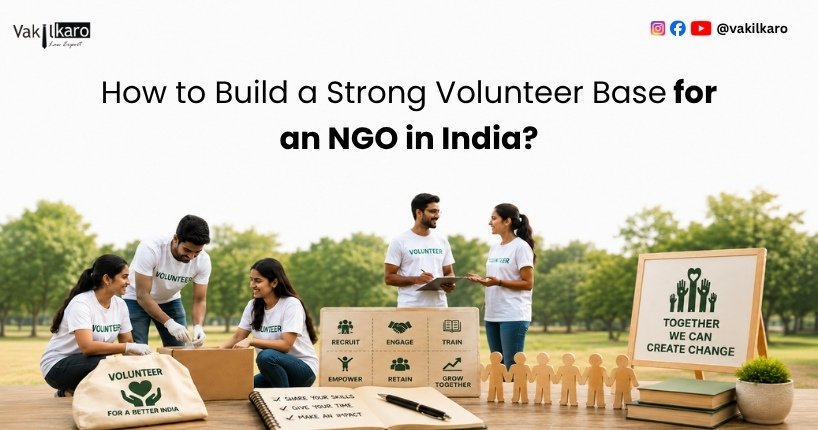
Volunteers are the heart of any NGO, especially in India, where social issues are widespread and pressing. While funding is essential, the consistent support of committed and passionate volunteers makes long-term impact possible. Building a strong volunteer base requires more than outreach—it demands trust, structure, and meaningful engagement. This blog offers practical strategies for NGOs to attract, manage, and retain volunteers while ensuring legal compliance through NGO registration, Section 8 company registration, and 12A and 80G registration. With the right foundation and approach, NGOs can build a vibrant volunteer community that drives sustainable social change across the country.
Key Takeaways
- Building a strong volunteer base isn’t just about numbers—it’s about creating a community of people who are inspired by your mission and empowered to take meaningful action.
- They need a strong volunteer base to implement programs, reach underserved communities, and amplify their impact.
- This blog delves into practical and actionable steps that NGOs can take to build a strong, sustainable volunteer base.
- Conclusion Building a strong volunteer base is not just about numbers—it’s about cultivating a community that believes in your cause and is willing to contribute their time, energy, and skills to further it.
- By creating clear structures, engaging storytelling, robust management practices, and volunteer-friendly policies, your NGO can build a reliable and long-lasting volunteer base.
Why Volunteers Are the Lifeblood of NGOs in India?
Volunteers form the backbone of Non-Governmental Organizations (NGOs) across the globe, and this holds especially true in India. With a population facing widespread challenges—ranging from poverty and illiteracy to environmental degradation and gender inequality—NGOs step in to fill critical gaps in public service delivery. However, no NGO can function effectively without the steady support of dedicated volunteers who bring energy, skills, and a passion for change.
In India, where financial resources are often stretched thin, volunteers not only supplement manpower but also bring credibility and community trust to an NGO’s mission. Their contributions are vital for implementing grassroots initiatives, organizing awareness campaigns, and extending the organization’s reach to remote areas. However, recruiting and retaining volunteers is not always easy—it requires thoughtful planning, clear communication, and legal credibility.
Before inviting volunteers to participate, NGOs must establish a foundation of trust and legitimacy. This begins with obtaining NGO registration or Section 8 company registration, which signifies that the organization is officially recognized and operates transparently. Additionally, securing 12A and 80G registration enhances financial accountability and demonstrates compliance with Indian tax regulations. These registrations also signal to potential volunteers—and their families—that the NGO adheres to ethical and legal standards.
Building a strong volunteer base isn’t just about numbers—it’s about creating a community of people who are inspired by your mission and empowered to take meaningful action. It demands consistent engagement, a structured approach to volunteer management, and recognition of their efforts. With the right strategy and legal groundwork, NGOs can harness the power of volunteers to deliver lasting social impact, even in resource-constrained environments. In a country where collective effort is key to solving systemic problems, empowering volunteers is not just a strategy—it’s a necessity.
Volunteers are the driving force behind the success and sustainability of any Non-Governmental Organization (NGO) They bring passion, dedication, and a deep commitment to social change—often working without expecting financial rewards. In a diverse and populous country like India, where a range of complex challenges exist—such as poverty, illiteracy, gender inequality, poor healthcare, and environmental degradation—NGOs play a pivotal role in addressing gaps left by government and market mechanisms. But even the most well-intentioned NGOs cannot achieve their missions alone. They need a strong volunteer base to implement programs, reach underserved communities, and amplify their impact.
While funding and legal recognition are undoubtedly important, volunteers bring life to these organizations. They help build credibility, extend operational reach, and generate grassroots momentum. However, attracting and retaining volunteers is not a simple task. It goes beyond simply asking for help—it requires a strategic framework that builds trust, defines roles, ensures engagement, and recognizes contributions.
Moreover, legal credibility plays a significant role in volunteer mobilization. In India, NGOs with NGO registration or Section 8 company registration are more likely to gain the trust of potential volunteers due to their official status and commitment to transparency. Likewise, obtaining 12A and 80G registration not only signals compliance with tax and financial norms but also reassures volunteers and partners that the organization operates within a legitimate and ethical framework.
This blog delves into practical and actionable steps that NGOs can take to build a strong, sustainable volunteer base. From setting up legal structures and defining volunteer roles to using digital platforms and offering recognition, every aspect of volunteer management is explored to help NGOs in India harness the true power of human potential for lasting social transformation.
Establish Legal Credibility
Before reaching out to potential volunteers, NGOs must establish credibility. Legal recognition through NGO registration or Section 8 company registration signals professionalism and legitimacy. Many volunteers, especially those from urban areas or corporate backgrounds, prefer working with organizations that are officially recognized.
Furthermore, having 12A and 80G registration not only provides tax benefits to donors but also reflects the NGO’s commitment to transparency and financial accountability. This instills trust among volunteers who want assurance that they are associating with a legally compliant and mission-driven organization.
Define Clear Roles and Objectives
Volunteers need clarity on what is expected from them. A successful volunteer strategy begins with defining the scope of engagement. Whether it’s teaching underprivileged children, organizing health camps, raising awareness about environmental issues, or supporting women’s empowerment programs, NGOs must align volunteer roles with their mission.
Create role-specific descriptions outlining tasks, required skills, time commitments, and expected outcomes. A Section 8 company or NGO with robust processes will find it easier to onboard and manage volunteers when roles are predefined.
Leverage Your Mission to Inspire
People are more likely to volunteer for causes they believe in. NGOs must articulate their mission in a compelling and emotionally resonant manner. Use storytelling to convey your impact, whether it’s through blogs, videos, newsletters, or social media. Highlight real stories of transformation brought about by your interventions.
For organizations that have undergone Section 8 company registration or NGO registration, showcasing the social purpose legally encoded in your registration documents can further inspire confidence among potential volunteers.
Build an Online Presence
In today’s digital age, most people discover volunteer opportunities online. A professional website, active social media channels, and presence on platforms like iVolunteer, GiveIndia, or Youth for Seva can greatly increase your visibility.
Highlight your 12A and 80G registration on your website to assure credibility. Make sure there’s a clear "Volunteer With Us" section where interested individuals can learn about opportunities and sign up easily.
Partner with Educational Institutions
Colleges and universities are excellent sources of enthusiastic volunteers looking to fulfill their internship or social responsibility requirements. Partner with institutions that have mandatory community service programs or encourage student-led social initiatives.
Your NGO’s legal standing—especially if you hold Section 8 company registration—can help in formalizing these partnerships and even gaining access to government-sponsored youth volunteer programs.
Engage Corporate Volunteers Through CSR
Corporate Social Responsibility (CSR) has become a significant driver of volunteering in India. Many companies encourage employees to contribute time to social causes during work hours. NGOs with 12A and 80G registration are eligible to receive CSR funds and collaborate with companies for volunteer-based initiatives.
If your NGO is registered as a Section 8 company, you may be better positioned to enter formal MoUs with corporates and scale volunteer programs through employee engagement.
Organize Volunteer Training Programs
Training helps align volunteers with your vision, equips them with the necessary skills, and boosts their confidence. Design onboarding sessions that introduce your NGO’s mission, explain operating procedures, and address ethical and cultural sensitivities.
Organizations that have completed NGO registration or Section 8 company registration can develop structured volunteer policies and standard operating procedures that promote consistency and professionalism in their volunteer programs.
Use Volunteer Management Tools
Managing a growing volunteer base manually can become overwhelming. Invest in low-cost or free volunteer management software such as Google Workspace, Trello, Airtable, or specific platforms like Golden Volunteer or InitLive. These tools help track volunteer hours, manage schedules, and communicate efficiently.
Even small NGOs with limited budgets can leverage free tech tools to professionalize their systems. Legal recognition through NGO registration or 12A and 80G registration can make them eligible for tech grants from platforms like TechSoup India.
Recognize and Reward Volunteer Contributions
Recognition boosts morale and encourages long-term engagement. Host volunteer appreciation events, award certificates, feature volunteers in your newsletters, and write personalized thank-you messages. Some NGOs also offer recommendation letters or internship certificates, especially to student volunteers.
An NGO with Section 8 company registration is perceived as more formal and reliable, which makes such recognition more valuable in the eyes of volunteers, particularly students seeking academic credit or professionals looking for social credentials.
Create Leadership Opportunities for Volunteers
One effective way to retain volunteers is to offer them growth opportunities. Identify long-term volunteers and assign them leadership roles such as team leads, program coordinators, or regional ambassadors. This not only boosts their motivation but also builds a pipeline of capable leaders within your organization.
A structured organization—especially one with Section 8 company registration—is better suited to define such internal hierarchies and integrate volunteers into governance and decision-making processes over time.
Maintain Legal and Ethical Standards
Volunteers must be protected and treated fairly. Develop policies on child safety, harassment, privacy, and health and safety to ensure a secure working environment. Ensure you meet the compliance requirements under laws like the Indian Labour Law and applicable provisions of the Income Tax Act.
Having 12A and 80G registration and NGO registration positions your NGO as a responsible entity that adheres to legal standards—something that increasingly matters to socially conscious volunteers.
Encourage Peer Referrals and Alumni Engagement
Volunteers who have had a positive experience are your best ambassadors. Encourage them to bring their friends, classmates, or colleagues on board. You can also maintain a database of volunteer alumni and reach out to them periodically for support, mentorship, or special events.
A legally compliant NGO with Section 8 company registration and transparent processes is more likely to gain the trust of volunteer networks and keep alumni engaged over time.
Localize Volunteer Programs
While urban youth often look for volunteering opportunities, there is untapped potential in rural communities as well. NGOs working in specific geographies can benefit by creating hyper-local volunteer programs that involve community members.
If you’ve secured NGO registration, you can also participate in state or district-level government schemes that promote local volunteering. Your localized programs will be more effective and scalable with a strong grassroots volunteer network.
Measure and Share Volunteer Impact
Collect data on the number of volunteer hours, beneficiaries reached, events organized, and feedback received. Use this data to create visual impact reports and share them on your website or social media.
Organizations with 12A and 80G registration are already required to maintain financial transparency. By also showcasing volunteer impact, you enhance your overall credibility and demonstrate the value of your human capital to funders, partners, and future volunteers.
Conclusion
Building a strong volunteer base is not just about numbers—it’s about cultivating a community that believes in your cause and is willing to contribute their time, energy, and skills to further it. For NGOs in India, this process must be backed by sound legal foundations such as NGO registration, Section 8 company registration, and 12A and 80G registration to ensure legitimacy and sustainability.
By creating clear structures, engaging storytelling, robust management practices, and volunteer-friendly policies, your NGO can build a reliable and long-lasting volunteer base. In a nation that thrives on collective effort, empowering volunteers is one of the most impactful ways to drive meaningful and scalable social change.
Why Choose Vakilkaro for NGO Legal Services and Volunteer Program Support
Building a legally compliant, credible, and impactful NGO begins with getting the right legal foundations in place—and Vakilkaro is the ideal partner to help you do just that. Whether you're starting a new nonprofit, expanding your existing operations, or aiming to build a strong volunteer base, Vakilkaro offers comprehensive legal and compliance services tailored to the unique needs of NGOs and social enterprises in India.
✅ Expertise in NGO and Section 8 Company Registration
Vakilkaro specializes in NGO registration, Trusts, Societies, and Section 8 company registration. Their experienced legal professionals guide you through every step—from selecting the appropriate structure to drafting essential documents and ensuring quick approvals. This lays the groundwork for credibility and professionalism, which is critical for attracting both volunteers and donors.
✅ Seamless 12A and 80G Registration
Vakilkaro simplifies the process of securing 12A and 80G registration, making your NGO eligible for tax exemptions and enabling donors to claim tax benefits. These certifications not only enhance your fundraising ability but also show volunteers that your NGO is financially accountable and legally sound.
✅ End-to-End Compliance and Reporting
From filing annual returns to preparing documentation for audits and grant applications, Vakilkaro ensures that your NGO remains compliant with the Income Tax Act, Companies Act, and other regulatory bodies. Their support helps NGOs avoid penalties and focus on mission-driven work.
✅ Additional Services Provided by Vakilkaro:
- FCRA Registration for foreign funding
- GST filing & tax advisory
- Trademark registration and IP protection
- Legal drafting (MOUs, contracts, policies)
- Accounting, bookkeeping & audits
- Corporate legal services for startups and MSMEs
✅ Affordable, Transparent & Supportive
Vakilkaro offers clear pricing, professional guidance, and unmatched customer support to help NGOs navigate legal complexities confidently. With Vakilkaro, you get more than a legal service—you get a long-term partner committed to helping your organization grow, stay compliant, and maximize impact.
Whether you're starting an NGO, applying for 80G, or scaling up your volunteer base, Vakilkaro is the one-stop legal solution you can trust.
Official External Resources
Use these primary/official sources to verify rules, forms, fees, timelines and regulatory updates before publication.
Frequently asked questions
How to Build a Strong Volunteer Base for an NGO in India?+
Building a strong volunteer base isn’t just about numbers—it’s about creating a community of people who are inspired by your mission and empowered to take meaningful action. This blog delves into practical and actionable steps that NGOs can take to build a strong, sustainable volunteer base.
