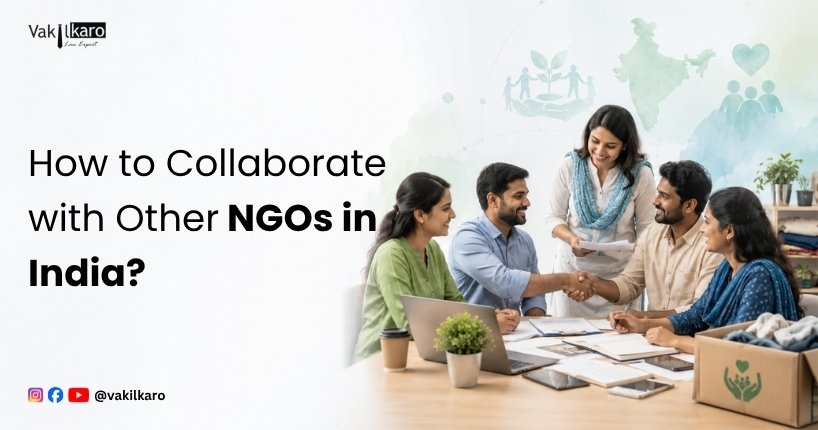
Collaboration is vital for NGOs aiming to create lasting change in India’s diverse socio-economic landscape. No single organization can address every challenge alone. Partnering with other NGOs fosters innovation, resource sharing, and greater impact. Whether in healthcare, education, or women’s empowerment, collaborations help optimize efforts, build credibility, and scale initiatives. This blog outlines practical strategies, legal steps like Section 8 company registration and 12A/80G compliance, and real case studies to help NGOs form successful partnerships. With expert support from legal advisors like VakilKaro, NGOs can collaborate confidently while ensuring legal compliance and long-term sustainability.
Key Takeaways
- By forming partnerships with other NGOs, organizations can scale their impact, increase operational efficiency, and deliver more holistic services to the communities they serve.
- From identifying the right partners and drafting formal agreements to understanding legal compliance and overcoming potential challenges, it offers a comprehensive guide to help NGOs collaborate effectively and ethically.
- Collaboration among NGOs goes beyond merely joining forces—it is about uniting under a shared vision, leveraging each other’s expertise, and strengthening each other's capabilities to achieve greater social good.
- Steps to Collaborate Effectively Collaborating with other NGOs can be a strategic move that maximizes impact, but it must be approached with careful planning and clear communication.
- Whether you’re initiating a partnership or need legal compliance assistance, VakilKaro can help with: Section 8 company registration Drafting MoUs and legal agreements 12A and 80G registration FCRA registration and compliance Due diligence for partner NGOs Legal audits and advisory With their expert legal team, NGOs can collaborate confidently and compliantly.
The Power of NGO Collaboration in India: Strategies, Benefits, and Legal Insights
In India’s vast and diverse socio-economic environment, collaboration among NGOs is not just beneficial—it’s essential. Given the complexity of social challenges and the scale at which solutions are needed, no single organization can create large-scale impact alone. By joining forces, NGOs can pool resources, share expertise, and amplify their reach to serve communities more effectively.
Collaboration between NGOs opens doors to innovation and efficiency. Whether it's working together on a joint project, sharing data and infrastructure, or advocating for policy change, partnerships allow NGOs to build on each other’s strengths. This leads to improved service delivery, cost savings, and increased credibility in the eyes of donors, communities, and regulatory bodies.
Identifying the right partner is the first step. NGOs should seek organizations with similar goals, complementary capabilities, and proper legal registrations like Section 8 company incorporation and 12A and 80G certification. Once a potential partner is identified, it’s important to outline clear roles, goals, timelines, and responsibilities. Drafting a Memorandum of Understanding (MoU) ensures mutual understanding and helps avoid conflicts.
Legal compliance is a critical aspect of successful collaboration. Both NGOs must be registered and adhere to relevant laws, especially when handling joint funds or foreign contributions. If foreign funding is involved, FCRA registration and adherence to data protection norms become crucial. This is where experienced legal advisors like VakilKaro provide immense value—offering services such as MoU drafting, due diligence, and compliance checks.
Ultimately, successful NGO Registration collaboration hinges on transparency, mutual respect, and shared vision. By working together, NGOs not only expand their impact but also foster a culture of cooperation that drives sustainable development. With the right approach and legal backing, collaborations can become a catalyst for meaningful social change across India.
Collaboration is one of the most transformative strategies available to NGOs aiming to bring about lasting social change in India. With a population of over 1.4 billion and a wide spectrum of socio-economic disparities, the challenges facing the country—ranging from poverty, illiteracy, and malnutrition to gender inequality, climate change, and lack of access to healthcare—are far too vast for any single organization to address in isolation. In such a landscape, working together becomes not just an option, but a necessity.
By forming partnerships with other NGOs, organizations can scale their impact, increase operational efficiency, and deliver more holistic services to the communities they serve. Collaboration allows NGOs to pool their knowledge, resources, and networks, making it easier to tackle complex problems with multi-dimensional solutions. For example, an NGO focusing on child education may partner with one working in child nutrition, thus offering more comprehensive support to the same beneficiaries.
Moreover, partnerships promote innovation through the cross-pollination of ideas and methodologies. NGOs can learn from each other’s experiences, adopt best practices, and explore new ways of working. This not only strengthens program effectiveness but also builds organizational capacity in the long run.
Whether your organization works in the realm of education, health, livelihoods, women’s rights, or environmental sustainability, joining hands with like-minded NGOs can unlock opportunities for deeper community engagement, increased visibility, and access to diversified funding sources.
This blog delves into the practical aspects of NGO collaboration in India. From identifying the right partners and drafting formal agreements to understanding legal compliance and overcoming potential challenges, it offers a comprehensive guide to help NGOs collaborate effectively and ethically. With the right mindset and strategic planning, collaboration can be a catalyst for long-term, scalable social impact.
Why NGO Collaboration Matters?
Collaboration among NGOs goes beyond merely joining forces—it is about uniting under a shared vision, leveraging each other’s expertise, and strengthening each other's capabilities to achieve greater social good. In India, where socio-economic challenges are often interconnected and region-specific, partnerships can significantly amplify the reach and effectiveness of nonprofit initiatives.
One of the biggest advantages of collaboration is the ability to create a broader impact. When NGOs combine their knowledge, resources, and operational strengths, they can scale programs across multiple regions and communities. This geographic and demographic expansion allows for more inclusive and widespread change, reaching individuals who may otherwise remain underserved.
Resource optimization is another critical benefit. Collaborating organizations can share infrastructure, manpower, data, and funding opportunities—cutting down on overhead costs and minimizing duplication of efforts. This ensures that limited resources are used efficiently and channeled directly into service delivery.
Working together also enhances the credibility of the organizations involved. Donors, government bodies, and the public tend to place more trust in collaborative initiatives that show unified efforts and transparency. Partnerships signal professionalism and accountability, which can lead to increased funding and policy support.
Moreover, collaboration fosters innovation. When NGOs with different backgrounds and experiences come together, they introduce new ideas and perspectives. This creative synergy often leads to better solutions for complex problems, encouraging adaptive and dynamic program designs.
Lastly, partnerships promote capacity building. NGOs can learn from each other’s successes and failures, improving their internal systems, compliance practices, and community engagement strategies. Experienced organizations can mentor smaller or newer NGOs, creating a ripple effect of growth and improvement across the nonprofit sector.
In essence, collaboration is not just a smart strategy—it’s a powerful necessity for NGOs aiming to create lasting and scalable social impact in India.
Types of NGO Collaborations
NGO collaboration in India can take many forms, depending on the organizations’ missions, legal structures, and strategic goals. Each type of partnership offers unique advantages and can help NGOs strengthen their impact while optimizing resources. Below are some of the most common and effective types of collaborations.
Programmatic Collaboration
This is one of the most impactful forms of NGO partnerships. When two or more NGOs with aligned missions come together, they can design and implement joint programs that address various dimensions of a common issue. For instance, in a rural development project, one NGO may focus on delivering primary healthcare while another handles nutrition and sanitation awareness within the same community. Such collaborative programming ensures holistic development and prevents duplication of efforts.
Capacity Building
Experienced NGOs can play a mentorship role by training newer or smaller organizations. These collaborations often focus on areas like project design, monitoring and evaluation, fundraising, legal compliance, and human resource development. Through workshops, on-site training, or shadowing programs, organizations build each other's strengths and improve sector-wide effectiveness.
Advocacy Campaigns
NGOs often join forces to influence public policy, raise awareness, or campaign for social justice. By working together, they can organize larger movements around issues such as gender equality, child rights, or environmental sustainability. A united voice helps draw greater public and political attention and adds weight to policy reform demands.
Resource Sharing
Collaborating NGOs can also share tangible and intangible resources such as office space, vehicles, staff, data, tools, or research materials. This is especially beneficial for smaller NGOs operating on tight budgets, as it reduces operational costs while promoting knowledge exchange.
Funding Partnerships
Joint funding proposals—especially for CSR initiatives or international grants—are becoming more common. By collaborating, NGOs present a more compelling case to funders, showing synergy, scale, and shared accountability. These partnerships not only enhance the chances of winning grants but also foster long-term financial stability through shared responsibilities.
In sum, collaboration can be tailored to meet the strategic needs of the organizations involved, offering flexibility, innovation, and resilience in tackling India’s complex social challenges.
Steps to Collaborate Effectively
Collaborating with other NGOs can be a strategic move that maximizes impact, but it must be approached with careful planning and clear communication. Below are the key steps to build strong, effective, and compliant NGO collaborations in India.
Identify Strategic Partners
The first step is to identify potential NGO partners that share your organization’s vision, mission, or work in a similar geographical or thematic area. Platforms like GuideStar India, NGO Darpan, and GiveIndia provide databases of registered, credible NGOs and can be invaluable during this process. While shortlisting potential collaborators, consider their alignment of values, programmatic strengths, compliance status (such as Section 8 company registration, 12A/80G certification, and FCRA registration), and overall reputation. Compatibility in these areas will ensure smoother collaboration.
Initiate Contact
Once you’ve identified potential partners, reach out with a formal letter or proposal. Clearly explain the purpose of collaboration, the areas where your organizations could synergize, and your NGO’s background—highlighting legal registrations, certifications, and past impact. This helps build trust from the outset. Additionally, attending networking events like CSR summits, online forums, or capacity-building workshops offers a more organic way to establish relationships with like-minded NGOs.
Define Objectives and Roles
Establishing clear, mutually agreed objectives is key to any successful partnership. Collaborating NGOs should define specific roles, expected contributions (such as staff, funding, or infrastructure), timelines, and budgets. It’s also important to set up communication systems to ensure smooth coordination. This prevents confusion, ensures accountability, and helps in tracking progress collectively.
Draft a Memorandum of Understanding (MoU)
An MoU serves as a formal yet non-binding document that outlines the scope and expectations of the collaboration. It should cover the duration of the partnership, reporting formats, conflict resolution mechanisms, and termination clauses. If the collaboration involves handling funds, intellectual property, or legal liabilities, it's advisable to go beyond an MoU and draft legal contracts with support from legal advisors like VakilKaro.
Maintain Transparency and Communication
Open, consistent communication is the backbone of effective collaboration. NGOs should schedule regular meetings, share updates, and maintain accessible documentation. Digital tools like Google Drive, Slack, WhatsApp, Trello, or Asana can help manage communication, task delegation, and project timelines efficiently.
Monitor and Evaluate Progress
To ensure that the collaboration achieves its goals, both parties should agree on joint Key Performance Indicators (KPIs) and regularly assess outcomes. Monitoring and evaluation processes should be participatory, with both NGOs contributing to data collection, reporting, and analysis. These insights not only validate the success of the partnership but also highlight areas for improvement.
Legal and Compliance Considerations for NGO Collaboration in India
When NGOs come together to collaborate, it is crucial that the partnership rests on a strong legal and compliance foundation. This ensures transparency, builds donor confidence, and protects all involved parties from future disputes or regulatory issues.
NGO Registration
Before initiating any formal collaboration, it’s essential to verify that both organizations are legally registered entities—either as a Trust under the Indian Trusts Act, a Society under the Societies Registration Act, or a Section 8 Company under the Companies Act, 2013. Collaborating with unregistered or informal groups can compromise the credibility of your NGO and lead to regulatory complications, especially when handling funds or engaging with government and CSR partners.
Section 8 Company Registration
If one or more of the collaborating NGOs are Section 8 companies, special attention must be given to compliance with the Companies Act. These organizations are required to maintain governance structures, conduct board meetings, submit annual financial disclosures, and ensure that partnership activities align with their Memorandum of Association. All collaboration agreements must adhere to these norms to maintain legal standing.
12A and 80G Registration
To receive and offer tax-exempt donations, NGOs must have valid 12A and 80G registrations from the Income Tax Department. These certifications are vital when NGOs jointly apply for grants or CSR funds, as they reassure donors that contributions will be eligible for tax benefits and that the organizations maintain financial transparency.
FCRA Compliance
In cases where foreign funding is involved, the NGO that receives or uses such funds must be registered under the Foreign Contribution (Regulation) Act (FCRA). This includes proper fund utilization, timely reporting, and adherence to FCRA norms. Collaborations where one partner lacks FCRA registration can lead to severe penalties and funding issues.
Data Privacy and Intellectual Property Rights
Collaborative projects often involve sharing data related to beneficiaries, program outcomes, research, or multimedia content. It’s critical to include clear clauses in agreements about data protection, ownership rights, usage permissions, and the handling of intellectual property. Photographs, videos, and reports must be used ethically and with proper consent, particularly when shared in public domains or donor reports.
Best Practice: Given the complexity of legal documentation and the risks involved, it is advisable to consult professional legal advisors like VakilKaro. They can assist in drafting Memorandums of Understanding (MoUs), verifying registrations and certifications, and ensuring that all collaborative efforts comply with the law while protecting the interests of all parties involved.
Challenges in NGO Collaboration and How to Overcome Them
While collaboration offers immense potential for NGOs, it’s not without its challenges. Recognizing these hurdles and proactively addressing them is crucial for building successful and sustainable partnerships.
Cultural Differences
Every NGO has its own unique organizational culture—shaped by leadership styles, communication practices, values, and operational structures. When two or more NGOs come together, these differences can lead to misunderstandings or friction. To overcome this, it’s important to engage in open and respectful dialogue from the start. Setting up joint orientation sessions, sharing internal policies, and promoting cultural sensitivity can foster mutual respect and smoother collaboration.
Lack of Trust
Trust is the cornerstone of any effective partnership, but it often takes time to build. When organizations are new to each other, there may be skepticism about intentions, transparency, or reliability. The best way to develop trust is to start small—initiate pilot projects or short-term collaborations that allow both sides to observe each other’s working style and ethics. Gradually scaling up the partnership as trust grows ensures long-term success.
Power Imbalances
In collaborations between large, well-established NGOs and smaller grassroots organizations, power dynamics can become skewed. Bigger NGOs may unintentionally dominate decision-making or impose their strategies, which can discourage meaningful participation from the smaller partner. To create a healthy balance, collaborations should be structured to ensure shared leadership, inclusive decision-making, and mutual respect for each organization’s contribution.
Funding Competition
One of the most sensitive areas in NGO collaboration is competition for limited funding. Sometimes, even potential partners may view each other as rivals. However, collaboration should be seen as a way to strengthen fundraising efforts rather than divide them. Joint funding proposals, co-branded CSR pitches, or consortium-based grant applications can increase credibility and access to larger funding pools.
Poor Communication
Lack of clear and consistent communication can derail even the most promising partnerships. Miscommunication leads to missed deadlines, confusion over roles, and broken trust. To avoid this, NGOs must establish communication protocols early on—defining meeting schedules, reporting formats, and decision-making channels. Designating liaison officers from each organization can help streamline updates and prevent misunderstandings.
Case Studies of Successful NGO Collaborations in India
Case 1: Akshaya Patra and Government Schools
The Akshaya Patra Foundation partners with government schools across India to provide mid-day meals. By aligning with government systems and smaller local NGOs for logistics, they serve millions of children daily.
Case 2: Goonj and Grassroots NGOs
Goonj collaborates with small NGOs in rural areas to implement its “Cloth for Work” initiative. Goonj supplies materials while local NGOs mobilize communities.
Case 3: Teach for India and Educational NGOs
Teach for India works alongside organizations like Pratham and Central Square Foundation to improve teaching outcomes and policy influence.
These examples show how collaboration can multiply an NGO’s reach and reputation.
Building a Collaborative Culture
At the heart of any successful NGO partnership lies a strong, collaborative culture. This culture goes beyond formal agreements and structures—it’s an internal mindset that values cooperation, openness, and shared purpose. Cultivating this culture within your organization is essential to ensure that collaborations are not only formed but are sustained effectively over time.
- Training your team on partnership skills is a foundational step. Staff at all levels should be equipped with soft skills such as effective communication, negotiation, empathy, and conflict resolution. These competencies are critical when working with external organizations, especially in situations where different operational styles and expectations can cause friction. Regular workshops, simulation exercises, and role plays can prepare your team to navigate collaborative dynamics smoothly.
- Celebrating joint achievements is another way to embed a culture of collaboration. Recognizing the success of partnerships in your organization’s newsletters, annual reports, or social media platforms helps reinforce the value of working together. Acknowledging your partners publicly not only builds goodwill but also sets a positive example for other teams and stakeholders. Additionally, sharing joint success stories with donors enhances your NGO’s credibility and demonstrates your ability to work collectively for greater impact.
- Documenting lessons learned from collaborations is equally important. Every partnership—successful or not—offers valuable insights. By capturing these learnings in the form of case studies, internal reports, or toolkits, your organization creates a knowledge base that future teams can refer to. This documentation can guide better decision-making, avoid repeating mistakes, and inspire new partnership models.
Ultimately, building a collaborative culture is about creating an environment where partnerships are seen not as optional extras, but as essential strategies for achieving long-term social change. With a committed team and a structured approach, your NGO can foster meaningful collaborations that thrive on mutual respect, shared vision, and collective impact.
How VakilKaro Supports NGO Collaborations
VakilKaro is a trusted legal service provider offering end-to-end support for NGOs in India. Whether you’re initiating a partnership or need legal compliance assistance, VakilKaro can help with:
- Section 8 company registration
- Drafting MoUs and legal agreements
- 12A and 80G registration
- FCRA registration and compliance
- Due diligence for partner NGOs
- Legal audits and advisory
With their expert legal team, NGOs can collaborate confidently and compliantly.
Conclusion
Collaboration is the future of social development. When NGOs come together, they don’t just add—they multiply their impact. In India’s diverse and dynamic nonprofit sector, forging strong partnerships can lead to sustainable, scalable change.
By following structured steps, understanding the legal landscape, and embracing a spirit of teamwork, your NGO can unlock the true power of collaboration. And with experienced partners like VakilKaro handling your legal needs, you can focus more on what truly matters—transforming lives.
Official External Resources
Use these primary/official sources to verify rules, forms, fees, timelines and regulatory updates before publication.
Frequently asked questions
How to Collaborate with Other NGOs in India?+
By forming partnerships with other NGOs, organizations can scale their impact, increase operational efficiency, and deliver more holistic services to the communities they serve. Steps to Collaborate Effectively Collaborating with other NGOs can be a strategic move that maximizes impact, but it must be approached with careful planning and clear communication.
