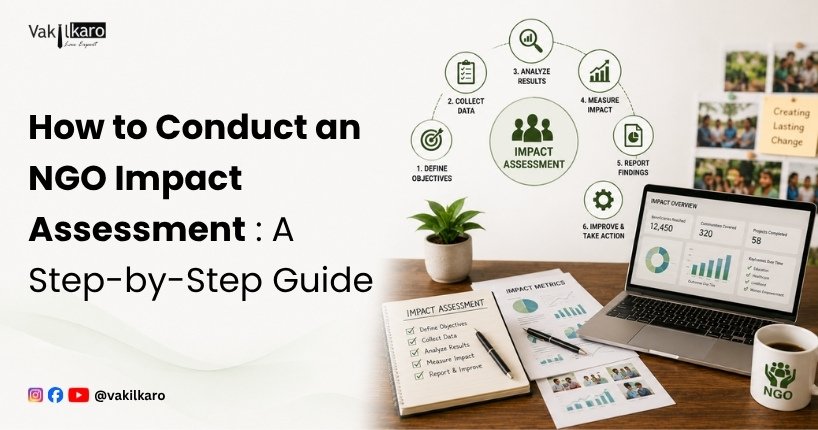
Non-Governmental Organizations (NGOs) are crucial for addressing social issues and require regular impact assessments to evaluate program effectiveness. This process helps measure outcomes, identify areas for improvement, and ensure accountability to donors and stakeholders. For NGOs with Section 8 company registration, NGO registration, and 12A and 80G certifications, conducting impact assessments is not only a good practice but also a requirement for legal compliance. It helps NGOs demonstrate transparency, build donor trust, and secure future funding. By following a structured approach to impact assessment, NGOs can maximize their effectiveness, improve operations, and achieve long-term sustainability.
Key Takeaways
- This blog will provide a step-by-step guide on how to conduct an NGO impact assessment, highlighting the importance of clear objectives, robust data collection methods, and effective reporting.
- Before diving into the specific steps of conducting an NGO impact assessment, it is essential to understand the purpose and value of the process.
- For an NGO, whether operating under a formal NGO registration, Section 8 company registration, or holding 12A and 80G certifications, an impact assessment is a powerful way to demonstrate the effectiveness of its programs and secure future financial support.
- Step-by-Step Guide to Conducting an NGO Impact Assessment An effective NGO impact assessment is a structured process that involves clear planning, execution, and evaluation.
- Step 1: Define the Purpose and Scope of the Impact Assessment Before beginning an assessment, you need to clearly define its purpose and scope.
The Importance of Impact Assessment for NGOs
Non-Governmental Organizations (NGOs) play a pivotal role in addressing a wide range of social issues, such as education, healthcare, poverty alleviation, and environmental conservation. However, for these organizations to continue making a meaningful difference, it is essential that they regularly assess the impact of their initiatives. Conducting impact assessments allows NGOs to measure the effectiveness of their programs, understand what works and what doesn’t, and adjust their strategies accordingly. This process ensures that resources are being utilized efficiently and that the intended outcomes for beneficiaries are being met.
An impact assessment provides a comprehensive overview of a program’s success, helping NGOs identify areas for improvement and refine their approach. This is critical in maintaining the accountability of the organization to its stakeholders, including donors, government bodies, and the communities it serves. For NGOs with formal registration, such as Section 8 company registration or NGO registration, and those with 12A and 80G certifications, impact assessments also help demonstrate transparency and compliance with legal frameworks. These certifications require NGOs to maintain high levels of accountability and report on the use of funds.
In addition to evaluating the outcomes of a program, impact assessments also play a vital role in securing future funding. When NGOs can show measurable results, they build donor confidence, which increases the likelihood of securing further financial support. Impact assessments help NGOs showcase their effectiveness, reinforcing their credibility and strengthening relationships with stakeholders.
By adopting a systematic approach to impact evaluation, NGOs can continually improve their programs, ensuring that they are meeting the needs of their target populations. Whether an organization is registered as a Section 8 company or holds 12A and 80G certifications, conducting thorough impact assessments is not just good practice but also an essential component of sustainable development and long-term success.
Non-Governmental Organizations (NGOs) are critical in addressing pressing social issues across various sectors, such as education, health, environment, and poverty alleviation. To maintain accountability and transparency, NGOs must assess and evaluate their impact regularly. Impact assessments help NGOs measure the effectiveness of their programs, identify areas for improvement, and ensure that their initiatives are delivering the intended outcomes for their beneficiaries. Conducting a thorough impact assessment also allows NGOs to build trust with donors, partners, and stakeholders, which is essential for securing future funding and support.
For NGOs that are registered as Section 8 companies, under NGO registration laws, or have certifications such as 12A and 80G, conducting regular impact assessments is not only good practice but also integral to maintaining legal compliance and transparency. This blog will provide a step-by-step guide on how to conduct an NGO impact assessment, highlighting the importance of clear objectives, robust data collection methods, and effective reporting.
Why Conduct an Impact Assessment?
Before diving into the specific steps of conducting an NGO impact assessment, it is essential to understand the purpose and value of the process. An impact assessment is an evaluation tool that allows NGOs to:
- Evaluate Effectiveness: Determine whether the programs and projects are meeting their objectives.
- Ensure Accountability: Demonstrate transparency to donors, stakeholders, and beneficiaries.
- Secure Funding: Impact assessments help build donor confidence by showing measurable outcomes and responsible fund usage.
- Improve Program Design: Identify areas for improvement and fine-tune project implementation.
- Attract Partnerships: Solid, data-backed evidence of your NGO’s impact increases its credibility, helping to form alliances with governments, businesses, and other organizations.
For an NGO, whether operating under a formal NGO registration, Section 8 company registration, or holding 12A and 80G certifications, an impact assessment is a powerful way to demonstrate the effectiveness of its programs and secure future financial support. Legal registration and certifications not only provide a solid governance framework but also ensure the NGO operates with full transparency and accountability.
Step-by-Step Guide to Conducting an NGO Impact Assessment
An effective NGO impact assessment is a structured process that involves clear planning, execution, and evaluation. Below are the key steps to conduct a thorough impact assessment.
Step 1: Define the Purpose and Scope of the Impact Assessment
Before beginning an assessment, you need to clearly define its purpose and scope. Why is the assessment being conducted? What do you want to achieve through the assessment? Identifying the specific objectives will guide the entire process.
Some common reasons to conduct an impact assessment include:
- To assess the effectiveness of a specific program or initiative.
- To measure the long-term social change facilitated by the NGO.
- To provide evidence to donors and stakeholders about the use of their funds.
The scope of the assessment should define which projects or programs are to be evaluated. For example, an NGO may focus on assessing a specific education program for underprivileged children or a healthcare initiative for rural communities.
It’s also essential to consider the legal framework of the NGO when planning the scope. NGOs with Section 8 company registration or NGO registration often face specific legal and reporting requirements that must be incorporated into the assessment. The 12A and 80G registration could be tied to donor reporting and compliance requirements, so the assessment should meet these standards.
Step 2: Set Clear Objectives and Indicators
Once the purpose and scope are defined, the next step is to set clear objectives for the assessment. These objectives should outline what you want to measure and what success looks like.
For example:
- Objective 1: Evaluate the quality and reach of education programs in rural areas.
- Objective 2: Measure the health improvements in children attending health camps.
To measure progress, you’ll need to develop specific indicators. These could include:
- The number of children enrolled in the education program.
- Changes in literacy rates among participants.
- Health improvements, such as reduced incidence of specific diseases in the target population.
The indicators must be measurable, realistic, and tied to the NGO’s objectives. These indicators will serve as benchmarks for assessing the success of your programs.
Step 3: Identify and Select Data Collection Methods
Data collection is the backbone of any impact assessment. The data you collect will provide insights into the effectiveness of your programs and whether they are achieving the intended outcomes.
Some common data collection methods for NGOs include:
- Surveys and Questionnaires: These tools allow you to gather quantitative and qualitative data from beneficiaries, staff, and other stakeholders.
- Interviews: Conducting one-on-one interviews with program participants, staff, and community leaders can provide in-depth insights.
- Focus Groups: Group discussions with participants or community members can offer valuable feedback on specific programs.
- Case Studies: Detailed case studies of individual participants can demonstrate the impact of your programs on a more personal level.
- Existing Reports and Records: Review past reports, financial statements, and monitoring data to understand trends over time.
NGOs with a formal NGO registration or Section 8 company registration can rely on these data collection methods while ensuring that they follow proper ethical guidelines. For instance, informed consent must be obtained from all participants, and confidentiality should be maintained, especially when dealing with sensitive data.
Step 4: Data Analysis
After collecting the data, the next step is to analyze it. The goal is to assess the effectiveness of the program in meeting its objectives. This involves:
- Comparing the collected data with the defined indicators.
- Identifying patterns or trends in the data.
- Looking for any unexpected results or challenges that arose during the project.
Statistical methods can be used to analyze quantitative data, such as pre- and post-survey comparisons. For qualitative data, content analysis or thematic analysis can help identify common themes in interviews or case studies.
For NGOs with 12A and 80G registration, demonstrating transparency and clarity in data analysis is crucial. Donors often look for objective, measurable outcomes before committing to future funding, and clear analysis helps build trust and credibility.
Step 5: Interpret the Results
Once the data is analyzed, interpret the results in the context of the objectives. Did the program meet its goals? Were there unexpected outcomes or challenges?
For instance, if your goal was to improve literacy rates among children, and the analysis shows a significant improvement in reading scores, the program can be considered successful. However, if the data reveals that some children didn’t show improvement, it could indicate areas where the program needs modification.
In this phase, it’s important to link the results back to your NGO’s mission. If an NGO is registered as a Section 8 company or has NGO registration, the findings should reflect how well the program aligns with its social welfare objectives.
Step 6: Share the Findings and Recommendations
Impact assessments are most useful when the results are shared with stakeholders, such as donors, partners, staff, and the community. Sharing your findings transparently ensures that everyone involved understands the outcomes, both positive and negative.
Recommendations should be based on the data analysis and focus on ways to improve the program. For example:
- If a healthcare program showed limited impact, the recommendation might be to increase community outreach or provide more resources.
- If the literacy program was successful, the recommendation could be to expand it to new regions.
For NGOs with 12A and 80G certification, sharing findings in a transparent manner with stakeholders enhances credibility and strengthens relationships with donors, ensuring ongoing support for future programs.
Step 7: Use the Findings for Program Improvement and Sustainability
The ultimate goal of an impact assessment is to use the findings to improve future programmatic efforts. A well-conducted assessment can help NGOs:
- Fine-tune existing programs for better effectiveness.
- Strengthen the capacity of the organization to deliver impactful results.
- Demonstrate to stakeholders that the NGO is committed to continuous learning and improvement.
Moreover, for NGOs with NGO registration or Section 8 company registration, these findings can help align future strategies with the regulatory frameworks, ensuring continued compliance with relevant laws and enhancing overall program sustainability.
Role of MCA in NGO Operations and Compliance
The Ministry of Corporate Affairs (MCA) plays a pivotal role in regulating NGOs in India, especially those registered under the Companies Act as Section 8 companies. A Section 8 company is a specific legal structure designed for organizations established for promoting commerce, art, science, sports, education, research, social welfare, religion, charity, or environmental protection. The MCA ensures that these organizations operate transparently and maintain the integrity of their not-for-profit status.
For NGOs registered as Section 8 companies, compliance with Ministry of Corporate Affairs MCA guidelines is not optional—it is essential. These organizations must adhere to strict corporate governance norms, including maintaining proper financial records, conducting regular board meetings, filing annual returns, and submitting audited financial statements. Failure to comply with these regulations can lead to penalties, cancellation of registration, or loss of credibility with stakeholders and donors.
The MCA’s involvement also extends to the approval process for incorporation. NGOs applying for Section 8 company registration must submit detailed documentation outlining their objectives, governance structure, and proposed activities. The MCA reviews this information thoroughly to ensure that the organization genuinely serves a charitable or public benefit purpose.
Moreover, the MCA facilitates transparency through mandatory disclosures. This includes publishing certain information on public platforms, allowing donors, beneficiaries, and regulators to verify the organization’s legitimacy and financial health. For NGOs looking to obtain or maintain 12A and 80G certifications from the Income Tax Department, demonstrating MCA compliance can significantly strengthen their application, as it reflects a solid governance foundation.
In essence, the MCA not only governs the legal incorporation and functioning of Section 8 companies but also acts as a safeguard for public trust. By ensuring NGOs comply with corporate standards, the MCA helps these organizations operate effectively, attract funding, and create lasting social impact.
Conclusion
Conducting a thorough impact assessment is crucial for NGOs to measure the effectiveness of their programs, improve operational efficiency, and maintain donor trust. By following a structured process, NGOs can ensure that their interventions are creating positive, measurable change in the communities they serve.
For NGOs with Section 8 company registration, NGO registration, and 12A and 80G certifications, conducting regular impact assessments is not only a way to evaluate success but also a means to demonstrate transparency and accountability. These legal frameworks not only strengthen an NGO's credibility but also provide the tools necessary to implement and sustain impactful programs.
Incorporating robust impact assessment practices into the NGO’s operations ensures long-term success, maximizes the effectiveness of interventions, and ultimately contributes to a more significant social change.
Why Choose Vakilkaro for NGO Legal Services?
When it comes to setting up and managing NGOs, having a trusted legal partner is essential to ensure compliance with various legal requirements and regulations. Vakilkaro stands out as the preferred choice for NGOs seeking legal assistance due to its comprehensive understanding of nonprofit law and its expertise in offering solutions tailored to the specific needs of NGOs. Here are some reasons why you should choose Vakilkaro for your NGO-related legal services:
- Expert Guidance in NGO Registration: Vakilkaro has a deep understanding of the NGO registration process and ensures that your organization is set up with the right legal structure, whether it's a Section 8 company or under the applicable NGO registration laws. The process is streamlined, ensuring that all legal requirements are met efficiently.
- Compliance with 12A and 80G Certification: For NGOs seeking to avail tax exemptions and attract more donations, 12A and 80G certifications are crucial. Vakilkaro assists in obtaining these certifications, making sure your NGO stays compliant with Indian tax laws while maximizing its ability to raise funds and maintain transparency.
- Customized Legal Solutions: Vakilkaro offers personalized legal services based on the specific requirements of your NGO, whether it's drafting child protection policies, ensuring regulatory compliance, or navigating complex legal matters. This tailored approach ensures that your NGO operates smoothly and within legal frameworks.
- Streamlined Processes: Vakilkaro helps you manage your NGO’s legal needs with ease, from registration to obtaining necessary certifications, ensuring that you don't face unnecessary delays or complications in your operations.
- Ongoing Support and Legal Expertise: Vakilkaro doesn’t just stop at the registration process. They offer ongoing legal assistance, ensuring your NGO remains compliant with changing regulations and best practices. Their expertise is always at your disposal, making them a reliable long-term partner for your legal needs.
With Vakilkaro's professional legal services, your NGO can focus on its mission, knowing that all legal aspects are being managed by a team of experts. Whether it’s helping with Section 8 company registration, NGO registration, or obtaining 12A and 80G certifications, Vakilkaro ensures a smooth, efficient, and legally compliant process.
Official External Resources
Use these primary/official sources to verify rules, forms, fees, timelines and regulatory updates before publication.
Frequently asked questions
How to Conduct an NGO Impact Assessment: A Step-by-Step Guide+
This blog will provide a step-by-step guide on how to conduct an NGO impact assessment, highlighting the importance of clear objectives, robust data collection methods, and effective reporting. For an NGO, whether operating under a formal NGO registration, Section 8 company registration, or holding 12A and 80G certifications, an impact assessment is a powerful way to demonstrate the effectiveness of its programs and secure future financial support.
