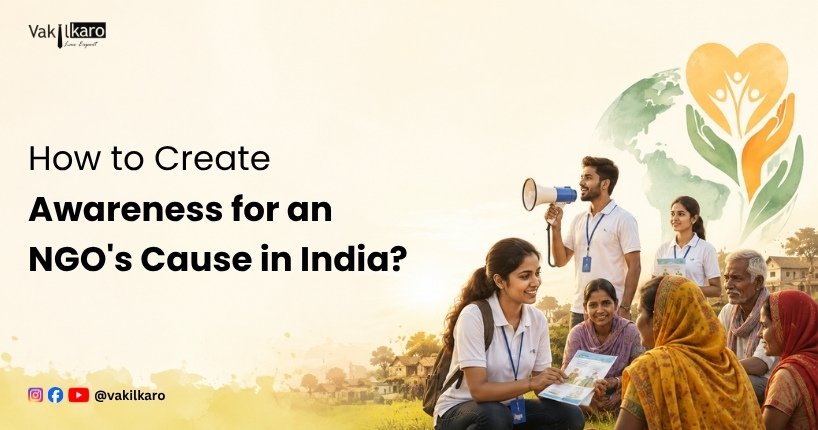
Creating awareness for an NGO’s cause in India is crucial for building trust, attracting donors, mobilizing volunteers, and driving long-term impact. A strong campaign begins with legal credibility—through Section 8 company registration, NGO registration, and 12A and 80G registrations—which assures stakeholders of the NGO’s legitimacy and transparency. NGOs must leverage social media, websites, events, and storytelling to connect emotionally with the public. Collaborations with institutions and media, along with consistent content and measurable impact, can enhance visibility. Legal registrations also unlock CSR and grant opportunities, laying the groundwork for wider outreach and lasting change in the community.
Key Takeaways
- Creating awareness for an NGO’s cause in India is crucial for building trust, attracting donors, mobilizing volunteers, and driving long-term impact.
- Raise Awareness for an NGO’s Cause in India Raising awareness is a critical step for any NGO in India to ensure public engagement, attract donors, and build a lasting impact.
- Introduction Creating awareness for an NGO’s cause in India is not just a marketing activity—it is the backbone of an NGO's growth, visibility, and long-term success.
- Comprehensive Strategies to Create Awareness for Your NGO in India Raising awareness is essential for an NGO to gain support, attract donors, and create a lasting impact.
- Final Thoughts Creating awareness for an NGO’s cause is not a one-time activity—it is a dynamic and ongoing journey that must adapt to changing times, evolving technology, and shifting public interests.
Raise Awareness for an NGO’s Cause in India
Raising awareness is a critical step for any NGO in India to ensure public engagement, attract donors, and build a lasting impact. For a successful outreach, it’s important to begin with a solid legal structure. Securing Section 8 company registration NGO registration, and 12A and 80G registrations provides credibility, transparency, and access to benefits like tax exemptions and CSR funding. These certifications serve as a foundation of trust for supporters, volunteers, and corporate partners.
Once legally established, NGOs should implement a well-rounded awareness strategy. Digital platforms are highly effective—social media channels like Facebook Instagram, and LinkedIn offer cost-efficient ways to tell stories, share updates, and connect with audiences. Creating engaging content such as impact stories, videos, and infographics can humanize your mission and inspire action.
A professionally designed website also plays a key role. It should clearly explain the organization’s goals, showcase success stories, and offer ways to get involved. content helps the NGO Registration show up in relevant search results, expanding its visibility.
Offline efforts are equally important. Hosting community events, workshops, or awareness drives fosters face-to-face connections. Collaborating with schools, colleges, and local influencers can help extend reach and increase participation.
Traditional media still holds weight in India. Publishing articles or inviting press coverage for events can enhance public recognition. Email newsletters are another tool to keep existing supporters engaged with updates and opportunities.
Building awareness is not a one-time event but a continuous effort. NGOs must stay consistent, transparent, and passionate about their cause. Legal compliance through Section 8 company registration, NGO registration, and 12A and 80G registration ensures that the organization is viewed as reliable and worthy of support—paving the way for lasting influence and meaningful societal change.
Creating awareness for an NGO’s cause in India is not just a marketing activity—it is the backbone of an NGO's growth, visibility, and long-term success. Awareness helps bridge the gap between the NGO and the communities, donors, and stakeholders it wishes to engage. It plays a vital role in gaining public trust, mobilizing resources, attracting volunteers, and influencing policy changes. In a diverse country like India—where social, cultural, and economic differences vary across regions—NGOs must adopt both grassroots-level outreach and tech-savvy digital strategies to make an impact.
However, even the most compelling cause needs a strong legal and structural foundation to thrive. Before launching any awareness initiative, NGOs must establish credibility through proper legal compliance. This starts with Section 8 company registration, which provides a formal identity under the Companies Act, 2013 making it easier to collaborate with corporates and government bodies. In addition, having valid NGO registration—whether as a trust, society, or Section 8 company—confirms the organization’s legitimacy and allows it to operate within legal boundaries.
Equally important are 12A and 80G registration which not only offer tax benefits to the NGO and its donors but also encourage more people to contribute by making donations tax-deductible. These registrations are often prerequisites for receiving CSR funds and government grants.
In today’s competitive non-profit landscape, awareness alone is not enough—credibility matters. Legal registrations boost the NGO’s reputation and instill confidence among the public, donors, and institutions. Thus, a successful awareness campaign must begin with this legal groundwork, enabling NGOs to amplify their voice, expand their reach, and create lasting, positive change across India.
Importance of Legal Structure and Registrations for NGOs in India
For any NGO aiming to build public awareness and earn widespread support in India, establishing a robust legal foundation is the first and most crucial step. Legal registrations not only give the NGO legitimacy but also open the door to a wide range of benefits, including funding, tax exemptions, and increased credibility in the eyes of donors and government bodies.
Section 8 Company Registration is one of the most trusted legal structures for NGOs under the Companies Act, 2013. It provides the organization with a structured and formal identity that enhances its credibility. This registration is especially valuable when seeking collaborations with corporate partners and government agencies, as it assures them that the NGO operates within a recognized legal framework and follows strict compliance norms.
In addition to Section 8 registration, NGO Registration under the appropriate format—whether as a society, trust, or Section 8 company—is essential. This process defines the nature and scope of the organization’s work and ensures it is legally allowed to function. Each structure has its own legal compliance requirements, and choosing the right one depends on the NGO’s mission, governance model, and operational goals.
12A and 80G registrations are equally critical for ensuring financial sustainability. The 12A registration grants income tax exemption to the NGO, while the 80G registration allows donors to claim tax deductions on the amount they contribute. These incentives not only reduce the financial burden on the NGO but also motivate individuals and organizations to contribute generously.
Together, these registrations build the foundation of trust and transparency. They also make the NGO eligible for various government schemes, CSR funds, and international grants. Therefore, securing these legal documents is a strategic necessity before initiating any awareness or fundraising campaign.
Comprehensive Strategies to Create Awareness for Your NGO in India
Raising awareness is essential for an NGO to gain support, attract donors, and create a lasting impact. In a country as vast and diverse as India, NGOs must adopt a mix of digital innovation and traditional engagement methods to ensure their voice is heard and their cause reaches the right audience. Here’s a detailed look at effective strategies NGOs can use to maximize visibility and engagement:
- Utilize Social Media Effectively
Social media platforms such as Facebook, Instagram, Twitter, and LinkedIn are vital tools for spreading your NGO’s message. These platforms allow you to share stories, event updates, behind-the-scenes content, videos, and photographs in real time. Posting consistently with meaningful content, using trending and relevant hashtags, and encouraging interactions through comments, shares, and likes can help your NGO organically grow its online presence and attract like-minded supporters.
- Develop a Professional Website
Your website acts as the digital headquarters of your NGO. It should provide visitors with clear information about your mission, vision, goals, team, accomplishments, and how they can support you. A responsive, user-friendly, and well-designed website builds credibility and serves as a reference point for media, donors, and partners. Optimizing your content with SEO (Search Engine Optimization) techniques ensures better visibility on search engines.
- Content Creation and Storytelling
Impactful content can connect deeply with your audience. Whether it’s blogs, case studies, videos, or success stories, showcasing real experiences from the field builds emotional resonance. When people read about how a child got access to education or a community gained clean drinking water, they’re more likely to support the cause.
- Leverage Events and Campaigns
On-ground events such as health camps, awareness drives, rallies, street plays, or community workshops create direct engagement with your target audience. These events also generate great content for social media and local media coverage, multiplying your reach.
- Form Strategic Collaborations
Partnering with schools, universities, local businesses, corporate CSR teams, and influencers can help your NGO access new audiences and leverage existing trust networks. These collaborations bring in additional resources—both human and financial—and elevate your campaign’s impact.
- Engage Media and Press
While digital platforms are popular, traditional media like newspapers, local radio stations, and TV channels still play a significant role in many parts of India. Sending well-crafted press releases, inviting journalists to cover events, or offering interviews can help generate wider public interest and recognition.
- Mobilize Volunteers and Ambassadors
Volunteers are not only manpower but also ambassadors of your cause. Motivated individuals can use their networks to share your NGO’s mission and expand your audience. Empower them with content, storytelling tools, and clear guidance to maximize their outreach.
- Launch Awareness Campaigns
Creative campaigns—both online and offline—can generate buzz. For example, a hashtag campaign encouraging people to share stories or photos can go viral. Offline, posters, banners, pamphlets, and door-to-door outreach still work wonders, especially in rural areas.
- Email Marketing and Newsletters
Stay connected with your supporters through regular emails. Share milestones, beneficiary stories, upcoming events, donation drives, and opportunities for involvement. A well-crafted newsletter keeps your audience informed and engaged, turning passive supporters into active contributors.
- Monitor and Analyze Results
To ensure your awareness strategy is effective, regularly track engagement using analytics tools. Evaluate which posts perform best, how people interact with your content, and which strategies lead to donations or sign-ups. Use this data to refine your approach and focus on what truly works.
By integrating these strategies with a strong legal foundation—like Section 8 company registration, NGO registration, and 12A and 80G registrations—your NGO can build a credible presence, connect with the right audience, and drive real, meaningful change across India.
Building Credibility and Trust for Your NGO
Creating awareness for an NGO is not just about visibility—it’s also about building credibility and earning the trust of stakeholders. In India’s competitive and compliance-driven environment, credibility is the backbone of every successful NGO. One of the most effective ways to establish this credibility is by obtaining proper legal registrations, such as Section 8 company registration, NGO registration, and 12A and 80G registrations.
These certifications serve as formal proof that your NGO is a legitimate, law-abiding entity committed to transparency and social good. When an NGO is registered as a Section 8 company under the Companies Act, 2013, it is automatically seen as more structured and professionally managed. This registration reflects a serious commitment to governance, which appeals to both individual donors and corporate entities.
Similarly, completing the basic NGO registration—whether as a trust, society, or Section 8 company—legally validates the existence of your organization. It ensures that your NGO is recognized under Indian law, allowing you to operate openly, access grants, and collaborate with government or private institutions.
Further enhancing this trust are the 12A and 80G registrations. With 12A registration, your NGO becomes exempt from paying income tax, allowing you to utilize more funds for your programs. The 80G registration, on the other hand, enables donors to claim tax deductions on their contributions, encouraging them to donate more freely. These registrations demonstrate that your NGO operates with financial transparency and accountability.
Displaying these certifications on your website, brochures, and fundraising campaigns is a powerful way to assure donors, volunteers, and partners of your legitimacy. It also signals that your NGO meets all compliance requirements and is eligible to receive CSR funding and grants. In essence, these registrations build a strong foundation of trust, which is crucial for long-term success and sustainability.
Overcoming Challenges Faced by NGOs in India
Running an NGO in India comes with its fair share of challenges. Despite having noble intentions and impactful missions, many NGOs struggle to gain visibility and sustained support. Limited financial resources, stiff competition for public and donor attention, and the growing phenomenon of donor fatigue make it difficult to thrive. However, with the right approach and strategic planning, these hurdles can be effectively overcome.
One of the key ways to address these challenges is consistency in messaging. Whether you’re posting on social media, updating your website, or speaking at an event, maintaining a clear, unified voice helps build a recognizable identity. Consistent messaging allows people to understand your cause and associate your name with the change you're striving to make.
Transparency is another critical factor. Keeping your operations open and honest—especially regarding how funds are used—goes a long way in building public confidence. This is where obtaining and showcasing registrations like Section 8 company registration, NGO registration, and 12A and 80G certifications adds immense value, as they reinforce the NGO’s legal and financial accountability.
Equally important is the ability to showcase measurable impact. People are more likely to support a cause when they can see tangible results. Sharing statistics, success stories, and real-life case studies not only validates your efforts but also helps potential supporters relate to your work emotionally and intellectually.
Lastly, it’s essential to communicate with honesty and passion. People connect with genuine voices and authentic narratives. Sharing your challenges, progress, and aspirations with sincerity creates a more human and relatable image of your organization.
Building trust takes time, but through consistent, transparent, and heartfelt communication, NGOs can overcome obstacles, keep donors and volunteers engaged, and lay the foundation for long-term growth and impact.
Final Thoughts
Creating awareness for an NGO’s cause is not a one-time activity—it is a dynamic and ongoing journey that must adapt to changing times, evolving technology, and shifting public interests. In a country as vast and diverse as India, the need for consistent and innovative communication is even more critical. NGOs must be prepared to continually evaluate their strategies, upgrade their outreach methods, and keep pace with new platforms and tools to stay relevant and impactful.
A strong foundation begins with establishing legal credibility. Obtaining Section 8 company registration, NGO registration, and 12A and 80G certifications is not just about regulatory compliance—it is about gaining trust and legitimacy in the eyes of donors, government bodies, corporate CSR partners, and the general public. These registrations assure stakeholders that the NGO is accountable, transparent, and eligible for tax exemptions and funding, especially from CSR initiatives.
Once the legal base is secured, the real work of building awareness begins. By leveraging digital tools, such as social media, websites, email campaigns, and SEO, NGOs can reach wide audiences at relatively low costs. Community engagement remains equally important—hosting events, conducting outreach programs, and forming partnerships can deepen local impact and generate real-world visibility.
The power of storytelling should not be underestimated. Sharing compelling stories about beneficiaries and community transformations brings emotion and humanity to your mission, helping people connect on a personal level. Meanwhile, forming strategic collaborations with corporates, influencers, and other NGOs can amplify your reach and resources.
Ultimately, with clear messaging, structured planning, and a team committed to the cause, any NGO can rise above the noise. By staying focused, authentic, and legally sound, NGOs in India can not only spread awareness effectively but also create meaningful, lasting change for the betterment of society.
Why Choose Vakilkaro for NGO Legal Services and Beyond
Vakilkaro stands out as a trusted partner for NGOs and other organizations seeking reliable, efficient, and affordable legal support in India. With a team of experienced legal professionals, Vakilkaro simplifies complex procedures and ensures full compliance with government regulations—making it the ideal choice for NGOs looking to build credibility and transparency through proper legal registration.
Whether you're applying for Section 8 company registration, NGO registration, or seeking tax exemptions through 12A and 80G registration, Vakilkaro offers end-to-end support. Their streamlined process minimizes paperwork and reduces delays, allowing NGOs to focus on their mission instead of legal hurdles.
In addition to NGO-related services, Vakilkaro offers a wide range of legal and compliance services, including:
- Company Incorporation (Private Limited, LLP, OPC)
- Trademark Registration and Intellectual Property protection
- GST Registration and Compliance Services
- F SSAI, MSME, Import-Export Code (IEC) Registration
- Drafting of Legal Documents (MOA, AOA, Trust Deeds, Agreements)
- Annual Compliance Filing, Income Tax Returns, and Financial Audits
- Licensing & Regulatory Approvals (RBI, NBFC, and more)
What truly sets Vakilkaro apart is its personalized service approach, transparent pricing, and dedicated legal advisors who guide you through every step. Their focus on digital service delivery ensures accessibility across India, including rural and remote areas.
Whether you're an NGO aiming to expand your reach or a business seeking legal clarity, Vakilkaro is your one-stop solution for hassle-free, expert-backed legal services that ensure compliance, peace of mind, and long-term success.
Official External Resources
Use these primary/official sources to verify rules, forms, fees, timelines and regulatory updates before publication.
Frequently asked questions
How to Create Awareness for an NGO's Cause in India?+
Raise Awareness for an NGO’s Cause in India Raising awareness is a critical step for any NGO in India to ensure public engagement, attract donors, and build a lasting impact. Introduction Creating awareness for an NGO’s cause in India is not just a marketing activity—it is the backbone of an NGO's growth, visibility, and long-term success.
