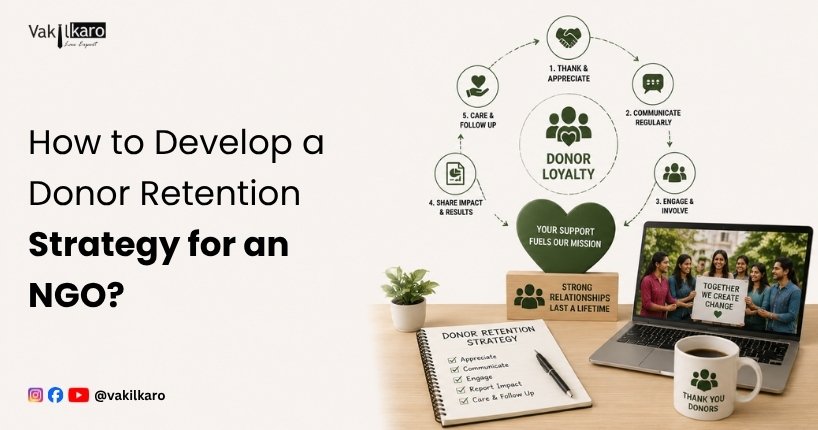
In the nonprofit world, donor retention is key to sustainability. A strong strategy helps NGOs build lasting relationships, reduce fundraising costs, and ensure consistent support. Whether you're a new organization undergoing NGO registration or an established Section 8 company, focusing on donor engagement is essential. Legal compliance, including 12A and 80G registration, enhances credibility and offers tax benefits that encourage repeat giving. Understanding donor behavior, building trust through transparency, and using digital tools are vital. With personalized communication, loyalty programs, and regular feedback, NGOs can strengthen donor relationships and foster long-term advocacy for their mission and impact.
Key Takeaways
- Crafting a Successful Donor Retention Strategy for NGOs In today’s competitive nonprofit landscape, securing ongoing support from donors is vital for the growth and sustainability of any NGO.
- For organizations in their formative stages undergoing NGO registration, or for those already functioning as a Section 8 company, developing a solid donor retention strategy should be an integral part of their operational planning.
- This guide will walk you through the key steps to building a successful donor retention strategy while emphasizing the importance of legal structure and compliance for your NGO’s growth and credibility.
- For NGOs that are newly formed and undergoing NGO registration, or those structured under Section 8 company registration, building a strong donor base early and focusing on retention can lay the foundation for long-term success.
- Conclusion In summary, developing an effective donor retention strategy is a critical component of an NGO’s long-term success.
Crafting a Successful Donor Retention Strategy for NGOs
In today’s competitive nonprofit landscape, securing ongoing support from donors is vital for the growth and sustainability of any NGO. While acquiring new donors is important, retaining existing ones is often more cost-effective and impactful in the long run. A well-planned donor retention strategy allows NGOs to build stronger relationships, reduce fundraising expenses, and create a reliable foundation for continued impact.
For NGOs at any stage—whether they are newly formed and undergoing NGO registration or already structured as a Section 8 company—a thoughtful retention approach should be a priority. Legal recognition and compliance through 12A and 80G registration not only add to the credibility of an organization but also offer tax benefits to donors, making them more likely to contribute again. These certifications can be effectively highlighted in communications to build trust and encourage repeat donations.
Understanding your donors is a critical first step. Segmenting them based on donation behavior, interests, and demographics allows for personalized communication and engagement. Beyond this, NGOs should focus on building genuine connections by expressing gratitude, sharing the impact of contributions, and involving donors in their journey.
Transparency also plays a major role in donor retention. Regular updates, financial reports, and success stories help demonstrate accountability. Showcasing your NGO registration, Section 8 company registration, and 12A/80G certificates reinforces the legitimacy of your work and builds donor confidence.
Additionally, utilizing digital platforms for communication, creating donor loyalty programs, and gathering feedback are excellent ways to maintain engagement. Training your team to communicate effectively and aligning everyone with donor-centric goals further strengthens this strategy.
Ultimately, donor retention is about more than repeated giving—it’s about building a community of loyal supporters. With a strong legal foundation and consistent, thoughtful engagement, your NGO can turn donors into long-term partners in your mission.
In the dynamic and often uncertain world of nonprofit work, sustaining a steady flow of funding is one of the greatest challenges faced by organizations. Unlike businesses that generate consistent revenue through products or services, NGOs depend heavily on donations, grants, and goodwill. However, these sources of income Tax can be unpredictable, and the competition among nonprofits for donor attention and resources continues to intensify. Amidst this landscape, donor retention has emerged as a key pillar of organizational sustainability and long-term success.
While much attention is often given to acquiring new donors, retaining existing ones is equally—if not more—important. Studies show that it costs significantly more to attract a new donor than to maintain an existing relationship. More importantly, retained donors are more likely to give larger amounts over time, engage more deeply with the cause, and become advocates who bring in new supporters through word of mouth. Therefore, focusing on donor retention not only stabilizes your financial inflow but also helps create a community of loyal contributors who share in your mission and values.
For organizations in their formative stages undergoing NGO registration, or for those already functioning as a Section 8 company, developing a solid donor retention strategy should be an integral part of their operational planning. A well-thought-out approach allows NGOs to build trust, foster long-term engagement, and align donors with the organization’s impact journey.
Moreover, ensuring proper legal compliance enhances donor confidence. Certifications like 12A and 80G registration not only make donations tax-deductible for contributors but also affirm the NGO’s legitimacy and accountability. By incorporating these legal frameworks into your retention strategy, you communicate transparency and integrity—qualities that are essential for cultivating lasting donor relationships.
This guide will walk you through the key steps to building a successful donor retention strategy while emphasizing the importance of legal structure and compliance for your NGO’s growth and credibility.
Understanding Donor Retention
Donor retention is the measure of how effectively an organization can maintain its relationships with donors over time, encouraging them to give repeatedly rather than making a one-time contribution. In simple terms, it reflects your NGO’s ability to turn first-time donors into long-term supporters. This metric is a critical indicator of an organization's health, sustainability, and overall impact.
Studies have shown that acquiring a new donor is significantly more expensive—often five to ten times more—than retaining an existing one. This is because the process of donor acquisition typically involves extensive outreach efforts, marketing campaigns, and time-consuming relationship-building. On the other hand, retained donors are already familiar with your work, have developed a level of trust, and are therefore more likely to continue supporting your mission if engaged properly.
A high donor retention rate provides financial stability and predictability. When you can count on a core group of returning donors, your NGO can plan its programs and operations more confidently, without the constant pressure of starting fundraising efforts from scratch. This reliability also reduces dependency on sporadic or emergency funding.
Beyond the financial advantages, retained donors often evolve into enthusiastic advocates for your cause. They are more likely to share your mission within their social and professional networks, volunteer their time, and contribute valuable feedback to help your organization grow. These loyal supporters become part of your NGO’s extended community, helping you expand your reach and credibility organically.
For NGOs that are newly formed and undergoing NGO registration, or those structured under Section 8 company registration, building a strong donor base early and focusing on retention can lay the foundation for long-term success. When complemented by legal certifications like 12A and 80G registration, your organization appears more trustworthy and legitimate, which further supports your efforts to retain and engage donors effectively.
Step 1: Lay the Legal Foundation
Before diving into retention strategies, it’s essential that your NGO is properly registered and compliant with Indian laws. This boosts your credibility and instills confidence in your donors.
a) NGO Registration
The first step is to legally register your organization. You can register your NGO as a Trust, Society, or a Section 8 Company. Each structure has its advantages, but Section 8 company registration is often preferred due to its transparent governance and legal recognition under the Companies Act, 2013.
b) 12A and 80G Registration
To attract and retain donors, especially high-value contributors, your NGO must obtain 12A and 80G registration under the Income Tax Act. These registrations offer tax exemptions to your organization and tax deductions to your donors, making it more appealing for them to contribute again in the future.
- 12A Registration: Provides income tax exemption to the NGO.
- 80G Registration: Allows donors to claim tax deductions on donations made.
Being transparent about these certifications in your communications can significantly improve donor trust and retention.
Step 2: Understand Your Donors
Just like businesses study their customers, NGOs must understand who their donors are, why they give, and what they care about.
- Segment your donors based on their giving history, donation amounts, and interests.
- Use donor management software to track data and engagement levels.
- Conduct surveys and feedback forms to learn more about donor motivations.
By having your Section 8 company registration and compliance documents like 12A and 80G registration in place, you can appear more professional and trustworthy during this stage.
Step 3: Build Relationships, Not Just Transactions
Donor retention thrives on relationships. Instead of treating donations as one-off transactions, focus on building genuine, long-term connections.
Strategies:
- Thank You Notes: Send personalized thank-you messages after each donation.
- Impact Reports: Show how the donation was used and what impact it made.
- Events and Webinars: Invite donors to virtual or in-person events.
Mention your 80G registration in these communications to remind donors of the tax benefits they receive from recurring contributions.
Step 4: Provide Transparency and Accountability
Donors want to know that their money is being used effectively. Regularly update your supporters with financial reports, program outcomes, and stories of change.
- Publish annual reports with audited financials.
- Highlight your NGO registration, Section 8 company registration, and 12A and 80G registration details.
- Use infographics and storytelling to communicate impact.
Being upfront about your certifications and legal compliance shows responsibility, which in turn enhances donor trust.
Step 5: Create a Donor Loyalty Program
Implementing a structured loyalty program can encourage repeated giving and deepen engagement.
Ideas include:
- Recognition tiers based on donation levels.
- Exclusive newsletters or sneak peeks into projects.
- Early access to events or volunteer opportunities.
Let your donors know that their support is legally acknowledged through 80G registration and that they are part of a compliant, well-regulated organization.
Step 6: Engage Through Digital Channels
The digital landscape provides ample opportunities for engagement and relationship-building.
- Use email campaigns to keep donors updated.
- Maintain an active social media presence.
- Develop a user-friendly website with a clear donation page.
On your donation page, highlight your Section 8 company registration and emphasize that all donations are eligible under 80G registration for tax benefits. This not only boosts credibility but also increases conversions.
Step 7: Re-Engage Lapsed Donors
Every NGO has donors who gave once and never came back. Re-engaging these individuals is often easier than acquiring new ones.
- Send reminder emails with updates on your work.
- Offer flexible donation options.
- Share how your 12A and 80G registrations make their future contributions more valuable.
Step 8: Collect and Act on Feedback
Feedback loops are critical to improvement. Encourage donors to share their thoughts and act on their suggestions.
- Send post-donation surveys.
- Conduct donor interviews.
- Show that their feedback influences real change.
This level of responsiveness, coupled with your formal NGO registration and tax compliance, shows professionalism and builds stronger donor trust.
Step 9: Train Your Team
A dedicated and well-informed team is essential for donor retention.
- Train staff on communication best practices.
- Educate them on the benefits of 80G registration so they can explain it clearly to donors.
- Align team goals with donor satisfaction metrics.
Your team's understanding of legal frameworks like Section 8 company registration and compliance requirements ensures consistent messaging.
Step 10: Evaluate and Improve
Donor retention is not a one-time effort. Regularly measure key metrics and make data-driven improvements.
- Track donor retention rate, average donation size, and donor lifetime value.
- Review how well your communications highlight your 12A and 80G registration benefits.
- Adjust your strategy based on performance and feedback.
Conclusion
In summary, developing an effective donor retention strategy is a critical component of an NGO’s long-term success. It is a delicate blend of strategic planning, emotional intelligence, and operational excellence—truly both an art and a science. At its core, donor retention is about understanding who your donors are, nurturing meaningful relationships with them, and consistently demonstrating the impact of their contributions. It also involves a commitment to transparency, accountability, and trust—all of which are essential for building loyalty.
Equally important is establishing a strong legal foundation. From the very beginning—starting with your NGO registration, choosing the appropriate legal structure such as Section 8 company registration, and obtaining key tax exemptions through 12A and 80G registration—these steps not only ensure compliance but also significantly enhance your credibility. Donors are far more likely to continue supporting an organization that is legally compliant, professionally managed, and transparent about how their contributions are being used.
Moreover, donor retention goes beyond the act of giving. It’s about cultivating a genuine connection with your supporters, making them feel valued, heard, and a vital part of your mission. A retained donor is more than a recurring source of funding—they are potential ambassadors, advocates, and partners in your journey to create meaningful social impact.
If you're in the early stages of building your nonprofit or seeking to reinforce your legal and compliance framework, expert assistance can make all the difference. Vakilkaro specializes in simplifying the process of NGO registration, Section 8 company registration, and acquiring 12A and 80G registration, so you can focus on your organization’s core purpose—making a lasting difference in the lives of those you serve.
With the right approach and the right support, your NGO can not only retain donors but also turn them into lifelong champions of your cause.
Why Choose Vakilkaro for NGO and Legal Services?
When it comes to starting and running an NGO or any other socially-driven organization in India, navigating the legal landscape can be complex and time-consuming. From choosing the right legal structure to obtaining essential certifications like Section 8 company registration, NGO registration, and 12A and 80G registration, every step requires precision, expertise, and up-to-date legal knowledge. This is where Vakilkaro becomes your trusted partner.
Here’s why Vakilkaro is the preferred choice for NGOs and other legal service needs:
✅ 1. Comprehensive Legal Expertise
Vakilkaro brings together a team of seasoned legal professionals with deep experience in NGO compliance, tax laws, and corporate regulations. Whether you're registering a new NGO or seeking approvals like 12A and 80G, Vakilkaro ensures that your paperwork is accurate, timely, and fully compliant with government norms.
✅ 2. One-Stop Legal Solution
From NGO registration and Section 8 company registration to GST, FCRA, and trademark registration and filings, Vakilkaro offers end-to-end legal solutions under one roof. You don’t have to coordinate with multiple service providers—Vakilkaro streamlines the entire process, saving you time and resources.
✅ 3. Transparent and Affordable Pricing
Vakilkaro believes in empowering NGOs and startups with cost-effective services. They offer clear, upfront pricing with no hidden charges, so you can plan your budget confidently.
✅ 4. Dedicated Support and Guidance
Every organization is unique. Vakilkaro assigns a dedicated legal expert to guide you through each stage, offering personalized solutions tailored to your NGO’s goals and compliance needs.
✅ 5. Fast Turnaround Times
Time is critical, especially for organizations waiting on approvals to start operations or receive donations. Vakilkaro is known for its efficiency and prompt execution, helping you get legally established without unnecessary delays.
✅ 6. Strong Reputation and Trust
With hundreds of successful NGO and company registrations to its name, Vakilkaro has built a reputation for reliability, professionalism, and client satisfaction.
Official External Resources
Use these primary/official sources to verify rules, forms, fees, timelines and regulatory updates before publication.
Frequently asked questions
How to Develop a Donor Retention Strategy for an NGO?+
Crafting a Successful Donor Retention Strategy for NGOs In today’s competitive nonprofit landscape, securing ongoing support from donors is vital for the growth and sustainability of any NGO. For organizations in their formative stages undergoing NGO registration, or for those already functioning as a Section 8 company, developing a solid donor retention strategy should be an integral part of their operational planning.
