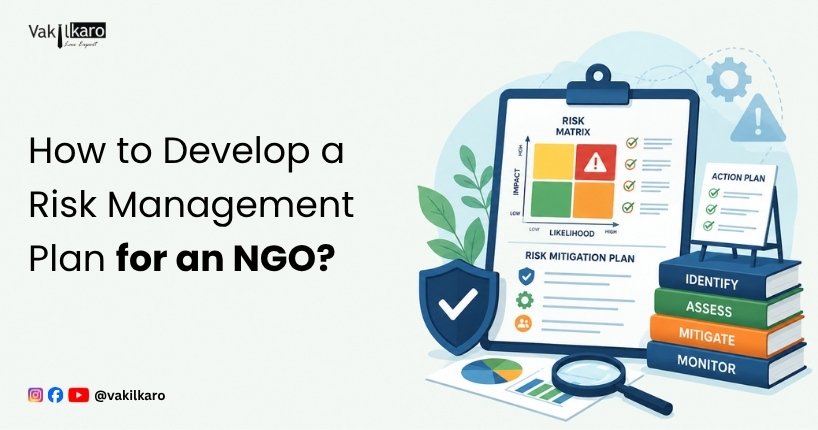
Developing a risk management plan is essential for NGOs to identify, assess, and mitigate risks that may disrupt their operations. It helps safeguard resources, ensures compliance with legal frameworks such as Section 8 company registration, NGO registration, and 12A and 80G registration, and strengthens donor confidence. By identifying financial, operational, legal, reputational, and strategic risks, NGOs can prioritize actions to address them effectively. Mitigation strategies include diversifying funding sources, ensuring legal compliance, and implementing monitoring systems. A crisis management plan ensures preparedness for emergencies. Regular reviews and updates keep the plan relevant, ensuring long-term sustainability and organizational success.
Key Takeaways
- How to Create a Risk Management Plan for an NGO Creating a comprehensive risk management plan is crucial for NGOs to protect themselves from various potential threats that can disrupt their operations.
- A risk management plan helps NGOs identify and assess risks across multiple domains, such as financial, operational, legal, reputational, and strategic, and develop strategies to minimize these risks.
- This blog will provide a step-by-step guide on how to develop a risk management plan for an NGO, emphasizing the importance of compliance with legal requirements such as Section 8 company registration, NGO registration, and 12A and 80G registration.
- Steps to Develop a Risk Management Plan for an NGO 3.1.
- Legal compliance is another vital aspect of a risk management plan, especially for NGOs registered under Section 8 company registration, NGO registration, and those with 12A and 80G registration.
How to Create a Risk Management Plan for an NGO
Creating a comprehensive risk management plan is crucial for NGOs to protect themselves from various potential threats that can disrupt their operations. A risk management plan helps NGOs identify and assess risks across multiple domains, such as financial, operational, legal, reputational, and strategic, and develop strategies to minimize these risks. It ensures the continuity of operations and fosters trust among donors and stakeholders.
The first step in developing a risk management plan is to identify potential risks. These risks can arise from various factors, including internal challenges such as insufficient funding or staffing, and external threats like changes in government regulations or natural disasters. Identifying these risks early enables NGOs to proactively address them.
Once risks are identified, NGOs must assess the likelihood and impact of each risk. This process involves determining how probable each risk is and how severely it would affect the organization if it occurred. Ranking risks according to their probability and potential impact helps prioritize which risks need immediate attention.
Next, NGOs should develop mitigation strategies to reduce the likelihood of risks occurring or minimize their impact if they do. For example, to address financial risks, NGOs can diversify their funding sources through grants, donations, or corporate partnerships. For operational risks, investing in staff training and improving infrastructure may prove beneficial. Legal compliance is crucial, especially for NGOs registered under Section 8 company registration, NGO registration, or those benefiting from 12A and 80G registration. Compliance with these regulations helps prevent legal issues that can jeopardize the organization’s credibility.
To ensure the success of the risk management plan, NGOs should implement monitoring and control systems. This can include regular risk assessments, maintaining a risk register, and monitoring the effectiveness of mitigation strategies. A crisis management plan should also be in place, outlining steps to take during an unforeseen crisis.
Regular reviews and updates ensure the risk management plan remains relevant and effective as the organization grows.
Non-Governmental Organizations (NGOs) are vital in driving social change, providing relief, and advocating for marginalized communities. However, like any other organization, NGOs face risks that can disrupt their operations, hinder their effectiveness, and affect their reputation. Therefore, having a robust risk management plan is critical to minimize these risks and ensure that the organization can continue to operate effectively.
This blog will provide a step-by-step guide on how to develop a risk management plan for an NGO, emphasizing the importance of compliance with legal requirements such as Section 8 company registration, NGO registration, and 12A and 80G registration. These legal frameworks play a vital role in ensuring that your risk management plan is legally compliant and aligned with best practices.
What is Risk Management for NGOs?
Risk management for an NGO involves identifying, assessing, and addressing the potential risks that could affect its operations, financial health, and reputation. It ensures that the NGO is well-prepared to handle challenges and can continue to achieve its mission without unnecessary disruptions.
There are various types of risks that NGOs may face, including financial, operational, reputational, legal, and strategic risks. Developing a comprehensive risk management plan helps NGOs proactively address these challenges, ensuring long-term sustainability and impact.
Why is a Risk Management Plan Important for NGOs?
A risk management plan is crucial for NGOs because:
- Helps safeguard resources: By identifying potential risks, NGOs can take measures to protect their financial and human resources.
- Ensures compliance: Legal and regulatory risks, especially in the context of NGO registration, Section 8 company registration, and 12A and 80G registration, must be mitigated to avoid penalties and maintain operational continuity.
- Strengthens donor confidence: A risk management plan reassures donors that their funds will be used effectively, reducing the likelihood of financial mismanagement or fraud.
- Improves decision-making: By assessing risks, NGOs can make informed decisions and prioritize actions that will have the most significant impact.
Steps to Develop a Risk Management Plan for an NGO
3.1. Step 1: Identify Potential Risks
The first step in creating a risk management plan for an NGO is identifying the risks that the organization may face. These risks can come from various sources, including internal and external factors.
Common types of risks for NGOs include:
- Financial Risks: These are risks related to the management of funds, including inadequate funding, misallocation of resources, fraud, or not being able to generate enough revenue through donations or grants.
- Operational Risks: These include challenges related to staffing, resources, and program execution. For example, an NGO might face operational risks if there is a lack of trained personnel or inadequate infrastructure.
- Legal and Compliance Risks: NGOs are subject to various legal requirements, especially when they are registered as a Section 8 company, a trust, or a society under NGO registration. Non-compliance with these regulations can lead to fines or the suspension of operations.
- Reputational Risks: This includes damage to the NGO's reputation due to poor management, scandals, unethical practices, or failure to deliver on its promises.
- Strategic Risks: These relate to the NGO's ability to stay focused on its mission, adapt to changes, and align its strategies with its long-term goals.
3.2. Step 2: Assess the Likelihood and Impact of Risks
Once risks have been identified, the next step is to assess the likelihood and potential impact of each risk. This helps prioritize which risks need to be addressed first.
For each identified risk, ask the following questions:
- Likelihood: How likely is this risk to occur? For example, if the NGO relies heavily on a few donors for funding, the risk of losing those donors is higher.
- Impact: If the risk occurs, what will be the impact on the organization? Will it cause significant financial loss, harm the reputation, or affect the ability to deliver services?
Each risk should be ranked according to its likelihood and impact. This will help determine which risks need immediate attention and which can be monitored over time.
3.3. Step 3: Develop Mitigation Strategies
Once risks have been assessed, the next step is to develop strategies to mitigate them. Mitigation strategies involve taking preventive actions to reduce the likelihood of a risk occurring or minimizing its impact if it does occur.
For example:
- Financial Risk: To mitigate financial risks, NGOs can diversify their funding sources by applying for grants, partnering with corporate sponsors, and encouraging individual donations. Additionally, implementing strong financial management practices and conducting regular audits will help ensure transparency and prevent misuse of funds.
- Operational Risk: NGOs can mitigate operational risks by investing in staff training, implementing clear processes and workflows, and ensuring proper resource allocation. Regular performance reviews and monitoring systems can help identify operational issues before they escalate.
- Legal and Compliance Risk: For NGOs registered under Section 8 company registration, NGO registration, or seeking 12A and 80G registration, compliance with legal requirements is crucial. NGOs should maintain accurate financial records, ensure transparency, and submit necessary reports to regulatory authorities. Seeking legal counsel to ensure compliance with tax laws and regulations can prevent costly fines and penalties.
- Reputational Risk: Reputational risks can be mitigated by ensuring that the NGO adheres to ethical practices, engages in transparent communication with stakeholders, and addresses any concerns promptly. Establishing a crisis communication plan is essential for managing any negative publicity.
3.4. Step 4: Implement Risk Monitoring and Control Mechanisms
Risk management is an ongoing process, not a one-time task. Once mitigation strategies are in place, NGOs need to establish systems to monitor and control risks continuously. This includes setting up regular risk assessments, maintaining an active risk register, and ensuring that the staff is trained to recognize and respond to emerging risks.
For example:
- Risk Register: Maintain a risk register that documents all identified risks, their likelihood, impact, and mitigation strategies. The register should be reviewed regularly and updated as new risks emerge.
- Monitoring and Evaluation (M&E): Regular monitoring of programs and activities ensures that risks are detected early. NGOs can implement M&E systems to assess the effectiveness of their risk mitigation strategies and make adjustments as needed.
3.5. Step 5: Establish a Crisis Management Plan
Despite all efforts to mitigate risks, some may still occur. Therefore, it is essential to have a crisis management plan in place. This plan outlines the steps to be taken in case a risk materializes and the organization faces a crisis.
Key components of a crisis management plan include:
- Communication Protocols: Establish clear communication protocols to ensure that all stakeholders are informed during a crisis.
- Roles and Responsibilities: Define roles and responsibilities for the crisis management team, ensuring that everyone knows their duties and can act swiftly.
- Contingency Plans: Prepare contingency plans for different types of crises. This could include financial crises, reputational damage, or legal challenges.
3.6. Step 6: Review and Update the Risk Management Plan Regularly
The risk environment for an NGO is constantly evolving. As such, it is essential to review and update the risk management plan regularly to account for changes in the organization's operations, external factors, and emerging risks. This ensures that the plan remains relevant and effective.
Legal Considerations for NGOs in Risk Management
For NGOs registered under Section 8 company registration, NGO registration, and those seeking 12A and 80G registration, adhering to legal and regulatory frameworks is an integral part of risk management. Non-compliance with these regulations can result in fines, penalties, and the loss of donor trust.
- Section 8 Company Registration: As a Section 8 company, your NGO is subject to the Companies Act, 2013, which outlines specific governance and operational requirements. Ensuring that your organization follows these regulations can help mitigate legal risks.
- NGO Registration: NGOs registered under the Societies Registration Act, Trust Act, or as a Section 8 company must maintain transparency and adhere to specific operational requirements. Non-compliance can result in the suspension of registration or legal action.
- 12A and 80G Registration: These tax exemptions offer significant benefits to NGOs, but they also come with responsibilities. To maintain your 12A and 80G status, you must ensure proper financial reporting, transparency, and compliance with tax laws.
Conclusion
Developing a risk management plan for an NGO is crucial not only for safeguarding the organization from potential risks but also for ensuring its long-term success and sustainability. Risks can come from various sources, including financial instability, operational challenges, legal complexities, and reputational threats. However, by identifying and assessing these risks, NGOs can take proactive steps to mitigate them, thereby reducing the likelihood of disruptions that could negatively impact their operations or hinder their mission.
A well-crafted risk management plan serves as a proactive tool that helps NGOs stay focused on their goals. It allows organizations to effectively address any issues before they escalate into larger problems, ensuring that they can continue their critical work in serving marginalized communities. The plan should include strategies for managing financial risks, such as diversifying funding sources, as well as operational risks, such as ensuring adequate staffing and resources. By having a framework in place to address potential challenges, NGOs can mitigate risks and maintain operational continuity, no matter the scale or scope of their interventions.
Legal compliance is another vital aspect of a risk management plan, especially for NGOs registered under Section 8 company registration, NGO registration, and those with 12A and 80G registration. These legal frameworks not only help NGOs maintain their tax-exempt status but also ensure they meet regulatory requirements, thus avoiding legal penalties and reputational damage. Complying with these regulations creates a strong foundation for risk management, aligning operational practices with legal expectations.
A solid risk management strategy also enhances transparency, which is crucial for maintaining donor confidence and trust. NGOs that demonstrate strong governance and transparency are more likely to attract continued support from donors, allowing them to scale their impact and achieve their mission effectively. In the long term, risk management enables NGOs to build resilience, adapt to changes in the operating environment, and remain focused on their core values and objectives.
In conclusion, a robust risk management plan is not just a necessary tool but a strategic asset for NGOs. By addressing risks comprehensively and adhering to legal frameworks, NGOs can ensure that their operations remain resilient and sustainable, enabling them to continue creating a meaningful and lasting impact in the communities they serve. Through careful planning, risk mitigation, and compliance, NGOs can navigate challenges effectively and continue to make a difference in the lives of those who need it most.
Why Choose Vakilkaro for Your NGO Legal Services?
When it comes to setting up and managing an NGO, the legal landscape can be complex and ever-changing. From obtaining NGO registration to ensuring compliance with the regulatory requirements of Section 8 company registration, 12A, and 80G registration, it’s essential to have the right legal partner by your side. Vakilkaro stands out as a trusted service provider for NGOs, offering expertise and a commitment to delivering seamless and comprehensive legal services.
- Expertise in NGO Registration and Compliance Vakilkaro is renowned for its in-depth understanding of NGO registration processes. Whether you are setting up a Non-Governmental Organization under Section 8 company registration, a Trust, or a Society, our team has the experience and knowledge to guide you through the registration process. We also assist with the ongoing legal compliance required to maintain your legal status, ensuring that your NGO meets all necessary regulatory frameworks.
- 12A and 80G Registration Support For NGOs seeking to establish credibility and attract donor funding, the 12A and 80G registrations are essential. Vakilkaro simplifies the often-complicated process of obtaining these tax exemptions, ensuring that your NGO benefits from tax relief and provides eligible donors with the appropriate tax-deductible receipts. Our legal team ensures that all the documentation is in order, enabling you to focus on your mission while we handle the paperwork.
- Tailored Legal Solutions for NGOs Every NGO is unique, with different needs and challenges. Vakilkaro takes a personalized approach, offering solutions that align with your specific objectives. Whether you need assistance in drafting governance documents, risk management plans, or ensuring compliance with fundraising regulations, we provide customized legal services designed to support your organization’s growth and sustainability.
- Hassle-Free and Efficient Process With Vakilkaro, you get a hassle-free experience. We understand that NGO founders are often passionate about their mission and want to focus on social change. We take the burden of legal complexities off your shoulders, handling all the administrative work and paperwork efficiently, so you can focus on achieving your goals.
- Transparent Pricing Vakilkaro believes in offering services that are not only high-quality but also affordable. With transparent pricing and no hidden fees, we ensure that you understand the costs upfront. Our services are designed to be budget-friendly, making legal assistance accessible to NGOs of all sizes.
- Commitment to Long-Term Support Establishing an NGO is just the beginning. Vakilkaro offers ongoing legal support to ensure that your organization continues to thrive. From compliance audits to renewals of Section 8 company registration, 12A, and 80G status, we provide continued assistance so that your NGO can evolve and expand without the legal complexities holding it back.
- Trusted by NGOs Across India Vakilkaro has built a strong reputation among NGOs for providing reliable, accurate, and efficient legal services. Our vast experience in NGO law, along with our commitment to ethical practices, has earned the trust of numerous NGOs across India. When you choose Vakilkaro, you’re choosing a partner dedicated to your success.
Official External Resources
Use these primary/official sources to verify rules, forms, fees, timelines and regulatory updates before publication.
Frequently asked questions
How to Develop a Risk Management Plan for an NGO?+
This blog will provide a step-by-step guide on how to develop a risk management plan for an NGO, emphasizing the importance of compliance with legal requirements such as Section 8 company registration, NGO registration, and 12A and 80G registration. Steps to Develop a Risk Management Plan for an NGO 3.1.
