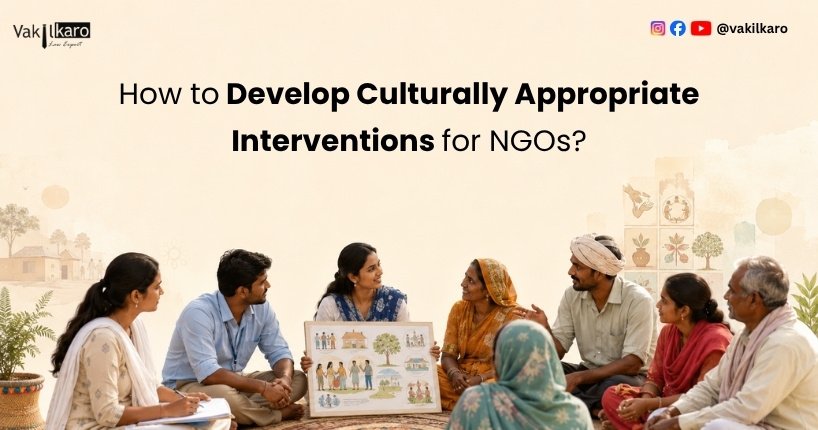
Developing culturally appropriate interventions is essential for the success of any NGO. Programs that respect local customs and beliefs gain deeper community trust and deliver lasting impact. This blog provides a step-by-step guide for NGOs—especially those undergoing Section 8 company registration, NGO registration, and seeking 12A and 80G registration—to create culturally aligned strategies. From community engagement and using local languages to incorporating indigenous knowledge and adapting program design, culturally sensitive interventions ensure relevance and sustainability. Legal compliance and tax-exempt status further strengthen NGO credibility and funding opportunities while staying aligned with the communities they serve. Culture builds the bridge to impact.
Key Takeaways
- Creating Culturally Relevant NGO Interventions: A Path to Sustainable Impact Designing culturally appropriate programs is vital for any NGO striving to make a real difference.
- Introduction In the diverse social landscape of India, developing culturally appropriate interventions is not just an added advantage—it is a fundamental necessity for the success of any non-governmental organization (NGO).
- Building Community-Centric Evaluation Metrics To ensure that your interventions are both effective and culturally appropriate, include community feedback in your Monitoring and Evaluation (M&E) processes.
- Challenges in Maintaining Cultural Sensitivity While developing culturally appropriate interventions is essential, maintaining cultural sensitivity over time presents its own set of complex challenges for NGOs.
- Role of Donors and Policy Makers in Promoting Culturally Sensitive Interventions Donors and policy makers play a pivotal role in shaping the success and sustainability of NGOs, particularly in fostering culturally appropriate interventions.
Creating Culturally Relevant NGO Interventions: A Path to Sustainable Impact
Designing culturally appropriate programs is vital for any NGO striving to make a real difference. When NGOs understand and incorporate the values, traditions, and social norms of the communities they serve, their efforts are more likely to build trust, encourage participation, and achieve long-lasting outcomes.
This approach is especially important for NGOs in India that are pursuing Section 8 company registration or other forms of NGO registration. Recognizing cultural dynamics early on—during the planning and registration phases—can shape more responsive and accepted programs. Moreover, aligning your operations with local customs can also boost credibility during the 12A and 80G registration process, which provides tax exemptions and benefits for both the NGO and its donors.
To create such interventions, NGOs should begin by engaging directly with communities—listening to their needs, involving local leaders, and using participatory methods. Employing local experts or volunteers who understand the community's language and practices helps avoid missteps. Incorporating indigenous knowledge—such as traditional health or agricultural practices—further deepens community relevance.
Effective communication is key, so materials should always be delivered in the local language. Additionally, NGOs must respect cultural norms around gender, religion, and social practices when designing and implementing programs.
Finally, cultural relevance should not end with implementation. Monitoring and evaluation tools must also reflect local values and community feedback. This not only improves program impact but also strengthens documentation for compliance with 12A and 80G requirements.
By combining legal compliance through proper NGO registration and cultural sensitivity in program design, NGOs can create meaningful, sustainable change. Culturally aligned interventions aren’t just good practice—they are essential for lasting impact.
In the diverse social landscape of India, developing culturally appropriate interventions is not just an added advantage—it is a fundamental necessity for the success of any non-governmental organization (NGO). Every community holds a unique set of traditions, languages, beliefs, and social norms that shape its identity. For NGOs aiming to bring about meaningful change, understanding and integrating these cultural nuances into program design and delivery is essential.
When NGOs demonstrate a genuine respect for the cultural context in which they operate, they build trust with the communities they serve. This trust leads to higher levels of engagement, smoother implementation of programs, and ultimately, more sustainable and impactful outcomes. On the other hand, programs that fail to consider local values often encounter resistance, poor participation, or even complete failure—despite good intentions.
This becomes even more significant for NGOs that are in the process of obtaining Section 8 company registration, completing NGO registration, or applying for 12A and 80G registration. These legal frameworks not only structure the organization’s operational and financial capabilities but also reflect its commitment to transparency, social responsibility, and long-term community engagement. Aligning cultural appropriateness with legal compliance enhances the credibility of the organization in the eyes of beneficiaries, donors, and regulatory authorities.
This blog serves as a comprehensive guide for NGOs in India to create culturally sensitive interventions. It combines actionable strategies with legal insights to help organizations establish a strong foundation, whether they are just beginning their journey with NGO registration or looking to scale with tax exemptions under 12A and 80G. By weaving cultural sensitivity into the core of their mission, NGOs can ensure their efforts are not only accepted but also embraced by the communities they seek to uplift.
Understanding Cultural Appropriateness in the NGO Sector
Cultural appropriateness in the context of NGOs refers to the thoughtful and intentional process of designing programs, strategies, and communication efforts that reflect the unique values, beliefs, customs, and social norms of the communities they aim to serve. This goes beyond language translation or surface-level adaptations; it requires deep engagement with the cultural fabric of the population, recognizing what matters most to them, and weaving those insights into every layer of intervention.
For NGOs in India—especially those formed through Section 8 company registration or other recognized NGO registration frameworks—embracing cultural relevance is not just a best practice, it’s a strategic imperative. When interventions are culturally attuned, they resonate more deeply with local populations, leading to greater program relevance and acceptance. People are more likely to participate and benefit from initiatives that reflect their lived experiences and traditions.
Moreover, culturally appropriate approaches help build mutual trust and cooperation between the NGO and the community. Instead of being seen as outsiders imposing change, NGOs become partners who respect and uplift the community’s way of life. This collaborative dynamic is crucial for ensuring that programs are sustainable and can be scaled over time without losing their impact.
On the contrary, ignoring or misrepresenting cultural elements can lead to unintended insensitivity, resistance, or even backlash. Cultural missteps can quickly erode the credibility and acceptance of the organization, regardless of how well-funded or well-meaning the program may be.
Ultimately, integrating cultural awareness—especially when applying for 12A and 80G registration for tax benefits and funding—is a powerful way to demonstrate an NGO’s genuine commitment to ethical, effective, and community-first development.
Step-by-Step Guide to Developing Culturally Appropriate Interventions
Start with Community Engagement
Before launching any program, Section 8 companies and NGOs must invest in understanding the community they plan to serve. Conduct community needs assessments, focus group discussions, and participatory rural appraisals. Engage local stakeholders and community leaders early in the planning phase.
Tip: During NGO registration, clearly define your target demographic and geographical focus. This helps in preparing appropriate cultural strategies.
Employ Local Expertise
Recruit staff or volunteers who are from or familiar with the community. Their insider knowledge can help avoid misunderstandings and ensure the use of culturally resonant methods.
Incorporate Indigenous Knowledge Systems
Use traditional knowledge, practices, and wisdom as part of your intervention. Whether it's local farming techniques or traditional health remedies, incorporating what communities already trust makes your program more relevant.
Case Study Example: An NGO with Section 8 company registration working in tribal areas of Odisha included tribal health healers in their maternal health awareness campaigns, increasing participation and outcomes.
Language Matters
Deliver all communication in the local language. This includes brochures, audio-visual materials, training content, and community outreach.
Pro Tip: While applying for 12A and 80G registration, include culturally relevant language strategies in your documentation to reflect community alignment.
Adapt Program Design to Cultural Norms
- Respect gender roles and religious practices.
- Consider traditional dress, rituals, and social hierarchies.
- Avoid times or venues that conflict with religious events or harvest periods.
These factors can significantly impact the participation and effectiveness of interventions.
Test and Validate Interventions Locally
Pilot your programs with a small local group before scaling. Gather feedback, observe responses, and make necessary adjustments. Validation from the community helps in legitimizing your efforts.
Build Flexibility into Program Models
NGOs and Section 8 companies should ensure their interventions can be adapted without compromising the core goals. Cultural diversity even within a single region can necessitate variations in approach.
Monitor Cultural Sensitivity Continuously
Cultural landscapes evolve. Use periodic assessments to ensure that your programs remain aligned with current social values and norms.
Tip: Regular reporting and feedback collection should be a part of your 12A and 80G compliance documentation, especially when showcasing impact to donors.
Legal Framework and Registrations: Why They Matter
Section 8 Company Registration
Section 8 companies under the Companies Act, 2013, are formed for charitable purposes. Cultural considerations are vital from the outset of Section 8 company registration, as they influence the organization’s vision, mission, and MoA (Memorandum of Association).
NGO Registration
Depending on the legal structure (Trust, Society, or Section 8 Company), NGO registration should reflect the cultural and regional context of operations. Cultural appropriateness can even be a decisive factor in community support during the registration process.
12A and 80G Registration
These registrations provide income tax exemptions and donor tax benefits, respectively. Showing cultural alignment and community integration in your operational model enhances your credibility with the Income Tax Department and funding bodies.
Building Community-Centric Evaluation Metrics
To ensure that your interventions are both effective and culturally appropriate, include community feedback in your Monitoring and Evaluation (M&E) processes.
- Use culturally appropriate indicators (e.g., increased participation in local events)
- Conduct interviews in local languages
- Involve community elders in impact assessment
12A and 80G Tip: These real-world metrics can significantly strengthen your compliance and reporting documentation.
Challenges in Maintaining Cultural Sensitivity
While developing culturally appropriate interventions is essential, maintaining cultural sensitivity over time presents its own set of complex challenges for NGOs. One of the primary difficulties is the presence of diverse cultural contexts even within a single geographic region. India, for instance, is home to multiple ethnicities, languages, religions, and customs that can vary drastically from one village or city to another—even within the same district. What may be acceptable and effective in one community could be misunderstood or rejected in another. This diversity demands a nuanced and highly localized approach from NGOs, especially those operating under Section 8 company registration or other formal NGO registration frameworks.
Another significant challenge is rapid urbanization and the constant evolution of traditions and social norms. As communities modernize and come into greater contact with global influences, their cultural identities shift. This makes it difficult for NGOs to keep pace with what is considered appropriate or effective, especially if program models are outdated or static. Interventions that worked a decade ago may no longer resonate today.
Furthermore, there is always the risk of unintentionally reinforcing harmful practices. In striving to respect cultural traditions, NGOs must remain vigilant not to endorse or legitimize norms that perpetuate inequality, discrimination, or harm—such as gender bias, caste-based exclusion, or superstitions. This delicate balance between respecting traditions and promoting positive change is one of the most critical—and sensitive—responsibilities of any NGO.
To address these challenges, organizations must invest in regular cultural sensitivity training for staff, maintain open dialogue with local communities, and adopt a flexible, adaptive program design. These practices not only reduce cultural missteps but also foster long-term trust, making the interventions more resilient and impactful—especially when applying for 12A and 80G registration, where community integration and ethical practices strengthen an NGO’s credibility.
Role of Donors and Policy Makers in Promoting Culturally Sensitive Interventions
Donors and policy makers play a pivotal role in shaping the success and sustainability of NGOs, particularly in fostering culturally appropriate interventions. Their influence goes beyond providing financial assistance—they help define the standards and priorities that guide the social sector. To ensure long-lasting and inclusive change, it is essential for these stakeholders to actively support and incentivize culturally grounded models of development.
Firstly, funding agencies must prioritize NGOs that demonstrate strong community engagement and local involvement. Organizations that take the time to understand and work within the cultural context of their target populations are more likely to deliver meaningful, sustainable outcomes. This makes it vital for donors to assess not only the scalability of an initiative but also its cultural compatibility.
Secondly, policy makers and grant bodies should encourage the integration of cultural components in all project proposals. This includes requiring NGOs—especially those with Section 8 company registration or other forms of NGO registration—to describe how their programs are aligned with local traditions, languages, and social dynamics. This not only ensures better community buy-in but also minimizes the risk of cultural alienation or resistance.
Finally, cultural impact must be monitored alongside financial and operational performance. While traditional reporting metrics focus on budget utilization and outputs, culturally sensitive models require an additional layer of evaluation. Donors and policy makers should look for indicators such as local acceptance, participation rates across diverse groups, and preservation or positive transformation of cultural practices. This is particularly relevant when reviewing organizations applying for or renewing 12A and 80G registration, as evidence of cultural integration strengthens their case for legitimacy and support.
In summary, when donors and policy influencers embed cultural sensitivity into their frameworks, they not only elevate the quality of interventions but also reinforce the values of inclusivity, respect, and ethical development.
Conclusion
Culturally appropriate interventions are not a one-time checklist but a continuous process of learning, adapting, and engaging. For NGOs and Section 8 companies aiming for long-term impact and sustainability, integrating cultural relevance is non-negotiable.
Additionally, effective NGO registration, 12A and 80G registration not only support operational and fundraising capabilities but also reflect a commitment to structured, sensitive, and responsible engagement with communities.
Culture is not a barrier—it is the bridge. The more you align with it, the stronger and more impactful your NGO's journey will be.
Official External Resources
Use these primary/official sources to verify rules, forms, fees, timelines and regulatory updates before publication.
Frequently asked questions
How to Develop Culturally Appropriate Interventions for NGOs?+
Building Community-Centric Evaluation Metrics To ensure that your interventions are both effective and culturally appropriate, include community feedback in your Monitoring and Evaluation (M&E) processes. Challenges in Maintaining Cultural Sensitivity While developing culturally appropriate interventions is essential, maintaining cultural sensitivity over time presents its own set of complex challenges for NGOs.
