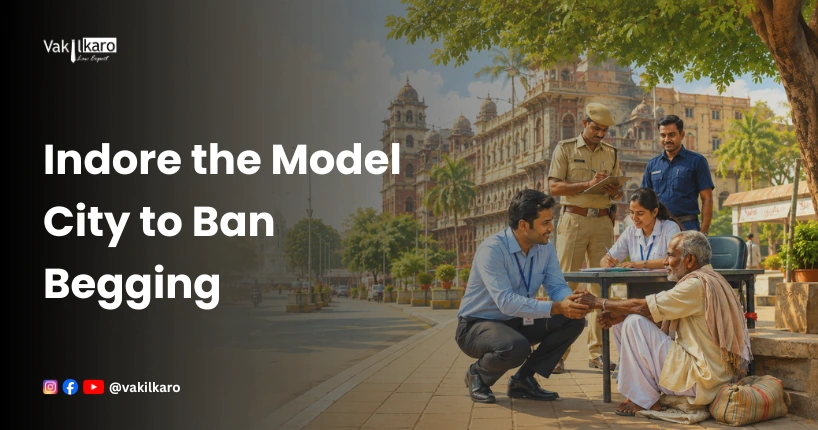
India has embarked on a significant reform journey by introducing the Bharatiya Nyay Sanhita (BNS), 2023, a modernized legal framework replacing the outdated Indian Penal Code (IPC) of 1860. Under this initiative, Indore became the first city to implement a begging ban as part of a pilot program to tackle systemic exploitation and poverty. This groundbreaking move focuses on rehabilitation and dismantling organized begging, setting the stage for similar programs in Delhi, Bengaluru, Chennai, and Hyderabad.
The Bharatiya Nyay Sanhita addresses emerging societal challenges, including organized crime and human trafficking, while promoting a compassionate legal approach. Recognizing begging as both a social and legal issue, the BNS distinguishes between coerced begging orchestrated by exploitative networks and individuals facing genuine economic hardships. This nuanced perspective has paved the way for strategic solutions, combining enforcement with rehabilitation.
Key Takeaways
- Under this initiative, Indore became the first city to implement a begging ban as part of a pilot program to tackle systemic exploitation and poverty.
- Indore Leads India's Pilot Begging Ban: Under Bharatiya Nyay Sanhita 2023, Indore became the first city to ban begging, prioritizing rehabilitation over punishment.
- By implementing the begging ban under the pilot program, Indore becomes a testing ground for the practical application of the Bharatiya Nyay Sanhita.
- Pilot Program Extension: Delhi, Bengaluru, Chennai, and Hyderabad After the successful implementation of the begging ban in Indore, the program is set to be extended to other major cities, including Delhi, Bengaluru, Chennai, and Hyderabad.
- Challenges in Scaling the Program: While the pilot program in Indore showed promising results, implementing the begging ban in larger metropolitan cities comes with challenges: Higher Population Density: Managing large populations in cities like Delhi and Bengaluru will require extensive resources and planning.
Indore Leads India's Pilot Begging Ban:
Under Bharatiya Nyay Sanhita 2023, Indore became the first city to ban begging, prioritizing rehabilitation over punishment. This pilot program, aimed at dismantling organized begging and empowering vulnerable individuals, will extend to cities like Delhi, Bengaluru, Chennai, and Hyderabad. By addressing root causes with vocational training and public awareness, Indore sets a precedent for compassionate governance and inclusive urban reform.
The Context: Bharatiya Nyay Sanhita, 2023
The Bharatiya Nyay Sanhita, introduced as part of India's comprehensive legal reforms to replace the outdated Indian Penal Code (IPC) of 1860, aims to modernize India's justice system. It focuses on addressing contemporary issues such as organized crime, cybercrime, and various societal challenges.
Key Features of the Bharatiya Nyay Sanhita
The BNS emphasizes modernization, clarity, and strict enforcement to ensure the safety, dignity, and rights of all citizens. Some of its key goals include:
- Decriminalizing outdated offenses while addressing evolving societal challenges.
- Promoting reforms that help eradicate issues like poverty, child labor, and exploitation.
- Implementing stricter measures against organized begging and human trafficking.
Under this legal reform, the issue of begging has been recognized as not merely a criminal problem but also a social challenge requiring strategic solutions.
Why Indore Was Chosen for the Pilot Program
Indore, located in Madhya Pradesh, is often regarded as a model city due to its achievements in urban cleanliness and governance. The city has topped the Swachh Survekshan rankings for several years in a row, setting benchmarks for cleanliness, waste management, and public participation. Indore's consistent success in tackling urban challenges made it a suitable choice for piloting innovative programs like the begging ban.
Factors That Made Indore the First City to Act:
- Urban Infrastructure: Indore boasts strong administrative systems and citizen awareness programs, which made the city more adaptable to change.
- Cleanliness Campaigns: Previous campaigns, such as the elimination of open defecation and waste segregation, succeeded due to Indore’s proactive policies.
- Public Participation: The active participation of residents and NGO in urban development initiatives created an environment for successful implementation of new reforms.
- Government Support: The local administration, along with the Madhya Pradesh government, strongly backed initiatives aimed at improving the quality of life for all citizens.
The Pilot Program: How It Was Implemented
The pilot program in Indore focused on both enforcement and rehabilitation. The strategy ensured that the ban would not criminalize poverty but instead address its root causes while promoting social inclusion.
Steps in the Implementation:
- Identification of Beggars: Surveys were conducted to identify areas where begging was prevalent, such as traffic signals, railway stations, and markets.
- Creating Rehabilitation Centers: Special shelters and rehabilitation centers were established to provide temporary housing, food, and healthcare to beggars.
- Skill Development Programs: Vocational training and skill development initiatives were introduced to help beggars become self-reliant.
- Public Awareness Campaigns: Citizens were educated about the detrimental effects of encouraging begging and urged to contribute to organized charities instead.
- Law Enforcement: Authorities ensured that organized begging rings and human trafficking networks were dismantled through strict legal action.
Relevance of the Begging Ban to Bharatiya Nyay Sanhita, 2023
Under the BNS, organized begging has been classified as a criminal offense, addressing the systemic exploitation of vulnerable individuals. It recognizes the distinction between voluntary begging and forced begging orchestrated by exploitative networks.
- Legal Provisions in the Bharatiya Nyay Sanhita:
The Bharatiya Nyay Sanhita, 2023, introduces several clauses that focus on eradicating organized begging. These include:
- Criminalizing Forced Begging: Organized begging, wherein individuals (especially children and women) are coerced into begging, is considered a punishable offense.
- Addressing Human Trafficking: The law aligns with international standards to combat trafficking, which is often linked to organized begging.
- Ensuring Rehabilitation: The legal provisions emphasize rehabilitation and integration of beggars into mainstream society rather than punitive measures.
By implementing the begging ban under the pilot program, Indore becomes a testing ground for the practical application of the Bharatiya Nyay Sanhita. It sets an example of how laws can be implemented to achieve both legal enforcement and social reform.
Pilot Program Extension: Delhi, Bengaluru, Chennai, and Hyderabad
After the successful implementation of the begging ban in Indore, the program is set to be extended to other major cities, including Delhi, Bengaluru, Chennai, and Hyderabad. These cities were chosen based on several factors:
Delhi: The National Capital
Delhi, being the political and administrative capital of India, faces significant challenges related to begging, particularly in areas like Connaught Place, Old Delhi, and tourist hubs. The extension of the begging ban in Delhi will be a crucial step in addressing organized begging rings operating in the city.
Bengaluru: The IT Hub
Bengaluru, often referred to as the Silicon Valley of India, attracts a large migrant population seeking employment. However, this influx has also led to an increase in begging, especially around IT parks and commercial areas. Implementing a begging ban in Bengaluru will address these challenges while promoting inclusive urban development.
Chennai: The Cultural Capital
Chennai, with its rich cultural heritage and large public gatherings at temples and beaches, has seen a rise in begging. The city’s authorities are focused on creating sustainable solutions to rehabilitate beggars while ensuring compliance with the law.
Hyderabad: The Emerging Tech City
Hyderabad, an emerging metropolitan city, faces issues related to organized begging networks operating near traffic signals, malls, and markets. The begging ban in Hyderabad will focus on dismantling these networks while providing opportunities for rehabilitation and skill development.
Challenges in Scaling the Program:
While the pilot program in Indore showed promising results, implementing the begging ban in larger metropolitan cities comes with challenges:
- Higher Population Density: Managing large populations in cities like Delhi and Bengaluru will require extensive resources and planning.
- Migrant Communities: Cities attract migrants seeking employment, making it essential to differentiate between economic vulnerability and organized begging.
- Coordination with NGOs: Effective partnerships with NGOs and community organizations are necessary to ensure the success of rehabilitation programs.
The Ethical and Social Implications
The decision to ban begging raises important ethical and social considerations. Critics argue that banning begging criminalizes poverty and penalizes individuals for their socio-economic conditions. However, proponents believe that the ban addresses the systemic exploitation of vulnerable individuals while offering them pathways to rehabilitation.
Ethical Arguments:
- Human Dignity: The ban aims to restore human dignity by helping beggars gain skills, employment, and a sense of purpose.
- Combating Exploitation: By targeting organized begging rings, the law ensures that vulnerable individuals are not exploited for profit.
- Promoting Inclusivity: The emphasis on rehabilitation rather than punishment ensures that the most marginalized members of society are given opportunities to thrive.
Addressing Concerns:
To address concerns about criminalizing poverty, the implementation of the begging ban focuses on rehabilitation and social inclusion. By providing shelter, healthcare, and skill development programs, the government aims to help beggars become self-reliant.
Success Stories and Future Prospects
The pilot program in Indore has already shown promising results. Several individuals who were previously engaged in begging have been rehabilitated and provided with job opportunities.
Key Success Stories:
- Vocational Training Programs: Many individuals have been trained in skills such as tailoring, carpentry, and food services, allowing them to earn a sustainable income.
- NGO Collaboration: Partnerships with NGOs have played a crucial role in providing counseling, healthcare, and education to rehabilitated beggars.
- Public Support: The citizens of Indore have embraced the program, with many contributing to organized charities and rehabilitation initiatives.
Future Prospects:
The success of the begging ban in Indore paves the way for its implementation across India. By combining legal enforcement with social reform, the government aims to address the root causes of begging while promoting dignity, equality, and inclusion.
Conclusion
The decision to ban begging in Indore under the pilot program marks a significant milestone in India’s efforts to address poverty, exploitation, and organized crime. By aligning with the Bharatiya Nyay Sanhita, 2023, the program emphasizes a balanced approach that focuses on rehabilitation, social inclusion, and law enforcement.
As the program is extended to other cities like Delhi, Bengaluru, Chennai, and Hyderabad, it holds the potential to transform the lives of thousands of vulnerable individuals while promoting urban development and societal progress.
While challenges remain, the success of the begging ban in Indore demonstrates the power of combining legal reforms with compassionate governance. It is a step toward creating a more inclusive and equitable society where every individual has the opportunity to lead a life of dignity and self-reliance.
Why Choose VakilKaro for All Legal Needs:
VakilKaro stands out as a reliable platform for addressing all your legal needs with precision, affordability, and convenience. Here’s why you should choose VakilKaro:
- Experienced Legal Experts: Access a team of skilled lawyers with expertise in various fields, including corporate law, family matters, property disputes, and more.
- Affordable Services: Get cost-effective legal solutions without compromising on quality. Transparent pricing ensures no hidden costs.
- End-to-End Assistance: From legal consultations and drafting documents to representing you in court, VakilKaro offers comprehensive services under one roof.
- Time-Saving Process: With streamlined procedures and online consultations, VakilKaro saves you valuable time.
- Client-Centric Approach: Personalized support ensures your case receives the attention it deserves.
- Technology-Driven Platform: VakilKaro leverages technology to make legal services accessible anytime, anywhere.
Official External Resources
Use these primary/official sources to verify rules, forms, fees, timelines and regulatory updates before publication.
Frequently asked questions
Indore the Model City to Ban Begging+
Under this initiative, Indore became the first city to implement a begging ban as part of a pilot program to tackle systemic exploitation and poverty. Indore Leads India's Pilot Begging Ban: Under Bharatiya Nyay Sanhita 2023, Indore became the first city to ban begging, prioritizing rehabilitation over punishment.
