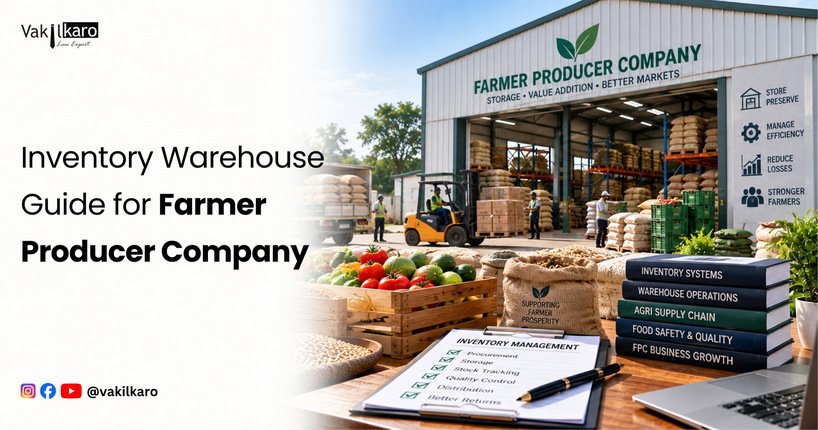
| Particular | Details |
|---|---|
| Process | Inventory & Warehouse Management |
| Applicable To | Farmer Producer Companies |
| Objective | Organised Stock & Storage Management |
| Covers | Inventory Recording, Warehouse Operations & Storage |
| Supports | Procurement, Quality, Business Operations & Governance |
| Long-Term Benefit | Efficient Stock Management & Sustainable Business Growth |
What is Inventory Management?
As a Farmer Producer Company grows, managing agricultural produce becomes increasingly complex.
Products received from Producer Members should be properly recorded, stored and monitored before processing, dispatch or sale.
Professional Producer Companies generally establish systems that support:
- Inventory Recording
- Warehouse Organisation
- Product Preservation
- Stock Monitoring
- Documentation
- Business Planning
- Operational Efficiency
A professionally managed inventory system reduces wastage, improves traceability and strengthens business continuity.
Inventory Management is the organised process of recording, tracking and controlling agricultural stock maintained by a Farmer Producer Company.
It generally includes monitoring:
- Product Quantity
- Product Location
- Product Movement
- Product Availability
- Stock Balance
Professional inventory systems help management make informed operational decisions.
Typical Features of Inventory Management
- Stock Recording
- Batch Tracking
- Inventory Monitoring
- Product Movement
- Stock Reconciliation
- Digital Inventory Records
- Business Reporting
- Organised Documentation
What is Warehouse Management?
Warehouse Management refers to the organised handling, storage and monitoring of agricultural produce after procurement.
A professionally managed warehouse generally supports:
- Safe Product Storage
- Inventory Control
- Product Preservation
- Warehouse Documentation
- Stock Movement
- Dispatch Preparation
Warehouse management helps maintain product quality while improving operational efficiency.
Typical Features of Warehouse Management
- Storage Planning
- Warehouse Layout
- Product Identification
- Inventory Allocation
- Warehouse Documentation
- Product Handling
- Stock Monitoring
- Dispatch Coordination
Inventory & Warehouse Summary Table
Why are Inventory & Warehouse Management Important?
Inventory and warehouse systems form the operational foundation of every professionally managed Producer Company.
Strong systems generally support:
- Product Quality
- Business Planning
- Financial Transparency
- Inventory Accuracy
- Operational Efficiency
Professional organisations integrate inventory management with procurement, accounting and business operations.
Improves Inventory Accuracy
Professional inventory systems generally help organisations maintain:
- Accurate Stock Records
- Product Availability
- Organised Documentation
- Reliable Inventory Reports
Accurate information improves operational planning.
Protects Agricultural Produce
Proper warehouse management generally helps protect products from:
- Physical Damage
- Storage Loss
- Mishandling
- Quality Deterioration
Safe storage improves long-term business value.
Supports Procurement & Sales
Inventory information generally helps management coordinate:
- Procurement Planning
- Storage Capacity
- Product Dispatch
- Customer Deliveries
Integrated operations improve efficiency.
Strengthens Financial Transparency
Inventory records generally support:
- Accounting
- Financial Reporting
- Stock Valuation
- Business Monitoring
Reliable inventory information improves governance.
Inventory & Warehouse Management Overview
Professional Producer Companies generally establish an integrated inventory and warehouse management system.
The system commonly includes:
- Inventory Recording
- Warehouse Storage
- Product Identification
- Stock Monitoring
- Inventory Documentation
- Product Movement Tracking
- Business Reporting
Each component contributes towards improving operational efficiency and reducing inventory-related risks.
Inventory Recording
Professional organisations generally maintain:
- Product Name
- Quantity
- Batch Information
- Storage Location
- Entry Date
Accurate records improve stock control.
Warehouse Storage
Warehouse management generally focuses on:
- Product Arrangement
- Storage Conditions
- Inventory Safety
- Product Accessibility
Organised storage supports efficient warehouse operations.
Stock Monitoring
Professional organisations generally monitor:
- Available Inventory
- Product Movement
- Warehouse Capacity
- Storage Performance
Continuous monitoring supports better operational planning.
Benefits Overview
A professionally managed inventory and warehouse system generally provides several long-term advantages.
Major benefits include:
- Better Stock Accuracy
- Improved Product Preservation
- Strong Inventory Control
- Efficient Warehouse Operations
- Better Financial Reporting
- Reduced Operational Losses
- Sustainable Business Growth
Vakilkaro Insight
Many Producer Companies focus on procurement while giving comparatively little attention to inventory management.
Professionally managed Farmer Producer Companies understand that successful procurement must be supported by organised warehouse operations and accurate inventory records.
A strong inventory management system helps reduce wastage, improve financial reporting and create a reliable operational foundation for future business expansion.
Founder Decision Box
Before Establishing an Inventory & Warehouse System, Ask:
- Have we planned our warehouse layout?
- Is our inventory recording system ready?
- Have we defined stock identification procedures?
- Are storage conditions appropriate for our products?
- Do we have organised warehouse documentation?
- Is our inventory system ready to support future growth?
Inventory & Warehouse Journey
Receive Agricultural Produce
↓
Record Inventory
↓
Allocate Warehouse Storage
↓
Monitor Stock Movement
↓
Maintain Warehouse Records
↓
Prepare Products for Dispatch
↓
Build an Efficient Inventory System
Why Choose Vakilkaro?
Vakilkaro helps Farmer Producer Companies establish organised inventory and warehouse management systems that support transparent operations and sustainable business growth.
Our services include:
- Farmer Producer Company Registration
- Inventory Management Advisory
- Warehouse Documentation Support
- Governance Framework Development
- Operational Process Structuring
- Digital Record Planning
- Compliance Advisory
- Long-Term Business Operations Support
Our experts help Producer Companies build professionally managed inventory and warehouse systems that improve operational efficiency, strengthen governance and support scalable agricultural business development.
Inventory Recording
Every Farmer Producer Company (FPC) should maintain an organised inventory recording system immediately after agricultural produce is procured.
Professional inventory recording generally helps management monitor:
- Product Quantity
- Product Type
- Batch Information
- Storage Location
- Stock Availability
- Product Movement
Accurate inventory records improve operational efficiency and financial transparency.
Stock Entry Process
Professional organisations generally record:
- Product Name
- Batch Number
- Quantity Received
- Date of Entry
- Storage Location
- Procurement Reference
Systematic stock entry reduces inventory errors.
Batch Identification
Professional Producer Companies generally assign unique batch references to improve:
- Product Traceability
- Inventory Monitoring
- Warehouse Management
- Product Identification
Batch management strengthens inventory control.
Warehouse Operations
Warehouse operations begin after inventory is received and recorded.
Professional warehouse management generally includes:
- Product Storage
- Product Arrangement
- Warehouse Monitoring
- Inventory Protection
- Stock Movement
Efficient warehouse operations improve business continuity.
Warehouse Layout
Professional organisations generally organise warehouses into:
- Receiving Area
- Storage Area
- Inspection Area
- Dispatch Area
- Documentation Section
A structured layout improves operational efficiency.
Product Arrangement
Products are generally arranged according to:
- Product Category
- Batch
- Storage Requirement
- Movement Frequency
Proper arrangement improves accessibility and inventory management.
Stock Movement
Every movement of inventory should generally be recorded.
Professional organisations generally monitor:
- Goods Received
- Internal Transfers
- Warehouse Allocation
- Product Dispatch
- Stock Balance
Continuous tracking improves inventory accuracy.
Stock Transfer
When inventory moves between locations, professional organisations generally record:
- Source Location
- Destination Location
- Quantity
- Transfer Date
- Responsible Person
Proper transfer records strengthen traceability.
Dispatch Preparation
Before products leave the warehouse, organisations generally verify:
- Quantity
- Product Identification
- Documentation
- Dispatch Approval
Verification improves operational accuracy.
Inventory Documentation
Professional inventory management depends upon organised documentation.
Professional organisations generally maintain:
- Inventory Register
- Stock Ledger
- Warehouse Register
- Batch Register
- Dispatch Register
- Goods Receipt Records
Complete documentation supports governance and audit readiness.
Inventory Register
The inventory register generally records:
- Product Name
- Quantity
- Batch Reference
- Warehouse Location
- Date of Entry
Accurate registers improve inventory monitoring.
Goods Receipt Records
Professional organisations generally prepare records relating to:
- Procurement Reference
- Product Details
- Quantity Received
- Quality Status
- Warehouse Allocation
Goods receipt records strengthen operational transparency.
Storage Management
Proper storage helps preserve product quality and minimise losses.
Professional warehouse management generally focuses on:
- Clean Storage Areas
- Organised Product Placement
- Stock Rotation
- Product Protection
- Environmental Monitoring
Good storage practices improve product life and market quality.
Storage Allocation
Products are generally allocated according to:
- Product Type
- Storage Requirements
- Batch
- Expected Dispatch Schedule
Planned storage improves warehouse efficiency.
Stock Rotation
Professional organisations generally follow stock rotation practices to reduce storage-related losses.
Organised stock rotation helps maintain product quality.
Warehouse Safety
Warehouse safety protects products, employees and business assets.
Professional organisations generally establish:
- Safe Storage Practices
- Fire Safety Measures
- Restricted Access
- Clean Warehouse Environment
- Emergency Procedures
Warehouse safety supports operational continuity.
Access Control
Professional organisations generally define authorised access to warehouse areas.
Controlled access improves:
- Inventory Security
- Accountability
- Operational Discipline
Product Protection
Professional warehouse systems generally focus on protecting inventory from:
- Physical Damage
- Moisture
- Contamination
- Theft
- Mishandling
Product protection preserves business value.
Inventory Monitoring
Professional Producer Companies generally review inventory through:
- Daily Stock Reports
- Warehouse Reports
- Inventory Reconciliation
- Stock Movement Reports
- Dispatch Reports
Regular monitoring improves operational planning.
Warehouse Documentation
Professional organisations generally maintain:
- Warehouse Register
- Inventory Reports
- Storage Records
- Dispatch Records
- Product Movement Records
- Inspection Reports
Organised documentation strengthens governance.
Inventory Reconciliation
Professional organisations generally compare:
- Physical Stock
- Inventory Records
- Warehouse Reports
Regular reconciliation helps identify:
- Stock Differences
- Recording Errors
- Inventory Variations
Inventory reconciliation improves financial accuracy.
Common Inventory & Warehouse Mistakes
Many Producer Companies experience operational challenges because inventory systems are not professionally managed.
Common mistakes include:
- Delayed Stock Entry
- Poor Warehouse Organisation
- Missing Inventory Records
- Incorrect Batch Identification
- Weak Stock Monitoring
- Poor Storage Practices
- Missing Dispatch Documentation
- Weak Inventory Reconciliation
- Inadequate Warehouse Security
- Lack of Digital Inventory Records
Professional inventory systems significantly reduce these risks.
Founder Inventory & Warehouse Checklist
Before managing warehouse operations, ensure:
✔ Inventory Recording System Ready
✔ Warehouse Layout Organised
✔ Batch Identification System Implemented
✔ Inventory Registers Prepared
✔ Storage Standards Defined
✔ Warehouse Safety Measures Implemented
✔ Stock Monitoring Process Ready
✔ Inventory Reconciliation Planned
✔ Documentation System Operational
✔ Professional Operational Review Completed
Vakilkaro Expert Insight
Many Producer Companies believe warehouse management begins after procurement.
Professionally managed Farmer Producer Companies understand that inventory management begins the moment agricultural produce is received.
Successful organisations consistently:
- Record Stock Immediately
- Organise Warehouse Storage
- Monitor Product Movement
- Maintain Batch Identification
- Preserve Complete Documentation
- Conduct Regular Inventory Reconciliation
- Strengthen Warehouse Safety
- Improve Operational Efficiency Continuously
A professionally managed inventory and warehouse system reduces operational losses, strengthens governance, improves financial reporting and creates a reliable operational foundation for sustainable agricultural business growth.
Benefits of Professional Inventory & Warehouse Management
A professionally managed Inventory & Warehouse Management System enables a Farmer Producer Company (FPC) to protect agricultural produce, improve operational efficiency and strengthen long-term business sustainability.
Inventory management is not merely about storing products—it helps the organisation maintain product quality, improve financial accuracy and support better business decisions.
Professional Producer Companies integrate inventory management with procurement, accounting and business planning.
Improves Inventory Accuracy
Organised inventory systems generally help maintain:
- Accurate Stock Records
- Product Availability
- Batch Identification
- Warehouse Allocation
- Inventory Visibility
Reliable inventory data improves operational planning.
Protects Agricultural Produce
Professional warehouse management generally protects products from:
- Physical Damage
- Moisture
- Contamination
- Storage Losses
- Mishandling
Better product preservation improves market value.
Strengthens Financial Transparency
Inventory records generally support:
- Stock Valuation
- Financial Reporting
- Accounting
- Audit
- Business Monitoring
Financial transparency strengthens governance.
Improves Warehouse Efficiency
Well-organised warehouse systems generally improve:
- Product Identification
- Stock Retrieval
- Warehouse Space Utilisation
- Dispatch Preparation
Efficient warehouse operations reduce operational delays.
Supports Business Expansion
As the Producer Company grows, professional inventory systems help manage:
- Larger Procurement Volumes
- Additional Warehouses
- Multiple Product Categories
- Higher Stock Movement
Scalable inventory systems support sustainable business growth.
Inventory Best Practices
Professionally managed Producer Companies generally follow structured inventory management practices.
Record Stock Immediately
Professional organisations generally record inventory immediately after receiving products.
Timely recording improves:
- Inventory Accuracy
- Product Traceability
- Business Reporting
Delayed entries may create inventory discrepancies.
Standardise Product Identification
Professional organisations generally assign:
- Batch Numbers
- Product Codes
- Warehouse Locations
Standard identification improves stock control.
Monitor Inventory Regularly
Professional inventory management generally includes reviewing:
- Available Stock
- Product Movement
- Warehouse Capacity
- Slow-Moving Inventory
Regular monitoring supports informed business decisions.
Maintain Clean Warehouses
Professional warehouse management generally includes:
- Clean Storage Areas
- Organised Product Placement
- Safe Working Conditions
- Pest Prevention
- Regular Inspection
A clean warehouse improves product preservation.
Integrate Inventory with Procurement & Accounting
Professional organisations generally integrate inventory systems with:
- Procurement
- Accounting
- Banking
- MIS
- Business Reporting
Integrated systems improve organisational efficiency.
Risk Management
Inventory and warehouse operations involve several operational and financial risks.
Professional Producer Companies generally establish structured systems to reduce these risks.
Inventory Loss Risk
Inventory losses may arise because of:
- Poor Record Keeping
- Theft
- Product Damage
- Incorrect Stock Handling
Professional inventory controls reduce losses.
Storage Risk
Improper storage may lead to:
- Product Deterioration
- Quality Reduction
- Stock Damage
Professional warehouse management improves storage quality.
Documentation Risk
Weak inventory documentation may affect:
- Accounting
- Audit
- Financial Reporting
- Governance
Organised records strengthen transparency.
Operational Risk
Warehouse operations may face:
- Dispatch Errors
- Stock Misplacement
- Inventory Variations
- Product Handling Issues
Professional operating procedures reduce operational risk.
Common Inventory & Warehouse Mistakes
Many Producer Companies experience inventory challenges because systems are not maintained consistently.
Common mistakes include:
- Delayed Inventory Entry
- Weak Warehouse Planning
- Incorrect Batch Records
- Poor Storage Practices
- Missing Documentation
- Weak Stock Monitoring
- No Inventory Reconciliation
- Poor Warehouse Security
- Weak Digital Records
- Lack of Standard Operating Procedures
Professional systems significantly reduce these challenges.
Practical Tips for Founders
Before strengthening inventory operations, founders should generally:
- Standardise Inventory Recording
- Organise Warehouse Layout
- Implement Batch Identification
- Strengthen Storage Practices
- Digitise Inventory Records
- Monitor Stock Regularly
- Conduct Inventory Reconciliation
- Improve Warehouse Safety
- Train Warehouse Personnel
- Seek Professional Operational Guidance
These practices improve long-term operational efficiency.
Founder Inventory & Warehouse Checklist
Before reviewing warehouse performance, ensure:
✔ Inventory Records Updated
✔ Warehouse Layout Organised
✔ Batch Identification System Working
✔ Storage Standards Followed
✔ Stock Monitoring Active
✔ Inventory Reconciliation Completed
✔ Warehouse Documentation Updated
✔ Safety Procedures Implemented
✔ Digital Inventory System Operational
✔ Professional Operational Review Completed
Practical Inventory & Warehouse Workflow
Receive Agricultural Produce
↓
Record Inventory
↓
Allocate Warehouse Storage
↓
Monitor Stock Movement
↓
Conduct Inventory Reconciliation
↓
Prepare Products for Dispatch
↓
Strengthen Inventory Governance
Vakilkaro Expert Recommendation
Many Producer Companies believe inventory management simply means storing products after procurement.
Professionally managed Farmer Producer Companies understand that inventory management is a strategic operational function.
Successful organisations consistently:
- Record Inventory Promptly
- Maintain Accurate Stock Records
- Strengthen Warehouse Organisation
- Protect Product Quality
- Monitor Inventory Continuously
- Integrate Inventory with Procurement & Accounting
- Conduct Regular Reconciliation
- Improve Operational Systems
A professionally managed inventory and warehouse system reduces operational losses, improves financial transparency, strengthens governance and provides the operational stability required for sustainable agricultural business growth.
Frequently asked questions
What is Inventory Management in a Farmer Producer Company?+
Inventory Management is the organised process of recording, tracking, monitoring and controlling agricultural produce stored by a Farmer Producer Company (FPC) after procurement.
What is Warehouse Management?+
Warehouse Management refers to the organised storage, handling, monitoring and movement of agricultural produce within the Producer Company's storage facilities.
Why are Inventory and Warehouse Management important?+
Professional inventory and warehouse management generally help: • Protect Agricultural Produce • Improve Inventory Accuracy • Strengthen Financial Transparency • Support Business Planning • Improve Operational Efficiency
What information should inventory records generally contain?+
Professional inventory records generally include: • Product Name • Quantity • Batch Number • Storage Location • Entry Date • Product Status
What is batch identification?+
Batch identification is the process of assigning a unique reference to each stock lot for easier tracking, monitoring and inventory management.
Why are warehouses important for Producer Companies?+
Warehouses generally help: • Preserve Product Quality • Organise Inventory • Improve Stock Management • Support Business Operations
Why should inventory be recorded immediately?+
Timely inventory recording generally improves: • Stock Accuracy • Traceability • Business Reporting • Inventory Control Delayed recording may increase inventory errors.
What is inventory reconciliation?+
Inventory reconciliation is the process of comparing physical stock with inventory records to identify and resolve differences.
Why is warehouse documentation important?+
Professional documentation generally supports: • Inventory Management • Accounting • Audit • Governance • Business Reporting
Can Vakilkaro help establish inventory systems?+
Yes. Vakilkaro provides assistance for: • Inventory System Planning • Warehouse Documentation • Governance Advisory • Operational Structuring • Producer Company Registration
Why is stock monitoring important?+
Regular monitoring generally helps organisations review: • Available Stock • Product Movement • Warehouse Capacity • Inventory Performance Continuous monitoring improves operational planning.
Can digital inventory systems improve efficiency?+
Yes. Digital inventory systems generally improve: • Accuracy • Reporting • Inventory Visibility • Business Analytics • Operational Efficiency
Why should storage standards be maintained?+
Professional storage generally helps: • Protect Product Quality • Reduce Losses • Improve Warehouse Safety • Support Business Continuity
What is warehouse safety?+
Warehouse safety generally includes: • Safe Storage • Controlled Access • Product Protection • Emergency Preparedness • Clean Working Environment
Can poor inventory management affect business growth?+
Yes. Weak inventory systems may result in: • Stock Loss • Financial Errors • Operational Delays • Customer Dissatisfaction Professional inventory management supports sustainable growth.
Why should inventory systems integrate with procurement?+
Integration generally improves: • Stock Accuracy • Financial Reporting • Business Planning • Operational Coordination Integrated systems strengthen organisational efficiency.
Why should inventory records be reviewed regularly?+
Professional organisations generally review: • Stock Levels • Warehouse Performance • Inventory Accuracy • Product Movement Regular review improves operational control.
What is the biggest inventory management mistake?+
One of the most common mistakes is failing to maintain accurate stock records and delaying inventory reconciliation.
Why should founders seek professional inventory guidance?+
Professional guidance helps: • Improve Inventory Systems • Strengthen Warehouse Operations • Reduce Operational Risks • Improve Documentation • Support Business Growth
What is the biggest benefit of a professionally managed inventory system?+
A professionally managed inventory system improves stock accuracy, protects agricultural produce, strengthens governance and creates a reliable operational foundation for sustainable business growth. Common Myths Many founders misunderstand inventory and warehouse management. "Warehouse management simply means storing products." Incorrect. Professional warehouse management generally includes: • Product Identification • Inventory Recording • Stock Monitoring • Documentation • Product Protection • Dispatch Planning "Inventory records are only useful for accounting." Incorrect. Inventory records also support: • Procurement • Warehouse Operations • Business Planning • Audit • Governance • Operational Decision-Making "Small Producer Companies do not need inventory systems." Incorrect. Every Producer Company benefits from organised inventory management regardless of its size. Strong inventory systems improve transparency and operational efficiency. "Physical stock alone is sufficient." Incorrect. Professional organisations generally maintain: • Physical Stock • Inventory Registers • Digital Records • Warehouse Documentation • Reconciliation Reports These systems collectively strengthen inventory governance. "Inventory management ends after warehouse storage." Incorrect. Professional inventory management continues through: • Stock Monitoring • Product Movement • Inventory Reconciliation • Dispatch Management • Business Reporting • Continuous Improvement Vakilkaro Expert Opinion Many Producer Companies initially focus on procurement while giving comparatively little attention to inventory governance. Professionally managed Farmer Producer Companies understand that inventory management directly affects: • Product Quality • Financial Reporting • Business Efficiency • Governance • Customer Satisfaction Successful organisations consistently: • Maintain Accurate Inventory Records • Strengthen Warehouse Operations • Protect Agricultural Produce • Conduct Regular Inventory Reconciliation • Integrate Inventory with Procurement & Accounting • Improve Warehouse Safety • Monitor Operational Performance A professionally managed inventory and warehouse system creates operational discipline, reduces business losses and provides the foundation for sustainable long-term agricultural enterprise growth. Related Guides Foundation Guides • Procurement Guide • Farmer Onboarding Guide • Digital FPO Guide • FPO Business Model Guide Operations Hub • Collection Centre Guide • Quality Inspection Guide • Dispatch & Logistics Guide • Inventory Audit Guide Compliance Guides • Accounting Guide • Governance Guide • Audit Guide Schema Recommendation Implement: • FAQ Schema • Article Schema • Breadcrumb Schema • Organization Schema Developer Notes • Place the Inventory & Warehouse Summary Table within the running main content after the relevant explanatory H2 section. • Apply FAQ Schema to all FAQs. • Highlight the Founder Inventory & Warehouse Checklist as a visual callout. • Display the Inventory & Warehouse Workflow as a process diagram. • Internally link to the Farmer Producer Company Registration Service Page, Procurement Guide, Digital FPO Guide, Accounting Guide, Governance Guide, Quality Inspection Guide, and Dispatch & Logistics Guide to strengthen topical authority.
