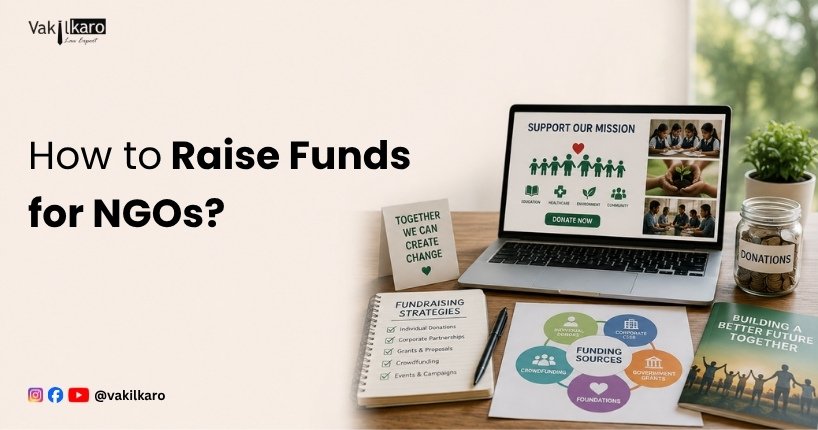
Securing funds is crucial for NGOs to sustain their operations and drive social change. From government grants and CSR funding to crowdfunding and donor engagement, multiple strategies help raise funds for NGOs in India. Proper NGO registration, including Section 8 Company registration, enhances credibility, making it easier to attract financial support. Obtaining 12A and 80G registration ensures tax exemptions and encourages donations. NGOs can also explore international grants, fundraising events, and income-generating activities to diversify revenue streams. By leveraging these methods, maintaining transparency, and demonstrating impact, NGOs can successfully raise money and expand their reach for a greater cause.
Key Takeaways
- From government grants and CSR funding to crowdfunding and donor engagement, multiple strategies help raise funds for NGOs in India.
- Effective Strategies to Raise Funds for NGOs Securing adequate funds is vital for NGOs to sustain their initiatives and make a lasting social impact.
- There are multiple ways to raise funds for NGOs in India, ranging from government grants and corporate social responsibility (CSR) funding to crowdfunding and donor engagement.
- By diversifying funding sources, maintaining transparency, and demonstrating impact, NGOs can effectively raise funds and sustain their mission.
- Importance of NGO Registration in Fundraising Before exploring how to raise funds for NGOs, it is crucial to understand why legal registration plays a vital role in securing financial support.
Effective Strategies to Raise Funds for NGOs
Securing adequate funds is vital for NGOs to sustain their initiatives and make a lasting social impact. There are multiple ways to raise funds for NGOs in India, ranging from government grants and corporate social responsibility (CSR) funding to crowdfunding and donor engagement. By leveraging the right strategies, NGOs can ensure financial stability and continue their work effectively.
One of the most reliable sources of funding for NGOs is government grants. Various ministries and state governments offer financial assistance to registered NGOs working in education, healthcare, and rural development. To qualify for these grants, NGOs must complete the necessary legal formalities, including NGO registration and Section 8 Company registration. Registering on government platforms like NGO-DARPAN also increases accessibility to funding opportunities.
Corporate Social Responsibility (CSR) funding is another significant avenue. Companies allocate a portion of their profits to social initiatives, and NGOs that align with their objectives can secure substantial financial support. NGOs with Section 8 Company registration are more likely to attract CSR funds, as they are legally recognized for non-profit activities.
Crowdfunding platforms like Ketto, Milaap, and ImpactGuru provide an opportunity for NGOs to raise money online. By creating compelling campaigns, sharing success stories, and utilizing social media, NGOs can reach a broad audience and encourage small-scale donations.
Additionally, obtaining 12A and 80G registration is essential to maximize fundraising efforts. These registrations allow NGOs to benefit from tax exemptions and offer donors the advantage of tax deductions, making contributions more appealing.
By diversifying funding sources, maintaining transparency, and demonstrating impact, NGOs can effectively raise funds and sustain their mission. With the right approach, fundraising becomes a continuous process that ensures long-term success and social transformation.
Non-Governmental Organizations (NGOs) play a vital role in driving social change, addressing various critical issues such as education, healthcare, environmental sustainability, and poverty alleviation. These organizations work towards uplifting underprivileged communities, advocating for human rights, and improving overall societal well-being. However, while the intent and mission of NGOs are noble, securing sufficient funds remains one of the most significant challenges they face. Without adequate financial support, NGOs struggle to maintain their operations, implement new projects, and expand their outreach.
For those wondering how to raise money for an NGO, understanding different fundraising strategies is essential. There are multiple avenues to explore, including government grants, individual donations, corporate sponsorships, and crowdfunding. Each of these funding sources comes with its own set of requirements and application procedures. NGOs must adopt a structured approach to fundraising, ensuring compliance with legal and regulatory frameworks to enhance their credibility and attract more donors.
One of the key aspects of successful fundraising is obtaining the necessary legal registrations. NGO registration, Section 8 Company registration, and 12A and 80G registration play a crucial role in building trust and legitimacy. A registered NGO is more likely to secure funding from government bodies, corporate donors, and international agencies. Section 8 Company registration, in particular, offers credibility for NGOs seeking corporate social responsibility (CSR) funds, while 12A and 80G registration provide tax exemptions and incentives for donors.
In this guide, we will explore various effective strategies to raise funds for NGOs in India. By leveraging government grants, CSR funding, digital fundraising platforms, and donor engagement, NGOs can secure the financial resources needed to sustain their mission and create a lasting social impact.
Importance of NGO Registration in Fundraising
Before exploring how to raise funds for NGOs, it is crucial to understand why legal registration plays a vital role in securing financial support. NGO registration establishes an organization as a legally recognized entity, enhancing its credibility and transparency. Donors, government bodies, corporate sponsors, and international agencies are more likely to provide financial assistance to registered NGOs, as they ensure accountability and compliance with legal frameworks.
A legally registered NGO enjoys several advantages in fundraising. Firstly, it gains access to government grants and funding schemes specifically designed for non-profit organizations working in social welfare sectors such as education, healthcare, environmental conservation, and poverty alleviation. Government ministries and agencies typically require NGOs to be registered to qualify for such financial assistance.
Secondly, corporate sponsors prefer collaborating with legally registered NGOs for their Corporate Social Responsibility (CSR) initiatives. Companies that allocate CSR funds must ensure that the recipient organization adheres to government regulations. NGOs with proper registration, particularly Section 8 Company registration, are more likely to attract CSR funding, as they operate under a structured and regulated legal framework.
Furthermore, NGOs seeking international funding must establish their credibility through legal registration. Many international organizations and funding agencies, such as the United Nations, the World Health Organization (WHO), and the Bill & Melinda Gates Foundation, prioritize working with legally recognized NGOs. Proper registration, along with additional compliance measures like 12A and 80G registration enhances an NGO’s eligibility for tax exemptions and allows donors to claim tax benefits, making it more appealing for financial contributions.
In summary, NGO registration is a fundamental step in building donor trust, ensuring financial credibility, and unlocking diverse funding opportunities. Without proper legal recognition, fundraising efforts can become challenging, limiting an NGO’s ability to fulfill its mission effectively.
NGO Registration Options
To operate legally and gain access to funding opportunities, NGOs in India must register under one of the three main legal structures: Trust, Society, or Section 8 Company. Each registration type serves different purposes and is governed by specific laws. Choosing the right type of registration depends on the NGO’s objectives, operational scale, and funding requirements.
A Trust is formed when a group of individuals comes together to work toward a charitable cause. Trust registration is ideal for NGOs involved in education, medical relief, or public welfare. The main governing document required for trust registration is the Trust Deed, which outlines the objectives, management structure, and operational guidelines of the Trust. Trusts are usually registered with the Sub-Registrar’s office of the respective state.
A Society is a non-profit organization formed by a group of individuals who voluntarily come together for the promotion of literary, scientific, or charitable objectives. Societies require at least seven members at the time of registration. The governing document for a Society is the Memorandum of Association (MoA) and Rules & Regulations, which define the NGO’s mission, membership details, and operational guidelines. Societies must be registered with the State Registrar of Societies.
A Section 8 Company is a type of non-profit organization registered under the Companies Act, 2013, with the objective of promoting charitable causes such as education, social welfare, and environmental sustainability. Unlike Trusts and Societies, a Section 8 Company operates with a structured corporate framework, offering better transparency and governance. The Ministry of Corporate Affairs (MCA) handles Section 8 Company registration, and the governing documents include the Memorandum of Association (MoA) and Articles of Association (AoA).
Among the three registration options, Section 8 Company registration is the most preferred choice for NGOs engaged in large-scale operations and looking to receive Corporate Social Responsibility (CSR) funds. Companies are more inclined to donate to Section 8 Companies because of their well-defined legal framework, financial accountability, and regulatory compliance. Moreover, NGOs registered as Section 8 Companies can benefit from 12A and 80G registration, making them eligible for tax exemptions and attracting more donors.
The choice between Trust, Society, or Section 8 Company depends on the size, structure, and funding needs of the NGO. While Trusts and Societies are easier to establish, Section 8 Company registration offers better credibility, financial governance, and access to government grants, CSR funding, and international donations. Proper registration not only strengthens an NGO’s legal standing but also helps in securing financial support for sustainable operations.
12A and 80G Registration for Funding to NGOs
To maximize funding opportunities and ensure financial sustainability, NGOs in India should obtain 12A and 80G registration under the Income Tax Act These registrations provide significant benefits, including tax exemptions for the NGO and incentives for donors, making it easier to attract financial support from individuals, corporations, and government agencies.
12A registration is essential for NGOs as it grants them tax exemption on their income. Without this registration, any donations or grants received by the NGO would be subject to income tax, reducing the funds available for their charitable activities. Once an NGO is registered under 12A, its entire income, including donations, grants, and other sources of revenue, becomes tax-free, allowing the organization to utilize its funds fully for its social initiatives. This exemption is crucial for NGOs working on long-term projects that require consistent financial support.
80G registration on the other hand, is designed to encourage donations by offering tax benefits to donors. When an NGO obtains 80G registration, donors who contribute to the organization can claim deductions on their taxable income, making it more appealing for individuals and corporations to support the NGO’s cause. This registration significantly increases the likelihood of receiving financial aid, as people are more willing to donate when they receive tax benefits in return. Additionally, businesses looking to fulfill their Corporate Social Responsibility (CSR) obligations often prefer donating to NGOs with 80G certification, as it provides them with financial advantages.
To apply for 12A and 80G registration, NGOs must submit an application to the Income Tax Department, along with necessary documents such as their NGO registration certificate, Trust Deed or Memorandum of Association (MoA), financial statements, and details of past activities. Once approved, these registrations remain valid for a specified period, after which renewal is required to continue availing the benefits.
Obtaining 12A and 80G registration not only strengthens an NGO’s credibility but also enhances its ability to secure funding from multiple sources, including government grants, CSR initiatives, and international donors. By leveraging these tax benefits, NGOs can build a sustainable financial structure and focus on their mission to drive social change effectively.
How to Raise Funds for NGOs: Best Strategies
Government Grants and Schemes
Government bodies provide substantial financial aid and funding to NGOs in India. Many ministries offer grants for NGOs working in areas like education, healthcare, and rural development. To apply for these funds:
- Ensure your NGO has completed NGO registration.
- Register on platforms such as NGO-DARPAN (by NITI Aayog) to access government grants.
- Submit detailed project proposals to relevant ministries.
Corporate Social Responsibility (CSR) Funds
Many businesses allocate a portion of their profits to CSR activities, making CSR funding an excellent source for NGOs. To attract CSR funds:
- Register as a Section 8 Company for credibility.
- Partner with companies that align with your NGO’s objectives.
- Highlight the impact of your projects with success stories and measurable results.
Crowdfunding and Online Fundraising
With the rise of digital platforms, online fundraising has become an effective way to raise money for NGOs. Crowdfunding platforms like Ketto, Milaap, and ImpactGuru allow NGOs to collect small donations from a large number of people.
- Create compelling campaigns with emotional appeal.
- Share fundraising campaigns on social media to reach a broader audience.
- Keep donors updated on how their contributions are being utilized.
Membership and Subscription Programs
One way to secure a steady flow of income is by setting up a membership program. NGOs can charge a nominal fee for membership, offering benefits such as exclusive newsletters, event invitations, and volunteer opportunities.
Organizing Fundraising Events
Fundraising events are a powerful tool to raise funds for NGOs in India. Some effective event ideas include:
- Charity auctions
- Marathons or walkathons
- Benefit concerts and cultural events
- Raffle draws and lucky draws
These events not only help in raising funds but also create awareness about your cause.
Grants from International Organizations
Several international agencies and foundations offer grants for NGOs worldwide. NGOs can apply for funds from organizations such as UNICEF, WHO, and the Bill & Melinda Gates Foundation.
- Ensure your NGO has proper 12A and 80G registration to qualify.
- Research grant opportunities and apply with a well-structured proposal.
Individual and High-Net-Worth Donors
Engaging individual donors is one of the most sustainable ways to generate funds for NGOs.
- Build relationships with philanthropists who align with your cause.
- Offer transparency on fund utilization to build trust.
- Implement a donor recognition program to appreciate contributions.
Income-Generating Activities
Some NGOs develop social enterprises to generate revenue for their initiatives. Examples include:
- Selling handmade products created by beneficiaries.
- Running training programs and workshops.
- Providing consulting services related to social impact.
Foreign Contributions and FCRA Registration
NGOs seeking international funding must register under the Foreign Contribution (Regulation) Act (FCRA), 2010.
- Only NGOs with three years of operational history can apply for FCRA registration.
- The funds should only be used for the stated objectives of the NGO.
Challenges in Raising Funds for NGOs
While there are multiple funding sources, NGOs often face obstacles in securing financial support. Some common challenges include:
- Strict Compliance Requirements: NGOs must maintain transparency and submit regular financial reports.
- High Competition: Many NGOs compete for limited funding opportunities.
- Donor Fatigue: Over time, individuals and corporations may lose interest in making repeated contributions.
- Lengthy Approval Process: Grant applications can take months for approval, delaying projects.
Tips for Successful Fundraising
To ensure success in raising funds for NGOs, follow these best practices:
- Develop a Fundraising Strategy: Set clear fundraising goals and a timeline.
- Leverage Digital Marketing: Use email campaigns, social media, and websites to attract donors.
- Demonstrate Impact: Share testimonials, impact reports, and success stories.
- Network with Potential Donors: Attend events, workshops, and business networking platforms to meet potential funders.
Conclusion
Raising funds for NGOs is crucial to ensuring their sustainability, growth, and long-term impact on society. Given the increasing competition for financial resources, NGOs must adopt a diversified approach to fundraising. This includes exploring multiple sources such as government grants, corporate social responsibility (CSR) funding, individual donations, crowdfunding, international aid, and income-generating activities. By implementing a well-structured strategy, NGOs can secure the financial support needed to drive their initiatives and create lasting change in their respective fields.
In addition to exploring various funding sources, NGOs must focus on legal compliance and credibility to build trust among donors and stakeholders. Obtaining proper legal recognition through NGO registration Section 8 Company registration, and 12A and 80G registration is essential for establishing legitimacy. These registrations not only provide tax exemptions and benefits but also make it easier for NGOs to qualify for government schemes, corporate partnerships, and international grants. Organizations that comply with legal and financial regulations are more likely to receive consistent funding and long-term support from donors.
Furthermore, transparency and accountability play a vital role in securing funds. NGOs should maintain accurate financial records, regularly report their impact, and communicate effectively with donors. Showcasing success stories, publishing financial statements, and demonstrating measurable outcomes can significantly increase donor confidence and encourage continued support.
For those looking to start an NGO in India, seeking expert legal guidance can help streamline the registration process, ensure compliance, and unlock numerous funding opportunities. With the right approach, dedication, and strategic planning, NGOs can successfully raise funds, sustain their operations, and continue making a meaningful difference in society. By leveraging the right resources and maintaining a commitment to transparency, NGOs can achieve their goals and positively impact countless lives.
Why Choose Vakilkaro for NGO Registration and Legal Services?
Vakilkaro is a trusted legal service provider known for its expertise in NGO registration, compliance, and various legal solutions. Whether you are looking to register an NGO as a Trust, Society, or Section 8 Company, Vakilkaro ensures a seamless process with expert guidance at every step. Their team of professionals specializes in legal documentation, tax exemptions, and regulatory compliance, helping NGOs secure essential registrations like 12A and 80G under the Income Tax Act.
One of the biggest challenges NGOs face is navigating complex legal procedures. Vakilkaro simplifies this by offering end-to-end support, from drafting the Memorandum of Association (MoA) or Trust Deed to filing applications with the relevant authorities. They ensure that NGOs meet all legal requirements, enabling them to qualify for government grants, CSR funding, and international donations. Their deep understanding of compliance laws ensures NGOs avoid unnecessary delays and rejections in the registration process.
Beyond NGO registration, Vakilkaro provides a range of legal services, including section 8 company registration trademark registration GST return filing and compliance, tax advisory, and business licensing. Their expertise in Section 8 Company registration makes them the preferred choice for NGOs looking to operate at a large scale and attract corporate social responsibility (CSR) funds. Additionally, Vakilkaro assists businesses and organizations in obtaining various licenses, ensuring smooth regulatory approvals.
By choosing Vakilkaro, NGOs and businesses can focus on their core mission while leaving the legal complexities to experienced professionals. Their commitment to accuracy, efficiency, and compliance ensures hassle-free legal solutions, making them a reliable partner for NGOs, startups, and enterprises alike.
Official External Resources
Use these primary/official sources to verify rules, forms, fees, timelines and regulatory updates before publication.
Frequently asked questions
How to Raise Funds for NGOs?+
Effective Strategies to Raise Funds for NGOs Securing adequate funds is vital for NGOs to sustain their initiatives and make a lasting social impact. By diversifying funding sources, maintaining transparency, and demonstrating impact, NGOs can effectively raise funds and sustain their mission.
