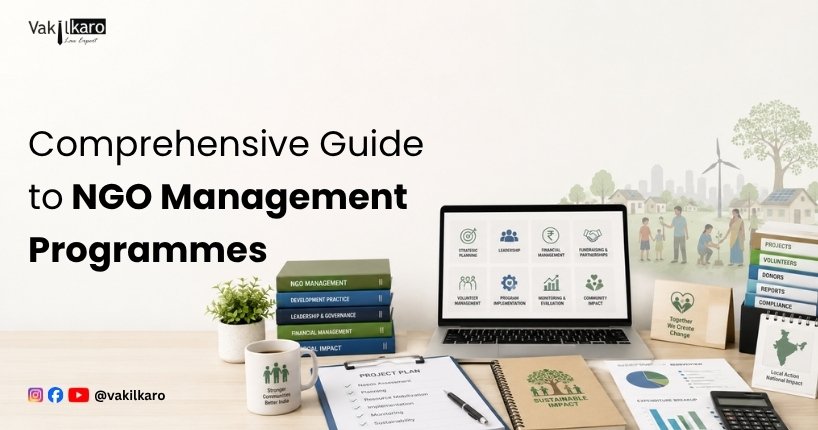
Effective NGO management ensures transparency, sustainability, and impact in addressing social issues. NGOs must adopt structured strategies, including legal compliance, fundraising, and governance. NGO registration options include Trust, Society, and Section 8 Company Registration, with the latter offering better governance and funding opportunities. Securing 12A and 80G registration is crucial for tax exemptions and donor incentives. NGOs must manage finances, projects, and volunteers efficiently while complying with legal requirements. Digital tools enhance operations, and expert assistance from Vakilkaro simplifies registrations, fundraising, and compliance, helping NGOs maximize their impact and achieve their mission effectively.
Key Takeaways
- Effective NGO management ensures transparency, sustainability, and impact in addressing social issues.
- Effective NGO Management: Key Strategies for Success Managing an NGO efficiently requires a structured approach to ensure transparency, sustainability, and long-term impact.
- Understanding and adopting best practices in NGO management is crucial for organizations looking to scale their initiatives and secure funding for sustainable growth.
- Understanding NGO Management: Key Components and Best Practices NGO management is a multifaceted process that involves strategic planning, efficient resource allocation, adherence to legal and regulatory requirements, and continuous monitoring of projects.
- NGO management programmes should include budgeting, financial reporting, and resource mobilization strategies.
Effective NGO Management: Key Strategies for Success
Managing an NGO efficiently requires a structured approach to ensure transparency, sustainability, and long-term impact. NGOs play a vital role in addressing social challenges, but their success depends on proper governance, financial planning, and compliance with legal regulations. Adopting a strategic NGO management framework helps organizations operate smoothly and achieve their mission effectively.
A fundamental aspect of NGO operations is legal registration. NGOs can be registered as Trusts, Societies, or Section 8 Companies, with Section 8 Company Registration being the most preferred due to its structured governance, credibility, and ability to attract grants and CSR funding. Additionally, obtaining 12A and 80G registration is crucial, as it provides tax exemptions for the NGO and allows donors to claim tax deductions, encouraging more contributions.
Financial sustainability is another critical factor in NGO management. Securing diverse funding sources, including government grants, CSR partnerships, and crowdfunding, ensures continuous operations. NGOs must maintain accurate financial records, submit compliance reports, and adhere to tax regulations to remain eligible for funding opportunities.
Effective NGO management also involves project planning and execution. NGOs must develop well-structured initiatives aligned with their mission, conduct needs assessments, and create detailed proposals for funding applications. Proper monitoring and evaluation systems ensure accountability and measure the impact of their projects.
Human resource and volunteer management play a significant role in enhancing operational efficiency. Recruiting skilled professionals, providing training, and implementing volunteer engagement strategies help NGOs maximize their resources and outreach.
Lastly, leveraging digital tools for donor management, financial tracking, and awareness campaigns enhances efficiency. Partnering with experts like Vakilkaro simplifies NGO registration Section 8 Company Registration, 12A and 80G registration, and legal compliance, allowing NGOs to focus on their mission and drive meaningful social change.
Non-Governmental Organizations (NGOs) serve as vital pillars of society, working towards social, economic, and environmental development. They address critical issues such as poverty alleviation, education, healthcare, women empowerment, environmental conservation, and disaster relief. However, to operate efficiently and maximize their impact, NGOs require structured management practices that ensure transparency, accountability, and long-term sustainability.
NGO management involves multiple aspects, including governance, financial planning, fundraising, project implementation, and compliance with legal requirements. Without a well-defined management framework, NGOs may struggle with financial instability, regulatory hurdles, and operational inefficiencies. Effective NGO governance ensures that organizations adhere to ethical standards, maintain public trust, and efficiently utilize resources to achieve their goals.
A key component of NGO operations is legal compliance, which includes obtaining proper registration. NGOs in India can register under different legal frameworks, such as Trust Registration Society Registration or Section 8 Company Registration. Among these, Section 8 Company Registration under the Companies Act, 2013, is preferred for its structured governance, credibility, and ability to attract funding from corporate and government sources. Additionally, NGOs seeking tax benefits and donor incentives must obtain 12A and 80G registration, which allow tax exemptions and deductions for donors, encouraging greater financial contributions.
This guide delves into the essential aspects of NGO management, including legal frameworks, financial sustainability, governance structures, compliance requirements, and strategies for securing funding. By implementing strong management practices, NGOs can enhance their operational efficiency, build long-term credibility, and create a lasting impact in their respective fields. Understanding and adopting best practices in NGO management is crucial for organizations looking to scale their initiatives and secure funding for sustainable growth.
Understanding NGO Management: Key Components and Best Practices
NGO management is a multifaceted process that involves strategic planning, efficient resource allocation, adherence to legal and regulatory requirements, and continuous monitoring of projects. Proper management ensures that NGOs operate effectively, achieve their objectives, and maintain accountability while delivering meaningful social impact. By implementing structured management frameworks, NGOs can optimize their operations, secure funding, and build long-term sustainability.
Key Components of NGO Management
Legal Compliance & Registration
Legal compliance is the foundation of NGO management. Proper registration provides NGOs with legal recognition and credibility, enabling them to operate within the law and qualify for government grants, corporate funding, and tax benefits. NGOs in India can register under:
- Trust Registration (Indian Trusts Act, 1882) – Suitable for charitable organizations focusing on education, healthcare, and social welfare.
- Society Registration (Societies Registration Act, 1860) – Ideal for NGOs working collaboratively in groups with a democratic structure.
- Section 8 Company Registration (Companies Act, 2013) – Preferred for its structured governance, credibility, and ability to attract corporate funding.
Additionally, NGOs must obtain 12A and 80G registration to avail tax exemptions and encourage donor contributions.
Fundraising & Financial Management
Sustainable financial management is crucial for NGOs to continue their work without interruptions. NGOs must develop diverse funding sources, including:
- Government Grants & Schemes – Applying for government programs that support social initiatives.
- Corporate Social Responsibility (CSR) Funds – Partnering with companies that allocate CSR budgets for social causes.
- Donations & Crowdfunding – Engaging individual donors through online and offline fundraising campaigns.
- Foreign Funding (FCRA Registration) – Complying with the Foreign Contribution Regulation Act (FCRA) for international donations.
Financial transparency, proper accounting, and regular audits are essential to maintain trust and credibility with donors and regulatory authorities.
Project Planning & Implementation
Effective project planning ensures that NGO initiatives align with their mission and deliver measurable impact. NGOs must:
- Define clear objectives based on community needs.
- Develop detailed project proposals, including budget, resources, and timelines.
- Secure necessary permissions and funding before launching initiatives.
- Ensure compliance with NGO registration and legal formalities.
A structured approach to project execution enhances efficiency and increases the chances of receiving long-term funding and support.
Monitoring & Evaluation (M&E)
Continuous assessment of NGO activities is crucial to measure progress, identify challenges, and improve project effectiveness. A strong M&E framework includes:
- Setting key performance indicators (KPIs) to track success.
- Regular progress reports for donors, stakeholders, and government agencies.
- Impact assessment studies to measure long-term benefits.
Proper documentation and reporting enhance accountability and credibility, making NGOs more eligible for future grants.
Human Resource Management
The success of an NGO depends on the dedication and expertise of its team. Efficient human resource management ensures that NGOs have skilled professionals and committed volunteers. Best practices include:
- Recruiting and training staff for specialized roles.
- Developing policies for employee welfare and performance evaluation.
- Encouraging volunteer engagement through structured programs.
- Building leadership capacity for better decision-making.
Strong NGO management creates an efficient, transparent, and sustainable organization, enabling NGOs to achieve their mission effectively while maintaining compliance with legal and financial regulations.
Legal Framework for NGOs in India: Understanding Registration Methods
Non-Governmental Organizations (NGOs) play a critical role in social welfare and development across various sectors, including education, healthcare, women’s empowerment, and environmental protection. However, to function legally and secure funding, NGOs must adhere to a structured legal framework in India. Proper NGO registration ensures transparency, compliance, and eligibility for government and corporate grants.
NGO Registration Methods in India
NGOs in India can be registered under three primary legal structures:
Trust Registration (Indian Trusts Act, 1882)
A trust is one of the oldest forms of NGO registration and is governed by the Indian Trusts Act, 1882. Trusts are typically formed to undertake charitable activities such as providing education, healthcare, and social relief.
Key Features:
- A minimum of two trustees is required to establish a trust.
- Trusts operate based on a trust deed, which outlines objectives, governance, and asset management.
- Trusts are usually irrevocable, meaning the original objectives cannot be altered without legal approval.
- Most suitable for family-run charitable organizations or religious institutions.
Advantages:
- Simple registration process with minimal government interference.
- No requirement for annual filings or member elections.
Disadvantages:
- Less structured governance, making it less attractive for corporate funding and government grants.
- Limited regulatory oversight can sometimes reduce credibility.
Society Registration (Societies Registration Act, 1860)
A society is an association of individuals working together for a common cause, typically in the fields of education, culture, sports, and research. Societies are governed by the Societies Registration Act, 1860, and are ideal for organizations that require democratic management and structured decision-making.
Key Features:
- A minimum of seven members is required to form a society.
- Societies must have a governing body responsible for administration.
- Registration is done at the state level, and different states may have additional rules.
- Requires annual compliance, including submission of reports and financial records.
Advantages:
- Flexible structure, allowing NGOs to modify their objectives over time.
- Suitable for large-scale initiatives involving multiple stakeholders.
Disadvantages:
- More complex governance compared to trusts, requiring elections and periodic renewals.
- Limited ability to attract corporate or foreign funding compared to Section 8 companies.
Section 8 Company Registration (Companies Act, 2013)
A Section 8 Company is the most structured and regulated form of NGO registration in India. It is governed by the Companies Act, 2013, and is specifically formed for charitable purposes such as social welfare, education, art, science, and environmental protection. Unlike other types of companies, Section 8 companies do not distribute profits to members but reinvest them for social causes.
Key Features:
- Requires a minimum of two directors and two shareholders.
- Governed by the Ministry of Corporate Affairs (MCA), ensuring high transparency.
- Eligible to receive Corporate Social Responsibility (CSR) funds, foreign contributions, and government grants.
- Must comply with annual audits and financial disclosures.
Advantages:
- High credibility and corporate governance, making it easier to attract donations.
- Tax benefits through 12A and 80G registration, allowing donors to claim tax exemptions.
- Easier to secure foreign funding (FCRA Registration) due to structured governance.
Disadvantages:
- Requires more compliance than trusts and societies.
- Registration involves higher costs and legal formalities.
Importance of 12A and 80G Registration
To receive tax exemptions and donor benefits, NGOs must obtain:
- 12A Registration: Ensures tax exemption on NGO income.
- 80G Registration: Allows donors to claim tax deductions on donations, encouraging more contributions.
Key Elements of NGO Management Programmes
Governance and Leadership
Effective governance ensures accountability and smooth functioning. NGOs management must establish a board of trustees or directors responsible for policy-making, financial oversight, and organizational growth.
Best Practices for Governance:
- Develop a clear NGO management structure.
- Conduct regular board meetings.
- Maintain transparency in decision-making processes.
- Implement a code of ethics and conflict resolution mechanisms.
Financial Management & Fundraising
NGOs need sustainable financial planning to manage projects efficiently. NGO management programmes should include budgeting, financial reporting, and resource mobilization strategies.
Fundraising Strategies for NGOs
- Government Grants & Schemes: NGOs can apply for various funding schemes available through ministries and international organizations.
- Corporate Social Responsibility (CSR) Funding: NGOs management should collaborate with corporations to secure CSR grants.
- Crowdfunding & Online Donations: Digital fundraising platforms help NGOs connect with a broader audience.
- Foreign Contributions (FCRA Registration): NGOs receiving international funds must comply with Foreign Contribution Regulation Act (FCRA) requirements.
Project Planning & Execution
NGOs must align their projects with social needs and funding requirements. NGO management should focus on designing impactful and sustainable programs.
Steps for Effective NGO Project Management:
- Identify and define project objectives.
- Conduct a needs assessment to determine target beneficiaries.
- Develop a detailed project proposal with financial estimates.
- Establish monitoring and evaluation mechanisms.
- Ensure compliance with NGO registration requirements before applying for grants.
Human Resource & Volunteer Management
The success of an NGO depends on its team. Managing staff and volunteers effectively enhances efficiency.
HR Best Practices for NGOs:
- Implement recruitment and training programmes.
- Establish policies for performance assessment and staff development.
- Encourage a culture of inclusivity and motivation.
- Develop a volunteer engagement strategy to maximize community involvement.
Legal Compliance & Regulatory Requirements
NGOs must adhere to legal regulations, including Section 8 Company Registration, 12A and 80G registration, and other tax laws to maintain their credibility and operational legitimacy.
Key Legal Requirements for NGOs
- Section 8 Company Registration ensures structured governance and funding opportunities.
- 12A and 80G Registration is mandatory for tax exemption and donor benefits.
- Annual Filings: NGOs must submit financial reports to regulatory authorities.
- FCRA Compliance: Required for receiving international donations.
Technology & Digital Management for NGOs
Digital transformation is vital for modern NGO management. Technology enhances outreach, efficiency, and transparency.
Essential Tech Tools for NGOs:
- Accounting Software: For financial management and audits.
- CRM Systems: For donor management and engagement.
- Website & Social Media: To increase visibility and connect with donors.
- Online Application Portals: For grant applications and fund management.
Challenges in NGO Management & Solutions
Common Challenges:
- Lack of Funds – Difficulty in securing consistent funding sources.
- Compliance Issues – Navigating legal requirements and registrations.
- Inefficient Governance – Poor leadership leading to mismanagement.
- Volunteer Retention – Difficulty in maintaining an active volunteer base.
- Limited Technological Integration – Lack of digital infrastructure for NGO operations.
Solutions:
- Apply for Section 8 Company Registration to gain credibility.
- Obtain 12A and 80G Registration for tax benefits and fundraising advantages.
- Implement financial transparency measures.
- Develop training and retention programs for volunteers.
- Utilize digital tools for efficient operations.
Conclusion
Successful NGO management requires a combination of legal compliance, financial sustainability, effective leadership, and strategic planning. Ensuring proper NGO registration, Section 8 Company Registration, and obtaining 12A and 80G registration can significantly enhance funding opportunities and credibility.
Partnering with expert legal advisors like Vakilkaro simplifies compliance and improves operational efficiency, allowing NGOs to focus on their mission and maximize social impact. NGOs that adopt structured management programmes and digital tools will be better equipped to create lasting change in society.
Why Choose Vakilkaro for NGO Registration and Legal Services?
When establishing and managing an NGO in India, navigating the complex legal landscape can be challenging. From NGO registration to compliance with tax exemptions and fundraising regulations, having expert legal support ensures smooth operations and credibility. Vakilkaro is a trusted legal service provider that specializes in assisting NGOs with registration, compliance, and governance, helping organizations focus on their social impact while ensuring legal security.
Reasons to Choose Vakilkaro
- Expert Guidance on NGO Registration
Vakilkaro provides end-to-end support for Trust, Society, and Section 8 Company Registration. Their team of legal experts helps NGOs choose the right structure based on their goals and funding requirements.
- Comprehensive 12A & 80G Registration Assistance
NGOs need 12A and 80G registration to claim tax exemptions and attract more donors. Vakilkaro simplifies the application process, ensuring compliance with all necessary documentation.
- Simplified Section 8 Company Registration
Section 8 Company Registration requires strict regulatory compliance. Vakilkaro assists in preparing MOA ( Memorandum of Association ), AOA ( Articles of Association ), digital signatures, and DIN registration, ensuring seamless incorporation.
- Corporate Social Responsibility (CSR) Compliance
Many NGOs seek CSR funding from companies. Vakilkaro helps NGOs align their objectives with CSR guidelines, making them eligible for corporate donations and partnerships.
- FCRA Registration & Foreign Funding Compliance
NGOs planning to receive international donations must comply with FCRA (Foreign Contribution Regulation Act) regulations. Vakilkaro guides NGOs through the application and reporting process, preventing legal complications.
- Legal Advisory & Compliance Management
NGOs must comply with multiple legal requirements, including annual filings, financial disclosures, and regulatory updates. Vakilkaro provides ongoing legal support to ensure full compliance with government norms.
- Trademark & Intellectual Property Protection
NGOs often create logos, slogans, and unique program names. Vakilkaro assists in trademark registration to protect branding and prevent misuse by third parties.
- GST Registration & Tax Advisory
NGOs engaged in commercial activities may require GST registration and tax consultation. Vakilkaro offers expert financial and tax advisory services to ensure compliance with taxation laws.
- Contract Drafting & Legal Documentation
NGOs frequently enter into agreements, MOUs (Memorandums of Understanding), and funding contracts. Vakilkaro ensures all legal documents are drafted professionally to safeguard NGO interests.
- One-Stop Legal Solution for NGOs
Whether it’s NGO registration, tax exemptions, compliance filings, or legal documentation, Vakilkaro provides holistic legal solutions, making them a trusted partner for NGOs.
Official External Resources
Use these primary/official sources to verify rules, forms, fees, timelines and regulatory updates before publication.
Frequently asked questions
Comprehensive Guide to NGO Management Programmes+
Effective NGO Management: Key Strategies for Success Managing an NGO efficiently requires a structured approach to ensure transparency, sustainability, and long-term impact. Understanding NGO Management: Key Components and Best Practices NGO management is a multifaceted process that involves strategic planning, efficient resource allocation, adherence to legal and regulatory requirements, and continuous monitoring of projects.
