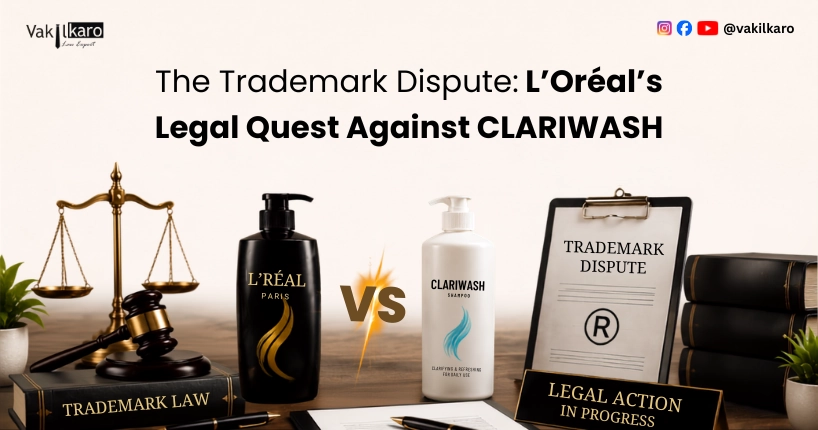
The legal battle between L’Oréal India Pvt. Ltd. and Rajesh Kumar Taneja (trading as Innovative Derma Care) over the trademark “CLARIWASH” highlights key principles in trademark law, including prior usage, deceptive similarity, and procedural integrity. L’Oréal, inheriting Cheryl’s Cosmeceuticals’ trademark portfolio, sought to cancel Taneja’s mark, alleging it was deceptively similar to their “CLARI” portfolio. The case centered on whether Taneja’s use of “CLARIWASH” predates L’Oréal’s trademarks, whether the marks confused consumers, and whether procedural errors during the trademark’s registration warranted cancellation. The Delhi High Court ruled in favor of Taneja, applying the anti-dissection rule, which evaluates trademarks as a whole, finding no consumer confusion due to distinct suffixes. The court also upheld the trademark despite registration errors, as procedural lapses were not grounds for invalidation. The case emphasizes the importance of proactive trademark monitoring, clear branding strategies, and proper documentation for businesses navigating trademark disputes.
Key Takeaways
- CLARIWASH – A Case of Brand Protection and Legal Strategy The trademark dispute between L’Oréal India Pvt.
- This article unpacks the 14-year-long legal dispute, exploring its implications and lessons for businesses navigating the maze of intellectual property rights while highlighting the strength of the Trademark Act.
- Legal Principles at Play The judgment highlighted critical principles in trademark law that uphold the integrity and fairness of the Trademark Act: Anti-Dissection Rule: Trademarks must be evaluated in their entirety.
- VakilKaro is the ideal choice for handling complex trademark disputes like L’Oréal’s legal battle against CLARIWASH, as they bring deep expertise in intellectual property law and strategic litigation.
- With a strong focus on protecting brand identity, VakilKaro ensures businesses are equipped with comprehensive legal support, offering advice on proactive trademark monitoring, effective registration strategies, and dispute resolution.
Trademark Dispute: L’Oréal vs. CLARIWASH – A Case of Brand Protection and Legal Strategy
The trademark dispute between L’Oréal India Pvt. Ltd. and Rajesh Kumar Taneja (Innovative Derma Care) over "CLARIWASH" showcases the intricacies of trademark law, emphasizing prior use, potential confusion, and procedural correctness. L’Oréal, having acquired Cheryl’s Cosmeceuticals in 2013, inherited trademarks like “CLARI-FI” and “CLARIMOIST,” using the “CLARI” prefix for its skincare products.
Taneja, who registered the trademark “CLARIWASH” in 2012, argued he had been using it since 2009, which predated L’Oréal’s registration. L’Oréal contested this, citing deceptive similarity and procedural flaws in Taneja’s trademark application. Nevertheless, the Delhi High Court ruled in Taneja’s favor, applying the "anti-dissection rule" to assess trademarks in their entirety rather than by individual parts.
The court determined that the two marks were sufficiently distinct, considering the different suffixes, and upheld Taneja’s earlier usage while rejecting the claim of procedural errors as grounds for cancellation. This case underscores the importance of vigilant trademark monitoring, effective branding, and a thorough understanding of trademark law to protect intellectual property and maintain market position.
In the cutthroat world of beauty and skincare, trademarks aren’t just legal identifiers; they are the essence of a brand’s identity, trust, and market dominance. The recent case of L’Oréal India Pvt. Ltd. vs. Rajesh Kumar Taneja Trading as Innovative Derma Care provides a fascinating insight into the complexities of trademark law and its interpretation in Indian courts. The Delhi High Court’s verdict in July 2024 underscored the importance of prior usage, procedural accuracy, and holistic assessment of trademarks. This article unpacks the 14-year-long legal dispute, exploring its implications and lessons for businesses navigating the maze of intellectual property rights while highlighting the strength of the Trademark Act.
Setting the Stage
L’Oréal, a global cosmetics powerhouse, operates in India through its wholly owned subsidiary, L’Oréal India Pvt. Ltd. In 2013, L’Oréal acquired Cheryl’s Cosmeceuticals, inheriting its portfolio of trademarks. Many of these incorporated the term “CLARI” —a prefix symbolic of clarity and skincare. These included notable marks like “CLARI-FI” and “CLARIMOIST,” first registered in 2009 and 2010.
The opposing party, Rajesh Kumar Taneja, a smaller but determined player in the skincare industry, had registered the trademark “CLARIWASH” in 2012. Taneja claimed usage since 2009, aligning his product with cosmetic and skincare preparations. The stage was set for a legal clash when L’Oréal sought to cancel Taneja’s trademark, alleging deceptive similarity and procedural errors in its registration.
The Case at a Glance
The heart of the case revolved around the following questions:
- Prior Usage: Did Taneja have a legitimate claim to using “CLARIWASH” before L’Oréal’s predecessors filed for their trademarks?
- Deceptive Similarity: Was “CLARIWASH” likely to confuse consumers, given L’Oréal’s “CLARI” portfolio?
- Procedural Validity: Did errors in the examination process during Taneja’s trademark registration justify cancellation?
Arguments and Counterarguments
L’Oréal’s Standpoint
L’Oréal’s legal team built their case on three pillars:
- Precedence and Ownership: Cheryl’s Cosmeceuticals, the original owner of the “CLARI” trademarks, began using the prefix in 2009. As these trademarks were transferred to L’Oréal in 2013, the brand argued that its ownership extended to all marks under the “CLARI” umbrella.
- Consumer Confusion: L’Oréal claimed that “CLARIWASH” was deceptively similar to its trademarks, particularly “CLARI-FI” and “CLARIMOIST.” This could mislead customers into associating Taneja’s products with L’Oréal’s reputable portfolio.
- Procedural Errors: A flawed examination report led to the erroneous registration of “CLARIWASH.” The registrar’s search referenced “CHARIWASH” instead, overlooking possible conflicts with “CLARI” trademarks.
Taneja’s Defense
- Prior Usage: Taneja presented evidence of using “CLARIWASH” since 2009, predating Cheryl’s application for some of its trademarks. He argued that this established legitimate ownership.
- Distinctiveness: The respondent emphasized that “CLARIWASH” had a unique commercial impression, distinct from L’Oréal’s marks. “CLARIWASH” was not deceptively similar when viewed as a whole.
- Fair Process: Taneja maintained that procedural lapses in the registrar’s examination did not warrant cancellation. He had legally and transparently acquired the trademark.
Judgment Day: The High Court’s Verdict
On July 15, 2024, the Delhi High Court ruled in favor of Rajesh Kumar Taneja, dismissing L’Oréal’s appeal. The court’s decision rested on several key findings:
- Holistic Evaluation of Trademarks: The court applied the “anti-dissection rule,” which mandates assessing trademarks as a whole rather than isolating components. While both marks shared the “CLARI” prefix, the suffixes (“-FI” and “-WASH”) created distinct commercial impressions, negating the likelihood of consumer confusion.
- Procedural Errors Are Not Grounds for Cancellation: Although the registrar’s examination process was flawed, the court held that procedural errors alone do not invalidate a trademark unless they lead to a direct violation of statutory provisions.
- Prior Usage: Evidence confirmed that Taneja began using “CLARIWASH” before L’Oréal’s trademarks were filed. This bolstered the respondent’s claim of rightful ownership.
Legal Principles at Play
The judgment highlighted critical principles in trademark law that uphold the integrity and fairness of the Trademark Act:
- Anti-Dissection Rule: Trademarks must be evaluated in their entirety. Isolated similarities, like a shared prefix, are insufficient grounds for establishing deceptive similarity.
- Prior Use Doctrine: Under Indian trademark law, the first party to use a mark in commerce generally has superior rights over later applicants, regardless of registration dates.
- Procedural Integrity vs. Substantive Validity: Errors in the trademark examination process do not automatically invalidate registrations. The substantive merits of a case take precedence.
The Role of the Trademark Act
The Trademark Act of 1999, which governs this case, is central to the court’s reasoning. The Act balances the rights of businesses to protect their intellectual property with the need to ensure fair competition. Here’s how the Act supported the judgment:
- Section 18: This section ensures a fair examination of applications. Although there was an error in the search report for “CLARIWASH,” the registration was upheld because the substantive evaluation of consumer confusion showed no infringement.
- Section 11: This provision protects earlier trademarks from deceptive similarities. The court determined that Taneja’s “CLARIWASH” was not deceptively similar to L’Oréal’s marks.
- Section 34: The prior use clause reinforced Taneja’s rights, ensuring his earlier adoption of “CLARIWASH” took precedence over L’Oréal’s subsequent filings.
Implications for the Business World
The L’Oréal vs. CLARIWASH case offers valuable lessons for businesses:
- Diligence in Trademark Monitoring: L’Oréal’s inability to oppose “CLARIWASH” during its registration window highlights the importance of actively monitoring trademark journals.
- Clear Branding Strategies: Businesses should avoid relying on common prefixes or suffixes to distinguish their brands. Unique and distinctive names reduce the risk of disputes.
- Robust Documentation: Both parties’ reliance on historical invoices and usage evidence underscores the need for meticulous record-keeping.
- Adherence to the Trademark Act: Companies must ensure their trademark applications and challenges align with statutory provisions to maximize their chances of success.
Conclusion
The L’Oréal India Pvt. Ltd. vs. Rajesh Kumar Taneja case serves as a masterclass in trademark litigation, showcasing how the Trademark Act safeguards fair competition and intellectual property. It demonstrates how the nuances of law, such as prior usage and holistic assessment, can tip the scales in favor of seemingly smaller players. For global corporations and startups alike, this case is a reminder that trademark battles are not just about legal might but also about strategy, precision, and timing.
As intellectual property law continues to evolve, this judgment will likely serve as a precedent for interpreting trademark disputes, ensuring a balance between protecting established brands and encouraging fair competition. For now, the cosmetics industry’s battlefield has one more tale of resilience, strategy, and justice.
Why choose VakilKaro for this?
VakilKaro is the ideal choice for handling complex trademark disputes like L’Oréal’s legal battle against CLARIWASH, as they bring deep expertise in intellectual property law and strategic litigation. Their team is well-versed in navigating the intricacies of trademark law, including key aspects such as prior usage, deceptive similarity, and procedural integrity. With a strong focus on protecting brand identity, VakilKaro ensures businesses are equipped with comprehensive legal support, offering advice on proactive trademark monitoring, effective registration strategies, and dispute resolution. They provide businesses with the necessary tools to safeguard their intellectual property, uphold their market presence, and manage legal challenges effectively, all while ensuring adherence to the nuances of trademark law and maximizing the chances of success.
Why choose VakilKaro for other related services in the Intellectual Property Domain?
VakilKaro offers a comprehensive range of intellectual property services, including trademark registration, patent registration and copyright protection, design registration, IP licensing, litigation, portfolio management, audits, anti-counterfeit measures, and trade secret protection. Their expert team provides tailored solutions to safeguard and maximize the value of intellectual assets, ensuring businesses can protect their innovations, creations, and brands effectively. With years of experience, VakilKaro delivers strategic advice, affordable legal solutions, and timely services, helping clients navigate complex IP laws. Their strong legal network and customized approach ensure businesses, startups, and individuals receive the best protection and representation for their intellectual property.
Official External Resources
Use these primary/official sources to verify rules, forms, fees, timelines and regulatory updates before publication.
Frequently asked questions
The Trademark Dispute: L’Oréal’s Legal Quest Against CLARIWASH+
CLARIWASH – A Case of Brand Protection and Legal Strategy The trademark dispute between L’Oréal India Pvt. VakilKaro is the ideal choice for handling complex trademark disputes like L’Oréal’s legal battle against CLARIWASH, as they bring deep expertise in intellectual property law and strategic litigation.
