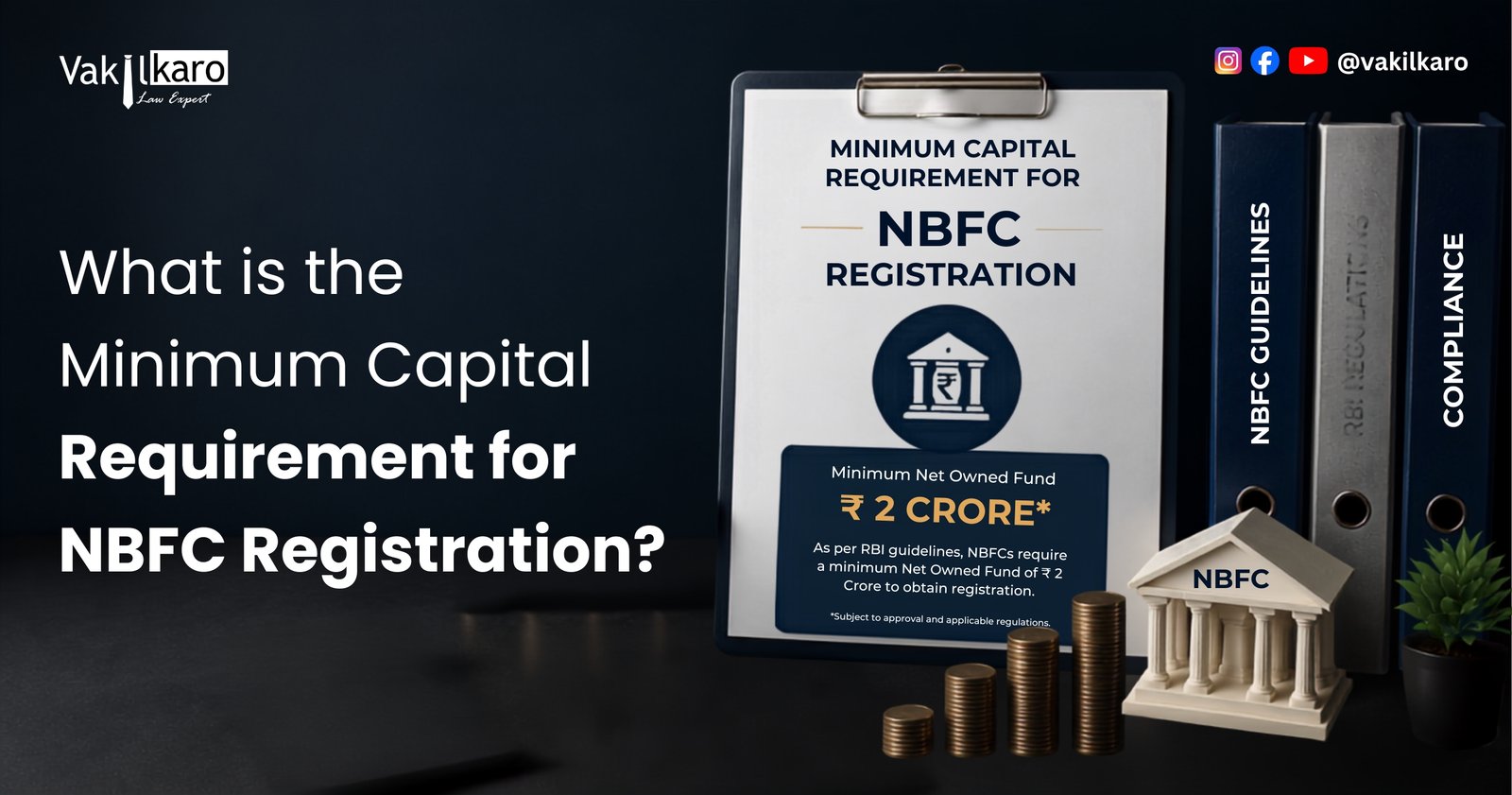
The minimum capital requirement for NBFC registration in India, set by the RBI, is INR 2 crore, ensuring financial stability and customer trust. This Net Owned Fund (NOF) comprises paid-up equity and free reserves minus liabilities, ensuring operational readiness. Different NBFCs, such as ICCs and AFCs, must meet specific capital norms based on their operations. To register, the company must incorporate under the Companies Act, prepare required documents, and apply via the RBI’s COSMOS portal. Post-registration, NBFCs must maintain compliance with CAR, KYC, and AML norms. Meeting the capital requirement enables NBFCs to manage risks and build credibility, supporting growth in India’s financial ecosystem.
Key Takeaways
- The minimum capital requirement for NBFC registration in India, set by the RBI, is INR 2 crore, ensuring financial stability and customer trust.
- Understanding the Minimum Capital Requirement for NBFC Registration The Reserve Bank of India (RBI) mandates a minimum capital requirement of INR 2 crore for NBFC registration to ensure financial stability and customer confidence.
- The minimum capital requirement for NBFC registration is defined by the Net Owned Fund (NOF), which refers to the financial resources owned by the company after deducting liabilities.
- As per RBI regulations, the minimum NOF required for NBFC registration is: INR 2 Crore: This is the baseline capital requirement for most NBFCs operating in India.
- Steps for NBFC Registration with RBI Once the minimum capital requirement is met, you can proceed with the registration process.
Understanding the Minimum Capital Requirement for NBFC Registration
The Reserve Bank of India (RBI) mandates a minimum capital requirement of INR 2 crore for NBFC registration to ensure financial stability and customer confidence. This capital, referred to as the Net Owned Fund (NOF), is calculated by summing paid-up equity capital and free reserves while subtracting liabilities, intangible assets, and accumulated losses. The NOF demonstrates the company’s financial strength, allowing it to operate sustainably and manage risks effectively.
Specific capital requirements may vary for different NBFC types, such as Investment and Credit Companies (ICCs) or Asset Finance Companies (AFCs), depending on their operational focus. To register an NBFC, the applicant must first incorporate the company under the Companies Act, 2013, and ensure compliance with regulatory requirements.
The registration process involves applying through the RBI’s COSMOS portal, along with key documents such as the NOF certificate, KYC details of directors and shareholders, and a comprehensive business plan. Once registered, NBFCs must adhere to ongoing compliance norms, including maintaining a Capital Adequacy Ratio (CAR) and implementing Know Your Customer (KYC) and Anti-Money Laundering (AML) measures.
These regulations ensure operational transparency, mitigate financial risks and foster trust among customers and stakeholders. Meeting the RBI’s minimum capital requirement not only establishes an NBFC’s credibility but also enables it to grow sustainably within India’s financial ecosystem.
Non-Banking Financial Companies(NBFCs) play a significant role in India’s financial ecosystem by offering essential services such as loans, asset financing, investments, and insurance. Unlike banks, NBFCs do not accept demand deposits or offer checking accounts. However, they bridge the gap in financial services for businesses and individuals in underserved sectors. For those looking to start an NBFC in India, understanding the capital requirements and the registration process is crucial.
This blog provides an in-depth overview of the minimum capital requirements for NBFC registration and the associated regulatory framework.
What is an NBFC?
An NBFC is a financial institution that provides various financial services and products but is not classified as a bank. Regulated by the Reserve Bank of India (RBI), NBFCs serve critical segments such as small businesses, individuals in rural areas, and underserved communities. Their offerings include loans, leasing, investment in securities, and wealth management.
NBFCs differ from banks in two main ways:
- They cannot accept demand deposits (such as savings or current accounts).
- They are not part of the payment and settlement system, which means they cannot issue checks or facilitate electronic transfers.
Regulatory Framework for NBFCs
NBFCs in India are governed by the Reserve Bank of India Act, 1934, and the Companies Act, 2013. To ensure financial stability and protect customers, the RBI has set strict guidelines for the establishment and operation of NBFCs. The most critical of these is the minimum capital requirement.
What is the Minimum Capital Requirement for NBFC Registration?
The minimum capital requirement for NBFC registration is defined by the Net Owned Fund (NOF), which refers to the financial resources owned by the company after deducting liabilities. As per RBI regulations, the minimum NOF required for NBFC registration is:
- INR 2 Crore: This is the baseline capital requirement for most NBFCs operating in India.
- INR 5 Crore: For NBFCs looking to operate in certain specific regions, such as the North-Eastern states, the requirement may differ depending on the business structure and objectives.
Understanding Net Owned Funds (NOF)
Net Owned Fund (NOF) is a measure of the financial strength of a company. It is calculated as:
NOF=Paid-Up Equity Capital+Free Reserves−Intangible Assets−Accumulated Losses\text{NOF} = \text{Paid-Up Equity Capital} + \text{Free Reserves} - \text{Intangible Assets} - \text{Accumulated Losses}
The NOF is critical for assessing whether an NBFC has the financial capacity to sustain its operations and manage risks effectively. The RBI ensures that NBFCs maintain the prescribed NOF to safeguard customers’ interests and promote financial stability.
Why is the Minimum Capital Requirement Important?
The minimum capital requirement serves multiple purposes:
- Ensures Financial Stability: A robust capital base ensures that NBFCs can withstand financial shocks and market volatility.
- Builds Customer Trust: Adequate capitalization enhances the credibility of NBFCs among customers, investors, and regulators.
- Supports Business Growth: With sufficient capital, NBFCs can expand their operations, introduce new products, and compete effectively.
- Mitigates Risk: A strong capital base acts as a buffer against non-performing assets (NPAs) and other risks.
Additional Capital Requirements Based on NBFC Type
The minimum capital requirement may vary depending on the type of NBFC. Below are some common types of NBFCs and their capital requirements:
- Investment and Credit Companies (ICCs): These NBFCs, which provide loans and invest in securities, must meet the minimum NOF of INR 2 crore.
- Asset Finance Companies (AFCs): AFCs, which finance the purchase of physical assets like vehicles or machinery, also require a minimum NOF of INR 2 crore.
- Microfinance Institutions (MFIs): MFIs that cater to low-income groups must meet the prescribed capital requirements and adhere to additional regulatory norms.
- Infrastructure Finance Companies (IFCs): These NBFCs, which fund infrastructure projects, typically require a higher NOF depending on the scale and scope of operations.
- Non-Deposit Taking NBFCs (NDTNBFCs): The baseline requirement of INR 2 crore applies to these NBFCs.
- Systemically Important NBFCs (SI-NBFCs): Large NBFCs that impact the financial system must maintain a higher capital adequacy ratio (CAR) in addition to the minimum NOF.
Steps to Meet the Minimum Capital Requirement
If you are planning to register an NBFC, here are the steps to meet the minimum capital requirement:
- Secure Initial Funding: Arrange for at least INR 2 crore through equity contributions, ensuring the funds are free from liabilities.
- Maintain Financial Transparency: Keep accurate records of all financial transactions to avoid discrepancies during the RBI’s scrutiny.
- Open a Bank Account: Deposit the NOF into a dedicated bank account to demonstrate your financial preparedness.
- Prepare Audited Financial Statements: Work with certified auditors to prepare and verify financial statements that showcase the NOF.
Steps for NBFC Registration with RBI
Once the minimum capital requirement is met, you can proceed with the registration process. Here’s a step-by-step guide:
Incorporate the Company
- Register the company under the Companies Act, 2013 as a private or public limited company.
- Ensure that the object clause in the Memorandum of Association (MOA) specifies NBFC activities.
Prepare the Required Documents
Gather the necessary documents, including:
- Certificate of Incorporation
- MOA and AOA
- NOF Certificate
- KYC documents of directors and shareholders
- Business plan and financial projections
Submit Online Application
- File an application for NBFC registration using the COSMOS portal on the RBI’s official website.
- Attach all required documents in the specified format.
Follow-Up Scrutiny
- The RBI will conduct a detailed review of your application and documents to ensure compliance with regulations.
Receive Certificate of Registration
- Once the RBI is satisfied with your application, it will issue a Certificate of Registration, allowing your company to operate as an NBFC.
Post-Registration Compliance
After NBFC registration, NBFCs must adhere to several ongoing compliance requirements:
- Capital Adequacy Ratio (CAR): Maintain the minimum CAR prescribed by the RBI to ensure financial stability.
- Periodic Reporting: Submit regular financial statements, balance sheets, and reports to the RBI.
- KYC and AML Compliance: Implement strict Know Your Customer (KYC) and Anti-Money Laundering (AML) policies.
- Risk Management Framework: Develop systems to manage credit, market, and operational risks.
Common Challenges in Meeting Capital Requirements
- Raising Funds: Securing the initial capital can be challenging for startups or small businesses.
- Regulatory Scrutiny: Ensuring compliance with the RBI’s guidelines requires meticulous attention to detail.
- Financial Planning: Mismanagement of funds can lead to delays in registration or regulatory penalties.
Conclusion
The minimum capital requirement for NBFC registration is a cornerstone of the regulatory framework, ensuring financial stability and customer trust. With a baseline NOF of INR 2 crore, NBFCs must demonstrate their financial preparedness and commitment to responsible operations. By understanding the capital requirements and adhering to the RBI’s guidelines, businesses can successfully register their NBFCs and contribute to India’s growing financial ecosystem.
Why Choose VakilKaro for NBFC Registration?
VakilKaro is a trusted partner for hassle-free NBFC registration, offering expert guidance and end-to-end support tailored to your business needs. With a deep understanding of RBI regulations and extensive experience in financial compliance, VakilKaro ensures every aspect of the registration process is handled efficiently and accurately. From assisting in meeting the minimum capital requirement to preparing and submitting crucial documents such as the NOF certificate, business plan, and KYC details, VakilKaro simplifies the entire journey.
Their team of professionals ensures that your application is aligned with RBI norms, minimizing delays or rejections. Beyond registration, VakilKaro offers ongoing compliance support, helping you maintain the required Capital Adequacy Ratio (CAR), implement robust KYC and AML policies, and meet periodic reporting obligations. This comprehensive approach ensures your NBFC operates smoothly while adhering to all regulatory guidelines.
VakilKaro’s personalized services, transparent pricing, and commitment to excellence make them a reliable choice for entrepreneurs looking to establish NBFCs. Whether you’re navigating the complexities of RBI’s COSMOS portal or need guidance on structuring your business for long-term success, VakilKaro’s expertise ensures a seamless process. Trust VakilKaro to help you focus on your business goals while they handle the regulatory intricacies with precision and professionalism.
Why Choose VakilKaro for Related Services?
VakilKaro is a one-stop solution for a wide range of legal, financial, and compliance services, catering to businesses and individuals with unmatched expertise. Their team of professionals is well-versed in the intricacies of regulatory frameworks, ensuring seamless execution of services like company registration, ITR-1 Return Filing trademark registration and legal documentation. VakilKaro's personalized approach ensures that every client receives tailored solutions designed to meet specific needs, whether it's securing an RBI license for an NBFC, obtaining business licenses, or managing intellectual property.
The firm’s commitment to transparency, efficiency, and accuracy sets it apart. VakilKaro not only streamlines complex processes but also offers continuous support for compliance, ensuring your business remains in line with evolving regulations. Services like tax advisory, corporate restructuring, and drafting contracts are handled with meticulous attention to detail, giving you the confidence to focus on growth while they manage the legal and procedural aspects.
VakilKaro's expertise extends to specialized areas, including microfinance, M&A advisory, and labor law compliance, making it a trusted partner for businesses across industries. Their cost-effective and client-centric approach ensures that you receive high-quality services without unnecessary delays or complications. Whether you’re a startup, an established business, or an individual seeking legal assistance, VakilKaro's comprehensive service portfolio and professional integrity make them a reliable choice for all your legal and compliance needs.
Official External Resources
Use these primary/official sources to verify rules, forms, fees, timelines and regulatory updates before publication.
Frequently asked questions
What is the Minimum Capital Requirement for NBFC Registration?+
Understanding the Minimum Capital Requirement for NBFC Registration The Reserve Bank of India (RBI) mandates a minimum capital requirement of INR 2 crore for NBFC registration to ensure financial stability and customer confidence. The minimum capital requirement for NBFC registration is defined by the Net Owned Fund (NOF), which refers to the financial resources owned by the company after deducting liabilities.
