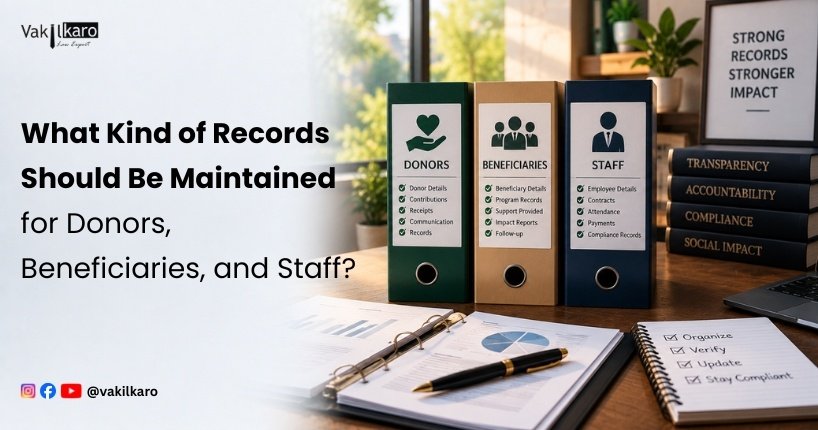
Starting an NGO or Section 8 company in India requires proper financial management to ensure legal compliance, transparency, and sustainability. Maintaining accurate financial records, including a general ledger, cash book, bank book, and balance sheet, is essential for tracking donations, grants, and operational expenses. Additionally, complying with tax regulations, such as 12A and 80G registrations, ensures accountability and eligibility for tax exemptions. These records help in audits, securing funding, and fostering trust with stakeholders. Proper financial management supports the effective functioning of your organization, helping it focus on its charitable mission and long-term impact.
Key Takeaways
- In this blog, we’ll guide you through the essential financial records every NGO and Section 8 company should maintain—from the general ledger and cash book to bank reconciliations and balance sheets.
- Now that we understand the importance, let’s explore the key books and records you should maintain.
- Books of Accounts (General Ledger) The first step in maintaining proper financial records is to set up and maintain books of accounts.
- Tax Records and Returns If your NGO or Section 8 company is registered under 12A and 80G, it is essential to maintain tax-related documents.
- If you're unsure about what records to maintain or need help with tax compliance and 12A/80G registration, consulting with legal and financial experts can help you avoid mistakes and ensure long-term success.
Essential Financial Records for NGOs and Section 8 Companies
Proper financial management is the backbone of any charitable organization’s credibility and sustainability. Whether you’ve completed your NGO registration or opted for Section 8 company registration, maintaining accurate and comprehensive records ensures you comply with legal requirements and retain your tax-exempt privileges under 12A and 80G registration.
Firstly, a general ledger serves as the master record of all financial transactions. It tracks income—such as donations, grants, and membership fees—and expenses like program costs, salaries, rent, and utilities. By categorizing each transaction, the ledger provides a clear snapshot of your organization’s financial position and prepares you for audits or grant applications.
A cash book is equally indispensable, especially for NGOs handling on-the-ground activities where cash transactions are frequent. Every cash receipt (e.g., small donations collected during events) and cash payment (e.g., petty expenses) should be logged chronologically. Paired with your cash book, a bank book captures all electronic transactions: deposits of larger grants, online donations, and bank withdrawals. Regular reconciliation of bank statements with your bank book prevents discrepancies and ensures transparency—critical for maintaining your 12A status.
At the end of each accounting period, NGOs and Section 8 companies compile a Receipt and Payment Account, summarizing all cash and bank transactions. This document, along with an Income and Expenditure Account, illustrates whether your operations ran at a surplus or deficit. Surpluses must be reinvested into your charitable objectives to satisfy the conditions of 12A registration.
A Balance Sheet rounds out your financial reports by listing assets (funds, equipment), liabilities (unpaid bills, loans), and net assets. This statement provides stakeholders and donors confidence in your organization’s fiscal health.
Lastly, meticulous tax records and returns, reflecting your 12A and 80G certifications, demonstrate your commitment to compliance. By keeping these books updated and accurate, your NGO or Section 8 company can focus on its mission—safe in the knowledge that its financial foundation is solid.
Embarking on the journey to establish a non-governmental organization (NGO) or a Section 8 company in India is more than just a legal exercise—it’s a commitment to driving real, measurable change in society. Whether your mission centers on alleviating poverty, improving healthcare access, advancing educational opportunities, or championing environmental sustainability, your organization’s impact hinges on trust. Stakeholders—donors, regulators, beneficiaries, and partners—must have confidence that every rupee is put to its intended use.
At the heart of that trust lies robust financial management. Properly maintained books and records not only ensure you meet statutory obligations under the Income Tax Act and the Companies Act but also uphold the transparency and accountability that donors and the public demand. Clear, accurate financial statements demonstrate that your organization is worthy of the tax exemptions granted through 12A registration and the donor incentives unlocked by 80G registration. Likewise, for Section 8 companies, adherence to corporate governance and regular filings confirms your status as a legally compliant entity.
In this blog, we’ll guide you through the essential financial records every NGO and Section 8 company should maintain—from the general ledger and cash book to bank reconciliations and balance sheets. We’ll also explain how these records intertwine with your NGO registration, Section 8 company registration, and ongoing compliance requirements, ensuring your organization remains sustainable, credible, and ready to expand its social impact.
Maintaining immaculate financial documentation isn’t just about avoiding penalties—it’s about building a reputation for integrity that empowers your organization to secure more funding, foster stronger partnerships, and ultimately magnify the difference you make in communities across India.
The Importance of Maintaining Financial Records
Before we dive into the specific types of records to maintain, it is crucial to understand why financial recordkeeping is so important for NGOs and Section 8 companies in India:
- Legal Compliance: Every organization in India, including NGOs and Section 8 companies, is required by law to maintain accurate financial records. For example, organizations with 12A registration must ensure that all income is used for charitable purposes, and they need to file income tax returns (ITR) accordingly. Similarly, 80G registration allows donors to claim tax deductions for donations made, so transparency is key.
- Transparency: Accurate books and records are essential for maintaining transparency in the use of funds. NGOs often deal with donations from the public or international sources, and it’s crucial that donors can trust their contributions are being used appropriately.
- Funding and Grant Opportunities: Maintaining comprehensive and accurate financial records makes it easier to apply for grants, seek donations, and build relationships with other stakeholders. A clear financial history is essential for gaining the trust of government bodies, international organizations, and corporate donors.
- Audit and Financial Reviews: NGOs and Section 8 companies are often subject to audits. Proper documentation can ensure smooth audits and avoid discrepancies that could result in penalties, fines, or the revocation of your 12A or 80G registration.
- Governance and Management: Financial records are crucial for effective governance. They allow your board members and management team to assess the financial health of the organization and make informed decisions.
Now that we understand the importance, let’s explore the key books and records you should maintain.
Books of Accounts (General Ledger)
The first step in maintaining proper financial records is to set up and maintain books of accounts. These books are the primary source for tracking the financial transactions of your NGO or Section 8 company. The accounts should be maintained in compliance with the Accounting Standards prescribed by the Institute of Chartered Accountants of India (ICAI) and the Income Tax Act.
A general ledger is the core of your accounting system, where all financial transactions are recorded. It provides a clear record of all the financial activities that your organization has carried out during the year.
The general ledger typically includes:
- Revenue Accounts: Record all incoming funds such as donations, grants, and contributions, whether they are domestic or international.
- Expense Accounts: Record all the costs associated with your activities, including program expenses, administrative costs, salaries, rent, utilities, etc.
- Bank Accounts: The ledger will also track the organization’s bank transactions, including deposits, withdrawals, and transfers.
Cash Book
The cash book is a subsidiary ledger that records all cash transactions, including income received and expenses paid. It is one of the most crucial financial records for NGOs and Section 8 companies, especially for those that work on the ground and handle cash-based transactions frequently.
A cash book includes:
- Cash Receipts: Donations or funds that have been received in cash. For an NGO with 12A registration, it is vital to track all donations for audit purposes.
- Cash Payments: Any expenses paid in cash should be recorded. This includes payments to vendors, suppliers, employees, etc.
Since cash handling can be sensitive, maintaining a cash book ensures transparency and accountability.
Bank Book
If your NGO or Section 8 company uses a bank account for financial transactions, a bank book is essential. This book tracks all banking transactions such as deposits, withdrawals, transfers, and any interest earned.
It is essential to reconcile the bank book regularly with your bank statement to ensure that the records match. If your NGO or Section 8 company is receiving foreign donations or grants, you must ensure that the bank account is FCRA (Foreign Contribution Regulation Act) compliant, and that the donations are documented properly.
The bank book should record:
- Deposits: Donations, grants, or any other funds received.
- Withdrawals: Any expenses or payments made via the bank account.
Receipt and Payment Accounts
This financial record is crucial for tracking all receipts and payments made during the accounting period. Receipt and Payment Accounts are particularly important for NGOs with 12A registration, as they will reflect the donations and other contributions your NGO has received and how they have been spent.
A receipt and payment account is a summarized version of the cash book. The main difference is that this account reflects all cash and bank transactions (whether received or paid), even if they are related to non-operating income (like interest income or investment returns). This account is typically prepared at the end of the financial year.
It includes:
- Receipts: All funds or donations received.
- Payments: All operational and non-operational expenses.
Income and Expenditure Account
This is one of the most critical financial records for NGOs. The income and expenditure account summarizes all the income and expenses of the organization during the financial year. For NGOs with 12A and 80G registration, it is essential to ensure that all income generated is used for charitable purposes and is reported accurately.
This account will typically include:
- Income: Includes donations, grants, interest income, and any other income generated from the organization’s activities.
- Expenditure: This includes all the operational expenses, like salaries, utilities, administrative costs, and program expenses.
The income and expenditure account helps measure the financial health of the NGO or Section 8 company. A surplus (income exceeding expenses) means your organization is financially stable, while a deficit means you may need to review your expenditure and funding strategy.
Balance Sheet
The balance sheet is an important financial document that shows the financial position of the NGO or Section 8 company. It provides a snapshot of assets, liabilities, and equity at the end of the financial year.
The balance sheet is divided into two sections:
- Assets: What the organization owns, including cash, bank balances, property, equipment, etc.
- Liabilities: What the organization owes, including loans, accounts payable, and outstanding expenses.
- Net Assets: The difference between assets and liabilities, which shows the organization’s net worth.
This record helps stakeholders assess the financial stability and viability of your NGO.
Grant and Donation Records
For NGOs that receive funding through grants or donations, it is crucial to maintain detailed records of each grant or donation received. These records should include:
- Donor Details: The name, contact information, and any relevant agreements with the donor.
- Amount Donated: The total amount donated or granted.
- Purpose: A description of how the donation or grant is intended to be used.
- Documentation: Any receipts, contracts, or agreements that validate the donation or grant.
Proper tracking of grants and donations is essential for transparency and ensures compliance with FCRA regulations if receiving international funds. If your NGO is 12A and 80G registered, maintaining detailed records of these funds will ensure that they are used in compliance with tax-exempt and donation regulations.
Tax Records and Returns
If your NGO or Section 8 company is registered under 12A and 80G, it is essential to maintain tax-related documents. This includes:
- Tax Returns: Copies of the tax returns filed with the Income Tax Department.
- Tax Exemptions: Documentation that proves eligibility for tax exemptions under 12A and 80G.
- Supporting Documents: Any receipts, bills, and records of tax-deductible donations received by the organization.
Maintaining these records ensures your NGO continues to comply with tax regulations, helps with audits, and keeps your 12A and 80G registrations intact.
Conclusion
Maintaining proper financial records is not just a regulatory requirement but an integral part of running a transparent and accountable NGO or Section 8 company. The records help maintain compliance with tax regulations, attract donors, secure grants, and ensure that your organization remains legally sound.
Whether you have NGO registration, Section 8 company registration, or 12A and 80G registration, maintaining books like the general ledger, cash book, bank book, income and expenditure account, and balance sheet ensures that you remain in good standing with the law, your donors, and other stakeholders. These records help track your organization’s financial health, ensuring that you are always in a position to demonstrate the efficient use of resources in your mission to create a positive impact on society.
By staying on top of financial recordkeeping, you ensure that your NGO or Section 8 company can continue to function smoothly and focus on its charitable or social objectives. If you're unsure about what records to maintain or need help with tax compliance and 12A/80G registration, consulting with legal and financial experts can help you avoid mistakes and ensure long-term success.
Why Choose Vakilkaro for Your Legal Services?
Vakilkaro is more than just a legal service provider—we’re your dedicated partner in navigating India’s complex legal and regulatory landscape. Whether you’re an entrepreneur, a nonprofit founder, or an individual seeking legal assistance, Vakilkaro stands out as a trusted name for reliable, affordable, and expert-driven legal solutions.
Here’s why clients choose Vakilkaro over others:
✅ End-to-End Legal Support
From business registrations (like Private Limited, LLP, and Section 8 Companies) to compliance services, trademark registration and filings, GST registration, income tax returns, and even licensing—we offer complete legal solutions under one roof.
✅ Expert-Led Services
Our team consists of experienced legal professionals, chartered accountants, and company secretaries who ensure that your services are handled with precision and compliance with current laws.
✅ Affordable & Transparent Pricing
No hidden fees or surprise costs. We offer upfront pricing and budget-friendly packages, making quality legal services accessible to startups, NGOs, and individuals alike.
✅ Fast Turnaround Time
Time is critical. Our streamlined process and expert team ensure that your legal tasks—whether it's FSSAI licensing, NGO registration, or ROC filings—are completed quickly and efficiently.
✅ Personalized Guidance
We understand that every client has unique needs. Vakilkaro provides personalized consultations to understand your requirements and offer tailored solutions, not just generic services.
✅ Strong After-Support
Our support doesn’t end with the service. We offer continuous legal compliance support and updates so your organization or business remains in good standing at all times.
Whether you're launching a new venture, running an NGO, or need help with taxation, Vakilkaro offers reliable legal expertise with a human touch.
Official External Resources
Use these primary/official sources to verify rules, forms, fees, timelines and regulatory updates before publication.
Frequently asked questions
What Kind of Books and Financial Records Should I Maintain?+
In this blog, we’ll guide you through the essential financial records every NGO and Section 8 company should maintain—from the general ledger and cash book to bank reconciliations and balance sheets. Books of Accounts (General Ledger) The first step in maintaining proper financial records is to set up and maintain books of accounts.
