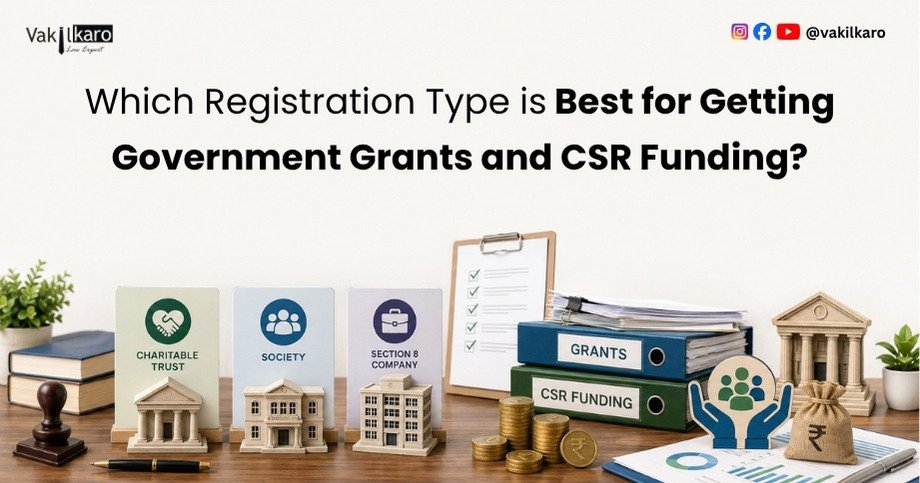
Choosing the right NGO registration type is crucial for securing government grants and CSR funding in India. While Trusts and Societies are easier to form, a Section 8 Company registration is highly preferred due to its formal governance and compliance structure. Government and corporate donors prioritize transparency and credibility, making 12A and 80G registration essential. These tax exemptions not only increase donor trust but also help NGOs maximize resources. For long-term funding success, especially from institutional sources, combining Section 8 Company registration with valid NGO registration and 12A/80G certificates offers the best pathway to sustainable growth and impact.
Key Takeaways
- Choosing the right NGO registration type is crucial for securing government grants and CSR funding in India.
- Choosing the Right Registration Type for Government Grants and CSR Funding Establishing a non-profit organization (NGO) in India comes with several important legal decisions, the most critical being the choice of registration type.
- Why Section 8 Company Registration is Best for Government Grants and CSR Funding?
- Easier FCRA Registration For NGOs looking to receive foreign contributions in addition to government and CSR grants, Section 8 Company registration simplifies the FCRA registration process due to its structured operations and compliance history.
- In conclusion, if your primary goal is to access government grants and CSR funding, opting for Section 8 Company registration combined with 12A and 80G registration is the most strategic and future-ready choice.
Choosing the Right Registration Type for Government Grants and CSR Funding
Establishing a non-profit organization (NGO) in India comes with several important legal decisions, the most critical being the choice of registration type. This choice greatly influences your eligibility for government grants and Corporate Social Responsibility (CSR) funding. While NGOs can be formed as Trusts, Societies, or Section 8 Companies, not all structures offer the same level of credibility, compliance, or transparency—qualities that are essential when seeking institutional funding.
Trusts are the simplest to set up, governed by trustees under the Indian Trusts Act, 1882. However, their informal structure and limited statutory obligations often make them less attractive to government bodies and CSR contributors. Societies, governed by the Societies Registration Act, 1860, offer more democratic governance with managing committees and member-based operations, making them more transparent than Trusts but still lacking in some compliance areas.
In contrast, Section 8 Company registration under the Companies Act, 2013, is highly favored for grant and CSR funding purposes. These companies operate with a Board of Directors, follow strict compliance rules, and undergo regular audits and filings—building strong trust among donors and funders. Their structured governance makes them a preferred partner for corporates fulfilling their mandatory CSR obligations under Indian law.
Regardless of the structure, obtaining 12A and 80G registration is essential. These registrations exempt NGOs from paying income tax and allow donors to claim tax deductions, respectively—making your NGO more appealing to both government programs and CSR donors.
In summary, while all three registration types allow you to run an NGO, a Section 8 Company registration, along with NGO registration and valid 12A and 80G certificates, provides the strongest foundation for receiving large-scale grants and CSR funding. It aligns your NGO with funders’ expectations of professionalism, governance, and transparency.
Starting a non-profit organization (NGO) in India is a noble endeavor aimed at creating social impact. However, beyond passion and purpose, establishing an NGO also involves making key legal and strategic decisions—one of the most crucial being the choice of legal structure. This decision does not just affect your operational model and internal governance; it plays a pivotal role in your NGO’s ability to attract funding, particularly from government bodies and Corporate Social Responsibility (CSR) initiatives.
In India, NGOs can be registered in one of three primary forms: as a Trust, a Society, or a Section 8 Company. Each of these registration types comes with its own legal framework, compliance requirements, and level of recognition. While all are valid avenues to start a non-profit, their suitability for receiving government grants and CSR contributions varies greatly. Government agencies and corporate donors often evaluate an NGO’s credibility, accountability, and transparency before extending financial support—factors that are directly influenced by the organization’s legal structure.
This blog will provide a comprehensive comparison of these three types of NGO registrations, assessing their strengths and limitations when it comes to qualifying for institutional funding. We will also highlight the role of 12A and 80G registrations, which are essential for tax exemptions and donor incentives. These registrations not only improve an NGO’s financial viability but also enhance its appeal to donors by offering tax benefits.
Whether you're in the early stages of launching an NGO or planning to restructure an existing one to attract more funding, understanding the implications of each registration type is essential. This guide will help you make an informed decision that maximizes your chances of securing government grants and CSR funds, while ensuring legal compliance and long-term sustainability.
Understanding the Importance of Legal Structure for Funding
The legal structure of an NGO influences its transparency, governance, accountability, and perception among donors, including the government and corporations. While all three types of registration—Trust, Society, and Section 8 Company—can be used to run a non-profit, they differ significantly in terms of credibility, compliance requirements, and administrative structure.
Government grants and CSR funding are often provided to organizations that demonstrate a high degree of transparency, formal governance, and compliance with statutory requirements. This makes the choice of structure crucial for NGOs looking to scale their impact through such funding sources.
Overview of NGO Registration Types
Trust Registration
A Trust is established under the Indian Trusts Act, 1882 (or relevant state laws for public charitable trusts). Trusts are relatively easy to set up and are governed by trustees. However, they often lack the formal governance mechanisms that government bodies and CSR donors prefer.
Society Registration
Societies are governed by the Societies Registration Act, 1860. They are more democratic than Trusts, having a managing committee and member-based governance. Societies are also required to maintain more records and have periodic meetings, which offers better transparency.
Section 8 Company Registration
Section 8 Companies are registered under the Companies Act, 2013, and are known for their structured governance. They must adhere to strict compliance norms, including board meetings, statutory audits, and annual filings. Due to their formal structure, Section 8 Company registration is often preferred by both government agencies and CSR funders.
Key Factors That Influence Eligibility for Government Grants and CSR Funding
Governance and Compliance
Government and CSR donors look for NGOs that follow proper governance and compliance norms. Section 8 Companies score the highest here, followed by Societies and then Trusts. The more formal and accountable the structure, the better the chances of receiving grants.
Credibility and Transparency
Credibility is built through transparent operations, regular audits, and timely filings. Section 8 Companies, due to their legal obligations, offer the highest transparency, which aligns with the expectations of institutional funders.
Tax Exemptions: 12A and 80G Registration
Regardless of the NGO registration type, obtaining 12A and 80G registration is critical.
- 12A registration exempts your NGO’s income from tax, provided it is used for charitable purposes.
- 80G registration allows donors to claim tax deductions, making your NGO more attractive to potential donors, including corporates offering CSR funds.
Without 12A and 80G registration, your NGO may find it challenging to gain credibility or attract substantial funding.
Why Section 8 Company Registration is Best for Government Grants and CSR Funding?
- Formal Governance Structure Section 8 Companies are required to have a Board of Directors and conduct regular board meetings. This structure provides clear accountability, making it easier to attract institutional funders who want to ensure their contributions are used responsibly.
- High Transparency Section 8 Companies must maintain statutory records, undergo annual audits, and file returns with the Registrar of Companies (ROC). This level of compliance reassures government bodies and CSR funders that the organization operates with integrity.
- Legal Recognition Being incorporated under the Companies Act gives Section 8 Companies a higher level of legal recognition. Many CSR programs specifically look for NGOs that are formally registered and have recognized governance models.
- Better Access to CSR Funds According to the Companies Act, 2013, businesses with a net worth of Rs. 500 crore or more, turnover of Rs. 1,000 crore or more, or a net profit of Rs. 5 crore or more must spend 2% of their average net profits over the past three years on CSR activities. These companies often prefer working with Section 8 Companies due to their professionalism and accountability.
- Easier FCRA Registration For NGOs looking to receive foreign contributions in addition to government and CSR grants, Section 8 Company registration simplifies the FCRA registration process due to its structured operations and compliance history.
Comparing Trusts, Societies, and Section 8 Companies for Grant and CSR Funding
The Role of 12A and 80G Registration in Securing Funds
While choosing the right NGO registration type is crucial, securing 12A and 80G registration is equally important. These registrations serve as proof that your organization is credible and compliant with Indian tax laws. They enhance your NGO’s appeal to both government and CSR funders.
- 12A Registration: Exempts the income of your NGO from taxation, allowing you to reinvest the full amount into your charitable activities.
- 80G Registration: Encourages donations by offering tax deductions to the donors. This is particularly attractive to CSR contributors as it reduces their taxable income.
Real-World Examples and Trends
In the practical landscape of non-profit operations in India, a noticeable trend has emerged—many of the most successful and consistently funded NGOs are registered as Section 8 Companies. This is not merely coincidental but the result of a structured approach to compliance, governance, and transparency, which government bodies and corporate funders prioritize when allocating grants and CSR funds.
Section 8 Companies, governed under the Companies Act, 2013, are required to follow a rigorous framework that includes regular board meetings, statutory audits, annual filings, and adherence to clear documentation standards. This legal structure ensures accountability and provides a level of transparency that instills trust among institutional donors. Consequently, Section 8 Companies are often seen as more reliable and professionally managed, which gives them an edge in a competitive funding environment.
In real-world scenarios, several prominent NGOs known for large-scale impact and extensive reach—especially in education, healthcare, and rural development—operate as Section 8 Companies. These organizations not only attract funding from government schemes but also build long-term partnerships with leading Indian and multinational corporations fulfilling their CSR obligations.
Adding to this, many large companies now maintain in-house or third-party-managed databases of verified NGOs for CSR collaborations. To qualify for inclusion in such databases, NGOs typically must show Section 8 Company registration along with valid 12A and 80G certificates. These certifications confirm the organization’s compliance with tax regulations and eligibility for offering tax benefits to donors, a crucial factor in CSR decision-making.
This trend highlights a growing emphasis on structure, accountability, and tax compliance in the non-profit sector. For NGOs aspiring to scale their operations through consistent and substantial funding, adopting the Section 8 Company model—alongside securing 12A and 80G registration—is proving to be a strategic and sustainable choice.
Final Thoughts
While Trusts and Societies offer a simpler and more cost-effective route to NGO registration, they may not always meet the compliance and transparency standards demanded by government and CSR funders. Section 8 Company registration, although more complex and expensive initially, offers long-term advantages in terms of credibility, legal recognition, and access to funds.
Adding 12A and 80G registration to any NGO type is a non-negotiable step if you aim to secure institutional funding. It not only provides tax benefits but also boosts your organization’s credibility.
In conclusion, if your primary goal is to access government grants and CSR funding, opting for Section 8 Company registration combined with 12A and 80G registration is the most strategic and future-ready choice. It ensures that your NGO stands out in a competitive funding landscape and remains compliant with all legal and tax-related obligations.
Why Choose Vakilkaro for Legal Services?
Vakilkaro stands out as a trusted legal partner for individuals, startups, businesses, and non-profit organizations across India. With a mission to simplify complex legal processes, Vakilkaro offers end-to-end solutions that are both affordable and efficient.
One of the key reasons to choose Vakilkaro is its team of experienced legal professionals, chartered accountants, and compliance experts who bring deep domain knowledge and practical experience to every case. Whether you're looking for NGO registration, Section 8 Company registration, 12A and 80G certification, FSSAI registration and licensing, GST registration, or startup legal support, Vakilkaro ensures smooth and hassle-free execution.
Clients benefit from Vakilkaro’s transparent pricing, step-by-step guidance, and dedicated customer support. The platform uses a technology-driven approach to reduce delays and paperwork, while also offering personalized assistance for more complex legal requirements.
Moreover, Vakilkaro’s credibility is built on thousands of successful registrations and legal compliances completed across sectors. From company incorporation and trademark registration to tax filings and NGO compliance, Vakilkaro is a one-stop solution for all your legal and compliance needs.
In short, if you're looking for affordable, reliable, and professional legal services, Vakilkaro is a name you can trust.
Official External Resources
Use these primary/official sources to verify rules, forms, fees, timelines and regulatory updates before publication.
Frequently asked questions
Which Registration Type is Best for Getting Government Grants and CSR Funding?+
Choosing the right NGO registration type is crucial for securing government grants and CSR funding in India. Choosing the Right Registration Type for Government Grants and CSR Funding Establishing a non-profit organization (NGO) in India comes with several important legal decisions, the most critical being the choice of registration type.
