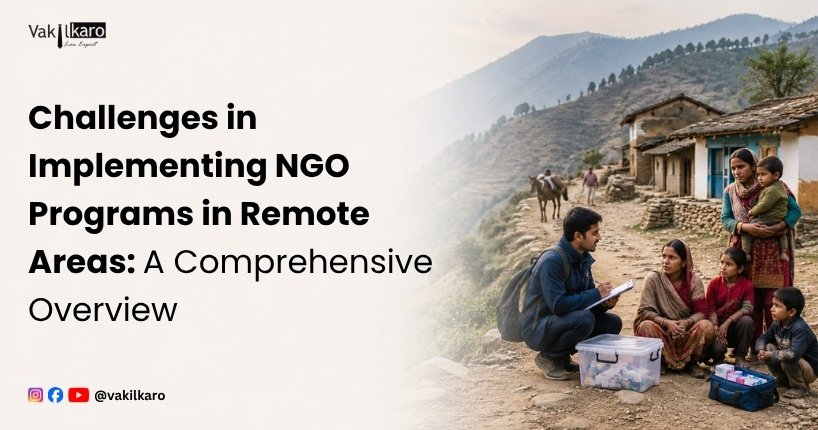
NGOs play a crucial role in driving social change in remote areas, but implementing programs in such regions comes with numerous challenges. These include geographical barriers, cultural resistance, limited resources, and political instability. NGOs must navigate poor infrastructure, engage with local communities, secure funding, and ensure compliance with regulations such as NGO registration, Section 8 company registration, and 12A and 80G registration. Overcoming these obstacles requires strategic planning, local involvement, and sustainable funding sources. By maintaining transparency and focusing on long-term impact, NGOs can successfully implement programs that create lasting change in underserved areas.
Key Takeaways
- NGOs play a crucial role in driving social change in remote areas, but implementing programs in such regions comes with numerous challenges.
- Challenges of Implementing NGO Programs in Remote Areas Non-Governmental Organizations (NGOs) often play a crucial role in improving the lives of people in remote and underserved areas.
- Geographical and Logistical Barriers One of the primary challenges when implementing NGO programs in remote areas is the geographical and logistical barrier.
- Lack of Skilled Human Resources Recruiting and retaining skilled human resources is another major challenge when implementing NGO programs in remote areas.
- Conclusions While implementing NGO programs in remote areas presents numerous challenges, these obstacles can be overcome with careful planning, strategic partnerships, and a deep understanding of the local context.
Challenges of Implementing NGO Programs in Remote Areas
Non-Governmental Organizations (NGOs) often play a crucial role in improving the lives of people in remote and underserved areas. However, the task of implementing successful programs in such regions comes with a set of unique challenges. These challenges can range from geographical and logistical barriers to cultural resistance, funding issues, and political instability. NGOs working in these areas must overcome these obstacles to create lasting impact and contribute to community development.
Geographical and Logistical Barriers
One of the primary challenges faced by NGOs in remote areas is poor infrastructure. In many cases, these regions have unpaved roads, unreliable transportation, and limited access to communication networks. This makes the transportation of materials, staff, and project resources a difficult and expensive task. Additionally, many remote areas lack basic services like electricity and internet, which are necessary for certain types of programs, such as online education or telemedicine. Overcoming these logistical hurdles requires innovative solutions, such as using local networks for transportation or creating temporary infrastructure to support operations.
Cultural and Social Barriers
Every remote area has its own set of cultural and social dynamics. NGOs may face resistance from local communities if their programs do not align with established traditions or values. For example, projects aimed at gender empowerment may conflict with traditional gender roles. To address this, NGOs must understand local customs and engage with community leaders to ensure their programs are culturally sensitive and well-received. Involving local stakeholders and respecting community knowledge can greatly improve the chances of success.
Funding and Resource Constraints
Many NGOs working in remote areas struggle with limited financial resources. Local governments often lack the funds to support these initiatives, and external donors may hesitate due to the region’s limited infrastructure or difficult access. However, NGOs that are registered under Section 8, NGO registration, and hold 12A and 80G registration can enhance their credibility, making it easier to attract funding and donor support.
Despite these challenges, NGOs can still make a lasting impact by strategically navigating these hurdles, engaging local communities, and maintaining compliance with legal frameworks.
Non-Governmental Organizations (NGOs) are fundamental to driving social change, especially in underserved and remote areas where governmental support is limited or non-existent. These organizations are often at the forefront of addressing critical issues such as access to education, healthcare, livelihood generation, and environmental conservation. They play an essential role in improving the quality of life for marginalized communities, often working in regions with limited infrastructure and resources.
NGOs are uniquely positioned to bridge the gap where traditional state-run services may fall short, delivering programs that empower communities and improve their well-being. They have the flexibility to design and implement initiatives that address specific local needs, making them indispensable actors in the global development sector.
However, working in remote areas presents a complex array of challenges that NGOs must overcome to ensure their programs are impactful and sustainable. One of the primary difficulties is logistical – remote locations often lack basic infrastructure like paved roads, reliable transportation systems, and modern communication networks. This can create significant delays in program implementation and increase operational costs. Additionally, there are social and cultural barriers that NGOs must navigate carefully. Local traditions, customs, and sometimes even resistance to external interventions can affect the success of their programs.
Moreover, funding remains a critical issue, especially for NGOs working in hard-to-reach areas. While local governments might lack the resources to support such initiatives, NGOs rely heavily on external funding from donors, grants, and other financial mechanisms. This is further complicated by the need for compliance with various legal frameworks, such as NGO registration, Section 8 company registration, and the 12A and 80G registration, which are necessary for receiving donations and ensuring tax exemptions.
This blog aims to delve into these key obstacles that NGOs face when working in remote regions. It will also explore how understanding and complying with relevant legal requirements can make a significant difference in the success of these organizations’ efforts. By highlighting these challenges and discussing effective strategies for overcoming them, we hope to provide NGOs with the insights needed to navigate the complexities of implementing projects in remote areas successfully.
Geographical and Logistical Barriers
One of the primary challenges when implementing NGO programs in remote areas is the geographical and logistical barrier. Remote regions are often difficult to access due to poor infrastructure, such as unpaved roads, lack of public transportation, and limited communication networks. The transportation of materials, volunteers, and project personnel to such locations can be both time-consuming and costly.
Additionally, in many remote areas, access to electricity, internet connectivity, and basic amenities is limited. This can hinder the effective implementation of programs that rely on technology, such as e-learning or telemedicine initiatives. NGOs must often devise creative solutions to overcome these challenges, including utilizing local networks for transportation or establishing temporary infrastructure to support their operations.
In these circumstances, effective monitoring and evaluation (M&E) become even more critical. NGOs must have robust systems in place to track progress, collect data, and ensure that their projects are meeting their objectives. Without reliable communication and logistical support, even well-intentioned programs may struggle to make a lasting impact.
Cultural and Social Barriers
Each remote region has its own unique set of cultural and social dynamics, which can present challenges for NGOs. These communities may have deeply ingrained traditions, belief systems, and social norms that may not align with the NGO’s objectives. It’s essential to understand the local culture, values, and social structures before implementing programs. Failure to do so can lead to resistance from local communities, making it difficult for NGOs to gain trust and support.
For instance, in some remote areas, traditional gender roles or caste-based discrimination may exist. NGOs that aim to empower women or marginalized groups may face opposition if their programs do not take local customs and sensitivities into account. It’s crucial for NGOs to engage with local leaders, community representatives, and influencers to ensure that their programs are culturally sensitive and that they receive local buy-in.
Moreover, NGOs must respect the local knowledge and practices in the communities they serve. In many cases, community members possess valuable insights into what works best in their environment. NGOs that collaborate with local stakeholders and take their perspectives into account are more likely to succeed in the long run.
Limited Resources and Funding Constraints
Remote areas often lack the financial resources and infrastructure required to support large-scale NGO programs. Local governments may not have the budget to fund such initiatives, and even if they do, they may lack the capacity to implement them effectively. As a result, NGOs must rely heavily on external funding sources, such as donors, grants, or corporate social responsibility (CSR) funds.
However, securing funding for NGO programs, particularly in remote areas, can be a daunting task. Donors may be hesitant to fund programs in areas with limited infrastructure or difficult access, and the lack of reliable data or evidence of impact can further discourage potential supporters. Additionally, NGOs in remote areas may struggle to raise awareness about their initiatives, making it harder to attract funding or recruit volunteers.
For NGOs registered under Section 8 Company registration or NGO registration, the process of securing funding often requires demonstrating financial transparency and accountability. This is where 12A and 80G registration becomes essential. Having these registrations not only enhances the credibility of the organization but also enables donors to avail tax exemptions for their contributions, making it easier for NGOs to secure financial support.
Moreover, NGOs must ensure that their programs are financially sustainable in the long term. While donor funding can provide short-term relief, it is not always a guaranteed source of income. NGOs must explore diverse funding options, including government schemes, CSR partnerships, and community contributions, to ensure the sustainability of their operations.
Political Instability and Regulatory Issues
In remote areas, political instability and legal challenges can pose significant obstacles for NGOs. Many rural or tribal regions may have political climates that are volatile, with local governance structures that may not be conducive to external interventions. In such regions, NGOs can face difficulties in obtaining the necessary permits or approvals to run their programs. Additionally, in some cases, local authorities may view NGOs with suspicion, perceiving them as foreign entities seeking to influence or disrupt local political dynamics.
Furthermore, NGOs operating in remote regions must navigate a complex regulatory framework. For example, NGOs registered as Section 8 companies are required to comply with the provisions of the Companies Act, 2013, which may include stringent reporting and auditing requirements. NGOs seeking 12A and 80G registration must adhere to the norms set by the Income Tax Department, including providing detailed financial statements and demonstrating that funds are being used for charitable purposes.
These regulatory hurdles can be particularly challenging for NGOs that operate in remote areas where local authorities may not be well-versed in NGO governance or compliance requirements. NGOs must be proactive in ensuring that they adhere to legal requirements, both to maintain their registration status and to avoid potential legal issues that could disrupt their operations.
Lack of Skilled Human Resources
Recruiting and retaining skilled human resources is another major challenge when implementing NGO programs in remote areas. In many remote regions, there is a shortage of qualified professionals, such as teachers, healthcare workers, or social workers, who are willing to work in difficult or isolated conditions. Even if skilled workers are available, they may not stay in remote areas for long due to factors such as low salaries, poor living conditions, or a lack of career growth opportunities.
In such cases, NGOs must find creative ways to train and equip local individuals to become the change agents in their communities. This may include offering skill-building programs for local residents, collaborating with educational institutions to provide training, or hiring staff from nearby towns or cities who are willing to commute to the remote area. NGOs must also be prepared to offer competitive compensation packages to attract and retain talent, even in areas where the cost of living is low.
Additionally, NGOs may face challenges in creating a sustainable workforce in remote areas. To overcome this, it is important to build partnerships with local community organizations and leverage local knowledge and resources. By developing a cadre of trained local volunteers or employees, NGOs can reduce their reliance on external staff and create more sustainable programs.
Sustainability and Long-Term Impact
One of the ultimate goals of any NGO program is to create a lasting impact. However, in remote areas, ensuring sustainability can be a significant challenge. Many well-intentioned projects fail to achieve long-term success due to factors such as lack of local ownership, insufficient training, or inadequate follow-up support.
In remote areas, community ownership is critical to the success of any NGO initiative. Without the active involvement of local residents, programs are less likely to be sustained after the NGO withdraws. It is important for NGOs to invest in building local capacity and ensuring that community members are empowered to take charge of the programs. This may involve establishing community-based organizations, providing leadership training, or working with local government agencies to ensure that programs are integrated into local governance structures.
Additionally, NGOs must carefully assess the potential long-term impact of their programs. While short-term results may be easy to achieve, it is the long-term outcomes that will determine the overall success of the project. NGOs must set clear, measurable goals and regularly evaluate their programs to ensure that they are achieving the desired impact. In the case of 12A and 80G registration, maintaining transparency and documenting the long-term results of a program can help NGOs demonstrate the effectiveness of their work to donors and regulators.
Conclusions
While implementing NGO programs in remote areas presents numerous challenges, these obstacles can be overcome with careful planning, strategic partnerships, and a deep understanding of the local context. NGOs must be prepared to adapt to the unique needs and realities of the communities they serve, while ensuring that they remain compliant with legal and regulatory frameworks such as NGO registration, Section 8 company registration, and 12A and 80G registration.
By addressing geographical, cultural, financial, and human resource barriers, NGOs can build sustainable programs that have a meaningful and lasting impact in remote areas. With the right approach and a commitment to compliance and accountability, NGOs can continue to make a significant difference, one community at a time.
Official External Resources
Use these primary/official sources to verify rules, forms, fees, timelines and regulatory updates before publication.
Frequently asked questions
Challenges in Implementing NGO Programs in Remote Areas: A Comprehensive Overview+
Challenges of Implementing NGO Programs in Remote Areas Non-Governmental Organizations (NGOs) often play a crucial role in improving the lives of people in remote and underserved areas. Geographical and Logistical Barriers One of the primary challenges when implementing NGO programs in remote areas is the geographical and logistical barrier.
