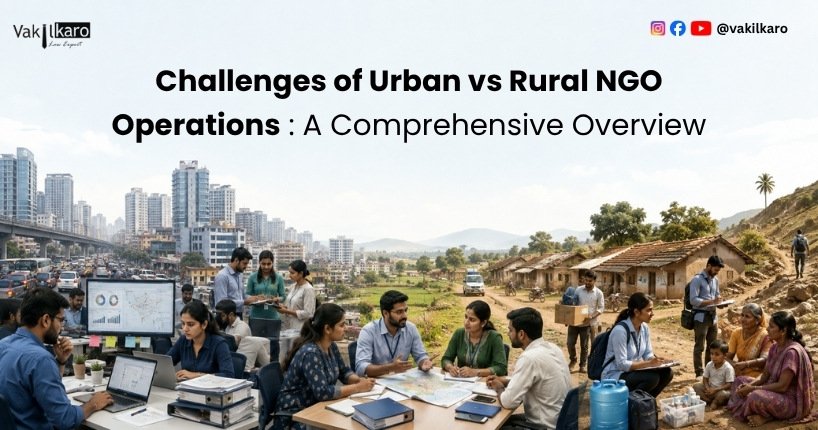
Non-Governmental Organizations (NGOs) face distinct challenges when operating in urban vs. rural areas. Urban NGOs benefit from better infrastructure, access to funding, and skilled human resources, but face high competition and diverse communities. Rural NGOs struggle with limited infrastructure and funding, but have stronger ties to local communities, enabling sustainable, grassroots initiatives. Both settings require tailored strategies for community engagement and program delivery. NGOs with proper NGO registration, Section 8 company registration, and 12A and 80G registration can ensure legal compliance, attract funding, and address operational challenges, making a meaningful impact in both urban and rural environments.
Key Takeaways
- NGOs with proper NGO registration, Section 8 company registration, and 12A and 80G registration can ensure legal compliance, attract funding, and address operational challenges, making a meaningful impact in both urban and rural environments.
- In this blog, we will explore the challenges faced by NGOs operating in urban and rural settings, with a focus on how these challenges affect their operations, strategies, and overall success.
- Understanding the Basics of NGO Operations Before delving into the challenges faced by NGOs in urban and rural environments, it's essential to understand the operational structure and key requirements for running an NGO in India.
- Urban vs Rural: Key Differences Impacting NGO Operations Urban and rural areas present very different landscapes for NGOs.
- Community Engagement and Trust Building trust with the community is a fundamental component of successful NGO operations, but it can vary significantly between urban and rural areas.
Challenges Faced by NGOs in Urban vs. Rural Areas
Non-Governmental Organizations (NGOs) encounter varying challenges based on whether they operate in urban or rural areas. While urban settings provide several advantages such as better infrastructure, access to funding, and a diverse community, rural areas often present more significant obstacles, including poor infrastructure and limited financial resources. However, rural NGOs tend to have closer connections with local communities, which can lead to more sustainable, grassroots-driven initiatives.
In urban areas, NGOs benefit from the presence of better infrastructure such as reliable transportation and communication networks. These resources make it easier to set up and run operations effectively. Urban NGOs also have access to a broader range of funding sources, including government grants, international donors, and corporate partnerships. Additionally, the availability of a large pool of skilled professionals allows urban NGOs to build specialized teams, improving the efficiency and impact of their programs. However, the competition for funding and attention is high, and standing out in a crowded space is a significant challenge.
In contrast, rural NGOs face barriers due to limited infrastructure such as poor transportation and inadequate access to technology. The lack of resources can make it difficult to deliver services effectively. Funding opportunities are often scarce, and rural NGOs mainly rely on small local donors or government support. Although they may face these challenges, rural NGOs benefit from strong community ties, which help them implement deeply rooted and culturally relevant programs. These NGOs often take a more grassroots approach to program implementation, engaging local leaders and community members to ensure long-term success.
For NGOs operating in either setting, ensuring proper registration is critical. NGO registration, Section 8 company registration, and 12A and 80G registration for tax exemptions are important legal and financial tools that help NGOs stay compliant and attract donors. Regardless of their location, NGOs must adapt their strategies to overcome the unique challenges they face in either urban or rural environments.
Non-Governmental Organizations (NGOs) play a pivotal role in the development of societies, addressing issues ranging from poverty, education, healthcare, gender equality, environmental sustainability, and human rights. Whether operating in urban or rural settings, NGOs face a unique set of challenges. These challenges can vary significantly due to the contrasting social, economic, and infrastructure conditions in urban and rural areas. In this blog, we will explore the challenges faced by NGOs operating in urban and rural settings, with a focus on how these challenges affect their operations, strategies, and overall success. Additionally, we will touch on key regulatory and compliance aspects for NGOs, such as NGO registration, Section 8 company registration, and 12A and 80G registration, which are crucial for legal and tax compliance in both urban and rural settings.
Understanding the Basics of NGO Operations
Before delving into the challenges faced by NGOs in urban and rural environments, it's essential to understand the operational structure and key requirements for running an NGO in India. An NGO is typically set up to serve the public interest, without seeking personal profit. Depending on its objectives, it could be registered as a Trust, Society, or Section 8 Company (which is a not-for-profit company). NGOs with a Section 8 company registration are specifically set up to promote social causes, and their profits are reinvested back into the organization’s activities.
In India, NGOs can also register for tax exemptions under 12A and 80G registration, which allows them to receive donations that are tax-deductible. NGO registration provides the legal framework under which the NGO can operate. These legal structures are crucial for ensuring that the NGO is compliant with regulations and is eligible for funding and support from various donors and government agencies.
Urban vs Rural: Key Differences Impacting NGO Operations
Urban and rural areas present very different landscapes for NGOs. These differences impact the operational approach, resource allocation, and community engagement strategies used by NGOs. While urban areas may have better access to resources, infrastructure, and funding, rural areas often face more profound social issues and limited access to services. Let's explore how these differences manifest in NGO operations.
Access to Resources and Infrastructure
In urban areas, NGOs benefit from better infrastructure, including transportation, communication networks, and access to technology. Urban regions also have a higher concentration of funding opportunities and potential donors, including international organizations, government bodies, and private corporations. The ease of setting up operations in cities is one of the main advantages for NGOs in urban settings. With the legal structure of Section 8 company registration, NGOs in cities can access corporate partnerships, volunteer resources, and even government subsidies more readily.
In contrast, rural NGOs face significant barriers in terms of infrastructure. Poor transportation networks, limited access to electricity and internet, and inadequate healthcare and educational facilities make it more challenging to implement programs effectively. For NGOs with NGO registration in rural areas, these logistical challenges require more innovative approaches, often necessitating a reliance on local knowledge and grassroots support to overcome barriers.
Funding and Financial Support
Urban NGOs often have access to more diverse funding sources. With the presence of major corporate entities and international donors, urban-based NGOs can tap into various streams of financial support. Additionally, NGOs in cities often have better networking opportunities, allowing them to participate in fundraising events and collaborate with corporate CSR (Corporate Social Responsibility) initiatives. These opportunities are typically less available to rural-based NGOs, where funding may be limited to small local donors, community contributions, or government grants.
For Section 8 companies, urban NGOs also benefit from the ability to form partnerships with corporate entities for shared initiatives, especially in sectors like education, health, and sustainability. These partnerships can bring in significant resources, both financial and human. On the other hand, rural NGOs often rely on government funding and smaller, community-based donors, which can be inconsistent and inadequate for scaling up operations.
To address this, rural NGOs might consider applying for 12A and 80G registration to attract donations that offer tax benefits to donors. However, despite the legal tax exemptions, rural NGOs still struggle with limited access to large-scale funding opportunities, primarily due to the lack of visibility and high competition in the donor community.
Human Resources and Capacity Building
Human resources are another critical factor differentiating urban and rural NGOs. Urban NGOs have access to a larger pool of skilled labor, including professionals with expertise in law, marketing, fundraising, and other essential areas. This allows urban-based NGOs to build more specialized teams, which can enhance the overall efficiency and impact of their programs. NGOs with Section 8 company registration are also more likely to have a formal governance structure and dedicated staff with expertise in specific sectors, ensuring better management of resources and compliance with regulations.
In rural areas, however, NGOs face challenges in terms of recruitment. The pool of skilled professionals is often limited, which can hinder the NGO’s ability to manage large-scale projects. Rural NGOs often rely on local volunteers who may not have formal training in program management, fundraising, or other technical aspects of NGO operations. This lack of expertise can impact the quality of services provided and make it more difficult to achieve long-term sustainability.
Capacity building for rural NGOs is critical. To overcome these challenges, rural NGOs must invest in training and development programs, even if it means conducting in-house workshops or collaborating with larger organizations to build local capacity. NGOs with 12A and 80G registration may be able to utilize their tax-exempt status to attract funding for training initiatives, helping to strengthen the skills of local staff and volunteers.
Community Engagement and Trust
Building trust with the community is a fundamental component of successful NGO operations, but it can vary significantly between urban and rural areas. In urban settings, people are often more aware of NGOs and their work, and there is a greater diversity of community members to engage. The challenge for urban NGOs is to stand out in a competitive environment and effectively communicate their mission to the public.
In rural areas, building trust is often more difficult, as people may be more skeptical of outside organizations, especially those that do not have a long-standing relationship with the community. Rural populations may also be more resistant to change, particularly when it comes to social issues such as gender equality, education, or health. NGOs with NGO registration in rural areas must take a more grassroots approach, building relationships over time and ensuring that community members feel genuinely involved in the projects being implemented.
In rural areas, NGOs are more likely to engage with local leaders, traditional institutions, and grassroots organizations to help create buy-in for their programs. This can take time, but it is often crucial for the long-term success of the NGO’s initiatives.
Social and Cultural Challenges
Rural areas are often home to more traditional, conservative values, which can create barriers for NGOs working on issues like gender equality, education, or reproductive health. In these settings, NGOs may face resistance from local communities, especially if their programs challenge established cultural norms. For example, initiatives aimed at empowering women or promoting sexual health may face backlash in conservative rural areas.
In urban environments, while cultural barriers may still exist, they are often less pronounced due to the greater diversity and exposure to progressive ideas. Urban NGOs might encounter challenges in addressing issues like urban poverty, housing, or pollution, but they often have the freedom to operate in a less restrictive social and cultural environment.
NGO Darpan: Enhancing Transparency and Access for NGO Registration in India
NGO Darpan is an online platform developed by the NITI Aayog, Government of India, to facilitate the registration and management of Non-Governmental Organizations (NGOs) in India. It serves as a comprehensive database for NGOs, enabling them to register and maintain their profile in a standardized manner. This platform provides a unique ID to NGOs, ensuring transparency and credibility. It is particularly relevant for NGOs that wish to apply for government grants and collaborate with various ministries, as the registration on NGO Darpan is often a prerequisite for accessing financial support and participating in government schemes. Additionally, it offers NGOs a centralized space to update their activities and key information, enhancing their visibility and accountability. In essence, NGO Darpan plays a vital role in the formalization and recognition of NGOs in India, making them eligible for a wide range of government programs and fostering a streamlined approach to NGO operations and governance.
Conclusion
The challenges faced by NGOs in urban and rural settings are starkly different but equally significant. Urban NGOs benefit from better infrastructure, access to funding, and a larger pool of skilled human resources. However, they must contend with high competition, limited community engagement, and the need to differentiate themselves in a crowded space. In contrast, rural NGOs face significant barriers related to infrastructure, funding, and human resources. Nevertheless, rural NGOs often have stronger connections with local communities, allowing them to implement more deeply rooted and sustainable initiatives.
Whether an NGO operates in urban or rural areas, they must adapt their strategies to the local context. For NGOs seeking to overcome some of these challenges, ensuring proper NGO registration, obtaining Section 8 company registration, and securing 12A and 80G registration for tax exemptions can provide legal and financial support that is critical for successful operations. By understanding these challenges and leveraging the right strategies, NGOs can make a meaningful impact, regardless of the environment in which they operate.
Why Choose Vakilkaro for Your Legal Services?
When it comes to legal services, Vakilkaro stands out as a trusted partner for NGOs and other organizations seeking efficient, reliable, and comprehensive solutions. Here’s why choosing Vakilkaro for your legal needs is the best decision:
- Expertise in NGO Registration and Compliance
Vakilkaro specializes in helping NGOs with their registration process, including NGO registration, Section 8 company registration, and 12A and 80G registrations. Their deep understanding of the legal requirements ensures that your NGO is set up correctly from the start and remains compliant with all regulations. This expertise is crucial for NGOs looking to build credibility and secure funding from donors.
- Tailored Solutions for Your Needs
Whether you're starting an NGO or expanding operations, Vakilkaro provides personalized solutions that align with your specific goals. They help you navigate the complexities of legal processes, ensuring your organization remains in compliance with laws while focusing on your mission.
- Efficient, Hassle-Free Process
Vakilkaro is known for its efficient service, ensuring the process of registration, legal compliance, and documentation is hassle-free. This allows NGOs to focus on their core mission without worrying about paperwork or legal obstacles. They take care of everything from start to finish, making the journey smooth for you.
- Reliable and Transparent Communication
With Vakilkaro, you’ll have access to transparent and reliable communication. They keep you informed at every stage of the process, answering any questions or concerns promptly. This ensures peace of mind and builds trust between you and the service provider.
- Affordable Pricing
Vakilkaro offers competitive pricing without compromising on quality, making it accessible for NGOs, especially those working in rural or less-funded settings. Their affordable services help ensure your organization’s legal framework is solid, paving the way for long-term sustainability and impact.
Choose Vakilkaro for their expert legal services, commitment to compliance, and hassle-free experience. Let them help you build a solid foundation for your NGO’s success.
Official External Resources
Use these primary/official sources to verify rules, forms, fees, timelines and regulatory updates before publication.
Frequently asked questions
Challenges of Urban vs Rural NGO Operations: A Comprehensive Overview+
NGOs with proper NGO registration, Section 8 company registration, and 12A and 80G registration can ensure legal compliance, attract funding, and address operational challenges, making a meaningful impact in both urban and rural environments. In this blog, we will explore the challenges faced by NGOs operating in urban and rural settings, with a focus on how these challenges affect their operations, strategies, and overall success.
