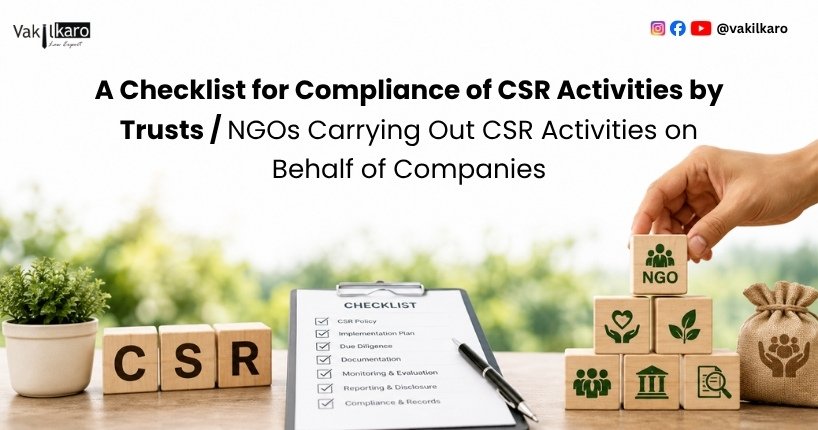
NGOs and Trusts conducting CSR activities for corporations must adhere to a compliance checklist to ensure legal and tax obligations are met. This includes registering under the correct legal structure, such as Section 8 companies or trusts, obtaining CSR-1 registration, and ensuring 12A and 80G certifications for tax exemptions. NGOs must also comply with GST rules, file income tax returns, maintain transparency in fund utilization, and align their goals with corporate CSR objectives. By following these steps, NGOs can effectively manage CSR funds, build trust with corporate donors, and ensure compliance with relevant income tax and tax exemption laws.
Key Takeaways
- NGOs and Trusts conducting CSR activities for corporations must adhere to a compliance checklist to ensure legal and tax obligations are met.
- Compliance Checklist for NGOs Handling CSR Activities Non-Governmental Organizations (NGOs) and Trusts play a significant role in executing Corporate Social Responsibility (CSR) activities on behalf of corporations.
- Introduction Non-Governmental Organizations (NGOs) and Trusts are often entrusted with carrying out Corporate Social Responsibility (CSR) activities on behalf of corporations.
- Alignment with Corporate CSR Objectives When carrying out CSR activities on behalf of companies, it is essential that the NGO aligns its goals with the company’s CSR objectives.
- Conclusion In conclusion, carrying out CSR activities on behalf of companies is a significant responsibility for any NGO or Trust.
Compliance Checklist for NGOs Handling CSR Activities
Non-Governmental Organizations (NGOs) and Trusts play a significant role in executing Corporate Social Responsibility (CSR) activities on behalf of corporations. However, managing CSR funds and adhering to the complex regulatory and tax requirements can be challenging. NGOs must follow a well-defined compliance checklist to ensure that they meet all legal obligations and maintain transparency in their operations.
The first step is ensuring that the NGO is legally registered under an appropriate structure. NGOs in India can be registered as trusts, societies, or Section 8 companies. Among these, Section 8 company registration is often preferred by corporations because of its formal governance and greater legal credibility. It ensures that the NGO complies with tax and business policies.
Next, obtaining CSR-1 registration from the Ministry of Corporate Affairs (MCA) is crucial. This form is mandatory for NGOs to receive CSR funding. The registration process involves submitting key documents such as NGO registration details, 12A and 80G certificates for tax exemptions, and financial statements that show transparent fund utilization. This ensures that CSR funds are used appropriately and aligns with corporate requirements.
Tax compliance is also essential for NGOs. They must register for 12A and 80G under the Income Tax Act. 12A registration ensures that the NGO’s income is exempt from income tax, while 80G registration allows donors to claim tax deductions for their contributions. NGOs must also adhere to GST (Goods and Services Tax) rules if applicable. They should issue tax invoices for taxable goods and services, maintain records, and ensure that transactions comply with sales and tax regulations.
Lastly, NGOs must maintain transparency in fund utilization by submitting regular reports and audits to corporate donors. By aligning their goals with the company’s CSR objectives and ensuring compliance with tax laws, NGOs can build trust, enhance credibility, and secure CSR funding for their social initiatives.
Non-Governmental Organizations (NGOs) and Trusts are often entrusted with carrying out Corporate Social Responsibility (CSR) activities on behalf of corporations. However, managing CSR funds and ensuring compliance with legal and tax regulations can be a complex and challenging task. To streamline the process and ensure adherence to the law, NGOs must have a clear and comprehensive compliance checklist.
This blog will provide a step-by-step guide for NGOs and Trusts to ensure they comply with the relevant Income Tax Act, tax exemptions, GST goods and services tax, and other necessary requirements. Whether you are a Section 8 company, a registered trust, or a society, this checklist will help you manage CSR activities efficiently while adhering to all legal frameworks.
NGO Registration and Legal Structure
Before anything else, it is essential for an NGO or Trust to have valid NGO registration under the appropriate legal structure. The three primary legal structures for NGOs in India are:
- Trusts under the Indian Trusts Act, 1882
- Societies under the Societies Registration Act, 1860
- Section 8 Companies under the Companies Act, 2013
Section 8 company registration is the most preferred by corporations due to its structured governance and better legal recognition. It ensures compliance with tax for business and other corporate policies.
Key Considerations:
- Ensure your NGO is registered under one of the legal structures mentioned above.
- Verify that your NGO registration is current and compliant with the Companies Act, 2013 (for Section 8 companies).
CSR-1 Registration
One of the first steps NGOs must take when working with companies for CSR activities is to obtain CSR-1Form registration. This form is filed with the Ministry of Corporate Affairs (MCA) and is required for receiving CSR funds. It ensures the NGO is legally registered and eligible to accept corporate donations.
Checklist for CSR-1 Registration:
- Complete the CSR-1 self-declaration form online.
- Submit your NGO registration details, including the governing body and legal framework (Trust, Society, or Section 8 company).
- Provide 12A and 80G registration certificates to prove eligibility for tax exemptions.
- Submit financial statements to demonstrate transparency in fund utilization.
Once registered, NGOs can receive CSR funds from companies that comply with the CSR law under the Companies Act, 2013.
Tax Exemption and Compliance: 12A and 80G Registration
In India, NGOs must adhere to income tax laws and claim tax exemptions to ensure both corporate and individual donors receive tax benefits. 12A registration ensures that an NGO is exempt from paying tax on its income, while 80G registration allows donors to claim tax deductions on their donations.
Importance of 12A and 80G Registration:
- 12A Registration: Ensures that the income of the NGO is exempt from income tax income tax under the Income Tax Act.
- 80G Registration: Allows donors to claim deductions for their donations, making your NGO more attractive to corporate donors.
NGOs should ensure that their 12A and 80G registration is up-to-date to receive CSR funds and ensure that corporate donations are tax-free for the company.
Checklist for 12A and 80G Registration:
- Ensure the NGO has a valid 12A and 80G registration with the Income Tax Department.
- Submit these certificates when applying for CSR-1 registration.
Compliance with GST (Goods and Services Tax)
Another crucial tax-related consideration for NGOs involved in CSR activities is compliance with the Goods and Services Tax (GST). While NGOs may not always be liable for GST, there are scenarios where they must adhere to GST rules, especially when dealing with sales or providing taxable services.
Checklist for GST Compliance:
- Ensure that your NGO has registered for GST if it meets the turnover criteria for registration.
- Issue proper tax invoices for any taxable goods or services provided under CSR activities.
- Maintain detailed records of all GST transactions, including sales tax on goods and services provided.
- If providing tax-exempt services, ensure proper documentation to maintain transparency.
Tax Rate and Filing of Returns
NGOs need to ensure they file income tax returns and comply with state tax regulations, including sales tax and goods and services tax (GST). Non-compliance can lead to penalties and potential loss of CSR funding. NGOs must understand the tax bracket for income tax, especially for income generated through fundraising activities or CSR projects.
Checklist for Income Tax Compliance:
- File regular income tax returns under the Income Tax Act.
- Ensure sales and tax returns are filed accurately for any taxable activity.
- Maintain detailed records to substantiate claims for tax exemption.
- Understand how tax bracket for income tax affects your NGO’s financial planning and liabilities.
Ensure Transparency in Fund Utilization
Transparency is crucial for maintaining trust and credibility with corporate donors. NGOs must be able to demonstrate that CSR funds are used effectively for the intended social objectives.
Checklist for Transparency:
- Maintain proper accounting records for all CSR funds received and spent.
- Submit free tax audits or financial reports to corporate donors, ensuring complete transparency.
- Provide detailed reports on fund utilization, including receipts, payments, and financial statements.
- Follow tax for business guidelines and tax companies regulations, ensuring all CSR-related transactions are properly documented.
Documentation and Reporting
Accurate documentation is essential for NGOs receiving CSR funds. Regular reporting ensures that all stakeholders, including corporate sponsors, government authorities, and the public, can track the progress and effectiveness of CSR initiatives.
Checklist for Reporting and Documentation:
- Maintain updated financial statements, including income and expenditure statements.
- Provide regular impact reports detailing how CSR funds have been utilized and the results achieved.
- Submit annual CSR reports to the corporate sponsor, including details on how the funds were spent in line with the agreed CSR goals.
- Ensure all documentation aligns with the tax rate and income tax income tax regulations.
Adherence to State Tax Laws
Different states may have different state tax laws, and NGOs must comply with the local tax regulations governing their operations. This includes paying sales tax for services provided, adhering to local sales and tax norms, and ensuring proper registration with state authorities.
Checklist for State Tax Compliance:
- Understand and comply with the state tax laws applicable to your NGO.
- If operating in multiple states, ensure that the NGO complies with the sales tax rules in each jurisdiction.
- Maintain records for all state tax payments and ensure timely filings.
Alignment with Corporate CSR Objectives
When carrying out CSR activities on behalf of companies, it is essential that the NGO aligns its goals with the company’s CSR objectives. Corporations prefer NGOs that can demonstrate clear, measurable results and a genuine commitment to social causes.
Checklist for Corporate CSR Alignment:
- Review and understand the company’s CSR policies and goals.
- Align the NGO’s mission with the company’s CSR strategy.
- Demonstrate impact through measurable results in the annual report.
- Ensure that all CSR activities are consistent with the company's tax company policies.
Conclusion
In conclusion, carrying out CSR activities on behalf of companies is a significant responsibility for any NGO or Trust. To maximize the impact of CSR funds and ensure compliance with tax regulations, it is essential for NGOs to follow the checklist outlined above. From obtaining NGO registration and CSR-1 registration to adhering to Income Tax Act rules, sales tax requirements, and GST compliance, NGOs must be diligent in ensuring all regulatory obligations are met. By maintaining transparency, filing timely reports, and aligning with corporate CSR objectives, NGOs can build long-lasting relationships with corporate donors while making a positive impact on society.
For NGOs looking to navigate these legal processes effectively, seeking expert assistance from a trusted service provider like Vakilkaro is highly recommended. They can ensure that your NGO complies with income and tax, tax for business policies, and 12A and 80G registration, helping you secure the necessary funding and carry out your social missions successfully.
Why Choose Vakilkaro for CSR Compliance and Other Legal Services
When it comes to ensuring seamless compliance with CSR regulations and other legal requirements, Vakilkaro stands out as a trusted partner for NGOs, businesses, and startups. Here's why:
- Expertise in Legal Compliance
Vakilkaro has a team of experienced legal professionals who are well-versed in the complexities of CSR compliance, including income tax, GST, and state tax regulations. Whether you need assistance with NGO registration, CSR-1 filing, or ensuring tax exemption through 12A and 80G registration, Vakilkaro simplifies the process and ensures full compliance with all applicable laws.
- Tailored Legal Solutions
Every NGO has unique requirements based on its structure, mission, and the nature of CSR activities it engages in. Vakilkaro offers personalized legal solutions, ensuring that your NGO or trust adheres to all necessary legal and tax frameworks. This includes Section 8 company registration, tax exemptions, GST registration and compliance, and transparent reporting of CSR fund utilization.
- Streamlined Process
Vakilkaro’s streamlined approach makes it easy to complete legal procedures without the hassle of dealing with multiple authorities. From obtaining CSR-1 registration to filing income tax returns and ensuring GST compliance, Vakilkaro manages the entire legal process, allowing you to focus on your social initiatives.
- Transparency and Trust
Vakilkaro helps maintain transparency in your financial records, ensuring that every CSR contribution is properly utilized, and the required documentation is in place. Their thorough and detailed legal reports build trust with corporate donors, enhancing your credibility and increasing your chances of securing CSR funding.
- End-to-End Legal Support
Apart from CSR compliance, Vakilkaro offers a wide range of legal services, including company registration, intellectual property protection, business licenses, and more. Their comprehensive legal solutions ensure that your organization stays fully compliant while focusing on its core social objectives.
In summary, choosing Vakilkaro for CSR compliance and other legal services ensures that your NGO or trust navigates complex regulations with ease, remains transparent, and maximizes funding opportunities for impactful social change.
Official External Resources
Use these primary/official sources to verify rules, forms, fees, timelines and regulatory updates before publication.
Frequently asked questions
A Checklist for Compliance of CSR Activities by Trusts / NGOs Carrying Out CSR Activities on Behalf of Companies+
Compliance Checklist for NGOs Handling CSR Activities Non-Governmental Organizations (NGOs) and Trusts play a significant role in executing Corporate Social Responsibility (CSR) activities on behalf of corporations. Introduction Non-Governmental Organizations (NGOs) and Trusts are often entrusted with carrying out Corporate Social Responsibility (CSR) activities on behalf of corporations.
