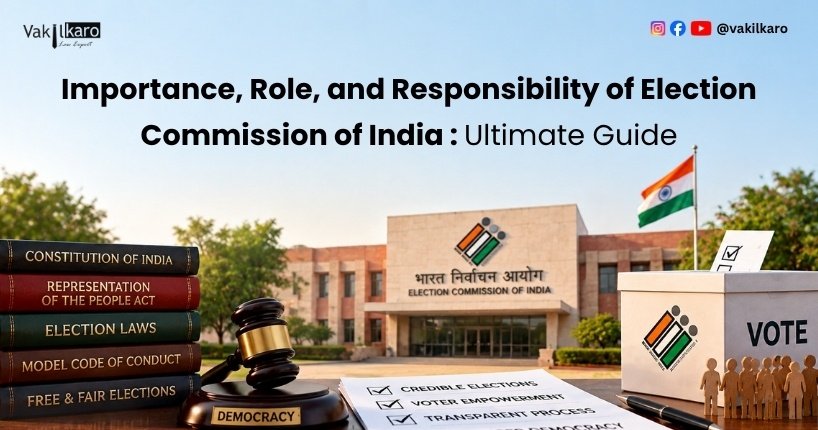
The Election Commission of India (ECI), established in 1950, plays a pivotal role in upholding India's democratic values. As an autonomous constitutional body, it ensures free, fair, and transparent elections across the country. From conducting elections for Parliament and state legislatures to regulating political parties and overseeing new political party registration online, the ECI's responsibilities are vast. With advancements like EVMs, voter ID digitization, and real-time monitoring tools, the ECI continues to modernize India's electoral process. Its role in safeguarding democratic integrity makes it one of the most critical institutions in the governance of the world’s largest democracy.
Key Takeaways
- The Election Commission of India (ECI), established in 1950, plays a pivotal role in upholding India's democratic values.
- The Vital Role of the Election Commission of India in Strengthening Democracy The Election Commission of India (ECI), formed in 1950 under Article 324 of the Indian Constitution, serves as the cornerstone of India’s electoral democracy.
- Introduction India, the world’s largest democracy, owes much of its democratic structure and electoral integrity to the Election Commission of India (ECI).
- Initially, the ECI was a single-member body, but it became a multi-member commission in 1993 and currently consists of the Chief Election Commissioner (CEC) and two Election Commissioners.
- Conclusion The Election Commission of India (ECI) stands as far more than a regulatory institution—it is the backbone of India’s democratic framework.
The Vital Role of the Election Commission of India in Strengthening Democracy
The Election Commission of India (ECI), formed in 1950 under Article 324 of the Indian Constitution, serves as the cornerstone of India’s electoral democracy. As an autonomous constitutional authority, the ECI is entrusted with supervising and conducting elections for the Parliament, State Legislatures, and the offices of the President and Vice-President. Its mission is to ensure that elections are conducted fairly, freely, and transparently, reflecting the true will of the people.
Over the decades, the ECI's responsibilities have expanded significantly. From regulating political campaigns and enforcing the Model Code of Conduct to curbing electoral malpractices, the ECI safeguards the integrity of every election. One of its major roles is maintaining up-to-date electoral rolls and issuing voter ID cards, thus enabling every eligible citizen to exercise their democratic right.
The ECI also plays a key role in registering and regulating political parties. In accordance with Section 29A of the Representation of the People Act, 1951, any organization wishing to contest elections must formally register with the ECI. Recently, the commission has made this process more efficient by offering an online registration system for new political parties. This digital shift promotes transparency, reduces bureaucratic delays, and encourages wider participation in the political landscape.
Technological innovations such as Electronic Voting Machines (EVMs), VVPAT systems, and tools like the cVIGIL app have empowered both voters and officials to ensure greater accountability. In times of emergencies or disruptions, the ECI also holds the authority to postpone or reschedule elections, ensuring peace and fairness.
As India continues to evolve as a democracy, the ECI remains a steadfast guardian of its electoral framework. Its adaptability, transparency, and commitment to free and fair elections are central to preserving the democratic ethos of the nation.
India, the world’s largest democracy, owes much of its democratic structure and electoral integrity to the Election Commission of India (ECI). Established in 1950, the ECI is an autonomous constitutional authority responsible for administering election processes in India at both the national and state levels. From conducting free and fair elections to overseeing political party registration in India, the ECI plays a pivotal role in upholding the democratic values enshrined in the Constitution.
With technological advancement and increasing citizen participation, the role of the ECI continues to evolve. From new political party registration online in India to managing electronic voting machines (EVMs), the ECI’s influence touches nearly every aspect of the democratic process.
In this blog, we’ll take a deep dive into the role, powers, responsibilities, and modern-day relevance of the ECI. We’ll also explore how it handles new political party registration online and how this process supports India's vibrant political landscape.
Constitutional Foundation of the ECI
The Election Commission of India was established under Article 324 of the Indian Constitution. This article empowers the ECI with the superintendence, direction, and control of the entire process of conducting elections to the Parliament, State Legislatures, and the offices of the President and Vice-President of India.
Initially, the ECI was a single-member body, but it became a multi-member commission in 1993 and currently consists of the Chief Election Commissioner (CEC) and two Election Commissioners.
Key Functions of the Election Commission of India
Conduct of Elections
One of the ECI’s primary responsibilities is conducting elections for:
- Lok Sabha (House of the People)
- Rajya Sabha (Council of States)
- State Legislative Assemblies and Councils
- President and Vice-President of India
This includes setting election dates, issuing notifications, accepting nominations, and publishing final results.
Ensuring Free and Fair Elections
To ensure that elections are conducted without bias, coercion, or malpractice, the ECI implements a Model Code of Conduct (MCC) for political parties and candidates. It monitors election campaigns, expenditure, use of government machinery, and ensures voters can cast their vote without fear.
Registration and Regulation of Political Parties
A critical responsibility of the ECI is overseeing political party registration in India. According to Section 29A of the Representation of the People Act, 1951, any association or group of individuals seeking to form a political party must register with the ECI.
This process is vital for transparency and accountability. Only registered parties are eligible to:
- Contest elections
- Access election symbols
- Receive tax exemptions and funding benefits
- Appear in electoral rolls
New Political Party Registration Online in India
In recent years, the ECI has streamlined the process through new political party registration online portals. The shift to digital has made it more convenient for emerging political organizations and citizen-led movements to enter the electoral fray.
To register a new political party online in India, applicants must:
- Visit the ECI’s official website
- Submit Form 1A along with the party constitution
- Provide a list of 100 members and their affidavits
- Publish a public notice in two national and two local newspapers
The process typically takes 30–90 days, subject to compliance and document verification.
This transition to new political party registration online in India ensures transparency, reduces paperwork, and enhances efficiency—key components for a healthy democratic ecosystem.
Voter ID and Electoral Rolls
The ECI maintains and updates the electoral roll to ensure every eligible citizen has the opportunity to vote. It issues Voter ID cards, deletes names of deceased voters, and ensures duplication or fraud is prevented.
Special voter awareness campaigns like SVEEP (Systematic Voters’ Education and Electoral Participation) promote participation among women, youth, and marginalized communities.
Electronic Voting Machines (EVMs) and VVPAT
To prevent electoral fraud, the ECI introduced Electronic Voting Machines (EVMs) in 1999 and later added Voter Verified Paper Audit Trail (VVPAT) systems. These innovations have increased efficiency and trust in the electoral process, allowing instant and tamper-proof vote counting.
Monitoring of Political Campaigns
The ECI has powers to:
- Monitor political advertisements
- Cap campaign expenditure (₹70 lakh for Lok Sabha, ₹28 lakh for Assembly seats)
- Ban hate speech or religious appeals
- Deploy flying squads and video surveillance teams
Disqualification of Candidates
The ECI can recommend disqualification under various provisions of the Representation of the People Act, including:
- Conviction in criminal cases
- Electoral fraud
- False affidavits
- Misuse of government machinery
Allotment of Symbols
Once a party is registered, it must apply for a party symbol—a visual identifier for voters. The ECI maintains a list of reserved and free symbols, and allocates them based on seniority, vote share, and recognition status.
Parties must consistently perform in elections to be recognized as:
- National Party
- State Party
This status brings benefits like free airtime on state-run media, priority in allotment of party symbols, and access to electoral rolls.
Deregistration and De-recognition
Although the ECI cannot directly deregister parties (due to a Supreme Court ruling), it can derecognize them for failing to meet election performance benchmarks. This means loss of symbol, tax benefits, and official recognition.
Model Code of Conduct (MCC)
The MCC is enforced from the announcement of elections until results are declared. It prohibits:
- Use of official resources for campaigns
- Hate speech or communal propaganda
- Vote buying or voter intimidation
- Personal attacks against opponents
The ECI monitors media, public meetings, and campaign rallies to ensure compliance. Violations can lead to notices, bans, or even FIRs.
Use of Technology for Transparency
From cVIGIL mobile app for reporting violations to ENCORE software for candidate nomination, the ECI uses a suite of digital tools to:
- Enable real-time monitoring
- Improve efficiency
- Encourage citizen participation
The push for new political party registration online in India is a part of this broader initiative to digitize and democratize electoral processes.
Postponing or Canceling Elections
In extreme situations like natural disasters, pandemics, or law and order breakdowns, the ECI has the authority to:
- Postpone or cancel elections
- Order re-polling in specific booths
- Deploy paramilitary forces for peacekeeping
This ensures that every election is conducted in a free, fair, and peaceful manner.
Importance of the ECI in Democratic India
The strength of India’s democracy rests on the shoulders of the ECI. Its integrity, independence, and operational transparency are critical to:
- Ensuring voter trust
- Preventing electoral malpractices
- Leveling the playing field for all political parties
The ability to conduct elections with over 900 million voters across diverse geographies is a logistical marvel and a global benchmark for democratic governance.
Moreover, through enabling new political party registration online, the ECI ensures that India’s political ecosystem remains dynamic, inclusive, and open to fresh leadership and citizen-led movements.
Challenges and Criticisms
Despite its achievements, the ECI faces several challenges:
- Allegations of bias or delayed actions
- Influence of money and muscle power in elections
- Low voter turnout in urban areas
- Delays in electoral reforms
Critics also call for more legal empowerment, such as the authority to deregister political parties or enforce stricter accountability for campaign violations.
However, reforms like online party registration, use of technology, and stricter financial monitoring indicate that the ECI is responsive and adaptive to the demands of modern democracy.
How to Register a New Political Party Online in India
Here’s a step-by-step guide to facilitate new political party registration online in India:
- Prepare a Party Constitution
Define aims, membership rules, and internal governance.
- Gather 100 Members
Submit signed affidavits with voter ID proof.
- Public Notification
Publish notice in two local and two national newspapers inviting objections within 30 days.
- Online Submission
Upload all documents on the ECI portal, including:
Form 1A
Affidavits
PAN details
Newspaper clippings
- Review and Approval
The ECI reviews the application, checks for compliance, and approves or rejects the registration.
Vakilkaro and similar legal consultancies can assist applicants through the documentation and compliance required for successful new political party registration online in India.
Conclusion
The Election Commission of India (ECI) stands as far more than a regulatory institution—it is the backbone of India’s democratic framework. Tasked with conducting elections across the world’s largest democracy, the ECI ensures that every voice, regardless of region, background, or political leaning, has a chance to be heard. Its role encompasses everything from conducting national and state elections to facilitating new political party registration online—creating a robust and inclusive electoral environment.
In a time when political awareness is growing and technology is reshaping public participation, the ECI’s adaptability is crucial. It must remain agile, transparent, and forward-thinking to address new challenges such as misinformation, voter apathy, and the complexities of digital governance. As citizens, political aspirants, and civic institutions engage more actively in the democratic process, understanding and navigating the ECI’s structure, processes, and compliance requirements becomes essential.
This is where Vakilkaro plays a transformative role. As a trusted legal advisory and corporate consultancy, Vakilkaro offers expert guidance in areas like new political party registration, ECI compliance, election documentation, and legal filings. Whether you're launching a grassroots political movement, formalizing a party structure, or ensuring lawful participation in elections, Vakilkaro helps you move forward with clarity and confidence.
By combining the democratic vision upheld by the ECI with Vakilkaro’s legal precision and practical support, individuals and organizations can engage more meaningfully in shaping India’s political future. After all, a vibrant democracy thrives not only on fair elections—but also on informed participation and accessible systems, which Vakilkaro empowers you to navigate with ease.
🔷 Need assistance with political party registration or ECI compliance? Reach out to Vakilkaro—your partner in building democratic impact.
🌐 Visit Vakilkaro.com to get started.
Official External Resources
Use these primary/official sources to verify rules, forms, fees, timelines and regulatory updates before publication.
Frequently asked questions
Importance, Role, and Responsibility of Election Commission of India: Ultimate Guide+
The Election Commission of India (ECI), established in 1950, plays a pivotal role in upholding India's democratic values. The Vital Role of the Election Commission of India in Strengthening Democracy The Election Commission of India (ECI), formed in 1950 under Article 324 of the Indian Constitution, serves as the cornerstone of India’s electoral democracy.
