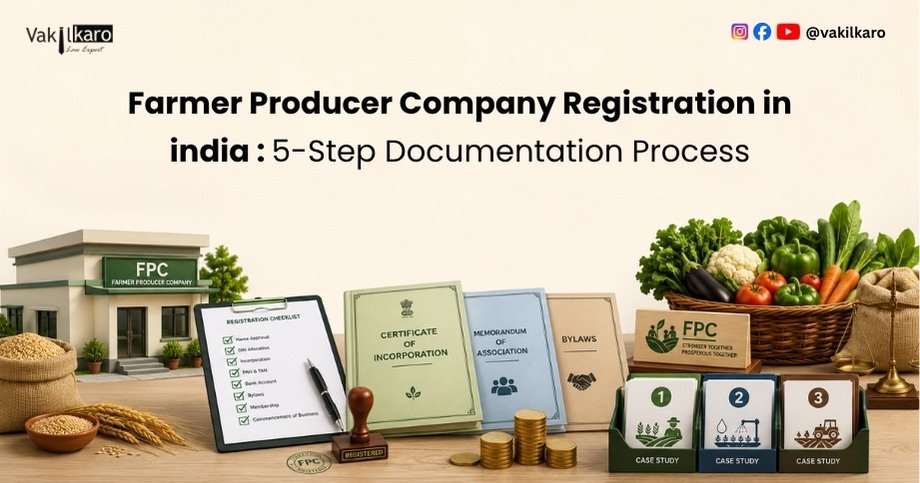
This comprehensive guide is specifically designed for farmers and agriculturists interested in registering a Farmer Producer Company (FPC) under the legal framework of the Companies Act, 2013 and other relevant local regulations in India. It details each step of the process, outlining the legal requirements, document submission timelines, deadlines, cost breakdowns, and fee structures to ensure that your registration journey is clear and successful. Whether you are a small-scale farmer looking to consolidate resources or a cooperative group aiming to enter the market with a structured corporate identity, this guide provides the necessary roadmap for your business venture.
Key Takeaways
- This comprehensive guide is specifically designed for farmers and agriculturists interested in registering a Farmer Producer Company (FPC) under the legal framework of the Companies Act, 2013 and other relevant local regulations in India.
- It details each step of the process, outlining the legal requirements, document submission timelines, deadlines, cost breakdowns, and fee structures to ensure that your registration journey is clear and successful.
- Understanding the Legal Framework and Eligibility about Farmer Producer Company Registration in India 1.1 Overview of the Farmer Producer Company (FPC) A Farmer Producer Company (FPC) is a hybrid business model aimed at aggregating small and marginal farmers into a collective structure.
- Preparation: Documentation and Pre-Registration Requirements 2.1 Forming a Core Team The initial step in the registration process involves the formation of a core management team composed primarily of farmers who will act as the promoters of the company.
- Filing the Registration Application 3.1 Preparing the Application Forms The Ministry of Corporate Affairs (MCA) has streamlined the company registration process using a unified platform called SPICe+ (Simplified Proforma for Incorporating Company electronically).
Understanding the Legal Framework and Eligibility about Farmer Producer Company Registration in India
1.1 Overview of the Farmer Producer Company (FPC)
A Farmer Producer Company (FPC) is a hybrid business model aimed at aggregating small and marginal farmers into a collective structure. This model is designed to improve their bargaining power, provide access to markets, and help in procuring inputs at competitive prices. FPCs are governed by the Companies Act, 2013, and also adhere to specific regulations set by the Ministry of Agriculture and various state governments. Establishing an FPC allows farmers to benefit from a corporate structure while continuing their economic activities under cooperative ethics.
1.2 Eligibility Criteria
To be eligible for forming an FPC, the following conditions must be satisfied:
- Membership: The majority of the members (shareholders) should be farmers or agricultural producers. The members should represent active participants in farming or allied activities.
- Objective: The primary purpose should be to promote the collective interest of small farmers, including procurement of inputs, collective marketing, and enhancement of the supply chain.
- Capital Requirements: While there is no fixed minimum capital requirement for forming an FPC, the members must demonstrate a clear business plan and the ability to fund initial operations.
- Local Registration: Must comply with state-specific guidelines and regulations applicable to FPCs.
Preparation: Documentation and Pre-Registration Requirements
2.1 Forming a Core Team
The initial step in the registration process involves the formation of a core management team composed primarily of farmers who will act as the promoters of the company. This team should consist of at least one person with expertise in corporate management or legal compliance.
Responsibilities of the core team include:
- Preparing the necessary documents listed in the registration application.
- Ensuring that all members meet the eligibility criteria as prescribed by law.
- Liaising with legal advisors for compliance with the Companies Act, 2013.
2.2 Documentation Checklist
Before initiating the registration process, gather all required documents. The following is a detailed checklist:
- Identity Proof: PAN cards, Aadhaar cards, or any government-issued identification for each promoter.
- Address Proof: Documents such as voter ID, passport, or utility bills.
- Photographs: Passport size photographs for all key members.
- Statement of Objectives: A detailed statement of the company’s purpose, including business goals and agricultural development projects.
- Draft Memorandum of Association (MOA) and Articles of Association (AOA): These documents outline the company's objectives, rules, and operational procedures in compliance with the Companies Act, 2013.
- Proof of Address for the Registered Office: Rental agreement or ownership proof of the office premises.
- Declaration of Compliance: A director’s declaration in line with the statutory requirements.
- Board Resolution: Resolution passed by promoters indicating their unanimous agreement to form the FPC.
- Application Form: Filled Form INC-32 (for SPICe+) and any other necessary forms provided by the Ministry of Corporate Affairs (MCA).
2.3 Preparing the MOA and AOA
The Memorandum of Association (MOA) and Articles of Association (AOA) are key documents that define the purpose, scope, and governance of your FPC. These documents should include:
- Business Objectives: A clear description that emphasizes the empowerment and collective benefit of farmers.
- Capital Structure: Details of authorized capital, share capital structure, and distribution amongst the members.
- Management Framework: Rules on board composition, meetings, appointment of key personnel, and decision-making processes.
It is advisable to consult legal experts of Vakilkaro to ensure that the MOA and AOA comply with all statutory requirements as mandated by the Companies Act, 2013.
2.4 Selecting a Registered Office
Every company, including an FPC, must have a registered office address in India. This address:
- Hosts all official communications and legal notices.
- Must be declared in the registration forms.
- Needs to be supported by documents such as a utility bill, lease agreement, or property ownership certificate.
Careful selection of the registered office is critical as it may have implications on jurisdiction for any legal matters and compliance with local state laws.
2.5 Financial Structuring and Capital Raising
An essential aspect of registration is demonstrating that the FPC is financially viable. Prepare a detailed financial plan outlining:
- Initial Investment: Capital contributions by each member.
- Funding Sources: Loans, subsidies from government schemes, or grants from agricultural departments.
- Projected Costs: Breakdowns of operational expenses, administrative overheads, and planned marketing expenditures.
Financial planning should be documented and submitted along with your registration application.
Filing the Registration Application
3.1 Preparing the Application Forms
The Ministry of Corporate Affairs (MCA) has streamlined the company registration process using a unified platform called SPICe+ (Simplified Proforma for Incorporating Company electronically). When filling out the registration forms, ensure that:
- All personal and financial details of the promoters are accurately entered.
- The MOA and AOA are attached in the prescribed format.
- The declaration of compliance is duly signed by at least one director.
The application forms specific to FPC registration contain additional fields to capture the cooperative nature of the organization. It is crucial to complete every section to prevent delays in processing.
3.2 Electronic Filing via MCA Portal
The registration process is predominantly online. Below is the step-by-step process for e-filing:
- Registration on MCA Portal: Sign up on the MCA portal (www.mca.gov.in) and obtain your Digital Signature Certificate (DSC).
- Form Submission: Complete and submit Form INC-32 (SPICe+). Ensure that you attach all necessary documents including MOA, AOA, and board resolutions.
- Payment of Fees: Pay the registration fees based on the authorized capital of the company as specified on the MCA portal.
- Submission and Acknowledgment: Once submitted, you will receive an acknowledgment receipt containing a unique reference number. Keep this number for future correspondence.
It is recommended to monitor the progress of your application regularly through the MCA portal.
3.3 Verification and Approval Process
After the application is submitted, the Registrar of Companies (RoC) will verify the documents provided. Key points to note during this phase include:
- Document Verification: The RoC checks for accuracy and completeness. Missing or erroneous data can lead to a request for additional information or even rejection.
- Legal Compliance Review: Verification that the MOA and AOA are compliant with the Companies Act, 2013 and other applicable regulations.
- Approval Time Frame: Typically, if all documents are in order, the process takes between 30 to 45 days from submission to final incorporation. However, this time frame might vary depending on the state and any additional queries raised by the RoC.
Post-Filing Procedures
4.1 Issuance of Certificate of Incorporation
Once the RoC is satisfied with the compliance and documentation, it issues a Certificate of Incorporation. This certificate:
- Clearly states the official registration of your FPC under the Companies Act, 2013.
- Contains essential details such as the company’s registration number and date of incorporation.
- Acts as proof of the company’s existence and is required for further operational activities such as opening bank accounts, applying for licenses, and entering into contracts.
4.2 Post-Incorporation Registrations
Following incorporation, there are additional registrations and formalities that must be completed for legal operations:
- Permanent Account Number (PAN): Apply for a PAN from the Income Tax Department if not automatically generated during the incorporation process.
- Tax Deduction and Collection Account Number (TAN): Required if your FPC is to be involved in any taxable transactions or if you intend to deduct tax at source.
- Goods and Services Tax (GST) Registration: Necessary if the annual turnover exceeds the current GST Registration threshold or if your business activities require GST compliance.
- Shops and Establishment Certificate: Depending on the local jurisdiction, registration with the local municipal authority might be necessary.
- Bank Account: Open a bank account in the name of the FPC using the Certificate of Incorporation, PAN, and other valid documents.
Completing these registrations ensures that the FPC operates legally and is fully compliant with all central and state regulations.
4.3 Drafting Internal Policies and Guidelines
With incorporation complete, the FPC should focus on establishing internal policies and guidelines that govern its day-to-day operations. Key areas include:
- Code of Conduct: Outline the ethical practices expected from all members, emphasizing transparency and accountability.
- Financial Management: Develop robust procedures for budgeting, financial reporting, and audits.
- Decision-making Process: Establish a protocol for general meetings and board resolutions to ensure democratic decision-making.
- Member Rights and Responsibilities: Clearly articulate the rights of members and the responsibilities they shoulder towards the collective goals.
Cost Breakdown and Fee Structure
5.1 Government Fees and Charges
The fees associated with registering an FPC vary depending on factors such as authorized capital and state-specific charges. Below is a general cost breakdown:
- Registration Fee: Fees payable to the MCA under the Companies Act, 2013, vary according to the company’s authorized capital. Typically, for small-scale FPCs, these fees can range from INR 5,000 to INR 20,000.
- Stamp Duty: Stamp duty charges apply to the MOA and AOA documents. The rate and payment method differ across states.
- DSC (Digital Signature Certificate): Each promoter is required to obtain a DSC. Costs vary between INR 500 to INR 1,500 per DSC depending on the service provider.
5.2 Professional Fees
Engaging professionals such as company secretaries, Chartered Accountants, or legal advisors is often essential for ensuring compliance. Their fees may include:
- Legal and Documentation Fees: Professional charges for preparing documents and ensuring that the application complies with legal standards, typically ranging from INR 10,000 to INR 50,000 depending on the complexity of the FPC structure.
- Advisory Charges: Fees for strategic advice on financial planning, compliance, and additional registrations may also apply.
5.3 Miscellaneous Expenses
Additional costs that may be incurred include:
- Notary and Photocopy Charges: Minimal costs for notarizing documents and obtaining certified copies.
- Travel and Communication: Expenses incurred for meetings with professionals or government officials during the registration process.
It is essential to budget for these fees and expenses in your overall business plan. Detailed cost planning helps avoid financial surprises during the registration process.
Document Submission Timeline and Deadlines
6.1 Pre-Application Preparation
before application submission, ensure that you allocate adequate time for document collection and preparation. Ideally, the pre-application phase should take approximately 15 to 20 days. During this period, confirm that:
- All identity and address proofs for promoters are updated.
- The board resolution and declaration of compliance are drafted and signed.
- The MOA and AOA drafts are reviewed by legal experts.
6.2 Application Submission and Acknowledgment
Once the documents are in order, the registration forms can be filed electronically on the MCA portal. The entire online submission process typically takes 2 to 3 days, assuming that there are no technical issues.
6.3 Verification and Review
The RoC initiates the verification of submitted documents within 7 to 10 days after receiving your application. It is important to be accessible for any queries or requests for additional documentation. In the event of discrepancies, you will be allotted a window of 5 to 7 days to rectify any issues.
6.4 Issuance of Certificate of Incorporation
If your application is in order and there are no major glitches, the Certificate of Incorporation is generally issued within 30 to 45 days from the date of submission. During this time, regularly monitor the status on the MCA portal. Delays can occur during peak filing seasons or if additional information is required.
6.5 Post-Incorporation Registrations
Following incorporation, additional registrations such as PAN, TAN, and GST should be initiated immediately. Typically, the processing time for these registrations is:
- PAN and TAN: Approximately 10 to 15 days each.
- GST Registration: Approximately 7 to 14 days.
Keeping a timeline ensures timely compliance and helps prevent any business interruptions.
Ongoing Compliance and Legal Requirements
7.1 Annual Compliance Requirements
After incorporation, FPCs are required to comply with annual filing requirements as listed in the Companies Act, 2013. These include:
- Annual Return Filing: File the Annual Return (MGT-7) and financial statements with the RoC. The deadlines are generally within 60 days of the annual general meeting (AGM).
- Statutory Audit: Appoint an auditor to conduct a statutory audit of the company’s accounts. The audit report must be submitted along with the financial statements.
7.2 Board Meetings and General Meetings
According to the Companies Act, 2013, it is mandatory to hold board meetings at least four times a year and an AGM once a year. Minutes of these meetings must be documented and preserved for regulatory audits.
7.3 Reporting and Disclosures
Transparency is key for maintaining good governance. The FPC must ensure:
- Regular Disclosures: Disclose significant financial decisions, major contracts, and modifications in policies to the members.
- Filing of Resolutions: File certain resolutions with the RoC as mandated by the Companies Act.
- Continuous Updates: Update statutory records such as the register of members, directors, and charges.
7.4 Compliance with Local Agricultural Policies
In addition to central laws, FPCs must adhere to local agricultural policies and guidelines issued by state agricultural departments. These policies often include specific provisions pertaining to:
- Subsidy Utilization: How government grants and subsidies can be used for collective farming projects.
- Market Interventions: Limits and conditions related to procurement and sale of farm produce.
- Quality and Standards: Compliance with standards for organic or certified produce if applicable.
7.5 Record Keeping and Auditing
It is essential to maintain accurate records of transactions, meetings, financial statements, and compliance documents. Regular internal and external audits not only enhance transparency but also prepare the FPC for any potential inspection by regulatory authorities.
Conclusion and Resources
Establishing a Farmer Producer Company is a transformative initiative designed to empower small and marginal farmers by harnessing collective strength under a formal corporate structure. The registration process, while detailed and regulated, is a vital step in formalizing operations and gaining access to a broader range of financial, technical, and marketing resources.
By following this guide, prospective FPC promoters can navigate the complex requirements of the Companies Act, 2013 and regional agricultural regulations with confidence. Here are some final tips to ensure a smooth registration process:
- Meticulous Documentation: Ensure that all documents are thoroughly prepared, authenticated, and submitted within stipulated deadlines.
- Professional Assistance: Engage qualified professionals—such as company secretaries, legal advisors, and finance experts—to guide you through the process.
- Timely Follow-ups: Regularly check the MCA portal and maintain communication with the RoC to promptly address any queries.
- Continuous Learning: Stay updated with any amendments in the Companies Act or local administrative policies that might affect your FPC.
For additional resources and updates, consider visiting the following websites:
- Ministry of Corporate Affairs (MCA)
- Government of India Portal
- Ministry of Agriculture & Farmers Welfare
Undertaking FPC registration is not only a legal formality but also a strategic decision that can revolutionize the agricultural practices and economic prospects for farmers in India. With proper planning, adherence to statutory deadlines, and commitment to maintaining transparency, your Farmer Producer Company can thrive and contribute to the broader economic development in rural areas.
We hope this guide has provided you with the clarity and detail necessary to begin your FPC registration journey. For many farmers, this is the first step towards a more organized, profitable, and sustainable agribusiness venture. Good luck!
Official External Resources
Use these primary/official sources to verify rules, forms, fees, timelines and regulatory updates before publication.
Frequently asked questions
Farmer Producer Company Registration in india: 5-Step Documentation Process+
Understanding the Legal Framework and Eligibility about Farmer Producer Company Registration in India 1.1 Overview of the Farmer Producer Company (FPC) A Farmer Producer Company (FPC) is a hybrid business model aimed at aggregating small and marginal farmers into a collective structure. Preparation: Documentation and Pre-Registration Requirements 2.1 Forming a Core Team The initial step in the registration process involves the formation of a core management team composed primarily of farmers who will act as the promoters of the company.
