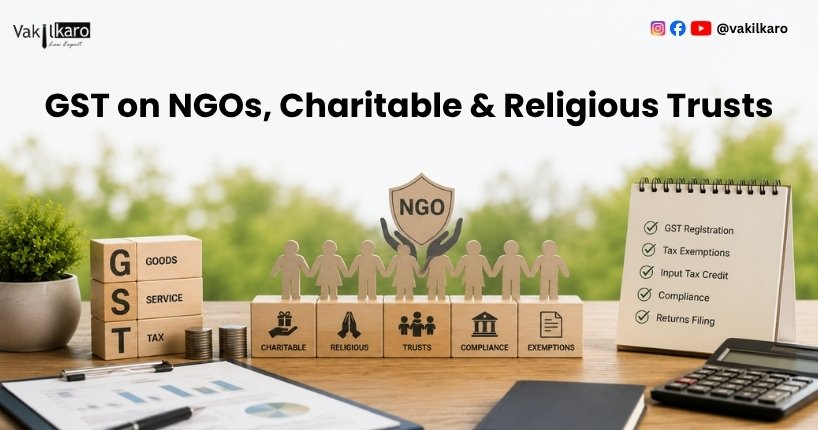
NGOs, charitable trusts, and religious trusts in India play a vital role in addressing social issues but must comply with GST and Income Tax regulations. While GST is generally not applicable to donations, it may apply to fees or services provided. NGOs can benefit from tax exemptions under GST for charitable, religious, and educational activities. Additionally, 12A and 80G registrations under the Income Tax Act offer income tax exemptions and encourage donations by providing tax deductions to donors. Section 8 company registration enhances credibility, especially for larger NGOs. Maintaining proper records and filing returns is crucial for compliance and sustainability.
Key Takeaways
- Understanding GST and Tax Exemptions for NGOs, Charitable & Religious Trusts in India Non-Governmental Organizations (NGOs), charitable trusts, and religious trusts in India serve crucial roles in addressing various social issues such as healthcare, education, poverty alleviation, and environmental conservation.
- This blog aims to provide a clear understanding of how GST impacts NGOs, charitable trusts, and religious trusts in India, focusing on the various tax exemptions available to them.
- Understanding GST on NGOs, Charitable, and Religious Trusts in India The Goods and Services Tax (GST) was introduced in India in 2017 as part of a major tax reform aimed at unifying the country’s indirect tax system.
- While NGOs, charitable trusts, and religious organizations generally work in the social welfare space and are not focused on making profits, they may still be affected by GST if they engage in specific commercial activities or charge for certain services.
- Conclusion GST on NGOs, charitable trusts, and religious trusts can be complex, but there are several provisions and exemptions available under both GST and the Income Tax Act that can help such organizations maintain their non-profit status and focus on their mission.
Understanding GST and Tax Exemptions for NGOs, Charitable & Religious Trusts in India
Non-Governmental Organizations (NGOs), charitable trusts, and religious trusts in India serve crucial roles in addressing various social issues such as healthcare, education, poverty alleviation, and environmental conservation. These organizations largely rely on donations, grants, and other forms of funding to continue their work. Since they operate on a non-profit basis, they generally enjoy tax exemptions, which allow them to allocate their resources more efficiently toward their charitable objectives. However, with the introduction of the Goods and Services Tax (GST) and the complex nature of the Income Tax Act these organizations need to understand their tax obligations.
GST, a tax levied on the supply of goods and services, applies to most businesses, but NGOs and trusts are subject to specific provisions. Generally, GST Registration does not apply to donations, as they are considered voluntary contributions, not payments for goods or services. However, NGOs may be required to pay GST if they charge fees for services, sell goods, or conduct events. For instance, if an NGO sells products or charges entry fees for an event, GST could be applicable on those transactions.
Additionally, various tax exemptions are available for NGOs and trusts. Charitable activities, including welfare work in education, healthcare, and environmental conservation, are exempt from GST. Religious activities, like religious worship and services provided by religious trusts, also enjoy GST exemptions. Educational services and healthcare services provided by non-profit organizations can also benefit from these exemptions, under specific conditions. Furthermore, NGOs registered under Section 8 of the Companies Act, 2013 benefit from tax exemptions, including eligibility for 12A and 80G registration, which helps attract tax-deductible donations and enhances their credibility.
To maximize their tax-exempt status, NGOs must maintain detailed records, file tax returns, and comply with both GST and Income Tax regulations, ensuring transparency and legal adherence.
In India, Non-Governmental Organizations (NGOs) charitable trusts, and religious trusts are vital contributors to societal development, addressing critical issues such as education, healthcare, poverty alleviation, and environmental conservation. These organizations are often established by groups of individuals, community leaders, or philanthropists who are dedicated to addressing specific social challenges. With a focus on public welfare and social good, NGOs, charitable trusts, and religious trusts strive to uplift marginalized communities, enhance access to healthcare and education, provide disaster relief, and protect the environment.
To achieve their missions, these organizations typically rely on donations, grants, and other forms of funding from individuals, corporates, and governments. Because of their non-profit nature, these organizations are granted several tax exemptions by the government, which allows them to allocate a larger portion of their funds directly toward their programs and services. In India, the government provides various tax benefits and exemptions to these organizations to promote their social welfare initiatives and to ensure that the majority of their income is used to advance public good rather than generating profits.
However, the introduction of Goods and Services Tax (GST) in India has raised several questions regarding the tax liabilities of NGOs, charitable trusts, and religious trusts. Under GST, which is a comprehensive indirect tax levied on the supply of goods and services, organizations such as NGOs that deal with goods or services are now required to understand whether they are subject to GST, especially when they charge for services or engage in commercial activities. This shift in taxation has led to confusion, as many of these organizations are not accustomed to paying taxes due to their non-profit status.
This blog aims to provide a clear understanding of how GST impacts NGOs, charitable trusts, and religious trusts in India, focusing on the various tax exemptions available to them. It will also explore the Income Tax Act, which offers additional exemptions for these organizations, helping them maintain their tax-free status while fulfilling their social missions. By addressing these concerns, the blog will provide guidance on how these organizations can navigate the complexities of tax regulations and maximize the tax benefits available to them.
Understanding GST on NGOs, Charitable, and Religious Trusts in India
The Goods and Services Tax (GST) was introduced in India in 2017 as part of a major tax reform aimed at unifying the country’s indirect tax system. This system aims to eliminate complex and overlapping taxation structures, streamline tax collection, and improve transparency. While GST has simplified the tax framework for many sectors, it has also raised several questions for Non-Governmental Organizations (NGOs), charitable trusts, and religious trusts that typically operate under a non-profit structure. The tax implications of GST are crucial for these organizations to understand as they directly impact their operations, financials, and overall compliance.
GST is essentially a tax levied on the supply of goods and services, and it applies to a wide range of business activities. While NGOs, charitable trusts, and religious organizations generally work in the social welfare space and are not focused on making profits, they may still be affected by GST if they engage in specific commercial activities or charge for certain services. Therefore, it is essential for such organizations to understand whether they are required to charge GST on their activities or if they qualify for exemptions.
One of the key concerns for these organizations is whether they need to charge GST on donations or funds they receive. While donations are typically not subject to GST as they are considered voluntary contributions and not payments for goods or services, there are instances where organizations may provide services in exchange for funds, such as event tickets, registration fees for training, or sale of products. In such cases, GST may be applicable, depending on the nature of the transaction.
Moreover, certain activities conducted by NGOs and trusts, such as religious services, educational programs, and healthcare services, may be exempt from GST under specific conditions. For example, many activities related to charity, welfare, and religion are exempt from GST under the GST Act. NGOs involved in providing services like education, healthcare, or community welfare can qualify for these exemptions, provided they meet certain criteria established by the government.
To maintain compliance with GST regulations, NGOs and trusts need to carefully track and document their activities. They should be aware of the thresholds for GST registration, as organizations with a turnover above a certain limit may be required to register for GST and file regular returns. Additionally, it is vital for NGOs and trusts to ensure that they are meeting all the necessary compliance requirements to avoid penalties and maintain their non-profit status.
In summary, understanding GST implications is crucial for NGOs, charitable trusts, and religious trusts to operate smoothly without running into tax-related challenges. By understanding when and how GST applies, and by taking advantage of available exemptions, these organizations can ensure they focus on their mission without being burdened by unnecessary tax obligations.
The Role of GST in NGO and Trust Operations
Most NGOs and trusts focus on non-commercial activities, such as charitable work, religious activities, and welfare services. In these cases, GST on NGO services may not be applicable. However, certain circumstances require NGOs to adhere to GST compliance.
- GST on Donations and Funds: GST is generally not applicable to donations or grants received by NGOs or charitable trusts. Donations are considered voluntary contributions, not payments for goods or services, and are not taxable under GST. However, if an NGO receives payment in exchange for goods or services (e.g., fees for services, entry tickets for events, or sale of products), GST may be applicable.
- GST on Goods and Services: If an NGO provides goods or services for a fee, they may be required to pay GST on those activities. The threshold for GST registration in India is ₹20 lakhs for most businesses, but for NGOs and charitable organizations, the threshold may vary depending on the type of activity conducted.
GST Exemptions for NGOs and Charitable Trusts
While GST applies to a range of goods and services, there are several exemptions available for NGOs and charitable trusts under the GST Act. Certain activities conducted by charitable or religious trusts are exempt from GST. These exemptions include:
- Charitable Activities: GST does not apply to the supply of goods or services by NGOs or charitable organizations that are engaged in charitable activities. Charitable activities can include welfare work in education, healthcare, sanitation, and environmental conservation. These activities are generally exempted under GST.
- Religious Activities: Religious organizations involved in the provision of religious services or religious worship are exempt from GST. This includes services like prayer halls, religious ceremonies, and charitable works performed by religious trusts.
- Educational Institutions: Educational services provided by NGOs and charitable organizations are exempt from GST under certain conditions. This includes education services provided by institutions that are recognized by the government, or those which provide vocational and skill development training.
- Healthcare Services: Healthcare services provided by charitable hospitals or clinics are generally exempt from GST. These healthcare services must be provided by an institution that is not run for profit, and they must focus on serving the public.
- Section 8 Company Registration: NGOs registered as Section 8 company Registration under the Companies Act, 2013, also benefit from tax-exempt status under the Income Tax Act and GST exemptions, provided they follow the prescribed regulatory framework. These organizations can apply for 12A and 80G registration which allows them to receive tax-deductible donations and enhances their credibility with donors.
Income Tax Exemptions for NGOs and Charitable Trusts
Apart from GST, NGOs and charitable trusts must also comply with Income Tax laws in India. Thankfully, under the Income Tax Act, there are several exemptions available for charitable organizations that meet certain conditions.
- Section 12A Registration: One of the most crucial registrations an NGO can obtain is the 12A registration under the Income Tax Act. This registration provides the NGO with tax-exempt status. NGOs with 12A registration do not have to pay income tax on the funds they receive, provided those funds are used for charitable purposes.
- Section 80G Registration: In addition to 12A registration, NGOs can apply for 80G registration, which provides tax deductions to donors. This encourages more donations to the NGO as individuals and businesses can claim a deduction on their taxable income for donations made to the NGO. 80G registration is vital for attracting funds, as it incentivizes people to contribute towards charitable causes.
- Tax-Free Status for Non-Profit Organizations: Non-profit organizations that have been granted 12A and 80G registrations enjoy tax-free status on their income. This means that the income tax on the money received by the NGO is waived off, allowing the organization to redirect these funds into its core mission of social welfare.
The Importance of Section 8 Company Registration for NGOs
When registering an NGO in India, one of the most popular structures is the Section 8 company registration under the Companies Act, 2013. This structure offers a more formalized approach to governance and is suitable for larger organizations or those that want to create a well-defined organizational structure.
- Tax Exemption Benefits: Just like charitable trusts and societies, Section 8 companies are also eligible for 12A and 80G registration, making them eligible for tax exemptions and enabling them to attract donations from tax-paying individuals or companies.
- Formal Governance Structure: A Section 8 company provides a more formal governance model, with a board of directors and a set of by-laws that dictate how the organization is run. This provides greater transparency and accountability, which is essential for large-scale operations and attracting grants from international donors.
- Access to CSR Funds: NGOs registered as Section 8 companies can access Corporate Social Responsibility (CSR) funds from businesses looking to fulfill their CSR obligations. These companies are seen as more credible by corporate donors, which can lead to more significant contributions.
Compliance and Record-Keeping for GST and Income Tax
NGOs and charitable trusts must maintain proper records to ensure compliance with both GST and Income Tax regulations. This includes:
- GST Invoices: For activities that are subject to GST, NGOs must maintain proper GST invoices for all sales or services provided. These invoices help track GST payments and make it easier to file returns.
- Income Tax Filings: NGOs must file annual income tax returns even if they are tax-exempt. The returns should reflect the income received by the organization, including donations and grants, and how these funds are utilized. NGOs registered under 12A and 80G must file their returns to maintain their tax-free status and continue receiving donations.
- Audit Requirements: Large NGOs and Section 8 companies are required to conduct audits of their financial records. The audit ensures transparency and accountability, which are essential for maintaining the organization’s tax-exempt status.
Conclusion
GST on NGOs, charitable trusts, and religious trusts can be complex, but there are several provisions and exemptions available under both GST and the Income Tax Act that can help such organizations maintain their non-profit status and focus on their mission. While NGOs are typically exempt from GST on donations, they must comply with GST when providing services for a fee. Additionally, by obtaining 12A and 80G registrations, NGOs can enjoy tax exemptions on income and attract more donations with the added benefit of tax deductions for donors.
Section 8 company registration provides a formal structure for larger NGOs, offering them enhanced credibility and access to corporate funding, while trust registration and society registration provide simpler structures for smaller organizations.
Ultimately, whether it's navigating the complexities of GST, understanding tax exemptions, or ensuring compliance with Income Tax regulations, NGOs and charitable trusts must work with experienced legal and tax professionals to ensure they maintain their tax-exempt status and continue to operate efficiently.
Why Choose Vakilkaro for NGO Registration and Other Legal Services
Starting and managing an NGO in India involves navigating a complex landscape of legal requirements, registrations, and compliance regulations. Whether it’s understanding GST on NGO activities, handling tax exemptions, or ensuring that your organization meets all necessary criteria under the Income Tax Act and GST Act, it’s essential to have expert legal guidance. This is where Vakilkaro stands out as a reliable partner for NGOs, charitable trusts, and religious organizations.
Expertise and Experience
Vakilkaro brings years of experience in assisting NGOs and other non-profit organizations with their registration and compliance needs. Their team of legal professionals is well-versed in the intricacies of NGO registration processes, including Section 8 company registration, trust registration, and society registration. Whether you are a new NGO looking to start your operations or an established entity seeking to ensure tax compliance, Vakilkaro offers customized solutions that suit your unique needs.
Comprehensive Legal Services
Vakilkaro is not just limited to NGO registration services. They provide a full spectrum of legal services that non-profits may require, such as obtaining 12A and 80G registration for tax exemptions, handling GST concerns, and ensuring compliance with income tax and other regulatory requirements. This comprehensive approach ensures that your NGO is legally sound and equipped to focus on its core mission of social change.
Tailored Solutions for Your NGO
Every NGO has different operational structures, funding sources, and goals. Vakilkaro understands these differences and provides personalized legal advice and support. Whether you are seeking to register as a Section 8 company to access CSR funds or are focused on obtaining 80G registration to enhance donor trust, Vakilkaro helps streamline the entire process and ensures that you take full advantage of tax exemptions and benefits.
Simplified Compliance
Compliance with legal regulations can be a daunting task, especially for non-profits. Vakilkaro offers expert assistance in ensuring your NGO’s compliance with both GST and Income Tax regulations, helping you avoid penalties and maintain a tax-exempt status. Their professionals take care of documentation, filing, and other essential processes, so you can concentrate on your organization’s social objectives.
Reliability and Transparency
Vakilkaro is known for its transparency, timely services, and client-focused approach. With clear pricing structures and open communication, they help build trust with their clients. Their in-depth knowledge of Indian legal frameworks allows NGOs to make informed decisions, ensuring that all legal paperwork and registrations are handled seamlessly and effectively.
Access to a Wide Range of Legal Services
Besides assisting with NGO registration and tax exemptions, Vakilkaro offers legal services across various sectors. Whether you need help with corporate law, intellectual property, or compliance for a small business, Vakilkaro’s diverse legal expertise provides you with the convenience of managing all your legal requirements under one roof.
In conclusion, Vakilkaro is a reliable and knowledgeable partner for NGOs and charitable organizations, providing expert legal services tailored to your specific needs. With their commitment to simplifying the legal landscape for non-profits, you can trust Vakilkaro to help your organization achieve its mission while ensuring full legal compliance.
Official External Resources
Use these primary/official sources to verify rules, forms, fees, timelines and regulatory updates before publication.
Frequently asked questions
GST on NGOs, Charitable & Religious Trusts+
Understanding GST and Tax Exemptions for NGOs, Charitable & Religious Trusts in India Non-Governmental Organizations (NGOs), charitable trusts, and religious trusts in India serve crucial roles in addressing various social issues such as healthcare, education, poverty alleviation, and environmental conservation. This blog aims to provide a clear understanding of how GST impacts NGOs, charitable trusts, and religious trusts in India, focusing on the various tax exemptions available to them.
