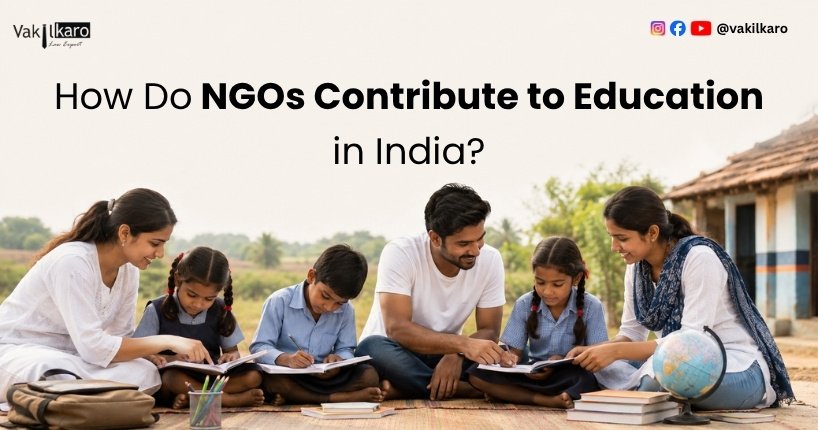
NGOs play a crucial role in improving education in India by providing learning opportunities to underprivileged children, promoting literacy, and reducing dropout rates. They establish schools, run vocational training programs, and advocate for educational reforms. Proper NGO registration, Section 8 Company registration, and 12A and 80G registration enhance their credibility, attract funding, and provide tax benefits to donors. These legal frameworks enable NGOs to sustain their initiatives effectively. Vakilkaro assists NGOs in navigating legal compliance, ensuring smooth operations and financial support. By leveraging these legal structures, NGOs continue to make education accessible and drive positive change in India.
Key Takeaways
- With millions of children lacking access to quality education due to financial constraints, societal barriers, and inadequate infrastructure, NGOs step in to fill these gaps by establishing schools, running literacy programs, and providing scholarships.
- With the right legal support, NGOs can continue making a significant impact on India’s education system, ensuring that learning opportunities reach every child, regardless of their socio-economic background.
- NGOs actively work towards promoting girl child education by: Providing scholarships and financial aid Running awareness campaigns on the importance of female education Establishing safe learning environments with proper sanitation facilities NGOs registered under the NGO registration framework and Section 8 Company registration are better positioned to receive grants and support for gender-focused educational programs.
- These initiatives include: Distributing tablets and laptops to students Creating free online courses and study materials Setting up digital classrooms in rural areas NGOs involved in digital education benefit from NGO registration and Section 8 Company registration, as it helps them collaborate with tech firms and receive grants.
- Whether it’s setting up community learning centers, running digital literacy programs, or advocating for education policy reforms, NGOs need structured governance and financial backing to create a lasting impact.
The Role of NGOs in Advancing Education in India
Non-Governmental Organizations (NGOs) play a vital role in transforming India's education landscape, especially for underprivileged and marginalized communities. By establishing schools, running literacy programs, and providing financial aid, NGOs help bridge the gap in access to quality education. Their efforts significantly reduce dropout rates, promote skill development, and ensure that education reaches even the most remote areas.
To operate effectively and secure funding, NGOs must comply with legal frameworks such as NGO registration, Section 8 Company registration, and 12A and 80G registration. These registrations not only grant NGOs legal recognition but also enable them to receive tax-exempt donations, making it easier to sustain their initiatives. Many organizations leverage these legal benefits to expand their educational programs and reach a larger audience.
Beyond formal education, NGOs actively engage in vocational training, digital learning, and girl child education. They offer scholarships, establish community-run schools, and conduct awareness campaigns to emphasize the importance of education. In addition, NGOs work alongside government agencies to advocate for policy changes that improve the education system and create inclusive learning environments.
However, running an NGO comes with challenges such as securing consistent funding, meeting regulatory requirements, and overcoming infrastructural barriers. This is where Vakilkaro, a trusted legal service provider, assists NGOs in ensuring legal compliance. From NGO registration and Section 8 Company registration to obtaining 12A and 80G registration, Vakilkaro helps NGOs streamline their operations and attract funding.
By adhering to proper legal procedures and securing financial support, NGOs can continue making a meaningful impact on India’s education system. Their relentless efforts ensure that education remains a fundamental right accessible to all, ultimately contributing to the nation’s growth and development.
Non-Governmental Organizations (NGOs) play a crucial role in enhancing India's education sector, particularly for underprivileged and marginalized communities. With millions of children lacking access to quality education due to financial constraints, societal barriers, and inadequate infrastructure, NGOs step in to fill these gaps by establishing schools, running literacy programs, and providing scholarships. Their efforts help reduce dropout rates, improve literacy levels, and create a more skilled and educated workforce.
NGOs do not merely focus on providing formal education but also emphasize skill development, vocational training, and digital literacy. Many organizations introduce specialized programs tailored to disadvantaged groups, such as girls, children with disabilities, and rural youth, to ensure that education remains inclusive and accessible. For instance, mobile learning centers and digital classrooms help students in remote areas receive quality education despite infrastructural limitations.
To operate effectively and secure funding, NGOs must comply with legal regulations such as NGO registration, Section 8 Company registration, and 12A and 80G registration. These legal provisions provide NGOs with formal recognition, allowing them to collaborate with government agencies, corporate sponsors, and international donors. Additionally, 12A and 80G registration offer tax benefits to both NGOs and their donors, encouraging more financial contributions that help sustain educational programs.
Beyond providing direct education, NGOs also advocate for policy changes in the education sector. They work with government bodies to improve the curriculum, enhance teacher training, and implement initiatives that benefit marginalized students. However, despite their impactful work, NGOs face several challenges, including funding shortages, legal complexities, and infrastructural constraints.
This is where Vakilkaro, a trusted legal service provider, plays a vital role. Vakilkaro assists NGOs in NGO registration, Section 8 Company registration, and obtaining 12A and 80G registration, ensuring compliance with legal requirements. By securing these registrations, NGOs can gain credibility, attract funding, and expand their initiatives.
With the right legal support, NGOs can continue making a significant impact on India’s education system, ensuring that learning opportunities reach every child, regardless of their socio-economic background. Their contributions not only shape individual lives but also contribute to the nation’s progress by building a well-educated and skilled workforce for the future.
Bridging the Educational Gap
One of the primary roles of NGOs is to bridge the educational divide between urban and rural areas. Many children in rural India lack access to basic education due to inadequate schools, financial constraints, and socio-cultural barriers. NGOs establish schools, learning centers, and mobile classrooms to provide quality education in these underserved regions.
Organizations that have undergone NGO registration and Section 8 Company registration gain credibility and access to various government and private funding sources. Moreover, obtaining 12A and 80G registration allows NGOs to provide tax benefits to donors, encouraging more contributions towards educational initiatives.
Promoting Girl Child Education
In India, gender disparity in education remains a concern, with many girls dropping out due to financial issues, early marriages, and societal restrictions. NGOs actively work towards promoting girl child education by:
- Providing scholarships and financial aid
- Running awareness campaigns on the importance of female education
- Establishing safe learning environments with proper sanitation facilities
NGOs registered under the NGO registration framework and Section 8 Company registration are better positioned to receive grants and support for gender-focused educational programs. Additionally, 12A and 80G registration enhance their ability to attract donors who prioritize women’s education.
Supporting Underprivileged and Disabled Children
Many children from low-income backgrounds or with disabilities struggle to receive proper education. NGOs play a key role in making education accessible by:
- Offering free tuition and study materials
- Providing transportation facilities to schools
- Developing specialized education programs for children with disabilities
- Training teachers to handle children with special needs
NGOs with 12A and 80G registration can offer tax deductions to their donors, leading to increased financial support for these initiatives. Additionally, NGO registration and Section 8 Company registration allow these organizations to partner with corporate entities under Corporate Social Responsibility (CSR) programs.
Skill Development and Vocational Training
Apart from formal education, NGOs also focus on skill-based learning to enhance employability among youth. Many NGOs provide:
- Computer literacy and digital skills training
- Vocational courses in fields like carpentry, tailoring, and healthcare
- Entrepreneurial training for self-employment
Having NGO registration and Section 8 Company registration helps these organizations build partnerships with industries and government bodies. Furthermore, obtaining 12A and 80G registration allows NGOs to attract financial aid from both domestic and international donors, ensuring the sustainability of skill development programs.
Mid-Day Meal Programs and Nutrition Support
Many children from low-income families drop out due to malnutrition and food insecurity. NGOs work in collaboration with government schemes and private donors to provide mid-day meals, ensuring children receive proper nutrition and continue their education.
Organizations that have NGO registration and Section 8 Company registration are eligible to apply for government grants for nutrition programs. 12A and 80G registration further support these initiatives by allowing tax exemptions for donors contributing to such causes.
Digital and E-Learning Initiatives
With the rise of technology, many NGOs have introduced digital learning programs to ensure students receive quality education despite infrastructural limitations. These initiatives include:
- Distributing tablets and laptops to students
- Creating free online courses and study materials
- Setting up digital classrooms in rural areas
NGOs involved in digital education benefit from NGO registration and Section 8 Company registration, as it helps them collaborate with tech firms and receive grants. Additionally, 12A and 80G registration encourage more contributions from individual donors who wish to support digital literacy.
Advocacy and Policy Reform
NGOs not only implement educational programs but also advocate for policy changes to improve the education system. They work with government bodies to:
- Enhance educational policies for marginalized communities
- Improve the quality of education in government schools
- Ensure better teacher training and curriculum development
By securing NGO registration and Section 8 Company registration, these organizations gain recognition and credibility, allowing them to influence policymakers effectively. 12A and 80G registration further ensure financial stability for continued advocacy efforts.
Encouraging Community Participation
Education is a collective responsibility, and NGOs play a significant role in mobilizing communities to support learning initiatives. Some ways in which NGOs encourage community participation include:
- Organizing parent awareness programs
- Training local volunteers as educators
- Establishing community-run schools
Proper NGO registration and Section 8 Company registration allow NGOs to operate legally and receive funding from both local and international sources. 12A and 80G registration further facilitate tax-deductible donations, enhancing community-based educational programs.
Overcoming Challenges in the Education Sector
Despite their significant contributions, NGOs face multiple challenges in their mission to improve education in India. Some common challenges include:
- Limited Funding: Securing consistent financial support remains a struggle. 12A and 80G registration help attract donors by offering tax benefits.
- Legal Compliance: Complex registration procedures can slow down NGO operations. Obtaining NGO registration and Section 8 Company registration ensures smooth functioning.
- Infrastructure Issues: Many rural schools lack proper facilities. NGOs work on infrastructure development through various fundraising programs.
- Cultural Barriers: Resistance to education, particularly for girls, poses a challenge. NGOs focus on awareness campaigns to change societal mindsets.
How Vakilkaro Assists NGOs in Legal Compliance
For NGOs to maximize their impact, they need to comply with legal requirements. Vakilkaro, a trusted legal service provider, assists NGOs with:
- NGO registration and Section 8 Company registration to ensure legal recognition.
- 12A and 80G registration to enable tax-exempt funding.
- FCRA registration for NGOs seeking international funding.
- Legal consultation on compliance and documentation.
By choosing Vakilkaro, NGOs can focus on their mission while ensuring regulatory compliance, attracting more funding, and expanding their reach.
Conclusion
NGOs play a pivotal role in transforming India's education sector by ensuring learning opportunities reach every child, particularly those from underprivileged backgrounds. Their contributions go beyond traditional classroom education, encompassing digital learning initiatives, girl child education programs, skill development courses, and policy advocacy to drive systemic improvements in the education sector. These organizations act as a bridge between government efforts and community needs, effectively addressing gaps in infrastructure, awareness, and accessibility.
However, despite their crucial role, NGOs face multiple challenges such as funding shortages, regulatory hurdles, and operational limitations. To continue their mission efficiently, NGOs must comply with legal formalities, including NGO registration, Section 8 Company registration, and 12A and 80G registration. These legal frameworks offer NGOs the credibility required to secure grants from government bodies, corporate sponsors, and international donors. Additionally, 12A and 80G registration provide tax benefits to both NGOs and their contributors, encouraging more financial support for educational initiatives.
Legal compliance also ensures that NGOs operate with transparency and accountability, making it easier for them to form partnerships and expand their reach. Whether it’s setting up community learning centers, running digital literacy programs, or advocating for education policy reforms, NGOs need structured governance and financial backing to create a lasting impact.
This is where Vakilkaro plays a crucial role. By providing expert assistance in NGO registration, Section 8 Company registration, 12A and 80G registration, and compliance-related matters, Vakilkaro empowers NGOs to focus on their core mission—educating and uplifting communities. With the right legal support, NGOs can streamline their operations, secure sustainable funding, and amplify their contributions to India's educational landscape, ensuring that every child has the opportunity to learn and thrive.
Why Choose Vakilkaro for Legal Services?
Vakilkaro is a trusted legal service provider known for its comprehensive, efficient, and hassle-free legal solutions tailored to businesses, startups, NGOs, and individuals. With a team of experienced legal professionals, Vakilkaro offers end-to-end assistance in registrations, compliance, taxation, and documentation, ensuring that clients remain legally compliant while focusing on their core activities.
Expertise in NGO and Business Registrations
Vakilkaro specializes in NGO registration, Section 8 Company registration, 12A and 80G registration, and private limited company registration, making it the go-to platform for individuals and organizations looking to start a compliant and legally recognized entity. Their expert guidance simplifies complex processes, reducing errors and delays.
Seamless Taxation and Compliance Support
Tax compliance is crucial for businesses and NGOs. Vakilkaro provides expert assistance in GST registration and filing, income tax filing, and audit support to ensure smooth financial operations. Additionally, they help NGOs and businesses obtain necessary certifications like FCRA registration and CSR compliance to facilitate funding and donations.
Intellectual Property Protection
For businesses, protecting intellectual property is vital. Vakilkaro offers trademark registration copyright registration and patent filing services, ensuring brand security and preventing unauthorized usage of intellectual assets.
Legal Documentation and Agreements
Vakilkaro simplifies the creation of essential legal documents, including contracts, MOAs, shareholder agreements, lease agreements, and employment contracts, ensuring businesses operate smoothly with legally sound documentation.
Reliable and Affordable Legal Solutions
Vakilkaro provides affordable and transparent pricing with dedicated support, ensuring that clients get the best legal services without hidden costs. Whether you are an entrepreneur, NGO, or corporation, Vakilkaro offers tailored legal solutions, making legal compliance effortless and efficient.
Official External Resources
Use these primary/official sources to verify rules, forms, fees, timelines and regulatory updates before publication.
Frequently asked questions
How Do NGOs Contribute to Education in India?+
With the right legal support, NGOs can continue making a significant impact on India’s education system, ensuring that learning opportunities reach every child, regardless of their socio-economic background. NGOs actively work towards promoting girl child education by: Providing scholarships and financial aid Running awareness campaigns on the importance of female education Establishing safe learning environments with proper sanitation facilities NGOs registered under the NGO registration framework and Section 8 Company registration are better positioned to receive grants and support for gender-focused educational programs.
