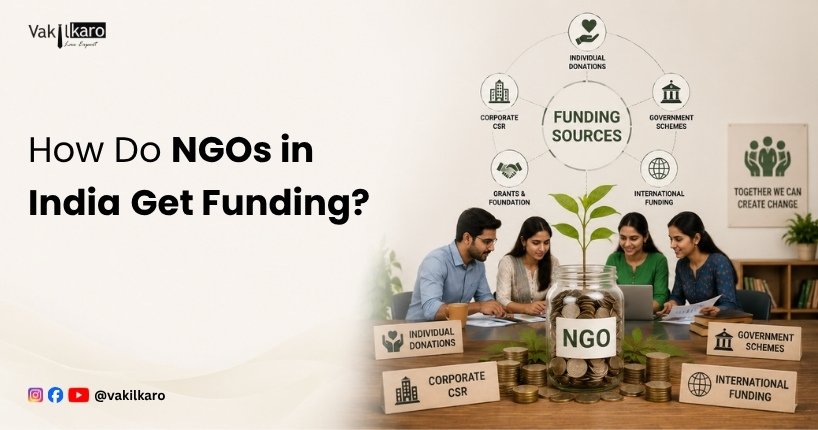
NGOs in India play a vital role in addressing social issues but require sustainable funding to operate effectively. Various sources of funding include government grants, corporate CSR contributions, foreign donations, crowdfunding, and individual philanthropy. To access these funds, NGOs must ensure proper NGO registration, Section 8 Company registration, and 12A and 80G registration for tax exemptions. Compliance with regulatory requirements and maintaining transparency is essential for securing grants and donor trust. By leveraging multiple funding streams and adopting strategic financial management, NGOs can ensure long-term sustainability and maximize their impact on society.
Key Takeaways
- Each funding source has its own eligibility criteria, compliance requirements, and application processes, making it crucial for NGOs to navigate these avenues strategically.
- By understanding the various funding options and ensuring compliance with legal and regulatory requirements, NGOs can enhance their financial stability and maximize their impact.
- This guide explores the different funding sources available for NGOs in India, the importance of proper registration, and how organizations can build a sustainable financial model to support their cause.
- Steps to Apply for Government Grants To qualify for government funding, NGOs must follow a structured application process and meet specific eligibility criteria.
- Grants from International NGOs and Foundations Securing funding from international NGOs and charitable foundations is a significant opportunity for Indian NGOs to expand their initiatives and create a broader social impact.
Funding Sources for NGOs in India: Ensuring Sustainability
Non-Governmental Organizations (NGOs) play a crucial role in addressing various social challenges, but their effectiveness depends on sustainable financial support. To carry out their missions successfully, NGOs rely on multiple funding sources, including government grants, corporate social responsibility (CSR) contributions, foreign donations, crowdfunding, and individual philanthropy.
Government grants are a significant source of funding, with various ministries offering financial assistance to NGOs working in education, healthcare, women’s empowerment, and environmental conservation. To qualify, NGOs must have valid NGO registration such as Section 8 Company registration, and comply with regulatory requirements like 12A and 80G registration for tax exemptions.
Corporate Social Responsibility (CSR) funding is another vital avenue, as companies allocate a portion of their profits to social causes under the Companies Act, 2013. NGOs that meet compliance standards and maintain transparency can establish partnerships with businesses to receive CSR funds.
Foreign contributions from international organizations and philanthropic foundations also provide financial support to NGOs. However, receiving such funds requires FCRA registration and adherence to strict guidelines. NGOs can also raise funds through crowdfunding platforms, where digital campaigns help attract donations from individuals worldwide.
Membership fees, fundraising events, and income-generating activities further contribute to financial sustainability. Some NGOs establish social enterprises that reinvest earnings into their initiatives, ensuring long-term viability. Additionally, securing 12A and 80G registration helps NGOs attract more donors by offering tax benefits on contributions.
By diversifying their funding sources and ensuring proper legal compliance, NGOs can build financial stability and enhance their impact on society. Partnering with professional legal service providers like Vakilkaro can help streamline registration processes and tax exemption applications, enabling NGOs to focus on their core mission of social development.
Non-Governmental Organizations (NGOs) are an integral part of India’s social and economic fabric, working to address critical issues such as education, healthcare, poverty alleviation, women's empowerment, environmental protection, and disaster relief. These organizations fill gaps in public service delivery, advocate for marginalized communities, and drive sustainable development initiatives. However, to effectively carry out their missions and expand their impact, NGOs require consistent and reliable funding.
The financial sustainability of an NGO determines its ability to implement long-term projects, support operational costs, and scale its initiatives to benefit more people. NGOs in India have access to multiple funding sources, including government grants, corporate sponsorships under Corporate Social Responsibility (CSR) initiatives, crowdfunding campaigns, international donations, and individual philanthropy. Each funding source has its own eligibility criteria, compliance requirements, and application processes, making it crucial for NGOs to navigate these avenues strategically.
One of the key aspects of securing funding is obtaining proper legal registration. NGOs can be registered as Trusts, Societies, or Section 8 Companies, each governed by different legal frameworks. Section 8 Company registration in particular, offers a corporate structure that enhances transparency and credibility, making it easier to attract funding from corporations and international organizations. Additionally, obtaining 12A and 80G registration is essential for tax exemptions, both for the NGO and its donors, encouraging more contributions from businesses and individuals.
By understanding the various funding options and ensuring compliance with legal and regulatory requirements, NGOs can enhance their financial stability and maximize their impact. This guide explores the different funding sources available for NGOs in India, the importance of proper registration, and how organizations can build a sustainable financial model to support their cause.
Government Grants and Schemes: A Vital Funding Source for NGOs
The Government of India plays a crucial role in supporting the non-profit sector by offering financial assistance through various grants and schemes. These grants help NGOs implement programs that align with national development goals, such as poverty alleviation, women’s empowerment, education, skill development, rural development, and environmental sustainability. Government funding enables NGOs to scale their initiatives, reach marginalized communities, and contribute to social progress.
Different ministries and departments administer these grants based on the focus area of the NGO. For example, the Ministry of Women and Child Development funds initiatives related to gender equality and child welfare, while the Ministry of Environment, Forest and Climate Change supports projects related to environmental conservation. Similarly, the Ministry of Social Justice and Empowerment provides funding for projects that uplift disadvantaged communities, including Scheduled Castes (SCs), Scheduled Tribes (STs), and persons with disabilities.
Steps to Apply for Government Grants
To qualify for government funding, NGOs must follow a structured application process and meet specific eligibility criteria. Below are the key steps involved:
- Legal Registration: NGOs must have a valid legal structure, registered under one of the following:
Societies Registration Act, 1860 (for societies)
Indian Trusts Act, 1882 (for trusts)
Companies Act, 2013 (for Section 8 Company registration)
- Compliance with Tax Regulations: NGOs should obtain 12A and 80G registration which provides tax exemptions for both the organization and its donors. This makes the NGO more appealing to government agencies and corporate funders.
- Application via Government Portals: NGOs must register on NGO-DARPAN, an online platform managed by NITI Aayog, to apply for government grants. Registration on this portal enhances transparency and credibility, making it easier to access government schemes.
- Submission of Documentation: NGOs need to prepare and submit detailed project proposals, including:
A clear outline of the project objectives, expected impact, and target beneficiaries.
Audited financial statements proving financial accountability and transparency.
Past performance reports showcasing successful projects and community impact.
Compliance with any additional requirements set by the funding ministry or department.
Challenges and Considerations
While government grants provide significant financial support, they are highly competitive, with thousands of NGOs applying for limited funds. Additionally, these grants come with strict compliance requirements, including periodic reporting, fund utilization audits, and impact assessments. Failure to meet these requirements can result in fund withdrawal or disqualification from future grants.
To increase their chances of securing government funding, NGOs should:
- Maintain clear financial records and ensure transparency in fund management.
- Build strong networks with government agencies and policymakers.
- Continuously monitor government schemes and deadlines to apply on time.
- Demonstrate a track record of successful social impact through previous projects.
By leveraging government grants effectively, NGOs can access substantial funding to support their social initiatives, enhance their outreach, and contribute meaningfully to national development. However, they must also focus on compliance, efficiency, and transparency to sustain their eligibility for future government support.
Corporate Social Responsibility (CSR) Funding
Corporate Social Responsibility (CSR) funding has emerged as a significant source of financial support for Non-Governmental Organizations (NGOs) in India. The Companies Act, 2013, mandates that companies meeting specific financial thresholds contribute a portion of their profits towards social welfare projects. This creates an opportunity for NGOs to collaborate with businesses and receive funding for impactful initiatives.
CSR Requirements Under the Companies Act, 2013
As per Section 135 of the Companies Act, 2013, companies that fulfill any of the following criteria must allocate at least 2% of their average net profits (from the preceding three financial years) towards CSR initiatives:
- A net worth of ₹500 crore or more
- An annual turnover of ₹1,000 crore or more
- A net profit of ₹5 crore or more
These companies are required to establish a CSR committee and develop a structured CSR policy. The policy outlines the company’s social initiatives and aligns them with national development priorities, such as education, healthcare, rural development, environmental sustainability, and poverty alleviation.
How NGOs Can Secure CSR Funding
To receive CSR funds, NGOs must position themselves as credible and efficient partners for corporate entities. The following steps can help NGOs secure CSR funding:
- Legal Registration and Compliance:
- NGOs must be registered as a legal entity under one of the following:
- Section 8 Company registration under the Companies Act, 2013
- Trust registration under the Indian Trusts Act, 1882
- Society registration under the Societies Registration Act, 1860
- Companies prefer working with registered NGOs as they ensure accountability and compliance with legal frameworks.
- 12A and 80G Registration:
- NGOs should obtain 12A and 80G registration, which provides tax benefits to donor companies.
- 80G registration allows donors to claim deductions on their contributions, making funding more attractive for corporations.
- Building Strong Corporate Relationships:
- NGOs should actively network with corporate CSR departments and decision-makers.
- Engaging in CSR forums, industry conferences, and corporate networking events can help establish connections with potential donors.
- Collaborating with businesses on small-scale projects before seeking larger funding commitments can build long-term trust.
- Developing Well-Structured Proposals:
- Companies seek projects that align with their CSR goals and demonstrate measurable impact.
- NGOs should present proposals that clearly outline:
- Project objectives and target beneficiaries
- Expected social impact and success indicators
- Financial planning and utilization of funds
- Strategies for implementation and monitoring
- Providing case studies of successful past projects can increase credibility.
- Ensuring Financial Transparency and Accountability:
- Corporations require NGOs to maintain clear financial records and periodic reports on fund utilization.
- Conducting third-party audits and submitting regular progress updates can enhance trust and ensure continued corporate funding.
- Proper documentation, including financial statements and impact reports, strengthens an NGO’s credibility and compliance with CSR guidelines.
Key Areas of CSR Investment
Many corporations focus their CSR initiatives on areas that align with national and global development goals. Some of the key sectors where NGOs can receive CSR funding include:
- Education: Scholarships, digital learning initiatives, and infrastructure development in schools.
- Healthcare: Free medical camps, maternal health programs, and disease prevention campaigns.
- Rural Development: Clean water supply, sanitation projects, and skill development programs.
- Environmental Conservation: Afforestation, renewable energy projects, and waste management initiatives.
Foreign Funding and FCRA Registration
Foreign funding plays a crucial role in supporting Non-Governmental Organizations (NGOs) in India. International organizations, foreign governments, philanthropic institutions, and global charities provide financial assistance for various social initiatives. However, to ensure transparency and prevent misuse of foreign contributions, the Indian government regulates such funding under the Foreign Contribution (Regulation) Act (FCRA), 2010. NGOs seeking to receive foreign donations must comply with the provisions of this Act to operate legally and maintain credibility.
Understanding the Foreign Contribution (Regulation) Act (FCRA), 2010
The FCRA, 2010, is a legal framework designed to regulate foreign contributions to Indian organizations. It ensures that funds received from foreign sources are used for legitimate purposes such as poverty alleviation, education, healthcare, environmental protection, and disaster relief. The Act applies to all NGOs, societies, trusts, and Section 8 Companies that seek financial aid from foreign donors.
Without FCRA registration, an NGO cannot legally accept foreign contributions, making compliance with the Act a prerequisite for organizations relying on international aid.
Eligibility Criteria for FCRA Registration
To obtain FCRA registration, NGOs must meet specific eligibility criteria, which include:
- Minimum Three Years of Operations
- An NGO must have a proven track record of at least three years in social service or development activities.
- Newly formed organizations are generally not eligible for direct FCRA registration but may apply for prior permission to receive foreign funds for a specific project.
- Proper Legal Registration
- NGOs must be registered under one of the following legal frameworks:
- Societies Registration Act, 1860 (for societies)
- Indian Trusts Act, 1882 (for trusts)
- Section 8 Company registration under the Companies Act, 2013 (for not-for-profit companies)
- Financial and Operational Transparency
- The NGO must submit audited financial statements for the past three years to demonstrate financial accountability.
- The organization should also provide a detailed report of past projects and how its previous funding has been utilized.
- Compliance with Tax Exemption Regulations
- Having 12A and 80G registration can enhance credibility by ensuring tax exemptions and compliance with Indian tax laws.
- Many international donors prefer funding NGOs that have tax exemption certificates, as this assures legitimacy and financial discipline.
Steps to Apply for FCRA Registration
To receive foreign contributions legally, NGOs must follow a structured application process:
- Filing an Online Application
- NGOs must apply through the FCRA online portal managed by the Ministry of Home Affairs (MHA).
- The application requires details about the organization, including its legal status, governance structure, and funding sources.
- Submission of Key Documents
- Registration certificate (Society, Trust, or Section 8 Company registration certificate)
- Audited financial statements of the last three years
- Annual reports outlining the NGO’s activities and impact
- List of key donors and past funding sources
- Verification and Approval
- The Ministry of Home Affairs (MHA) conducts a thorough background check and may request additional information.
- Once verified, the NGO receives FCRA registration, valid for five years.
- Renewal and Compliance
- FCRA registration must be renewed every five years.
- NGOs must file annual returns detailing the utilization of foreign funds.
Importance of FCRA Compliance
Strict compliance with FCRA guidelines is essential, as any violation can lead to severe penalties, including cancellation of registration, financial audits, and legal actions. Key compliance measures include:
- Maintaining a separate bank account exclusively for receiving foreign funds.
- Submitting annual financial reports to the government.
- Ensuring funds are used only for the approved purposes, as stated in the application.
Crowdfunding and Online Fundraising for NGOs in India
In the digital age, crowdfunding and online fundraising have emerged as powerful tools for NGOs to mobilize resources, expand their reach, and engage with a global donor base. Unlike traditional fundraising methods, crowdfunding allows organizations to leverage the power of the internet and social media to raise small contributions from a large number of people.
Various online fundraising platforms, such as Milaap, Ketto, ImpactGuru, and GiveIndia, provide NGOs with a user-friendly interface to launch fundraising campaigns and collect donations from individuals worldwide. These platforms have helped numerous NGOs secure funds for education, healthcare, disaster relief, environmental conservation, and other social causes.
Why Crowdfunding is Effective for NGOs
Crowdfunding has gained popularity due to its ease of access, low operational cost, and ability to reach a broad audience. Unlike traditional grant applications, which may take months to process, crowdfunding campaigns can generate immediate financial support.
Additionally, online fundraising enables NGOs to connect directly with donors, share real-time updates, and build long-term relationships. Donors are more likely to contribute when they see the impact of their donations and receive regular updates from the NGO.
Best Practices for Crowdfunding
To run a successful crowdfunding campaign, NGOs should follow these best practices:
- Create a Compelling Campaign with a Clear Mission
- NGOs must develop a strong, emotionally engaging story that highlights the problem they aim to solve.
- The campaign should include a clear call to action—whether it's providing meals to children, funding medical treatment, or setting up a school.
- High-quality images and videos can significantly enhance donor engagement.
- Ensure Transparency and Provide Regular Updates
- Transparency is key to building trust with donors.
- NGOs should share regular updates on how funds are being used and the impact of donations through progress reports, photos, and testimonials.
- A detailed fund utilization plan helps assure potential donors that their contributions are being used effectively.
- Obtain 12A and 80G Registration for Tax Benefits
- NGOs that have 12A and 80G registration can attract more donors by offering them tax exemptions.
- Many individuals and corporate donors prefer contributing to organizations with tax-deductible donation status.
- Leverage Social Media and Digital Marketing
- Social media platforms such as Facebook Instagram Twitter, and LinkedIn play a crucial role in promoting crowdfunding campaigns.
- NGOs should regularly post stories, updates, and donor acknowledgments to encourage more contributions.
- Running paid advertisements on social media can further enhance reach and visibility.
- Engage Influencers and Brand Ambassadors
- Collaborating with social media influencers, celebrities, and corporate partners can help an NGO gain more exposure.
- A well-known personality endorsing a crowdfunding campaign can boost credibility and encourage more donations.
- Use Multiple Payment Options
- Providing various payment options such as UPI, credit/debit cards, and digital wallets makes it easier for donors to contribute.
- NGOs should also consider offering international payment options to attract global donors.
- Analyze and Improve Campaign Performance
- NGOs should track the success of their crowdfunding campaigns using analytics tools available on crowdfunding platforms.
- Studying donor behavior and engagement patterns helps in optimizing future campaigns.
Crowdfunding in NGO Sustainability
Crowdfunding not only helps NGOs raise immediate funds but also builds a community of engaged supporters. A well-executed campaign can lead to repeat donations, long-term donor relationships, and increased awareness of the NGO’s mission.
Furthermore, crowdfunding reduces dependency on traditional funding sources, such as grants and corporate donations, giving NGOs more financial flexibility.
Grants from International NGOs and Foundations
Securing funding from international NGOs and charitable foundations is a significant opportunity for Indian NGOs to expand their initiatives and create a broader social impact. Many international organizations provide financial assistance, technical support, and capacity-building opportunities for NGOs working on causes such as education, healthcare, poverty alleviation, human rights, and environmental conservation.
Some of the most well-known international donors that fund Indian NGOs include the Bill & Melinda Gates Foundation, Ford Foundation, UNICEF, USAID, Global Fund, and World Bank-supported initiatives. These organizations seek to collaborate with credible and legally compliant NGOs that align with their mission and objectives.
Why International Grants Matter for NGOs
International grants offer long-term financial support and often come with capacity-building programs, training, and global networking opportunities. Unlike local grants, which may be limited in scope, international funding can help NGOs scale their projects, implement innovative solutions, and reach underserved communities.
Additionally, receiving grants from reputed international foundations enhances an NGO’s credibility and reputation, making it easier to secure funding from other donors in the future.
Steps to Apply for International Grants
To successfully obtain international grants, NGOs must follow a structured application process and meet specific eligibility criteria.
Legal Registration and Compliance
- NGOs must be legally registered under the Societies Registration Act, 1860, the Indian Trusts Act, 1882 or as a Section 8 Company under the Companies Act, 2013.
- Section 8 Company registration enhances credibility, as it signifies a legally recognized entity dedicated to non-profit activities.
- NGOs seeking foreign funding must also comply with the Foreign Contribution (Regulation) Act (FCRA), 2010, which regulates the receipt and utilization of foreign contributions.
Obtain 12A and 80G Registration for Tax Benefits
- Many international donors prefer NGOs that have 12A and 80G registration as it provides tax exemptions for funds received.
- These registrations also make the organization more transparent and accountable in terms of fund utilization.
Identify Relevant Grant Opportunities
- NGOs should research and identify foundations that align with their mission and focus areas.
- Websites such as GrantStation, FundsforNGOs, and the United Nations’ grant portals provide information on available funding opportunities.
- NGOs should subscribe to donor newsletters, attend funding workshops, and build networks with global philanthropic organizations.
Prepare a Strong Grant Proposal
- A well-crafted proposal should clearly define the NGO’s mission, objectives, target beneficiaries, and expected outcomes.
- The proposal should include a detailed project plan, budget, and sustainability strategy.
- Demonstrating measurable impact, innovative approaches, and scalability enhances the chances of securing funding.
Submit Financial Statements and Reports
- NGOs must submit audited financial statements, annual reports, and records of past activities to prove transparency and accountability.
- Many donors require NGOs to have a track record of successful project implementation before awarding grants.
Align with Donor Organization’s Objectives
- Every funding organization has specific priorities and impact areas.
- NGOs should ensure their projects align with the donor’s mission, whether it is focused on public health, gender equality, environmental sustainability, or education.
Ensure Compliance with Donor Expectations
- Once an NGO secures a grant, it must adhere to the donor’s reporting and monitoring requirements.
- Regular progress updates, financial accountability, and impact assessments help maintain a long-term relationship with funding organizations.
Challenges in Securing International Grants
While international grants provide significant financial support, they come with challenges, including:
- High competition – Many NGOs apply for the same grants, making the selection process highly competitive.
- Complex application process – NGOs need experienced grant writers who can draft compelling proposals.
- Compliance requirements – International donors often have strict guidelines regarding fund utilization, documentation, and reporting.
- Dependence on foreign funding – Over-reliance on international grants can make NGOs vulnerable to policy changes or shifts in donor priorities.
Membership Fees and Subscriptions
One of the most sustainable and predictable sources of funding for NGOs is membership fees and subscriptions. This model allows NGOs to build a community of supporters who contribute financially to their cause regularly. Unlike one-time donations, membership-based funding provides a steady and recurring income, helping NGOs maintain financial stability and long-term operations.
Membership programs can be structured in a way that encourages individuals and organizations to actively engage with the NGO’s work while enjoying certain benefits in return. This method is particularly useful for NGOs that advocate for social causes, professional associations, or cultural and educational organizations.
How Membership-Based Funding Works
Creating Different Membership Levels
- NGOs can offer tiered membership options such as individual memberships, corporate memberships, lifetime memberships, or student memberships.
- Each level can come with specific benefits, such as access to exclusive events, training programs, research publications, and networking opportunities.
- Offering flexible payment options (monthly, yearly, or lifetime memberships) makes it easier for a diverse audience to join.
Offering Value to Members
- Members should feel incentivized to contribute by receiving regular updates, participation opportunities, and special perks.
- Some common benefits include:
- Exclusive newsletters with insights into ongoing projects.
- Invitations to seminars, webinars, and workshops on relevant topics.
- A say in the NGO’s decision-making process through voting rights or advisory roles.
- Recognition through certificates, badges, or appreciation events.
Strengthening Member Engagement
- Retaining members requires consistent communication and engagement.
- NGOs can organize member meetups, webinars, and Q&A sessions to keep their community involved.
- Sending impact reports and success stories makes members feel that their contributions are making a tangible difference.
Advantages of Membership-Based Funding
Ensures a Steady Revenue Stream
- Unlike one-time donations, membership fees provide a predictable income, helping NGOs plan their projects better.
- The long-term commitment of members ensures financial sustainability.
Builds a Loyal Supporter Base
- Members are more likely to stay connected with the NGO’s mission and contribute beyond membership fees through volunteering and fundraising.
- A strong member base also increases credibility when applying for corporate sponsorships and grants.
Enhances Tax Benefits Through 12A and 80G Registration
- NGOs with 12A and 80G registration can offer tax exemptions to members, making it more attractive for individuals and businesses to join.
- This also helps in securing corporate memberships, as companies can claim tax deductions on their contributions.
Challenges in Membership-Based Funding
While membership fees provide a stable funding model, NGOs may face certain challenges:
- Convincing people to pay a membership fee requires offering real value in return.
- Retaining members requires ongoing engagement and delivering consistent benefits.
- Managing memberships at scale requires proper record-keeping, communication, and administration tools.
Events and Fundraising Campaigns
Fundraising events are one of the most engaging and effective ways for NGOs to generate funds while increasing awareness about their cause. By organizing charity events, marathons, auctions, and awareness campaigns, NGOs can connect with potential donors, corporate sponsors, and the general public, encouraging active participation and financial contributions.
Events not only serve as a platform for fundraising but also provide an opportunity for networking, fostering partnerships, and strengthening relationships with existing supporters. Successful fundraising campaigns can significantly enhance an NGO’s visibility, credibility, and financial sustainability.
Successful Event Planning Strategies
Selecting a Cause That Resonates with the Target Audience
- The event should align with the NGO’s core mission and focus on a cause that appeals to the target audience.
- Clear objectives should be set—whether the goal is to raise funds, increase awareness, or expand the NGO’s donor base.
- Events should evoke an emotional connection, making attendees feel like they are actively contributing to meaningful social change.
Partnering with Corporate Sponsors and Media Outlets
- Corporate sponsorships can significantly boost funding while offering companies an opportunity to fulfill their Corporate Social Responsibility (CSR) obligations.
- NGOs can collaborate with businesses that align with their mission, ensuring mutual benefits such as branding and community goodwill.
- Engaging media outlets like newspapers, radio stations, and digital platforms helps in promoting the event to a wider audience and attracting more attendees.
Offering Incentives Like Tax Exemptions Through 12A and 80G Registration
- NGOs registered under 12A and 80G can offer tax benefits to donors, making contributions more appealing.
- Clearly communicating these tax exemptions in promotional materials can encourage higher donations.
- Corporate donors and high-net-worth individuals are more likely to contribute when they receive financial benefits through tax deductions.
Showcasing Success Stories and Impact Reports
- A successful event is one that not only raises funds but also demonstrates transparency and accountability.
- Sharing real-life impact stories from beneficiaries helps in establishing an emotional connection and trust among donors.
- Providing well-documented financial reports and outcome analyses assures contributors that their funds are being utilized effectively.
Types of Fundraising Events and Campaigns
Charity Galas and Auctions
- Hosting an annual charity gala with ticketed entry and corporate sponsorships can be an excellent fundraising strategy.
- Silent and live auctions of donated items or artwork can help raise additional funds.
Marathons and Walkathons
- Organizing marathons, walkathons, and cycling events engages both participants and sponsors.
- Entry fees and sponsorships can generate significant funds while promoting a healthy and active lifestyle.
Online Fundraising Campaigns
- Virtual events such as webinars, live-streamed concerts, and online pledge drives can reach a global audience.
- Crowdfunding platforms like Milaap, Ketto, and GiveIndia can be used to collect donations.
Awareness Campaigns and Community Events
- Hosting panel discussions, street plays, and awareness workshops can educate the public while raising funds through ticket sales or voluntary contributions.
- Collaborating with local businesses for sponsorships and venue support can reduce costs and increase outreach.
Benefits of Fundraising Events for NGOs
- Enhances Public Engagement: Events provide a direct platform for donor interaction, creating stronger emotional connections.
- Builds a Strong Supporter Base: Recurring events help in maintaining long-term donor relationships.
- Creates Networking Opportunities: NGOs can collaborate with industry leaders, corporate sponsors, and influential individuals.
- Boosts Brand Awareness: Media coverage and promotional activities help NGOs increase visibility and credibility.
Social Enterprises and Income-Generating Activities
To ensure long-term sustainability and financial independence, many NGOs in India are adopting social enterprises and income-generating activities as an alternative to traditional funding methods. By engaging in business-like operations, NGOs can generate revenue while staying committed to their social mission. This approach reduces their reliance on donations, grants, and external funding, allowing them to create a self-sustaining financial ecosystem.
Social enterprises are particularly beneficial for NGOs that focus on livelihood generation, vocational training, and community development, as they provide employment opportunities to underprivileged groups while funding social initiatives.
Types of Social Enterprises and Income-Generating Activities
Handicraft Production and Artisan Empowerment
Many NGOs work with rural artisans, women’s self-help groups, and marginalized communities to produce and sell handmade products such as textiles, pottery, jewelry, and eco-friendly goods. These products are marketed through e-commerce platforms, retail stores, and corporate gifting programs, generating income while preserving traditional crafts.
Vocational Training and Skill Development Centers
NGOs engaged in education and employment generation often set up training centers to teach skills like tailoring, carpentry, digital literacy, and hospitality services. Graduates from these programs can either start their businesses or work for local employers, while NGOs charge nominal fees or receive commissions from job placements.
Agricultural and Agro-Based Initiatives
NGOs in rural development and environmental conservation often invest in organic farming, dairy production, beekeeping, and food processing units. These initiatives not only support sustainable agriculture but also generate revenue through the sale of organic produce, dairy products, and processed foods in local and international markets.
Microfinance and Cooperative Models
Some NGOs provide small loans and financial services to entrepreneurs in low-income communities through microfinance institutions (MFIs) and cooperative societies. The interest earned on loans is reinvested in expanding financial support for more beneficiaries, ensuring a continuous cycle of growth.
Educational Institutions and Consultation Services
NGOs working in education often establish schools, coaching centers, or online learning platforms to provide affordable education. Similarly, NGOs with expertise in legal aid, health, and environmental conservation offer consulting and advisory services to businesses and individuals for a nominal fee.
How Social Enterprises Support NGOs
Revenue from Goods and Services Helps Fund Social Initiatives
- Income generated from product sales, training programs, or services is reinvested in social projects.
- It enables NGOs to fund operational costs without solely depending on external donors.
- Expanding income-generating activities ensures long-term financial sustainability.
Self-Sufficiency Reduces Dependency on External Donors
- NGOs that rely solely on grants, donations, and government funding often face financial uncertainty.
- A stable income stream from social enterprises allows NGOs to plan long-term projects with financial confidence.
- Self-sustained operations provide greater flexibility in decision-making and project execution.
Section 8 Company Registration Allows NGOs to Operate with Business-Like Efficiency
- Registering as a Section 8 Company under the Companies Act, 2013, enables NGOs to operate like a business while maintaining their non-profit status.
- This registration helps NGOs attract investors, apply for government incentives, and establish transparent governance structures.
- Profits earned by the NGO must be reinvested in social activities, ensuring that financial gains align with the organization’s mission.
Developing a Sustainable Financial Model for Long-Term Impact
For NGOs to successfully implement social enterprises, they need to focus on:
✅ Market Research – Identifying sustainable business opportunities aligned with their mission.
✅ Business Planning – Developing a model that balances profitability with social impact.
✅ Legal Compliance – Ensuring proper NGO registration, Section 8 Company registration, and adherence to tax regulations.
✅ Strategic Partnerships – Collaborating with corporate organizations, government agencies, and financial institutions.
✅ Transparency and Reporting – Maintaining accountability to stakeholders and ensuring proper utilization of funds.
By adopting social enterprises and income-generating models, NGOs can achieve financial independence, enhance their impact, and create lasting change in society.
Endowments and Investments
Some well-established NGOs create endowment funds where a portion of donations is invested, and only the interest earned is used for operations.
Key Aspects of Endowments:
- Requires careful financial planning and investment management.
- Provides a stable source of income in the long run.
- Transparency and financial reporting are crucial for donor confidence.
Endowments help NGOs sustain their activities beyond periodic fundraising efforts.
Individual Donations and Philanthropy
Many NGOs receive funds from individual donors who believe in their cause. High-net-worth individuals and philanthropists also contribute significantly to social initiatives.
Encouraging Individual Donations:
- Offering tax deductions through 12A and 80G registration motivates donors.
- Personalized donor engagement strategies build lasting relationships.
- Transparency in fund utilization enhances credibility.
Individual donations remain one of the most flexible and essential sources of NGO funding.
Conclusion
Funding is the backbone of any NGO’s sustainability and impact. By leveraging multiple funding sources—government grants, CSR partnerships, foreign aid, crowdfunding, membership fees, and social enterprises—NGOs can ensure financial stability and long-term growth. Proper NGO registration, Section 8 Company registration, and 12A and 80G registration are crucial for securing funds and maintaining credibility.
For NGOs looking to streamline their registration and tax exemption processes, professional legal services like Vakilkaro offer expert guidance and hassle-free documentation assistance. By adopting a diversified and strategic approach to fundraising, NGOs can continue their mission of creating meaningful social change in India.
Why Choose Vakilkaro for NGO Registration and Legal Services?
Navigating the complex legal framework for NGO registration, Section 8 Company registration, 12A and 80G registration, and compliance with regulatory requirements can be challenging. Vakilkaro simplifies this process by offering expert legal assistance, ensuring smooth and hassle-free registration, compliance, and documentation for NGOs and other businesses. Here’s why Vakilkaro is the best choice:
Expert Guidance on NGO and Section 8 Company Registration
Vakilkaro has a team of experienced professionals who assist NGOs in choosing the right legal structure—Trust, Society, or Section 8 Company—based on their operational needs. They ensure compliance with the Societies Registration Act, 1860, the Indian Trusts Act, 1882, and the Companies Act, 2013 for seamless registration.
Seamless 12A and 80G Registration for Tax Exemptions
Obtaining 12A and 80G registration is crucial for NGOs to secure tax exemptions and attract more donors. Vakilkaro assists in:
✅ Documentation and filing for 12A and 80G registration.
✅ Ensuring timely approvals from the Income Tax Department.
✅ Helping NGOs maximize donor benefits through tax-deductible contributions.
FCRA Registration Assistance for Foreign Funding
For NGOs seeking international grants, FCRA (Foreign Contribution Regulation Act) registration is mandatory. Vakilkaro provides:
✅ End-to-end support in filing FCRA applications.
✅ Ensuring compliance with FCRA regulations to receive foreign donations legally.
✅ Assistance with FCRA renewal and reporting requirements.
Corporate Compliance & CSR Funding Assistance
With increasing corporate involvement in Corporate Social Responsibility (CSR) funding, Vakilkaro helps NGOs:
✅ Register as a Section 8 Company to attract corporate donors.
✅ Draft impact-driven proposals to secure CSR funds.
✅ Maintain financial transparency and compliance with CSR laws.
Legal Documentation & Contract Drafting
Vakilkaro provides customized legal documentation services, including:
✅ MOA, AOA, and Trust Deeds for NGO registration.
✅ Contracts and agreements for social enterprises and donor funding.
✅ Audit and compliance reporting for tax and government approvals.
Business, Taxation, and Trademark Services
Apart from NGO-related services, Vakilkaro specializes in:
✅ Company registration (Pvt Ltd, LLP, OPC, MSME, Startups).
✅ GST filing, tax advisory, and compliance management.
✅ Trademark registration IP protection, and business licensing.
Vakilkaro: A Trusted Legal Partner for NGOs and Businesses
By choosing Vakilkaro, NGOs and businesses benefit from:
✅ End-to-end legal support for registration, taxation, and compliance.
✅ Affordable and transparent pricing with no hidden charges.
✅ Experienced legal professionals who simplify complex legal procedures.
✅ Timely approvals and hassle-free documentation processing.
Vakilkaro ensures that NGOs and businesses focus on their mission while staying legally compliant. Whether you need NGO registration, Section 8 Company formation, tax exemptions, or business legal services, Vakilkaro is your trusted legal partner for seamless execution.
Official External Resources
Use these primary/official sources to verify rules, forms, fees, timelines and regulatory updates before publication.
Frequently asked questions
How Do NGOs in India Get Funding?+
Each funding source has its own eligibility criteria, compliance requirements, and application processes, making it crucial for NGOs to navigate these avenues strategically. This guide explores the different funding sources available for NGOs in India, the importance of proper registration, and how organizations can build a sustainable financial model to support their cause.
