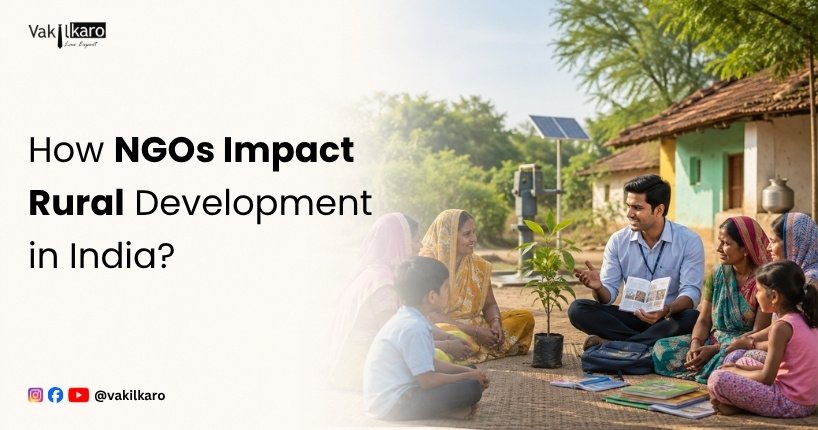
Rural development remains a pressing issue in India, where a large portion of the population lives in villages lacking access to essential services like education, healthcare, and employment. Non-Governmental Organizations (NGOs) play a crucial role in bridging these gaps by implementing grassroots initiatives tailored to local needs. By promoting sustainable development, empowering communities, and supporting government efforts, NGOs have become vital change agents. Legal compliance through NGO registration, Section 8 company registration, and 12A and 80G registration enhances their credibility, enables tax benefits, attracts funding, and ensures transparent operations. This blog explores how NGOs are transforming rural India through their dedicated efforts.
Key Takeaways
- How NGOs Drive Rural Development in India India’s rural landscape, home to a majority of the country’s population, continues to grapple with persistent challenges such as inadequate infrastructure, poor access to quality healthcare and education, limited employment opportunities, and environmental degradation.
- The Role of NGOs in Rural Development Non-Governmental Organizations (NGOs) have become indispensable agents of change in India’s rural development landscape.
- Education and Skill Development Education is one of the foundational areas where NGOs create significant impact.
- Collaborations and Government Partnerships in Rural Development Collaboration between NGOs and other stakeholders—especially the government and corporate sector—is essential for achieving wide-reaching and sustainable rural development in India.
- Impact Assessment and Sustainability in NGO-led Rural Development In the realm of rural development, impact assessment is not just a regulatory requirement—it’s a critical process that enables Non-Governmental Organizations (NGOs) to demonstrate the effectiveness of their work.
How NGOs Drive Rural Development in India
India’s rural landscape, home to a majority of the country’s population, continues to grapple with persistent challenges such as inadequate infrastructure, poor access to quality healthcare and education, limited employment opportunities, and environmental degradation. Non-Governmental Organizations (NGOs) have emerged as powerful catalysts for rural transformation, working at the grassroots level to implement sustainable and community-driven solutions. These organizations act as a bridge between the government and rural communities, ensuring that development initiatives reach those who need them the most.
NGOs play a multifaceted role in promoting rural development. They engage in activities such as improving literacy through informal education centers, vocational training, and digital literacy programs. In healthcare, they organize mobile clinics and awareness campaigns on nutrition, sanitation, and disease prevention. NGOs also focus on empowering women through the formation of Self-Help Groups (SHGs), skill development, and microfinance programs, helping women achieve financial independence and greater societal participation. Additionally, they support agriculture by introducing eco-friendly farming practices and linking farmers to better markets.
Legal compliance significantly enhances an NGO’s effectiveness. Registering as a Trust, Society, or a Section 8 Company under Indian law provides legal recognition and access to government schemes. Section 8 company registration, in particular, ensures structured governance and higher transparency. Furthermore, 12A registration grants income tax exemption to NGOs, while 80G registration enables donors to receive tax deductions—both of which boost donor confidence and funding opportunities.
In conclusion, NGOs are essential to rural India’s development story. By addressing socio-economic issues with legal backing, innovative strategies, and grassroots engagement, they contribute to inclusive growth. Legal frameworks like NGO registration Section 8 company registration, and 12A and 80G certification not only support their operations but also amplify their impact and long-term sustainability.
Rural development remains one of India’s most pressing and complex challenges. Despite the nation’s rapid urbanization and economic growth, a significant proportion of India’s population still lives in villages, where basic amenities and opportunities are limited. These areas often face chronic issues such as inadequate infrastructure, poor access to quality healthcare and education, scarcity of clean water and sanitation facilities, and insufficient employment avenues. Environmental degradation and lack of awareness about sustainable practices further hinder progress.
To address these deeply rooted problems, Non-Governmental Organizations (NGOs) have emerged as key players in India’s rural development landscape. These organizations function as bridges between underserved communities and the resources needed for their growth. Working at the grassroots level, NGOs identify local needs, mobilize communities, and implement development programs that are inclusive, sustainable, and community-driven. Their initiatives span across various sectors including education, health, women empowerment, livelihood promotion, agriculture, environmental conservation, and more.
What makes NGOs effective is not just their commitment and reach, but also their structured operations backed by legal compliance. Legal frameworks such as NGO registration, Section 8 company registration, and 12A and 80G registration empower NGOs to function with transparency, accountability, and legitimacy. These registrations help formalize their existence, make them eligible for government and CSR funding, and offer tax benefits to both the organizations and their donors. This legal foundation is crucial in building donor trust, expanding operations, and ensuring long-term sustainability.
In essence, NGOs are not just service providers—they are change-makers who work tirelessly to uplift rural communities. Their efforts, supported by robust legal and financial systems, play a transformative role in creating a more equitable and developed rural India.
The Role of NGOs in Rural Development
Non-Governmental Organizations (NGOs) have become indispensable agents of change in India’s rural development landscape. Their efforts span a wide range of sectors, helping to uplift rural communities by addressing critical issues and fostering long-term self-reliance. Through community-based programs and collaborations, NGOs empower people with the tools and knowledge needed to overcome social and economic challenges. Their work is deeply rooted in grassroots engagement and focuses on inclusive, sustainable development.
Education and Skill Development
Education is one of the foundational areas where NGOs create significant impact. They work to boost literacy rates, reduce school dropout rates, and make education more accessible to marginalized children. This includes setting up informal learning centers in remote areas, providing study materials, training local teachers, and offering scholarships to deserving students. NGOs also run skill development programs focused on vocational training, entrepreneurship, and digital literacy. These initiatives prepare rural youth for better employment opportunities or help them pursue self-employment, thereby improving income and living standards.
Healthcare Initiatives
In regions with limited healthcare access, NGOs bridge the gap by operating mobile health clinics, conducting health camps, and launching awareness drives on topics like nutrition, hygiene, vaccination, and disease prevention. Their collaborations with government health departments help enhance existing rural healthcare systems and make basic health services more accessible.
Women Empowerment
Empowering women is at the heart of many rural development initiatives. NGOs establish Self-Help Groups (SHGs) that provide rural women with a platform to save, borrow, and invest in small-scale enterprises. These groups often come with skill training programs, microfinance support, and gender sensitization workshops. Such efforts contribute to greater financial independence, leadership roles, and social participation for women in rural communities.
Livelihood and Agriculture
Agriculture remains the primary occupation in most rural areas. NGOs help farmers adopt sustainable and organic farming methods, improve yield through better techniques, and secure fair market linkages. They also provide training in allied sectors like poultry, dairy, weaving, and handicrafts to diversify income sources and reduce dependency on farming alone.
Water, Sanitation, and Hygiene (WASH)
Access to clean water and sanitation facilities is essential for healthy living. NGOs implement water conservation projects, construct toilets in schools and homes, and conduct hygiene awareness campaigns. These efforts not only improve health outcomes but also reduce school absenteeism, especially among girls.
Environmental Sustainability
With rural areas being particularly vulnerable to climate change, NGOs promote environmental initiatives like afforestation, use of renewable energy sources, and eco-friendly agricultural practices. These programs not only protect natural resources but also ensure the long-term ecological sustainability of villages.
Legal Compliance and Its Role in Scaling NGO Impact
Legal compliance forms the foundation of trust and credibility for NGOs in India. As these organizations work to create meaningful change in rural and underserved communities, having the right legal structure and registrations is essential to secure funding, build partnerships, and ensure sustainable growth. NGOs that operate within a transparent legal framework are more likely to gain the confidence of donors, corporate sponsors, and government agencies, which in turn accelerates their impact.
The first step in establishing legitimacy is NGO registration, which can be done under one of three structures: a Trust, Society, or a Section 8 Company. Each of these forms has its own governance rules and operational scope. Registration provides legal recognition and allows NGOs to open bank accounts, sign legal documents, and apply for various government schemes and grants. It also enables the organization to function with accountability and transparency, which is crucial for earning public trust.
Among these options, Section 8 company registration is widely regarded as a preferred structure for NGOs that plan large-scale, long-term projects. Registered under the Companies Act, 2013, Section 8 companies are known for their regulated framework, strict compliance requirements, and governance standards. This structure enforces regular reporting, financial audits, and transparency, making it highly credible in the eyes of both domestic and international stakeholders. It also facilitates better project management, accountability, and donor assurance.
In addition to basic registration, 12A and 80G registration under the Income Tax Act are vital for financial sustainability. A 12A registration allows NGOs to claim income tax exemption on their earnings, while 80G certification permits donors to avail of tax deductions on the donations they make. These tax benefits serve as major incentives for corporate donors and philanthropic individuals, significantly improving the NGO’s fundraising potential.
In essence, legal compliance through proper registration and certifications acts as a launchpad for growth. It not only helps NGOs scale their programs and reach but also instills a culture of ethical operations and fiscal responsibility. With NGO registration, Section 8 company registration, and 12A and 80G certifications in place, organizations can create a solid framework for long-term development, attracting more resources and partners to achieve their mission.
Case Studies: Successful NGO Contributions to Rural Development
- SEWA (Self Employed Women’s Association) Operating in several states, SEWA empowers women through training, microfinance, and advocacy. Registered as a society and holding 12A and 80G certification, SEWA has impacted thousands of women by enabling economic independence.
- Pratham Pratham focuses on improving the quality of education in rural India. As a Section 8 company with valid 12A and 80G registrations, Pratham has scaled its model across states through partnerships with schools and governments.
- Barefoot College Based in Rajasthan, Barefoot College trains rural women to become solar engineers. With robust NGO registration and tax exemptions, it receives funding from global donors and has replicated its model in multiple countries.
Challenges Faced by NGOs in Rural Development
While NGOs play an indispensable role in transforming rural India, their journey is fraught with numerous obstacles. These challenges can hamper program delivery, delay initiatives, and limit their overall impact. To ensure long-term sustainability and effectiveness, NGOs must proactively address these hurdles.
Funding Constraints
One of the biggest challenges NGOs face is securing consistent and adequate funding. Most rural development projects require long-term investments, but many NGOs operate on short-term grants or donor contributions. This lack of predictable income affects planning, implementation, and expansion of programs. Moreover, competition for limited funds can be intense, especially for smaller NGOs without widespread visibility.
Bureaucratic Hurdles
NGOs often have to navigate a complex web of governmental procedures, which can result in delays in approvals, disbursement of grants, and clearances. These bureaucratic obstacles increase the administrative burden and reduce the time available for fieldwork. For instance, securing necessary permissions to implement programs in rural areas or partnering with government departments can be time-consuming and frustrating.
Geographical Barriers
Operating in remote and underdeveloped areas comes with logistical challenges. Poor road connectivity, lack of electricity, and inadequate communication infrastructure make it difficult for NGOs to deliver services efficiently. Weather conditions and natural disasters further complicate access to these regions, delaying project timelines and increasing operational costs.
Lack of Trained Manpower
Qualified and skilled professionals often prefer urban jobs over rural assignments, leaving NGOs with a talent gap. The shortage of experienced personnel in rural areas affects the quality of education, healthcare, training, and other services provided by NGOs. Recruiting, training, and retaining dedicated staff becomes a persistent challenge.
Regulatory Compliance
NGOs must comply with various legal and financial regulations to operate transparently and maintain their tax-exempt status. This includes timely renewal of 12A and 80G registrations, regular FCRA compliance, and accurate annual filings. These tasks require administrative expertise and can become overwhelming, especially for small NGOs with limited resources.
To overcome these challenges, NGOs must adopt innovative funding models, build partnerships with local communities and governments, invest in staff training, and streamline their compliance processes. Legal structures such as Section 8 company registration, along with maintaining valid NGO registration, 12A, and 80G certificates, can significantly help in enhancing credibility and attracting long-term support.
Use of Technology in Rural Development
In recent years, technology has emerged as a game-changer in accelerating rural development efforts. NGOs are increasingly embracing digital tools to enhance the effectiveness, reach, and transparency of their programs. These innovations allow organizations to address long-standing challenges in rural areas more efficiently while optimizing resources and improving overall impact.
One of the most significant contributions of technology is seen in the fields of healthcare and agriculture. NGOs are deploying mobile applications to provide vital health information, appointment scheduling, and disease tracking in remote villages where medical services are scarce. Similarly, agriculture-based apps are helping farmers access real-time data on weather forecasts, crop prices, soil health, and government schemes—empowering them to make informed decisions and increase productivity.
In the education sector, e-learning platforms and virtual classrooms have broken geographical barriers, enabling students in rural regions to access quality educational content and interactive sessions. NGOs are using these tools to supplement government education initiatives, conduct teacher training, and reduce dropout rates by making learning more accessible and engaging.
Digital payments and microfinancing tools are also playing a crucial role in financial inclusion. By facilitating safe and secure transactions, these tools help Self-Help Groups (SHGs) and small entrepreneurs in rural areas access credit, save money, and grow their businesses. NGOs often partner with fintech platforms to provide financial literacy and connect communities to digital banking services.
Moreover, GIS (Geographic Information System) mapping is being utilized for efficient planning and monitoring of water resources, sanitation infrastructure, and agricultural development. It allows NGOs to map water bodies, track irrigation patterns, and identify regions needing intervention.
The integration of such technologies improves operational efficiency, data accuracy, and real-time impact monitoring. It also strengthens transparency—especially for NGOs with Section 8 company registration, NGO registration, or 12A and 80G registration—as they can showcase measurable outcomes to donors and regulatory bodies. Ultimately, the smart use of technology empowers NGOs to scale their initiatives, reach more beneficiaries, and bring about sustainable change in rural India.
Collaborations and Government Partnerships in Rural Development
Collaboration between NGOs and other stakeholders—especially the government and corporate sector—is essential for achieving wide-reaching and sustainable rural development in India. No single entity can address the multifaceted challenges faced by rural communities; hence, strategic partnerships multiply impact, enhance resource utilization, and ensure program scalability.
Government partnerships play a crucial role in extending the outreach of rural initiatives. NGOs frequently work alongside departments focused on health, education, agriculture, and rural development. For instance, through active involvement in flagship government schemes like the National Rural Livelihood Mission (NRLM), NGOs help in mobilizing Self-Help Groups, training rural entrepreneurs, and supporting livelihood activities. Under the Swachh Bharat Abhiyan, NGOs contribute to building sanitation infrastructure, promoting hygiene awareness, and conducting behavioral change campaigns. Similarly, Digital India opens doors for NGOs to implement digital literacy and e-governance projects in remote villages.
NGOs also collaborate with Panchayati Raj Institutions (PRIs)—the local self-governance bodies—to ensure grassroots participation, community ownership, and efficient implementation of development projects. PRIs act as important conduits between NGOs and the local population, ensuring that programs align with actual community needs.
Additionally, the rise of Corporate Social Responsibility (CSR) in India has made partnerships with private companies a powerful tool for development. Companies with CSR mandates often fund projects related to education, health, and rural livelihoods. NGOs with proven credibility and compliance are preferred partners for such collaborations.
To qualify for these collaborations, NGOs must have formal legal documentation, including NGO registration (as a Trust, Society, or Section 8 Company). A Section 8 company registration is especially valued for its transparent structure and accountability. Furthermore, 12A and 80G registration is essential to gain tax exemptions and enable donors to claim tax deductions, making the organization more attractive to funders.
In essence, these partnerships—founded on legal compliance, mutual trust, and shared objectives—greatly enhance the effectiveness, scale, and sustainability of rural development efforts across India.
Impact Assessment and Sustainability in NGO-led Rural Development
In the realm of rural development, impact assessment is not just a regulatory requirement—it’s a critical process that enables Non-Governmental Organizations (NGOs) to demonstrate the effectiveness of their work. By conducting regular evaluations using surveys, data analytics, field studies, and direct feedback from beneficiaries, NGOs can track the tangible outcomes of their interventions. These assessments help measure whether objectives are being met, uncover areas that require improvement, and ensure that resources are being utilized efficiently.
For donors, partners, and government agencies, transparency and accountability are key factors when deciding to support an NGO. Organizations that can present measurable outcomes, success stories backed by data, and evidence of social return on investment are more likely to receive sustained funding. This is particularly important for NGOs with Section 8 company registration or NGO registration, as these entities are expected to uphold higher standards of transparency and governance. Additionally, maintaining 12A and 80G registration enhances donor trust by ensuring that funds are used ethically and are eligible for tax exemptions.
Beyond short-term success, the sustainability of rural development projects is crucial. NGOs must adopt forward-looking strategies that allow communities to thrive even after external support ends. Key sustainability measures include:
- Diversifying funding sources: Relying on a single donor or grant poses financial risks. NGOs that tap into multiple sources—corporate CSR funds, government schemes, crowdfunding, and international donors—are better positioned to continue their work over the long term.
- Building community ownership: When beneficiaries are involved in planning and implementation, they are more invested in maintaining the outcomes. This ensures continuity and relevance.
- Establishing local leadership: Training and empowering local leaders helps reduce dependence on external facilitators and fosters self-reliance.
- Institutionalizing knowledge transfer: Creating systems and documentation that preserve organizational knowledge enables continuity, even during staff transitions.
Ultimately, strong impact assessment combined with sustainable planning not only strengthens NGO credibility but also ensures enduring improvements in rural communities.
Conclusion
NGOs play a transformative role in rural development by addressing critical issues with innovation, dedication, and a grassroots approach. Legal compliance through NGO registration, Section 8 company registration, and 12A and 80G registration is vital to ensuring transparency, building donor trust, and scaling operations. With stronger partnerships, use of technology, and robust monitoring, NGOs can significantly contribute to inclusive and sustainable rural growth in India. Their efforts complement government initiatives and pave the way for a more equitable society.
Why Choose Vakilkaro for NGO and Other Legal Services
Vakilkaro stands out as a trusted legal partner for NGOs and businesses alike, offering comprehensive, transparent, and cost-effective legal solutions. Whether you are looking to start an NGO, register a Section 8 company, or apply for 12A and 80G registrations, Vakilkaro simplifies the entire process with expert guidance and end-to-end support.
Here's why Vakilkaro is the preferred choice:
- Expertise in NGO Compliance: Vakilkaro has deep experience in assisting NGOs with registration, drafting MOAs, and ensuring legal compliance under the Indian Trusts Act, Societies Registration Act, and Companies Act, 2013.
- Seamless Section 8 Company Registration: The team ensures fast and hassle-free registration of Section 8 companies, adhering to all governance, compliance, and reporting norms.
- 12A and 80G Registration Support: Vakilkaro handles documentation, filing, and follow-ups to secure tax exemption (12A) and donor benefit (80G) certifications efficiently.
- Affordable Pricing: Transparent and budget-friendly packages designed to meet the needs of startups, NGOs, and growing businesses.
- Dedicated Legal Advisors: Each client is assigned a legal advisor to provide personalized support, answer queries, and offer updates throughout the process.
- Technology-Driven Services: From document uploads to progress tracking, Vakilkaro uses digital tools to make legal procedures smooth and accessible.
- Wide Range of Legal Services: Beyond NGO services, Vakilkaro offers company incorporation, trademark registration, GST return filing accounting, contract drafting, and RBI/FCRA compliance.
Choosing Vakilkaro means choosing a reliable legal ally committed to helping you build a legally sound and scalable foundation for your organization. Whether you're setting up an NGO or scaling your business, Vakilkaro is here to support your mission.
Official External Resources
Use these primary/official sources to verify rules, forms, fees, timelines and regulatory updates before publication.
Frequently asked questions
How NGOs Impact Rural Development in India?+
How NGOs Drive Rural Development in India India’s rural landscape, home to a majority of the country’s population, continues to grapple with persistent challenges such as inadequate infrastructure, poor access to quality healthcare and education, limited employment opportunities, and environmental degradation. Education and Skill Development Education is one of the foundational areas where NGOs create significant impact.
