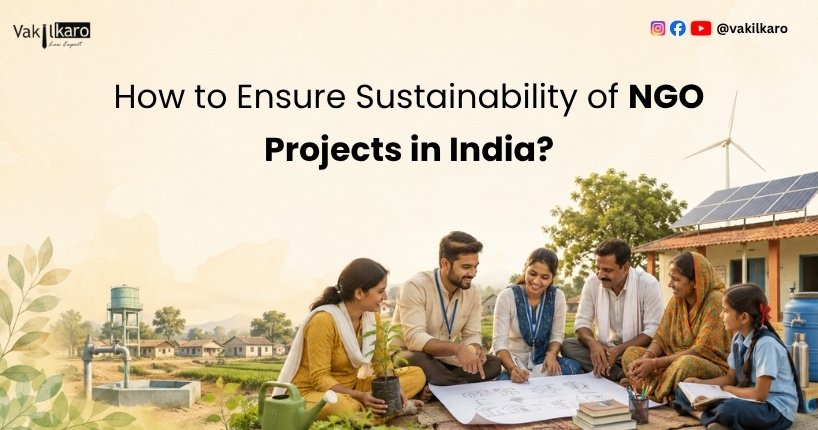
Non-Governmental Organizations (NGOs) are key drivers of social progress in India, addressing issues like education, healthcare, environment, and women empowerment. Yet, many NGOs face the challenge of sustainability—not just financial, but strategic and operational. Whether operating as a trust, society, or through Section 8 company registration, ensuring sustainability is vital for long-term success. Proper NGO registration, along with 12A and 80G registration, lays the legal foundation to access funding, form partnerships, and maintain compliance. This blog explores how Indian NGOs can build resilience and continuity into their projects by adopting sustainable practices and aligning with essential legal frameworks.
Key Takeaways
- Ensuring Long-Term Impact: The Role of Legal Compliance in NGO Sustainability Non-Governmental Organizations (NGOs) are essential contributors to India’s socio-economic development, addressing critical needs in areas such as education, healthcare, environmental protection, and women empowerment.
- Proper NGO registration also enables organizations to legally operate bank accounts, enter into agreements, apply for government and CSR grants, and ensure accountability.
- Importance of Proper NGO Registration for Long-Term Sustainability One of the foundational steps for ensuring the sustainability of any Non-Governmental Organization (NGO) in India is choosing the right legal structure.
- Embedding Sustainability in Project Planning for Long-Term Impact Sustainability should never be an afterthought—it must be built into the very foundation of every NGO project.
- Including this feedback in your documentation shows that your NGO not only delivers results but also stays accountable and adaptive—key indicators of sustainability and credibility in the development sector.
Ensuring Long-Term Impact: The Role of Legal Compliance in NGO Sustainability
Non-Governmental Organizations (NGOs) are essential contributors to India’s socio-economic development, addressing critical needs in areas such as education, healthcare, environmental protection, and women empowerment. However, one of the most persistent challenges they face is ensuring the long-term sustainability of their initiatives. Sustainability in the NGO sector extends far beyond securing consistent funding—it encompasses strategic planning, legal compliance, strong leadership, community engagement, and transparent operations.
For any NGO aiming for lasting impact, establishing a solid legal foundation is the first step. NGOs in India can be registered as trusts, societies, or companies under Section 8 of the Companies Act, 2013. Among these, Section 8 company registration is particularly advantageous due to its structured governance model and increased credibility, which helps in attracting funding and forming strategic partnerships. Proper NGO registration also enables organizations to legally operate bank accounts, enter into agreements, apply for government and CSR grants, and ensure accountability.
Equally important are 12A and 80G registrations, which offer significant financial benefits. 12A registration exempts NGOs from income tax, allowing more resources to be invested in program activities. Meanwhile, 80G registration offers tax benefits to donors, encouraging larger and more frequent contributions. These certifications not only ensure financial sustainability but also build credibility with donors and regulatory bodies.
Sustainability also involves aligning advocacy and operational strategies with legal norms, investing in staff development, and embracing technology to improve efficiency. Transparency in financial reporting and community-driven approaches to program design further contribute to long-term success.
In conclusion, for Indian NGOs to ensure the longevity and effectiveness of their projects, a comprehensive approach rooted in legal compliance, strategic planning, and stakeholder trust is essential. By prioritizing proper registration and regulatory alignment, NGOs can secure both their mission and their future.
Non-Governmental Organizations (NGOs) serve as the backbone of grassroots development in India. They are instrumental in bridging the gap between government programs and underserved communities by working in diverse sectors like education, public health, environment, skill development, women empowerment, and disaster relief. Their efforts have led to transformative social changes across the country. However, despite their noble missions and passionate teams, many NGOs face a common and critical hurdle—sustainability.
Sustainability, in the context of NGOs, is not merely about securing enough funds to operate. It encompasses a broader framework that includes strategic vision, long-term planning, effective stakeholder engagement, skilled governance, regulatory compliance, and continuous impact measurement. Without a clear plan for sustainability, even the most well-intentioned projects risk fading away after the initial funding or support ends.
The legal structure of an NGO plays a foundational role in its sustainability. Whether the organization is formed as a trust, society, or through Section 8 company registration, each structure carries different advantages and compliance requirements. Among them, Section 8 company registration is particularly beneficial for NGOs aiming for credibility, transparency, and corporate-style governance. This structure makes it easier to attract long-term partnerships, corporate social responsibility (CSR) funds, and international support.
Furthermore, obtaining NGO registration and securing 12A and 80G registrations are crucial for financial viability. While 12A registration provides income tax exemptions for the NGO, 80G registration incentivizes donors by offering tax deductions, leading to increased donor confidence and contributions.
In this blog, we will delve into practical strategies and legal pathways Indian NGOs can adopt to ensure the continuity, impact, and growth of their initiatives. From compliance to community engagement and from funding diversification to technological adoption, we explore what it truly takes to build a sustainable NGO model in India.
Importance of Proper NGO Registration for Long-Term Sustainability
One of the foundational steps for ensuring the sustainability of any Non-Governmental Organization (NGO) in India is choosing the right legal structure. The legal form not only determines the organization's credibility and governance but also plays a vital role in accessing funding, building trust, and ensuring operational longevity.
In India, NGOs can be registered under three primary frameworks:
- Trusts under the Indian Trusts Act, 1882
- Societies under the Societies Registration Act, 1860
- Section 8 Companies under the Companies Act, 2013
While each form has its benefits, Section 8 company registration is often regarded as the most robust and professional. This structure demands higher compliance and transparency, which appeals to donors, government agencies, and corporate partners. The corporate-style governance associated with Section 8 companies enhances the NGO’s ability to attract sustainable partnerships, funding opportunities, and long-term collaborations.
Proper NGO registration is not just a legal formality—it unlocks a range of operational and strategic benefits. With a valid registration, an NGO can:
- Open and operate a bank account in the organization’s name, enabling transparent financial transactions
- Enter into Memorandums of Understanding (MoUs) and contracts with other organizations, funders, or government bodies
- Apply for government grants, CSR funds, and international donations
- Ensure compliance with relevant laws to avoid penalties or operational roadblocks
On the other hand, operating without proper NGO registration can lead to legal complications, restricted funding access, and challenges in gaining stakeholder trust. It may also hinder the NGO's ability to scale or collaborate effectively.
In essence, appropriate and timely NGO registration, especially as a Section 8 company, lays the groundwork for a credible, compliant, and sustainable non-profit organization in India.
Maximizing Financial Sustainability Through 12A and 80G Registration
Financial stability is the cornerstone of a sustainable NGO. While passion and vision drive an organization’s mission, consistent funding is essential to keep that mission alive and expanding. In India, two key tax registrations—12A and 80G—play a vital role in ensuring that NGOs have access to continuous and legitimate financial support.
12A registration exempts an NGO from paying income tax on the donations and grants it receives. Without this exemption, the funds received would be treated as taxable income, significantly reducing the resources available for program execution. This registration is, therefore, crucial for enabling organizations to utilize their donations fully and efficiently for charitable purposes.
80G registration, on the other hand, directly benefits the donor. It allows individuals and institutions who contribute to the NGO to claim deductions on their taxable income. This tax relief acts as an incentive for donors to contribute more generously and frequently. An NGO with valid 80G registration is more likely to attract and retain donors, both domestic and international.
Beyond these financial advantages, 12A and 80G registrations significantly enhance the credibility of an organization. Donors are more confident when supporting NGOs that are officially recognized by the Income Tax Department ensuring their funds are being used transparently and for genuine social causes.
Furthermore, these registrations become even more powerful when paired with Section 8 company registration. Section 8 companies, known for their structured governance and regulatory compliance, are often preferred by corporates for CSR (Corporate Social Responsibility) funding under the Companies Act. When an NGO combines Section 8 registration with 12A and 80G approvals, it builds a solid foundation for both trust and funding opportunities.
In conclusion, securing 12A and 80G registration is not just a legal necessity—it is a strategic move toward financial sustainability and long-term impact.
Embedding Sustainability in Project Planning for Long-Term Impact
Sustainability should never be an afterthought—it must be built into the very foundation of every NGO project. Planning with sustainability in mind ensures that the impact of your initiative continues well beyond the lifespan of direct NGO involvement. Thoughtful, inclusive, and strategic planning not only strengthens program outcomes but also empowers communities to become self-reliant in the long run.
A crucial first step is community ownership. Engaging local stakeholders and beneficiaries from the early stages of the project fosters a sense of responsibility and commitment. When people feel that a project belongs to them, they are more likely to maintain and expand its outcomes even after the NGO exits. Regular community consultations and participatory decision-making create deeper trust and ensure that the solutions being offered are both relevant and sustainable.
An often-overlooked yet vital component of project planning is having a clearly defined exit strategy. This means outlining from the start how the NGO will gradually reduce its involvement, while transitioning responsibility to local bodies, community leaders, or government agencies. This transition must be strategic, well-communicated, and backed by support mechanisms.
To further secure sustainability, NGOs must focus on capacity building. Training and equipping local individuals, volunteers, and institutions with the skills, tools, and knowledge required to independently manage and scale the initiative is essential. This builds resilience within the community and reduces dependency on external support.
Equally important is establishing a strong Monitoring and Evaluation (M&E) framework. By regularly tracking progress, identifying challenges, and making data-driven decisions, NGOs can ensure that the project remains effective and adaptable over time.
NGOs registered under Section 8 of the Companies Act are particularly well-positioned to integrate these sustainable planning elements. The legal and governance framework of Section 8 companies encourages professional management, accountability, and long-term thinking—factors that align perfectly with sustainable development goals.
Diversifying Funding Sources for Financial Stability and Growth
One of the most critical strategies for ensuring long-term sustainability of an NGO is diversifying its funding base. Relying heavily on a single donor or funding type poses a serious risk; if that source dries up, it could jeopardize the entire project or even the existence of the organization. Therefore, building a resilient and multi-channel funding structure is essential.
NGOs in India have several avenues to explore for financial support. Corporate Social Responsibility (CSR) partnerships have become a major source of funding, especially after the Companies Act, 2013 mandated qualifying companies to spend a percentage of their profits on social development. To tap into CSR funds, NGOs must have proper registration—preferably as a Section 8 company—and valid 12A and 80G registrations, which enhance credibility in the eyes of corporate donors.
Another key source is FCRA (Foreign Contribution Regulation Act) funding. NGOs that work on large-scale social initiatives can attract donations from international foundations and donors, but they must obtain FCRA registration to receive and utilize foreign funds legally. This opens up significant opportunities for growth, especially for organizations working on globally relevant issues like climate change, education, or public health.
In addition, NGOs should also encourage membership programs and individual donations. These provide a stable flow of unrestricted funds that can be used flexibly across different projects. 80G registration plays a crucial role here, as it incentivizes individual donors by offering tax deductions.
Many NGOs are also adopting social enterprise models, where they generate income through products or services related to their mission. Section 8 companies, in particular, are allowed to conduct revenue-generating activities, provided the profits are reinvested into the organization’s social objectives rather than distributed among members.
By tapping into a combination of CSR, FCRA, individual donors, and earned income, NGOs can reduce financial vulnerabilities and build a stronger foundation for sustainable impact.
Strengthening NGO Governance and Leadership for Sustainable Impact
Strong governance and capable leadership are essential pillars for the long-term sustainability of any Non-Governmental Organization (NGO). They foster transparency, ensure accountability, and guide strategic decision-making, all of which contribute to the credibility and efficiency of the organization. In the dynamic and often challenging nonprofit sector, strong leadership is not just about day-to-day management—it’s about upholding values, building trust, and ensuring the continuity of impactful work.
To achieve this, NGOs must start by forming a competent and diverse board of directors or trustees. This board should ideally include professionals from varied backgrounds such as finance, law, social work, and community development. Their collective expertise helps in informed decision-making, risk management, and long-term planning. A diverse board also enhances the NGO’s ability to respond effectively to complex social issues with well-rounded perspectives.
Next, it is vital to establish comprehensive internal policies that govern various aspects of the organization’s operations. Policies related to conflict of interest, staff behavior, financial control, procurement, and ethical practices are necessary for maintaining internal discipline and consistency. Clear policies protect the NGO from mismanagement and serve as a guide for both staff and leadership in navigating daily operations.
Moreover, conducting regular board meetings is crucial for reviewing progress, making strategic decisions, and staying aligned with the organization’s goals. These meetings should be well-documented, with minutes recorded and follow-up actions implemented to maintain a culture of accountability and responsiveness.
NGOs registered as Section 8 companies under the Companies Act, 2013 are legally required to follow a stricter governance framework. This includes filing annual returns, maintaining statutory registers, and adhering to compliance requirements set by the Ministry of Corporate Affairs. While these obligations may seem demanding, they significantly boost the organization’s transparency and credibility.
Ultimately, strong governance and leadership are not just regulatory requirements—they are the foundations upon which lasting social change is built. They inspire confidence in donors, ensure ethical operations, and create a resilient organization capable of scaling its impact over time.
Creating Strategic Partnerships for Greater Impact and Sustainability
In the nonprofit sector, collaboration is often the key to amplifying impact, reaching underserved communities, and ensuring the long-term sustainability of initiatives. Strategic partnerships allow NGOs to pool resources, share knowledge, and reduce over-reliance on a single organization or donor. Whether it's leveraging government programs, tapping into academic research, or engaging with the private sector, partnerships can help scale operations while enhancing credibility and effectiveness.
Government partnerships are particularly valuable for accessing public resources, receiving policy support, and aligning NGO initiatives with national development goals. Collaborating with government bodies allows NGOs to integrate their work into broader frameworks, such as health campaigns, education reforms, or livelihood schemes. These partnerships also open doors to grants, training, and logistical support.
Academic institutions are essential allies when it comes to research, training, and capacity-building. NGOs can collaborate with universities for impact studies, community surveys, curriculum development, and volunteer programs. These associations strengthen the evidence base for NGO work and provide data-driven approaches to social challenges.
Partnering with other NGOs facilitates joint implementation of projects, resource sharing, and knowledge exchange. This is particularly beneficial in complex or large-scale interventions where combining strengths and geographic coverage leads to better outcomes. These alliances reduce duplication of efforts and foster unity within the civil society space.
Engagement with the private sector, especially through Corporate Social Responsibility (CSR) initiatives, brings access to funding, technology, innovation, and infrastructure. Private companies can offer tools, platforms, or even skilled volunteers that enhance the efficiency and reach of social programs.
To formalize these partnerships, having valid NGO registration—whether as a Trust, Society, or Section 8 company—is crucial. A properly drafted Memorandum of Association (MOA) or Trust Deed provides the legal foundation to enter into Memoranda of Understanding (MoUs) or contracts. Among all registration types, Section 8 companies enjoy greater flexibility and corporate compatibility, making them ideal partners for private and government entities alike.
Strategic partnerships, when built on shared values and clear agreements, can transform an NGO’s capacity to deliver sustainable, large-scale change.
Investing in Technology to Strengthen NGO Operations
In today’s digital age, technology is no longer a luxury for NGOs—it’s a strategic necessity. Investing in the right technological tools can significantly improve an organization’s efficiency, reduce operational costs, and expand its reach. When used effectively, technology enhances program delivery, supports data-driven decision-making, and fosters stronger engagement with stakeholders.
One of the most important applications of technology in the NGO sector is data management. Cloud-based systems allow NGOs to securely store, manage, and analyze vast amounts of data related to beneficiaries, project outcomes, finances, and donor contributions. This makes it easier to track progress, generate reports, and demonstrate impact to funders and regulatory authorities.
Fundraising tools are another critical area. Online crowdfunding platforms, donor management software, and automated payment gateways streamline the donation process and expand the donor base. These tools help NGOs build long-term relationships with supporters through targeted campaigns, personalized communication, and transparent reporting.
Effective communication is also essential for visibility and advocacy. NGOs can harness digital marketing, social media, email campaigns, and webinars to raise awareness about their causes, share success stories, and mobilize volunteers and donors. A strong online presence builds trust and keeps supporters informed and engaged.
For NGOs with 12A and 80G registration, investments in technology can be strategically positioned as capacity-building expenses funded by donor contributions. As long as these tools directly contribute to the NGO’s mission—such as improving service delivery or expanding outreach—they are justifiable under most grant agreements.
Moreover, Section 8 companies often have an advantage in adopting technology, thanks to their corporate-style governance and alignment with formal procurement norms. This makes it easier to onboard tech partners, negotiate contracts, and integrate digital tools into day-to-day operations. Overall, embracing technology is a forward-thinking move that boosts transparency, scalability, and sustainability for NGOs in India.
Staff Development and Retention
The strength and longevity of any NGO largely depend on the dedication, skills, and stability of its team. Staff members are the frontline warriors who translate vision into action and ensure that programs reach the communities they are meant to serve. Therefore, investing in staff development and retention is not just beneficial—it is essential for long-term sustainability.
To begin with, ongoing training and capacity building should be a core part of the organizational strategy. Training programs in leadership, project management, financial literacy, and technical fieldwork equip staff with the skills needed to perform effectively and adapt to evolving challenges. Well-trained employees are more confident, productive, and capable of taking on responsibilities without constant supervision.
Beyond skills, NGOs should also focus on creating clear growth paths within the organization. When staff members see opportunities for advancement and professional development, they are more likely to stay committed and motivated. This could include promotions, cross-functional roles, or chances to lead new initiatives. Creating a culture where talent is nurtured helps retain high performers and builds a sense of belonging.
Equally important is ensuring that all employees are aligned with the NGO’s mission and values. This alignment fosters a deep emotional connection to the work, which becomes a driving force behind consistent performance. When team members believe in the impact of their efforts, they are more likely to stay engaged, even during difficult times.
While investing in human resources might seem like an overhead cost, it actually provides a significant return on investment. High staff turnover leads to recruitment delays, loss of institutional knowledge, and project disruption. On the other hand, retaining skilled and mission-driven staff ensures continuity, builds internal leadership, and strengthens the overall impact of the NGO. In short, staff development is not an expense—it's a cornerstone of sustainable social change.
Transparency and Reporting
Transparency and accountability are fundamental to the sustainability of any NGO. In an era where donors, regulators, and the public demand greater visibility into how funds are used and what impact is being created, maintaining transparent practices is not just a choice—it’s a necessity.
At its core, transparency builds trust. Donors, partners, and beneficiaries are more likely to support and collaborate with an organization that openly shares information. This includes publishing detailed annual reports that highlight the NGO’s achievements, financial performance, and challenges. These reports should be made available to stakeholders and the public to promote a culture of openness.
Another key aspect is the disclosure of donor contributions and fund utilization. This not only honors the donor’s intent but also demonstrates integrity in financial management. Clearly outlining where funds are coming from and how they are being spent creates confidence and encourages continued support.
Reporting project outcomes is equally important. Stakeholders want to see measurable results and understand the real-world impact of the NGO’s work. Providing qualitative and quantitative data through impact assessments and success stories helps reinforce the value of your programs.
To enhance credibility, NGOs should undergo third-party audits regularly. These audits provide an unbiased review of the organization’s financial health and operational practices. For NGOs with 12A and 80G registration, such transparency is a regulatory requirement. Misuse of funds or failure to report accurately can lead to suspension or cancellation of registrations—jeopardizing both credibility and funding.
For NGOs registered as Section 8 companies, the compliance bar is even higher. These organizations must file annual returns, financial statements, and compliance reports with the Ministry of Corporate Affairs. Adhering to these legal requirements not only avoids penalties but also reinforces the NGO’s professional standing, enhancing its long-term viability and sustainability.
Community Feedback and Adaptation
For an NGO to be truly sustainable, it must remain flexible, responsive, and rooted in the needs of the communities it serves. No matter how well-planned a project is, if it fails to evolve with the changing circumstances on the ground, its impact will be short-lived. That’s why community feedback and adaptive strategies are vital for long-term success.
Sustainable NGOs make it a point to regularly gather feedback from beneficiaries and local stakeholders. This can be done through surveys, community meetings, focus group discussions, or informal check-ins. These insights help the organization understand what is working, what’s not, and where adjustments are needed. Listening to the community also builds trust and ownership, making beneficiaries feel valued and more invested in the project’s success.
Equally important is the NGO’s ability to adapt its programs based on this feedback. Needs may change due to economic shifts, social dynamics, or even natural disasters. By being responsive, NGOs can tweak their interventions to stay aligned with real-world needs, ensuring their work remains impactful and meaningful.
Sustainability also involves a willingness to learn from past failures. Instead of hiding missteps, sustainable NGOs analyze what went wrong and use those lessons to refine future efforts. This culture of continuous learning fosters resilience and innovation.
Moreover, community feedback becomes a powerful tool when seeking 80G renewal, applying for CSR funding, or filing impact reports. Donor agencies and corporate partners value on-the-ground perspectives and real-life success stories. Including this feedback in your documentation shows that your NGO not only delivers results but also stays accountable and adaptive—key indicators of sustainability and credibility in the development sector.
Conclusion
Sustainability is a continuous process that requires sound planning, robust systems, and a commitment to transparency. With the right legal foundation—starting with proper NGO registration, supported by Section 8 company registration for added credibility, and compliance with 12A and 80G registration for tax and donor benefits—NGOs in India can position themselves for long-term success.
Whether your focus is rural development, education, healthcare, or the environment, integrating sustainability into every layer of your organization ensures that the positive change you create endures long after the project ends.
For NGOs aspiring to scale their operations, partnering with experienced legal and compliance experts like Vakilkaro can make all the difference. From Section 8 company registration to guiding you through the 12A and 80G registration process, Vakilkaro provides end-to-end solutions for legal, financial, and regulatory needs—ensuring your mission stays strong and sustainable.
Why Choose Vakilkaro for NGO Sustainability and Other Legal Services
When it comes to ensuring your NGO's long-term sustainability and compliance, Vakilkaro stands out as a trusted partner. With years of experience in legal and financial advisory, Vakilkaro offers end-to-end support tailored to the unique needs of NGOs, whether you're just starting out or scaling up your impact.
Expertise in NGO Registration and Compliance: Vakilkaro helps you choose the most suitable legal structure—be it a Trust, Society, or Section 8 Company—and ensures smooth registration with all necessary documentation. Their in-depth knowledge of 12A and 80G registration also ensures that your NGO becomes eligible for tax exemptions and donor incentives, which are crucial for funding and credibility.
Strategic Legal Support for Sustainability: From drafting legally sound MoUs and partnership agreements to guiding you through CSR compliance, FCRA registration, and annual filings, Vakilkaro ensures your organization remains legally strong and operationally transparent.
Customized Advisory for NGO Growth: Vakilkaro doesn’t just offer legal help—they guide you through sustainability strategies like project planning, stakeholder engagement, staff retention, governance building, and impact reporting. Their support empowers NGOs to secure long-term funding and form meaningful collaborations.
Additional Services by Vakilkaro Include:
- Private Limited Company & LLP Registration
- GST Registration & Filing
- Trademark Registration & IP Protection
- Drafting Contracts and Agreements
- Business Licensing & Regulatory Approvals
- Accounting, Bookkeeping & Tax Advisory
- RBI Licenses for Microfinance & NBFCs
With Vakilkaro, you gain more than a legal consultant—you gain a dedicated ally committed to your mission and growth. Whether it’s ensuring compliance, enhancing credibility, or planning for sustainability, Vakilkaro’s team of experts is equipped to support your organization at every step.
Official External Resources
Use these primary/official sources to verify rules, forms, fees, timelines and regulatory updates before publication.
Frequently asked questions
How to Ensure Sustainability of NGO Projects in India?+
Ensuring Long-Term Impact: The Role of Legal Compliance in NGO Sustainability Non-Governmental Organizations (NGOs) are essential contributors to India’s socio-economic development, addressing critical needs in areas such as education, healthcare, environmental protection, and women empowerment. Importance of Proper NGO Registration for Long-Term Sustainability One of the foundational steps for ensuring the sustainability of any Non-Governmental Organization (NGO) in India is choosing the right legal structure.
