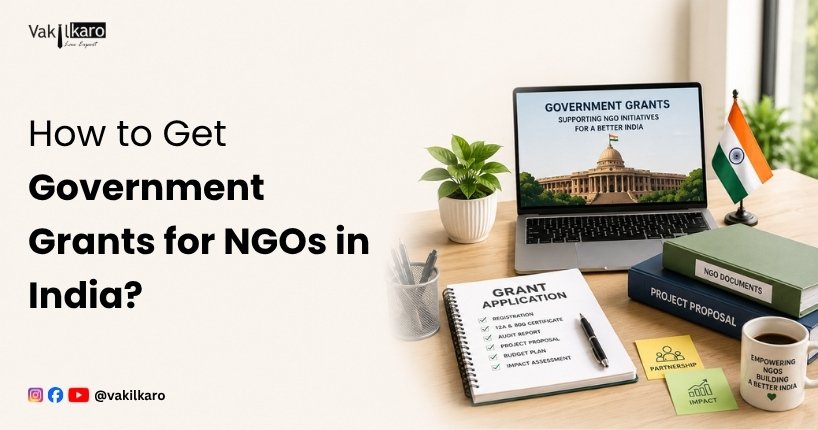
Government grants provide essential financial support to NGOs working in areas like education, healthcare, women empowerment, and poverty alleviation. To qualify for these grants, NGOs must meet legal requirements, including NGO registration, Section 8 company registration, and 12A and 80G registration. This guide explains how NGOs can identify government funding opportunities, apply for grants, and ensure compliance. From preparing strong project proposals to maintaining financial transparency, NGOs must follow a structured approach. Understanding the grant application process and eligibility criteria can help organizations secure funding and enhance their impact on society.
Key Takeaways
- How NGOs Can Secure Government Grants in India Government grants serve as a vital financial resource for NGOs engaged in social welfare activities such as education, healthcare, women empowerment, and poverty alleviation.
- Unlike donations from private entities, government grants come with specific eligibility criteria and compliance requirements, making it essential for NGOs to have proper legal registrations such as NGO registration, Section 8 company registration, and 12A and 80G registration.
- NGO Registration An NGO must be legally registered under one of the following structures to be eligible for government grants: Trust Registration: NGOs can register as charitable trusts under the Indian Trusts Act, 1882.
- Step-by-Step Process to Get Government Grants for NGOs Step 1: Identify Relevant Government Schemes Each ministry or government department has specific funding programs for NGOs.
- Overcoming These Challenges To improve their chances of securing government grants, NGOs should: Ensure proper legal compliance, including Section 8 company registration, 12A and 80G registration.
How NGOs Can Secure Government Grants in India
Government grants serve as a vital financial resource for NGOs engaged in social welfare activities such as education, healthcare, women empowerment, and poverty alleviation. To qualify for these grants, NGOs must meet specific legal and compliance requirements, including NGO registration, Section 8 company registration and obtaining 12A and 80G registration. These registrations help establish the credibility of an NGO and enable it to access tax benefits and funding opportunities.
To secure government grants, NGOs must first identify relevant funding schemes. Various ministries and state departments provide financial assistance to NGOs that align with national development goals. Some key schemes include the National Rural Health Mission (NRHM) for healthcare initiatives, the Integrated Child Development Services (ICDS) for child welfare programs, and the National Skill Development Corporation (NSDC) grants for vocational training projects.
Once a suitable grant is identified, NGOs must ensure they meet all eligibility criteria. This includes having a valid NGO registration maintaining transparent financial records, and complying with government regulations. Additionally, preparing a well-structured project proposal is crucial. The proposal should clearly outline the organization’s background, project objectives, implementation plan, budget, and monitoring strategy.
After completing the application process through government portals like NGO Darpan, NGOs must actively follow up with the concerned authorities. Once grants are awarded, compliance with reporting requirements is essential. NGOs must submit periodic progress reports and maintain detailed records of fund utilization.
While government grants are a significant source of funding, NGOs should also explore alternative funding sources, such as CSR contributions, crowdfunding, and international grants. By ensuring proper legal compliance, preparing strong proposals, and maintaining financial transparency, NGOs can successfully secure government grants and enhance their impact on society.
Non-Governmental Organizations (NGOs) play a pivotal role in addressing various social challenges in India, including poverty alleviation, education, healthcare, women’s empowerment, and environmental conservation. These organizations work tirelessly to uplift underprivileged communities, promote sustainable development, and support marginalized groups. However, to carry out their mission effectively, NGOs require consistent financial support. While donations from individuals and corporations help sustain their operations, government grants serve as one of the most reliable sources of funding.
Government grants provide NGOs with financial assistance to execute large-scale social initiatives, infrastructure development, operational costs, and capacity-building programs. Various ministries and government departments offer grants to organizations that align with national development goals. These funds can significantly impact the reach and effectiveness of an NGO’s projects, helping them make a lasting difference in society.
However, securing government grants is not a straightforward process. NGOs must comply with specific legal and financial requirements to be eligible for funding. Proper legal documentation, including NGO registration, Section 8 company registration, and 12A and 80G registration is essential for establishing credibility and ensuring transparency. These registrations not only enhance an NGO’s legitimacy but also enable them to qualify for tax exemptions, attract more donors, and meet government funding criteria.
This guide offers a comprehensive understanding of how NGOs can apply for and obtain government grants in India. It covers essential aspects such as eligibility criteria, the application process, required documentation, and compliance requirements. By following the right procedures and maintaining financial accountability, NGOs can successfully secure government grants and use them to drive impactful social change.
Understanding Government Grants for NGOs
Government grants are a crucial financial resource for NGOs working toward social development in India. These grants are provided by various government ministries, departments, and agencies to support organizations engaged in initiatives that align with national development goals. The funds received through these grants can be utilized for multiple purposes, including infrastructure development, capacity building, operational expenses, and specific social welfare projects. Unlike donations from private entities, government grants come with specific eligibility criteria and compliance requirements, making it essential for NGOs to have proper legal registrations such as NGO registration, Section 8 company registration, and 12A and 80G registration.
Types of Government Grants for NGOs
- Central Government Grants:
The Indian government, through its ministries and departments, offers financial aid to NGOs working in various sectors. Some key ministries providing grants include:
- Ministry of Women and Child Development – Supports NGOs working on women empowerment, child welfare, and nutrition programs.
- Ministry of Rural Development – Funds initiatives aimed at improving rural livelihoods, housing, and skill development.
- Ministry of Social Justice & Empowerment – Assists NGOs working for marginalized communities, persons with disabilities, and senior citizens.
- State Government Grants:
Various state governments provide region-specific grants to NGOs operating within their jurisdiction. These grants often focus on local issues such as rural development, healthcare, education, and disaster relief. NGOs must check the respective state government websites for available funding opportunities and apply accordingly.
- Corporate Social Responsibility (CSR) Grants:
While CSR funds are primarily private contributions from corporations, they are often allocated in collaboration with government programs. Under the Companies Act, 2013, businesses meeting a certain profit threshold are required to allocate a percentage of their profits toward CSR activities. NGOs that have valid NGO registration, 12A and 80G registration can collaborate with companies to receive CSR grants for their projects.
- International Grants via Government Channels:
Some international organizations and foreign donors contribute funds to Indian NGOs through government-regulated channels. These contributions are monitored under the Foreign Contribution Regulation Act (FCRA), 2010, to ensure transparency and accountability. NGOs seeking such grants must obtain FCRA registration and adhere to government regulations regarding foreign contributions.
By understanding the different types of government grants available, NGOs can strategically plan their funding applications and enhance their chances of securing financial assistance for their social initiatives. Proper legal compliance, including Section 8 company registration, 12A and 80G registration and transparent financial records, further strengthen an NGO’s eligibility for these grants.
Eligibility Criteria for Government Grants
To qualify for government grants, NGOs must meet specific legal and operational criteria. These requirements ensure transparency, accountability, and compliance with government regulations. Proper registration and certifications not only enhance an NGO’s credibility but also improve its chances of securing funding. Below are the key eligibility criteria for obtaining government grants in India.
NGO Registration
An NGO must be legally registered under one of the following structures to be eligible for government grants:
- Trust Registration: NGOs can register as charitable trusts under the Indian Trusts Act, 1882. Trusts are typically formed for social welfare, education, healthcare, or religious purposes and are managed by trustees.
- Society Registration: NGOs operating as societies must register under the Societies Registration Act, 1860. Societies are ideal for groups involved in advocacy, research, and community development. They require a governing body and follow democratic decision-making.
- Section 8 Company Registration: NGOs that wish to operate under a corporate structure can register as Section 8 companies under the Companies Act, 2013. These organizations function as non-profits, promoting commerce, art, education, or charitable activities. Section 8 companies have a higher level of regulatory oversight and corporate governance.
12A and 80G Registration
To maximize funding opportunities, NGOs should obtain 12A and 80G registrations under the Income Tax Act, 1961:
- 12A Registration: Grants NGOs tax exemption on their income, allowing them to utilize funds more effectively for social initiatives.
- 80G Registration: Enables donors to claim tax deductions on their contributions, making it easier for NGOs to attract funding from corporate and individual donors. These tax benefits encourage financial support and long-term partnerships with philanthropists and businesses.
FCRA Registration (If Applicable)
If an NGO plans to receive foreign funding through government channels, it must obtain Foreign Contribution Regulation Act (FCRA) registration under the FCRA Act, 2010. This registration ensures that foreign donations are used for legitimate purposes and do not pose risks to national security or economic stability. NGOs applying for FCRA registration must maintain a proven track record of social service and adhere to strict financial reporting and compliance regulations.
By fulfilling these eligibility criteria, NGOs can enhance their credibility, secure government grants, and effectively implement programs that contribute to social development in India.
Step-by-Step Process to Get Government Grants for NGOs
Step 1: Identify Relevant Government Schemes
Each ministry or government department has specific funding programs for NGOs. Some key schemes include:
- National Rural Health Mission (NRHM) – For health and sanitation projects.
- Integrated Child Development Services (ICDS) – For child and maternal welfare programs.
- National Skill Development Corporation (NSDC) Grants – For skill training initiatives.
- Rashtriya Mahila Kosh (RMK) – For women’s empowerment programs.
Visit the websites of relevant ministries to explore grant opportunities.
Step 2: Ensure Legal Compliance
Before applying for a government grant, ensure your NGO has:
- Valid NGO registration (Trust, Society, or Section 8 Company registration).
- 12A and 80G registration for tax exemptions.
- FCRA registration if applying for foreign-funded government projects.
- A clear financial track record with audited statements.
Step 3: Prepare a Detailed Project Proposal
A well-structured project proposal is crucial for securing grants. It should include:
- Organizational Background: Information about the NGO, including its registration details and mission.
- Project Objectives: Clearly defined goals aligned with government development priorities.
- Implementation Plan: Timeline, strategies, and expected outcomes.
- Budget Estimate: Detailed financial plan, including resource allocation.
- Monitoring & Evaluation Plan: Mechanisms to track progress and measure impact.
Step 4: Submit Application to the Relevant Authority
- Government grants are typically applied through online portals like NGO Darpan (managed by NITI Aayog) or respective ministry websites.
- Attach all required documents, including Section 8 company registration, 12A and 80G registration certificates, financial statements, and project reports.
- Some grants may require field visits or interviews before approval.
Step 5: Follow-Up and Compliance
After submission, regularly follow up with the concerned department. Once the grant is received, maintain detailed records and submit periodic progress reports to comply with grant conditions.
Challenges in Securing Government Grants for NGOs
While government grants provide a crucial source of funding for NGOs, obtaining them is not always a straightforward process. Several obstacles can make it difficult for organizations to access these funds. Understanding these challenges can help NGOs better prepare and navigate the application process effectively.
Bureaucratic Hurdles
One of the biggest challenges in securing government grants is the complex bureaucratic process involved. NGOs must go through multiple levels of scrutiny, from submitting applications to getting approvals from different government departments. Delays in processing, lack of clarity on eligibility criteria, and extensive documentation requirements often make it difficult for NGOs to receive timely funding. Additionally, navigating government portals and dealing with administrative inefficiencies can slow down the process further.
Intense Competition for Limited Funds
With thousands of NGOs operating across India, competition for government grants is extremely high. Since funding is limited, only a small percentage of applicants receive grants. Many well-established NGOs with a strong track record and government connections often have an advantage, leaving smaller or newer organizations struggling to secure financial support. To stand out, NGOs must demonstrate a clear impact, well-documented projects, and financial stability in their applications.
Strict Compliance and Reporting Requirements
Government grants come with stringent compliance rules that NGOs must follow. Organizations must maintain accurate financial records, submit periodic progress reports, and ensure that funds are utilized strictly for the approved purposes. Failure to comply with reporting requirements, financial audits, or impact assessments can result in penalties, grant revocation, or blacklisting from future funding opportunities.
Legal and Tax Complexities
Many NGOs face difficulties due to a lack of proper legal and tax registrations. Without valid NGO registration 12A and 80G registration, and in some cases, FCRA registration, NGOs may not qualify for government grants. These registrations are essential for tax exemptions and ensuring transparency in fund utilization. Additionally, the legal framework surrounding grant eligibility often changes, requiring NGOs to stay updated with regulatory changes to avoid disqualification.
Overcoming These Challenges
To improve their chances of securing government grants, NGOs should:
- Ensure proper legal compliance, including Section 8 company registration, 12A and 80G registration.
- Prepare well-structured project proposals with clear objectives and financial transparency.
- Build a strong track record of social impact through past projects and community engagement.
- Stay updated on government policies, application deadlines, and new funding opportunities.
- Develop relationships with relevant government authorities and departments to gain better insights into the grant process.
By addressing these challenges strategically, NGOs can enhance their eligibility and improve their chances of securing government grants to fund their social initiatives effectively.
Alternative Funding Sources for NGOs
While government grants provide significant financial support to NGOs, relying solely on them can be risky due to bureaucratic delays, intense competition, and compliance requirements. To ensure sustainability and long-term impact, NGOs must explore diverse funding sources. Here are some key alternative funding options:
Corporate Social Responsibility (CSR) Grants
With the introduction of the Companies Act, 2013, large corporations in India are required to allocate a portion of their profits to Corporate Social Responsibility (CSR) activities. Many companies collaborate with NGOs to implement projects in areas like education, healthcare, environmental sustainability, and rural development. NGOs can approach corporations with well-defined project proposals that align with the company’s CSR objectives. Organizations like Tata Trusts, Infosys Foundation, and Reliance Foundation are known for their CSR initiatives supporting NGOs.
Crowdfunding and Public Donations
Crowdfunding has emerged as a powerful tool for NGOs to raise funds from individuals across the world. Online crowdfunding platforms like Milaap, Ketto, ImpactGuru, and GiveIndia enable NGOs to share their causes and attract donations from socially conscious individuals. Social media campaigns, storytelling, and digital outreach strategies can significantly enhance the success of crowdfunding efforts. Additionally, NGOs can organize fundraising events, charity auctions, and donor memberships to generate funds from the public.
Collaboration with International Organizations
International funding agencies, foundations, and development organizations offer financial aid to NGOs working on global causes. Organizations like UNICEF, WHO, World Bank, and USAID provide grants for initiatives in health, education, human rights, and disaster relief. However, to access such funds, NGOs must have FCRA registration, which allows them to receive foreign contributions legally. Building partnerships with international NGOs and participating in global funding programs can open doors to substantial financial resources.
Endowments and Private Philanthropy
Wealthy individuals, business leaders, and philanthropic foundations often support NGOs through endowments, grants, and donations. Azim Premji Foundation, Bill & Melinda Gates Foundation, and Rohini Nilekani Philanthropies are some of the major contributors to social causes in India. NGOs can approach high-net-worth individuals (HNWIs) or family-run charitable trusts to seek long-term financial support. Creating impact-driven reports and showcasing successful projects can attract philanthropists willing to invest in meaningful social change.
Building a Sustainable Fundraising Strategy
To maximize financial stability, NGOs should:
- Maintain l egal compliance, including NGO registration, Section 8 company registration, and 12A & 80G registration to enhance credibility.
- Develop strong networking with corporate sponsors, philanthropists, and international donors.
- Implement transparent financial practices and demonstrate measurable social impact.
- Leverage digital marketing and social media campaigns for crowdfunding and public outreach.
- Apply for multiple funding sources simultaneously to reduce dependency on any single stream.
By diversifying funding sources, NGOs can strengthen their financial position, expand their reach, and sustain their operations effectively, ensuring a lasting impact on society.
Conclusion
Securing government grants is a structured and competitive process that requires NGOs to be well-prepared, legally compliant, and strategically aligned with government priorities. Grants provide crucial financial assistance to NGOs, enabling them to implement large-scale social welfare projects. However, obtaining these funds is not simply about applying for them—it demands meticulous planning, proper documentation, and adherence to regulatory requirements.
One of the first steps toward securing government funding is ensuring legal compliance. NGOs must have valid NGO registration, Section 8 company registration, and 12A and 80G registration to establish their authenticity and gain tax-exempt status. These registrations not only improve credibility but also increase the chances of securing grants from both government bodies and private donors. Additionally, FCRA registration is essential for organizations seeking foreign grants through government-approved channels.
Apart from legal documentation, NGOs must identify the right funding opportunities by thoroughly researching relevant government schemes. Ministries such as the Ministry of Social Justice & Empowerment, Ministry of Women and Child Development, and Ministry of Rural Development frequently release grant programs that align with various social causes. NGOs should stay updated with new funding announcements and apply for grants that match their mission and objectives.
A well-structured project proposal plays a pivotal role in securing funding. It should clearly outline the organization’s background, objectives, project implementation plan, financial estimates, and impact measurement strategies. Government agencies prefer funding organizations that demonstrate transparency, accountability, and measurable impact, making financial audits and progress reports crucial for long-term grant retention.
To increase funding success, NGOs must also diversify their income sources. While government grants are an excellent source of funding, they should be complemented with CSR grants, crowdfunding, international partnerships, and private philanthropic contributions. A diversified funding strategy ensures financial sustainability and allows NGOs to continue their mission without dependency on a single funding source.
By staying compliant, submitting strong proposals, maintaining transparency, and networking with potential donors, NGOs can successfully obtain government grants and create a meaningful impact in society. A proactive approach, combined with thorough research and legal diligence, will help organizations secure the necessary funding to drive positive change and improve lives across India.
Why Choose Vakilkaro for NGO and Legal Services?
Vakilkaro is a trusted legal service provider specializing in NGO registration, Section 8 company registration, 12A and 80G registration, FCRA compliance, and other essential legal requirements for non-profit organizations. With a team of experienced professionals, Vakilkaro ensures a seamless and hassle-free process for NGOs and businesses looking to establish and manage their legal compliance efficiently.
Key Reasons to Choose Vakilkaro:
✅ Expert Guidance: Vakilkaro’s legal experts provide comprehensive assistance in registering NGOs under different structures, including Trust, Society, and Section 8 Company. They ensure that all documentation is in order and meet regulatory requirements.
✅ End-to-End Support: From FCRA registration for foreign funding eligibility to obtaining 12A and 80G registration for tax exemptions, Vakilkaro handles every aspect of legal compliance so that NGOs can focus on their mission.
✅ Government Grant Assistance: Vakilkaro helps NGOs prepare legally sound and compelling grant applications, increasing the chances of securing government funding and CSR grants.
✅ Affordable & Transparent Services: With fixed pricing, no hidden charges, and quick processing times, Vakilkaro ensures cost-effective legal solutions tailored to the needs of NGOs and businesses.
✅ Comprehensive Business & Legal Solutions: Apart from NGO services, Vakilkaro provides support for company registration GST compliance, trademark registration tax advisory, corporate legal documentation, and RBI licensing for microfinance and NBFC businesses.
By choosing Vakilkaro, NGOs and businesses can avoid legal hassles, stay compliant, and focus on growth while experts handle all the paperwork and regulatory processes.
Official External Resources
Use these primary/official sources to verify rules, forms, fees, timelines and regulatory updates before publication.
Frequently asked questions
How to Get Government Grants for NGOs in India?+
Unlike donations from private entities, government grants come with specific eligibility criteria and compliance requirements, making it essential for NGOs to have proper legal registrations such as NGO registration, Section 8 company registration, and 12A and 80G registration. NGO Registration An NGO must be legally registered under one of the following structures to be eligible for government grants: Trust Registration: NGOs can register as charitable trusts under the Indian Trusts Act, 1882.
