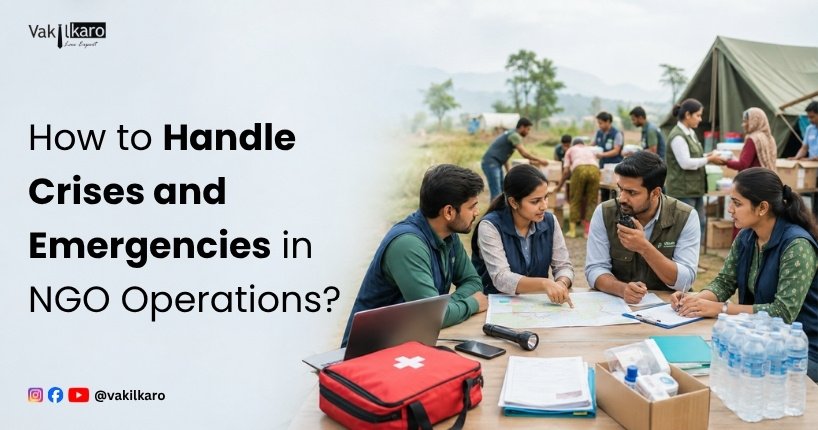
Crises are inevitable in the nonprofit sector, whether due to natural disasters, political unrest, or financial challenges. For NGOs in India, particularly those registered under Section 8 or as trusts and societies, being prepared to respond swiftly is critical. Legal compliance, such as ensuring NGO registration, 12A, and 80G certificates are current, plays a vital role in maintaining donor trust. Effective crisis management involves creating a comprehensive plan, building an emergency response team, maintaining transparent systems, and leveraging technology. By staying prepared, NGOs can navigate crises, secure funding, and continue serving communities while safeguarding their reputation and operations.
Key Takeaways
- This guide provides valuable insights into how NGOs can effectively handle crises and emergencies, offering practical advice on crisis management strategies, legal compliance, and donor relations.
- Understanding the Nature of Crises in NGO Operations NGOs operate in a dynamic environment where various types of crises can arise unexpectedly, posing significant threats to their operations, reputation, and ability to deliver services to communities.
- Legal and Regulatory Crises Legal and regulatory crises can occur when an NGO faces challenges related to its registration, tax compliance, or adherence to regulatory standards.
- NGO Darpan and Handling Crises and Emergencies in NGO Operations NGO Darpan plays a pivotal role in helping NGOs manage crises and emergencies effectively by providing a platform for timely information, coordination, and resource mobilization.
- NGO Darpan also helps NGOs track their impact during emergencies, ensuring that their efforts are transparent and accountable, which is essential for maintaining trust and sustainability in the long term.
Effective Crisis Management for NGOs: Ensuring Preparedness and Compliance
In the nonprofit sector, crises are inevitable, ranging from natural disasters and political instability to financial difficulties and operational disruptions. For NGOs in India, especially those registered as Section 8 companies, trusts, or societies, the ability to respond promptly and effectively to such crises is critical to their survival and success. A swift and organized response can mitigate the impact on communities in need and protect the organization’s reputation and operations.
A crucial aspect of crisis management for NGOs is ensuring legal compliance. Maintaining proper NGO registration, along with current 12A and 80G certifications, is essential for securing resources, accessing emergency funds, and retaining donor confidence during turbulent times. These legal documents play an important role in maintaining transparency, which is vital when communicating with stakeholders, donors, and the public during a crisis.
To be well-prepared, NGOs should develop a comprehensive crisis management plan that includes identifying potential risks, setting up contingency protocols, and establishing clear communication strategies. A designated emergency response team, consisting of key personnel such as team leaders, communication officers, legal advisors, and field coordinators, should be in place to manage different aspects of the crisis. Regular training and mock drills will ensure that the team is ready to respond effectively.
Internal systems also need to be robust. Transparent financial records, strong governance structures, and the use of technology to monitor operations are fundamental in times of crisis. Moreover, NGOs should maintain regular communication with donors, providing updates on the situation, sharing impact stories, and assuring them that legal compliance is being upheld.
By investing in legal readiness, planning, and transparent communication, NGOs can not only survive a crisis but emerge stronger, ensuring continued support from donors and the public while maintaining their mission and impact.
In the nonprofit sector, crises and emergencies are inevitable. Whether triggered by a natural disaster, political instability, internal management breakdowns, or financial crises, these situations can arise unexpectedly, often leaving organizations scrambling to respond. The unpredictable nature of these challenges means that nonprofits must be ready to act quickly and efficiently. The ability to manage crises effectively is crucial, as how an organization responds can either enhance or severely damage its reputation, operational capacity, and trust with its stakeholders.
For NGOs in India, especially those that are registered as Section 8 company Registration or operate under a trust or society, crisis preparedness is particularly important. These organizations not only focus on serving communities in need but are also bound by legal and regulatory frameworks that require them to meet specific compliance standards. In such cases, understanding how to prepare for and manage emergencies is critical to ensuring that their operations can continue without interruption. In addition, the ability to act quickly and decisively in the face of a crisis allows NGOs to maintain their credibility and continue to serve those who depend on their work.
One of the fundamental aspects of crisis management for NGOs is ensuring legal compliance, particularly with NGO registration, 12A, and 80G Registration and certificates. These legal requirements are essential for ensuring that NGOs remain eligible for funding, both from donors and government agencies. Proper legal registration helps maintain donor confidence, ensuring that the organization can access the resources it needs to navigate challenging times. These certifications also offer crucial tax benefits, making it easier for organizations to raise funds during a crisis.
This guide provides valuable insights into how NGOs can effectively handle crises and emergencies, offering practical advice on crisis management strategies, legal compliance, and donor relations. By understanding the importance of preparation and the role that legal readiness plays in ensuring continued support, NGOs can better equip themselves to weather any storm and continue their critical work for the communities they serve.
Understanding the Nature of Crises in NGO Operations
NGOs operate in a dynamic environment where various types of crises can arise unexpectedly, posing significant threats to their operations, reputation, and ability to deliver services to communities. These crises can broadly be categorized into several types, each requiring distinct strategies for mitigation and response. Understanding the nature of these crises is essential for NGOs to build resilience and ensure continued effectiveness in their mission.
- Natural Disasters
Natural disasters such as earthquakes, floods, and pandemics are among the most disruptive events NGOs can face. These events can halt field operations, displace vulnerable communities, and create urgent needs that demand immediate action. For example, in the aftermath of an earthquake or flood, NGOs may need to shift their focus from long-term programs to emergency relief, including providing food, shelter, medical assistance, and restoring basic infrastructure. Additionally, pandemics like COVID-19 can disrupt normal operations, limit staff availability, and place additional strain on health systems and the communities served. Preparedness for such events, including having contingency plans in place, is critical for NGOs to respond swiftly and minimize the negative impact on their work.
- Financial Crises
A sudden loss of funding or delays in donor contributions can lead to a financial crisis, which may threaten the continuity of an NGO’s programs and services. NGOs often rely on donations, grants, and government funding, which can be unpredictable or subject to external economic conditions. A reduction in funding or a delayed grant can halt ongoing projects, demoralize staff, and damage relationships with donors. Financial crises can also arise from mismanagement, inefficient use of resources, or failure to diversify funding sources. To mitigate these risks, NGOs need to build robust financial systems, maintain reserves for emergencies, and foster long-term relationships with donors and stakeholders.
- Reputational Crises
Reputation is a critical asset for any NGO. Allegations of financial mismanagement, misuse of funds, governance failures, or non-compliance with regulations can severely damage an organization’s reputation. In the age of social media, a single negative story can quickly spread, tarnishing the credibility of an NGO and undermining trust with donors, beneficiaries, and partners. Reputational crises can arise from internal issues, such as leadership conflicts, or external factors, like negative press or public scrutiny. Effective governance, transparency in operations, and strong accountability measures are key to avoiding reputational crises. When they do occur, a swift and transparent response is essential to restore trust.
- Operational Crises
Operational crises refer to disruptions in the day-to-day functioning of an NGO. This can include staff turnover, technological failures, or supply chain disruptions. For example, the sudden departure of key staff members can lead to a loss of knowledge and continuity in operations, especially in small organizations with limited staffing. Similarly, technology failures such as data breaches, software crashes, or poor communication systems can hinder an NGO’s ability to function efficiently. Supply chain disruptions, such as the inability to deliver goods or services due to logistical issues, can impede fieldwork and delay essential aid delivery. NGOs should invest in training, technology infrastructure, and backup systems to address these operational vulnerabilities.
- Legal and Regulatory Crises
Legal and regulatory crises can occur when an NGO faces challenges related to its registration, tax compliance, or adherence to regulatory standards. In India, NGOs are required to be properly registered, either as a trust, society, or a Section 8 company. Issues with NGO registration, failure to renew 12A or 80G certifications, or non-compliance with local laws can lead to legal challenges, loss of tax-exempt status, and difficulties accessing donor funds. Non-compliance with regulations, such as failing to submit necessary reports to the government or misusing funds, can also result in fines, investigations, or even the suspension of operations. Regular audits, legal consultations, and staying updated with changing regulations are necessary steps to ensure that an NGO remains compliant and can navigate potential legal crises effectively.
By understanding and categorizing these various types of crises, NGOs can better prepare for them, implement preventative measures, and develop appropriate response plans. This proactive approach enables organizations to manage challenges more effectively, ensuring continuity of operations and maintaining the trust and support of their stakeholders.
Importance of Crisis Management Planning
Every NGO should develop a crisis management plan as part of its operational strategy. This involves:
- Risk Assessment: Identify potential threats specific to your area of work.
- Contingency Planning: Prepare protocols for various crisis scenarios.
- Communication Strategy: Set guidelines on how to communicate with stakeholders, media, and donors.
- Legal Preparedness: Ensure all legal compliances, such as NGO registration and valid 12A and 80G registration, are up-to-date.
Building an Emergency Response Team
Your NGO should have a designated emergency response team with clear roles:
- Team Leader: Coordinates the overall response.
- Communication Officer: Manages internal and external communication.
- Legal Advisor: Ensures compliance with Section 8 company registration, 12A and 80G regulations.
- Field Coordinators: Handle on-ground operations.
Training and mock drills should be conducted regularly to ensure team preparedness.
Strengthening Internal Systems Before a Crisis Hits
A strong internal system is the foundation of effective crisis management. NGOs should:
- Maintain transparent financial records.
- Implement proper governance mechanisms.
- Use technology to monitor operations and ensure quick access to data.
- Keep all legal registrations including Section 8 company registration, NGO registration, and 12A and 80G registration current.
Maintaining Donor Trust During a Crisis
During emergencies, communication with donors becomes more critical than ever:
- Send regular updates on the crisis and how the NGO is responding.
- Share data and impact stories.
- Reassure them of ongoing compliance with legal requirements, including valid 12A and 80G registrations.
Trust is a valuable currency. Being proactive and transparent helps NGOs retain donor support even during hard times.
Leveraging Legal Compliance to Access Emergency Funds
NGOs that maintain legal compliance are more likely to access emergency funding quickly:
- Section 8 company registration boosts credibility and positions the NGO as a professionally managed entity.
- 12A registration helps NGOs retain more of their income by availing tax exemptions.
- 80G registration encourages donors to contribute more, knowing they can claim tax deductions.
Legal readiness can significantly accelerate the fundraising process during emergencies.
Partnering with Government and Other NGOs
During large-scale crises, collaboration is key:
- Partner with government agencies for logistical support.
- Coordinate with other NGOs to avoid duplication and optimize impact.
- Ensure all partners are compliant with NGO registration norms to maintain collective accountability.
Utilizing Technology for Crisis Management
Technology plays a crucial role in modern-day crisis management:
- Use cloud-based platforms for data backup.
- Implement real-time tracking of relief efforts.
- Use social media to communicate with the public and raise funds.
- Maintain digital copies of NGO registration, Section 8 company documents, and 12A/80G certificates for easy access.
Conducting Post-Crisis Evaluations
After the immediate crisis is resolved, conduct a thorough review:
- Assess what worked and what didn’t.
- Document lessons learned.
- Update crisis management plans accordingly.
- Share insights with stakeholders and update them on continuing compliance, especially if there were any disruptions related to Section 8 company or 12A/80G documentation.
Preparing for the Future
Crisis management is an ongoing process:
- Review your plans periodically.
- Renew legal documents well before expiry.
- Stay informed on changes in laws related to NGO registration and tax exemptions.
- Invest in staff training and digital infrastructure.
NGO Darpan and Handling Crises and Emergencies in NGO Operations
NGO Darpan plays a pivotal role in helping NGOs manage crises and emergencies effectively by providing a platform for timely information, coordination, and resource mobilization. During times of crisis, such as natural disasters or public health emergencies, NGOs often face urgent operational challenges, including resource shortages, logistical hurdles, and the need for rapid collaboration. Through NGO Darpan, NGOs can quickly access government resources, funding opportunities, and collaborative networks designed to address emergency situations. The platform facilitates smooth communication between organizations and government bodies, ensuring that NGOs can swiftly respond to crises. Additionally, by being registered on NGO Darpan, NGOs gain enhanced credibility, making it easier to partner with other organizations, donors, and stakeholders to pool resources, share knowledge, and provide efficient relief. NGO Darpan also helps NGOs track their impact during emergencies, ensuring that their efforts are transparent and accountable, which is essential for maintaining trust and sustainability in the long term.
Conclusion
Crises are a constant and unpredictable challenge for NGOs, but their response does not have to be. While the occurrence of an emergency or unforeseen disruption may be beyond an organization’s control, the way it responds can be shaped by careful planning, effective communication, and legal readiness. The key to navigating crises lies in preparedness—equipping your NGO with the tools, systems, and knowledge to act swiftly and decisively when facing adversity. By ensuring that legal compliance is maintained, such as keeping NGO registration, Section 8 company registration, and 12A and 80G certifications up to date, NGOs create a solid legal foundation for any crisis response.
Legal compliance is not just a regulatory requirement but a crucial asset in times of emergency. When an NGO’s legal documents are in order, it can access critical resources more effectively, maintain transparency with donors, and assure stakeholders that the organization remains trustworthy and committed to its mission. In situations where funding and resources are needed urgently, being legally prepared can make the difference between securing essential support or missing out on crucial assistance. Compliance with registration norms also demonstrates professionalism and accountability, further strengthening the NGO’s credibility during difficult times.
Investing in robust crisis management systems, such as risk assessments, clear contingency plans, and communication strategies, builds an organization’s resilience. The foundation of these systems lies in strong internal operations, including transparent financial records, efficient governance structures, and a culture of accountability. By fostering transparency with donors and stakeholders, NGOs can reinforce their reputation and maintain vital support, even when facing uncertainty. Transparency, especially regarding the organization’s crisis response, allows for greater trust and continued contributions from donors.
Ultimately, by focusing on both operational preparedness and legal compliance, NGOs not only safeguard their capacity to respond to emergencies but also ensure that they can continue delivering meaningful impact, even in the most challenging times. The strength of your NGO during a crisis will depend on how well you’ve prepared beforehand. Let your commitment to planning, legal readiness, and transparent communication become your greatest strengths when confronting crises, enabling your organization to emerge more resilient and capable of fulfilling its mission.
Why Choose Vakilkaro for Legal Services?
When it comes to navigating the complexities of legal requirements, particularly for NGOs, having a reliable and experienced partner is crucial. Vakilkaro stands out as a trusted service provider for various legal services, including NGO registration, Section 8 company registration, 12A and 80G certifications, and other essential legal support. Here’s why you should choose Vakilkaro for these services and more:
Expertise in NGO Legalities
Vakilkaro specializes in providing comprehensive legal services for NGOs, ensuring compliance with all regulations and requirements. Whether you're setting up a Section 8 company, registering a trust, or navigating the intricacies of 12A and 80G registrations, Vakilkaro’s team of legal experts ensures that all processes are handled efficiently and in accordance with Indian laws. Their deep understanding of nonprofit regulations makes them the ideal partner for your organization’s legal needs.
End-to-End Solutions
Vakilkaro offers end-to-end legal services, making the process of setting up and managing your NGO straightforward and hassle-free. From initial registration to ongoing compliance support, Vakilkaro provides expert guidance at every stage. Whether it’s preparing your documentation, filing necessary paperwork, or advising on legal matters, Vakilkaro ensures that your NGO stays on track and remains legally compliant.
Quick and Efficient Services
Time is critical when it comes to legal matters, especially for NGOs involved in urgent relief work or other time-sensitive activities. Vakilkaro’s legal team is known for its efficiency in handling complex legal tasks, ensuring that your organization is registered and compliant as quickly as possible. Their streamlined processes and clear communication make it easy to navigate the often overwhelming world of legal compliance.
Transparent and Cost-Effective Pricing
Vakilkaro offers transparent pricing for all its legal services. They understand the financial constraints that many NGOs face and aim to provide affordable solutions without compromising on quality. Their straightforward pricing structure means that you can trust Vakilkaro to offer value for money, helping your organization stay within budget while meeting all legal requirements.
Comprehensive Legal Support
In addition to NGO-related services, Vakilkaro offers a wide range of other legal services, including company registration, tax planning, contracts, and compliance management. This makes Vakilkaro a one-stop shop for all your legal needs, providing comprehensive support for both your nonprofit and any other ventures you may have.
Customer-Centric Approach
Vakilkaro prioritizes customer satisfaction and works closely with clients to understand their unique needs. Their team is responsive, approachable, and always ready to provide tailored advice. With Vakilkaro, you can rest assured that your legal matters are handled with the utmost professionalism and care.
Reputation and Trustworthiness
With a strong reputation in the legal services industry, Vakilkaro is trusted by numerous NGOs, startups, and businesses across India. Their commitment to quality and client success has made them a go-to legal partner for many organizations. Choosing Vakilkaro means entrusting your legal matters to a company with a proven track record of reliability and success.
In summary, Vakilkaro is your go-to legal partner for ensuring NGO registration, compliance with tax and regulatory norms, and handling other legal complexities. With their expertise, efficiency, and commitment to customer satisfaction, Vakilkaro makes legal compliance and services easier, allowing your NGO to focus on its mission while staying legally sound.
Official External Resources
Use these primary/official sources to verify rules, forms, fees, timelines and regulatory updates before publication.
Frequently asked questions
How to Handle Crises and Emergencies in NGO Operations?+
This guide provides valuable insights into how NGOs can effectively handle crises and emergencies, offering practical advice on crisis management strategies, legal compliance, and donor relations. Understanding the Nature of Crises in NGO Operations NGOs operate in a dynamic environment where various types of crises can arise unexpectedly, posing significant threats to their operations, reputation, and ability to deliver services to communities.
