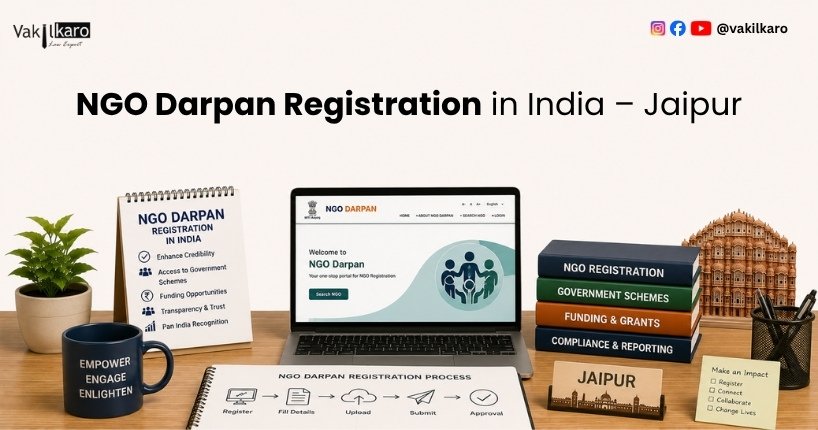
NGO Darpan registration is essential for NGOs, trusts, and Section 8 companies seeking government recognition and funding. The NGO Darpan portal, managed by NITI Aayog, ensures transparency and connects NGOs with government schemes. Registration provides credibility, access to grants, and tax exemptions under 12A and 80G registration. The process involves creating an account, submitting documents like trust deeds or incorporation certificates, and verification. There is no government fee for Darpan registration. NGOs in Jaipur and across India can benefit from government collaborations and funding opportunities by registering on the NGO Darpan portal and securing an NGO Darpan certificate.
Key Takeaways
- In this blog, we will delve into the details of NGO Darpan registration, its significance, eligibility criteria, step-by-step registration process, required documents, and its impact on trusts, societies, and Section 8 companies in Jaipur and across India.
- The registration process is simple and involves creating an account on the NGO Darpan portal, providing organizational details, and submitting necessary documents such as registration certificates, PAN card details, and financial reports.
- Other Voluntary Organizations Involved in Social Work Apart from trusts, societies, and Section 8 companies, other voluntary organizations, self-help groups (SHGs), and grassroots-level NGOs engaged in humanitarian aid, disaster relief, education, healthcare, and rural development are also eligible for NGO Darpan registration.
- Step 3: Submit Required Documents To complete Darpan registration, organizations must submit: Trust Deed or Society Registration Certificate Section 8 Company Incorporation Certificate (if applicable) PAN card of the NGO Details of governing body members Annual reports and financial statements Step 4: Verification and Approval Once the application is submitted, the authorities verify the details.
- Whether you are looking for NGO Darpan registration, Section 8 company registration, trust or society formation, or tax exemption services like 12A and 80G registration, Vakilkaro ensures a hassle-free and professional experience.
NGO Darpan Registration: A Gateway to Government Recognition and Funding
NGO Darpan registration is a crucial step for NGOs, trusts, and Section 8 companies that seek government recognition, credibility, and access to various funding opportunities. Managed by NITI Aayog, the NGO Darpan portal serves as a bridge between NGOs and government schemes, ensuring transparency and accountability in the sector. By completing Darpan registration, organizations can enhance their reputation, gain eligibility for government grants, and enjoy tax exemptions through 12A and 80G registration
The registration process is straightforward and involves creating an account on the NGO Darpan portal, providing organization details, and submitting necessary documents such as a trust deed, society registration certificate, or Section 8 company incorporation certificate. Additional requirements include a PAN card, governing body details, and financial statements. Once submitted, the application undergoes verification, and upon approval, the organization receives an NGO Darpan certificate, confirming its registration.
One of the biggest advantages of NGO Darpan registration is that there are no government fees involved, making it accessible for all eligible organizations. This free service promotes transparency and encourages NGOs to align with government policies and initiatives. Furthermore, NGOs that obtain 12A and 80G registration can benefit from tax exemptions and attract more donations from individuals and corporations looking for tax-deductible contributions.
For NGOs in Jaipur and across India, registering on the NGO Darpan portal opens up numerous opportunities for growth and collaboration. By completing the registration process, organizations can secure financial aid, build credibility, and contribute more effectively to social welfare. If you operate an NGO and want to leverage government support, NGO Darpan registration is a necessary step towards achieving your mission.
Non-Governmental Organizations (NGOs) play a pivotal role in addressing various social, economic, and environmental challenges. These organizations work towards community development, education, healthcare, poverty alleviation, women empowerment, rural development, and other charitable causes. By supplementing government efforts, NGOs help in creating a more inclusive society by reaching marginalized and underserved populations.
To promote transparency, accountability, and seamless coordination between NGOs and the government, the Government of India launched the NGO Darpan Portal. This digital interface, managed by NITI Aayog, serves as a centralized database of NGOs and Voluntary Organizations (VOs) across the country. The platform facilitates NGOs in registering themselves, updating their information, and applying for government schemes, financial aid, and other benefits. It also ensures that the registered NGOs operate within legal frameworks, thereby enhancing their credibility and trustworthiness.
NGO Darpan registration is a crucial requirement for organizations that wish to collaborate with government bodies, apply for grants, and participate in various welfare programs. Registration on the NGO Darpan portal not only provides NGOs with government recognition but also helps them establish credibility among donors, corporate sponsors, and international funding agencies. Additionally, it serves as a means to monitor and regulate the functioning of NGOs, ensuring transparency in their financial and operational activities.
In this blog, we will delve into the details of NGO Darpan registration, its significance, eligibility criteria, step-by-step registration process, required documents, and its impact on trusts, societies, and Section 8 companies in Jaipur and across India. Understanding these aspects will help NGOs and charitable organizations navigate the registration process effectively and leverage government support to enhance their social impact.
What is NGO Darpan?
NGO Darpan is a digital platform initiated by NITI Aayog, in collaboration with the Ministry of Electronics and Information Technology, to create a centralized database of Non-Governmental Organizations (NGOs) and Voluntary Organizations (VOs) operating in India. This platform is designed to promote transparency, accountability, and seamless interaction between NGOs and various government departments. It serves as a bridge that connects NGOs with different ministries, enabling them to participate in government welfare schemes, apply for grants, and enhance their credibility in the social sector.
Before the introduction of NGO Darpan, the process of NGO-government collaboration lacked a structured system, leading to inefficiencies and difficulties in tracking registered organizations. The NGO Darpan portal was developed to address these challenges, offering a streamlined mechanism for NGOs to register and update their details regularly. By registering on the portal, organizations gain official recognition, making it easier to build trust among donors, corporate sponsors, and funding agencies.
One of the major benefits of NGO Darpan registration is that it provides NGOs access to government schemes and financial assistance. Many ministries and government bodies mandate NGOs to be registered on NGO Darpan before they can apply for funding or participate in social welfare projects. Additionally, the platform allows NGOs to showcase their work, track their applications, and ensure compliance with government regulations.
By registering on the NGO Darpan portal, NGOs can strengthen their credibility, improve transparency in their operations, and enhance their ability to receive financial aid from both government and private entities. This initiative not only benefits NGOs but also helps the government monitor and regulate the non-profit sector efficiently, ensuring that public funds are utilized effectively for social development.
What is Darpan Registration?
Darpan registration is the official process that allows Non-Governmental Organizations (NGOs), trusts, societies, and Section 8 companies to register on the NGO Darpan portal, a digital platform managed by NITI Aayog. This registration grants NGOs a unique identification number and an NGO Darpan certificate, which is essential for organizations seeking government grants, financial aid, subsidies, and other benefits.
The NGO Darpan registration process was introduced to ensure transparency, accountability, and streamlined communication between NGOs and government departments. Many ministries and government bodies require NGOs to be registered on the NGO Darpan portal before they can apply for funding, participate in social development programs, or receive tax benefits under 12A and 80G registration This system helps the government maintain a structured database of NGOs, preventing fraud and ensuring that only genuine organizations receive support.
By completing Darpan registration, NGOs gain official recognition from the government, making it easier to establish credibility with donors, corporate sponsors, and funding agencies. The certificate obtained through NGO Darpan registration is widely accepted by government agencies and serves as proof that an organization is legally registered and eligible for various welfare schemes.
Moreover, Darpan registration is not limited to newly established NGOs; even existing NGOs, trusts, and Section 8 companies that have been operating for years can apply for it. The registration process is simple and involves creating an account on the NGO Darpan portal, providing organizational details, and submitting necessary documents such as registration certificates, PAN card details, and financial reports.
Overall, Darpan registration is a crucial step for NGOs that wish to enhance their credibility, access government funding, and contribute effectively to social welfare initiatives in India.
Why is NGO Darpan Registration Important?
NGO Darpan registration is a significant step for NGOs, trusts, societies, and Section 8 companies looking to establish credibility, access government funding, and operate transparently. The registration offers multiple benefits that enhance the effectiveness and legitimacy of an organization in the social sector. Below are the key reasons why NGO Darpan registration is essential:
Government Recognition
Registering on the NGO Darpan portal provides official recognition to NGOs, making them eligible for collaborations with government departments and ministries. This credibility enhances their trustworthiness among donors, corporate sponsors, and international funding agencies. Many government schemes and welfare programs require NGOs to have an NGO Darpan certificate as proof of legitimacy before granting access to financial aid or projects.
Access to Funding Opportunities
One of the primary advantages of Darpan registration is that it enables NGOs to apply for government grants, subsidies, and funding programs. Various ministries allocate funds for social development projects, but only registered NGOs can participate. This financial support helps organizations expand their activities, reach more beneficiaries, and sustain their operations effectively.
Ensuring Transparency in Operations
The NGO Darpan portal was created to promote accountability and transparency within the NGO sector. By registering, organizations commit to disclosing their financial statements, activities, and governing body details, ensuring they function within legal and ethical guidelines. This transparency not only builds trust with the government but also reassures donors and stakeholders that funds are being used responsibly.
Facilitating Government-NGO Collaboration
NGO Darpan registration also acts as a networking platform, allowing NGOs to connect with relevant government bodies and ministries. This collaboration helps NGOs stay updated on new policies, schemes, and funding opportunities, making it easier to align their initiatives with government priorities. Stronger engagement between NGOs and government agencies ensures that social welfare programs reach the right beneficiaries effectively.
Eligibility for Tax Exemptions
NGOs that obtain 12A and 80G registration can enjoy tax benefits, but many government agencies require NGO Darpan registration as a prerequisite before approving these exemptions.
- 12A Registration allows NGOs to exempt their income from tax, helping them retain more funds for social initiatives.
- 80G Registration enables donors to claim tax deductions on donations, encouraging more people and businesses to contribute to NGO activities.
By completing Darpan registration, NGOs strengthen their chances of securing 12A and 80G tax benefits, making fundraising efforts more effective.
Eligibility for NGO Darpan Registration
NGO Darpan registration is open to a wide range of non-profit organizations engaged in social welfare, charitable activities, and developmental projects. Organizations that seek government recognition, financial support, and tax exemptions must register on the NGO Darpan portal to avail these benefits. Below are the types of organizations that are eligible for Darpan registration:
Trusts
A trust is a legally registered entity that manages funds or resources for charitable, educational, religious, or social causes. Trusts are established under the Indian Trusts Act, 1882 and are commonly used for philanthropic activities such as education, healthcare, poverty alleviation, and disaster relief. Trusts seeking government grants, subsidies, and tax benefits must complete NGO Darpan registration to gain credibility and financial aid from government bodies.
Societies
Societies are formed under the Societies Registration Act, 1860 and operate as non-profit organizations engaged in activities like literacy programs, environmental conservation, rural development, and public health initiatives. Societies function with a governing body and members who oversee the administration and execution of various social projects. Registering on the NGO Darpan portal enables societies to apply for government funding, showcase their work, and enhance their credibility among donors.
Section 8 Companies (Non-Profit Organizations)
A Section 8 Company is a non-profit entity registered under the Companies Act, 2013 with the primary objective of promoting commerce, art, science, research, education, sports, social welfare, environmental protection, and charity. Unlike trusts and societies, Section 8 companies follow a more structured corporate governance model and have legal obligations similar to private limited companies. However, they do not distribute profits among shareholders but instead reinvest the funds into social causes. NGO Darpan registration is vital for Section 8 companies as it enables them to apply for government tenders, grants, and corporate social responsibility (CSR) funding.
Other Voluntary Organizations Involved in Social Work
Apart from trusts, societies, and Section 8 companies, other voluntary organizations, self-help groups (SHGs), and grassroots-level NGOs engaged in humanitarian aid, disaster relief, education, healthcare, and rural development are also eligible for NGO Darpan registration. These organizations, though small in scale, can greatly benefit from government collaboration, financial assistance, and networking opportunities by being part of the NGO Darpan portal.
Process of NGO Darpan Registration
Step 1: Create an NGO Darpan Account
- Visit the NGO Darpan portal ( https://ngodarpan.gov.in/ ).
- Click on "Sign Up" and provide basic details such as organization name, contact details, and PAN information.
Step 2: Provide Organization Details
- Enter details like the registration number, date of establishment, and type of organization (trust, society, or Section 8 company).
- Upload scanned copies of relevant registration certificates.
Step 3: Submit Required Documents
To complete Darpan registration, organizations must submit:
- Trust Deed or Society Registration Certificate
- Section 8 Company Incorporation Certificate (if applicable)
- PAN card of the NGO
- Details of governing body members
- Annual reports and financial statements
Step 4: Verification and Approval
Once the application is submitted, the authorities verify the details. Upon successful verification, the NGO receives the NGO Darpan certificate, confirming registration on the NGO Darpan portal.
Darpan Registration for Trusts
Trusts play a significant role in social welfare, focusing on charitable, educational, religious, and developmental activities. To enhance their credibility and gain access to government grants, funding opportunities, and tax exemptions, trusts must complete Darpan registration through the NGO Darpan portal, managed by NITI Aayog.
The Darpan registration process for trusts is similar to that of other NGOs, but specific documentation is required to establish the trust’s authenticity. Once registered, the trust receives an NGO Darpan certificate, which serves as a unique identification and is essential for availing government schemes and financial aid.
Key Steps for Darpan Registration for Trusts
Account Creation on the NGO Darpan Portal
The first step in Darpan registration is creating an account on the NGO Darpan portal ( https://ngodarpan.gov.in ). The trust must provide essential details such as:
- Name of the Trust
- Contact Information (Email ID, Phone Number, Address)
- Trust PAN Number
Submission of Trust Information
Once the account is created, the trust needs to provide complete details regarding its registration, such as:
- Registration Number and Date (as per the Trust Deed)
- Type of Trust (Public or Private)
- Objectives and Activities of the Trust (education, healthcare, social welfare, etc.)
- Details of Trustees and Governing Body Members
Uploading Required Documents
To successfully complete Darpan registration, a trust must submit the following documents:
- Registered Trust Deed – A legal document proving the existence and objectives of the trust.
- PAN Card of the Trust – Mandatory for financial transactions and government compliance.
- Details of Trustees – Names, designations, and contact information of board members.
- Annual Reports and Financial Statements – Documents showcasing the trust’s activities and financial health (if applicable).
Verification and Approval
After submitting all details and documents, the application is reviewed by NGO Darpan authorities. Once verified, the trust receives an NGO Darpan certificate, confirming its registration. This certificate is essential for applying for government schemes, grants, and tax benefits such as 12A and 80G registration.
Benefits of Darpan Registration for Trusts
- Official Government Recognition, enhancing trustworthiness among donors and stakeholders.
- Eligibility for Government Grants and Funding Programs to support social initiatives.
- Increased Transparency and Credibility, helping build confidence with potential donors and funding agencies.
- Tax Benefits under 12A and 80G registration, enabling trusts to receive tax exemptions and offer tax deductions to donors.
NGO Darpan Registration Fees
There is no government fee for NGO Darpan registration. It is a free service provided by NITI Aayog to promote transparency and facilitate government-NGO collaboration.
Section 8 Company Registration and NGO Darpan
Section 8 company registration is one of the most preferred structures for NGOs in India. These companies operate as non-profits, focusing on charitable and social work. Once a Section 8 company is registered, it must also complete NGO Darpan registration to avail government benefits and funding.
12A and 80G Registration for NGOs
After NGO registration organizations should apply for 12A and 80G registration under the Income Tax Act
- 12A Registration: Grants NGOs tax exemption on their income.
- 80G Registration: Allows donors to claim tax deductions for contributions made to the NGO.
Having 12A and 80G registration enhances credibility and increases funding opportunities for NGOs.
Conclusion
NGO Darpan registration is an essential step for NGOs, trusts, societies, and Section 8 companies that aim to enhance their credibility, gain access to government grants, and establish seamless collaboration with authorities. It serves as a bridge between non-governmental organizations and government ministries, ensuring transparency and accountability in the sector. Whether an NGO is engaged in education, healthcare, poverty alleviation, environmental conservation, or any other social cause, registering on the NGO Darpan portal opens doors to numerous opportunities that can help expand its reach and impact.
By completing Darpan registration, NGOs can apply for government funding, receive official recognition, and establish trust with donors and corporate partners. Additionally, NGOs with 12A and 80G registration can benefit from tax exemptions, making it easier to secure financial contributions from individuals and businesses. This not only helps organizations sustain their operations but also encourages more donors to support meaningful causes.
For NGOs, especially those operating in Jaipur and across India, registering on the NGO Darpan portal is a strategic move that enhances visibility and strengthens their ability to collaborate with government bodies, corporate social responsibility (CSR) initiatives, and international funding agencies. The registration process is straightforward, and the benefits far outweigh the effort required to complete it.
If you run an NGO, trust, or Section 8 company in Jaipur, now is the right time to register on the NGO Darpan portal. Doing so will unlock new opportunities for growth, funding, and impactful social contributions, ensuring that your organization continues to drive positive change in society.
Why Choose Vakilkaro for NGO Darpan Registration and Other Legal Services?
Vakilkaro is a trusted legal service provider specializing in NGO registrations, corporate compliance, taxation, and business legalities. Whether you are looking for NGO Darpan registration, Section 8 company registration, trust or society formation, or tax exemption services like 12A and 80G registration, Vakilkaro ensures a hassle-free and professional experience.
Expertise in NGO Registrations and Compliance
Vakilkaro has a team of experienced legal professionals who specialize in NGO Darpan registration, trust and society formation, and Section 8 company incorporation. Their expertise ensures that your registration process is quick, error-free, and compliant with government norms.
End-to-End Support for NGO Darpan Registration
From document preparation to submission and approval, Vakilkaro handles the entire Darpan registration process for you. Their team ensures that all necessary documents—such as trust deeds, incorporation certificates, and PAN details—are correctly submitted to avoid delays or rejections.
Assistance in 12A and 80G Registration
Vakilkaro also helps NGOs obtain 12A and 80G registration, enabling tax exemptions for the organization and tax benefits for donors. These certifications are crucial for attracting funding and ensuring long-term sustainability.
Cost-Effective and Transparent Services
Unlike traditional legal firms, Vakilkaro provides affordable, fixed-fee legal services without hidden costs. They maintain complete transparency in pricing, ensuring clients receive value for money.
Other Legal and Business Services Provided by Vakilkaro
In addition to NGO and trust-related registrations, Vakilkaro offers a wide range of legal and compliance services, including:
- Company Registration: Private Limited company, LLP, Section 8 Company, One Person Company (OPC)
- Trademark Registration & Intellectual Property Protection
- GST Registration & Compliance
- Microfinance and RBI License Assistance
- Tax Advisory and Compliance
- Legal Documentation & Agreement Drafting
- Business Licenses and Compliance Management
Quick and Reliable Customer Support
Vakilkaro offers dedicated customer support, ensuring clients receive real-time updates, guidance, and resolutions to their queries. Their personalized assistance helps NGOs and businesses navigate legal complexities smoothly.
Official External Resources
Use these primary/official sources to verify rules, forms, fees, timelines and regulatory updates before publication.
Frequently asked questions
NGO Darpan Registration in India – Jaipur+
In this blog, we will delve into the details of NGO Darpan registration, its significance, eligibility criteria, step-by-step registration process, required documents, and its impact on trusts, societies, and Section 8 companies in Jaipur and across India. Step 3: Submit Required Documents To complete Darpan registration, organizations must submit: Trust Deed or Society Registration Certificate Section 8 Company Incorporation Certificate (if applicable) PAN card of the NGO Details of governing body members Annual reports and financial statements Step 4: Verification and Approval Once the application is submitted, the authorities verify the details.
