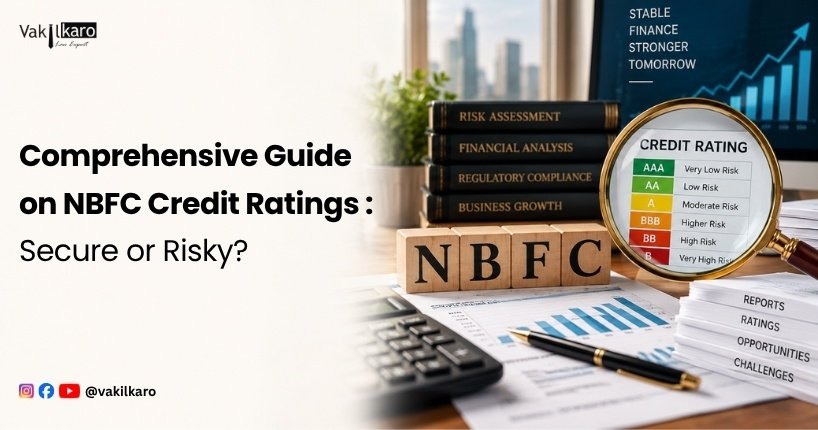
Credit ratings are crucial for Non-Banking Financial Companies (NBFCs) in India, influencing everything from access to funds to investor confidence. Whether a company is newly pursuing NBFC registration or is already RBI-registered, a strong rating improves borrowing terms, regulatory reputation, and competitive edge. It plays a vital role in the NBFC lifecycle, especially during expansions, funding rounds, or the application process for licenses. Vakilkaro, a trusted legal-tech platform, supports NBFCs throughout this journey by helping with documentation, compliance, audits, and credit rating preparedness. Strengthen your NBFC’s future with the right rating strategy, backed by Vakilkaro’s end-to-end guidance and regulatory expertise.
Key Takeaways
- Whether the company is newly incorporated and undergoing NBFC registration with the Reserve Bank of India (RBI), or is already an established RBI-registered finance company, credit ratings have a direct impact on its ability to attract funding, partners, and investor confidence.
- Regulatory Influence While not a mandatory part of the NBFC registration process, the Reserve Bank of India (RBI) views credit ratings as an indicator of sound financial and risk management practices.
- Credit Ratings and the NBFC Lifecycle In the journey of a Non-Banking Financial Company (NBFC), credit ratings are not a one-time milestone but an ongoing strategic asset.
- From the early stages of NBFC registration to scaling operations and applying for additional licenses, credit ratings play a pivotal role in defining the company’s credibility, access to funding, and regulatory standing.
- In short, credit ratings accompany an NBFC throughout its lifecycle—guiding its financial strategy, shaping its market perception, and validating its regulatory fitness.
The Strategic Importance of Credit Ratings for NBFCs Registration in India
In today’s dynamic financial ecosystem, a credit rating is not just a formality for Non-Banking Financial Company Registration (NBFCs)—it is a powerful tool that defines credibility, funding capability, and regulatory strength. Whether an NBFC is newly formed or already has its license from the Reserve Bank of India (RBI), its credit rating plays a crucial role in establishing its standing in the financial market.
A credit rating is essentially an independent evaluation of an NBFC’s capacity to meet its debt obligations. This rating reflects various factors such as financial performance, asset quality, risk management, and governance practices. For any company undergoing NBFC registration, understanding and preparing for a future credit rating is essential. It sets the foundation for sound internal controls and financial reporting, which are vital during both the registration and operational stages.
A good credit rating empowers NBFCs to access capital at competitive interest rates, build trust with investors and financial institutions, and gain a competitive edge over others. It also signals regulatory readiness, especially important for those applying for licenses like core investment company registration or for NBFCs expanding into asset finance or microfinance sectors.
Regular assessments, especially during phases of growth, mergers, or public fund-raising, help NBFCs stay financially disciplined. This rating is a vital benchmark during equity investment rounds, IPO preparations, or transitions toward banking licenses.
Vakilkaro plays a pivotal role in helping NBFCs strengthen their creditworthiness. From assisting in the NBFC license application process to advising on financial structuring, documentation, and compliance, Vakilkaro ensures NBFCs are not just compliant with RBI norms but are also strategically positioned to grow. With expert support, companies can focus on expansion while maintaining strong credit standing and investor trust. A solid credit rating isn’t just a score—it’s a growth catalyst.
For any Non-Banking Financial Company (NBFC), securing and sustaining a strong credit rating is far more than just a regulatory tick-box — it’s a strategic requirement that underpins business credibility, operational efficiency, and long-term success. Whether the company is newly incorporated and undergoing NBFC registration with the Reserve Bank of India (RBI), or is already an established RBI-registered finance company, credit ratings have a direct impact on its ability to attract funding, partners, and investor confidence.
A credit rating is an independent evaluation of an NBFC’s ability to meet its financial obligations. It reflects financial discipline, asset quality, liquidity, risk management, governance, and overall market standing. In the context of new NBFC registration, having a well-structured financial foundation from the start can significantly improve creditworthiness and reduce the cost of future borrowing. For operational NBFCs seeking business expansion or additional licenses (like a Core Investment Company registration or an NBFC-MFI license), a favorable credit rating opens doors to larger credit lines, private equity funding, and institutional partnerships.
This is where Vakilkaro brings added value. As a leading legal-tech platform, Vakilkaro assists NBFCs at every step — from incorporation and RBI license application to structuring internal compliance, governance documentation, and rating preparedness. Vakilkaro’s expert team not only helps meet NBFC registration requirements but also works to ensure that the company’s financial structure supports a strong initial and ongoing credit rating. Their services include advising on capital structure, facilitating audit-readiness, preparing registration documents, and ensuring compliance with RBI norms.
In today’s competitive financial sector, credit rating is not just about numbers—it’s about perception, reliability, and growth potential. With Vakilkaro’s professional guidance, NBFCs can position themselves as trustworthy, scalable, and financially sound institutions ready to lead in the Indian lending ecosystem.
What Is a Credit Rating in the NBFC Context?
In the landscape of India’s financial sector, a credit rating for a Non-Banking Financial Company (NBFC) is a vital benchmark of credibility and financial health. Simply put, it is an independent, professional evaluation of the NBFC’s capacity to meet its debt obligations — both in the short and long term. This assessment is carried out by credit rating agencies based on a variety of financial and non-financial parameters.
A credit rating reflects several key aspects of an NBFC’s operational and financial framework:
- Financial Strength: This includes the NBFC’s capital structure, liquidity position, leverage ratios, and access to funding.
- Asset Quality: Lenders and investors want to know how well the NBFC manages its loan portfolio, including the level of non-performing assets (NPAs).
- Profitability: Operating margins, return on assets, and net profits are all indicators that impact the rating.
- Governance and Compliance: Strong board oversight, internal controls, regulatory compliance with RBI norms, and transparency in reporting all contribute positively.
- Risk Profile: This encompasses market exposure, credit risks, interest rate sensitivity, and management strategy.
A higher credit rating (like AA or AAA) suggests lower credit risk and boosts the NBFC’s credibility with lenders, investors, and business partners. It enables easier access to debt markets at lower interest rates and attracts equity investors with confidence in governance and returns.
Given the vast number of RBI-registered NBFCs in India, a strong credit rating serves as a powerful differentiator. It not only influences financing opportunities but also shapes public perception and business expansion potential. For NBFCs seeking an RBI license, credit ratings serve as an important preparatory tool for establishing robust internal financial systems from the outset.
Why Credit Rating Matters for NBFCs
In the competitive and tightly regulated environment of non-banking financial services, a credit rating is more than a compliance requirement—it’s a strategic advantage. Whether a company is in the early stages of NBFC registration or already a well-established player, maintaining a strong credit rating significantly impacts its operational and financial trajectory. Here’s a deeper look into why credit ratings are crucial for NBFCs:
- Access to Capital
NBFCs often fund their lending operations through bank loans, bond issuances, or other debt instruments like non-convertible debentures (NCDs). A high credit rating signals lower credit risk to lenders and investors, making it easier for the NBFC to secure funds. More importantly, it reduces the cost of borrowing—interest rates are directly influenced by the NBFC’s perceived financial health. Better ratings mean cheaper loans and improved margins, which is essential for sustaining long-term profitability.
- Investor & Market Confidence
Credit ratings serve as a seal of credibility for stakeholders. Institutional investors, venture capitalists, and strategic partners often rely on these ratings when evaluating an NBFC’s risk profile. A positive rating boosts trust, enabling the NBFC to negotiate better terms in funding deals, attract equity investors, and form alliances with reputable market players. It also instills confidence among shareholders and depositors about the company’s governance and stability.
- Regulatory Influence
While not a mandatory part of the NBFC registration process, the Reserve Bank of India (RBI) views credit ratings as an indicator of sound financial and risk management practices. For NBFCs in specialized segments like housing finance or microfinance, a strong rating can influence regulatory perception during license renewals or expansion requests.
- Competitive Advantage
Among the thousands of RBI-registered NBFCs, a robust credit rating is a differentiating factor. It not only enhances visibility in the financial ecosystem but also positions the company as a trustworthy entity in the eyes of clients, investors, and regulators. In crowded markets, reputation built on transparency and financial discipline can be a game-changer.
Credit Ratings and the NBFC Lifecycle
In the journey of a Non-Banking Financial Company (NBFC), credit ratings are not a one-time milestone but an ongoing strategic asset. From the early stages of NBFC registration to scaling operations and applying for additional licenses, credit ratings play a pivotal role in defining the company’s credibility, access to funding, and regulatory standing. Here's how credit ratings intersect with each phase of the NBFC lifecycle:
During NBFC Registration: Building the Foundation
When applying for NBFC registration with the Reserve Bank of India (RBI), especially for loan companies and microfinance institutions (MFIs), laying the groundwork for a future credit rating is essential. While a rating may not be mandatory at this stage, demonstrating the intention and capacity to maintain strong financial governance makes the application more robust. This includes establishing proper internal audit mechanisms, financial controls, and compliance structures—all of which are assessed during credit rating evaluations. Proactive planning ensures that once the NBFC is operational, it is already aligned with rating expectations.
Growth Phase: Scaling with Confidence
As an NBFC begins to grow and expand its operations, a credit rating becomes crucial for unlocking new sources of funding, such as term loans, debentures, and structured finance products. Banks and institutional investors often use credit ratings to assess the risk of lending, and companies with better ratings enjoy lower interest rates and more flexible credit terms. This is especially important for NBFCs focusing on capital-intensive sectors like vehicle finance, housing finance, or SME lending.
License Expansion: Proving Regulatory Readiness
When an NBFC applies for additional licenses, such as for becoming a Core Investment Company (CIC) or transforming into a banking institution, having a consistently high credit rating demonstrates maturity, transparency, and regulatory compliance. It signals to the RBI that the company is equipped with the financial resilience and risk management systems required for greater responsibility and broader financial services outreach.
In short, credit ratings accompany an NBFC throughout its lifecycle—guiding its financial strategy, shaping its market perception, and validating its regulatory fitness.
Common Triggers for Credit Rating Assessment in NBFCs
For Non-Banking Financial Companies (NBFCs), credit ratings are not static—they are dynamic reflections of the company’s financial health, risk exposure, and operational maturity. As such, credit rating agencies periodically reassess ratings based on various business activities or changes in financial structure. These reassessments are triggered by specific corporate actions or strategic decisions that may influence the NBFC’s ability to meet its obligations. Below are some of the most common triggers for a credit rating assessment:
Business Expansion
When an NBFC embarks on geographical or sectoral expansion, especially into risk-sensitive areas like unsecured lending or new markets, credit rating agencies reassess the company's risk exposure, capital adequacy, and liquidity buffer. Expanding operations usually demands more capital, which can impact leverage ratios and asset quality, making a fresh rating evaluation crucial.
Application for Banking License
NBFCs applying for a banking license from the Reserve Bank of India (RBI) must undergo rigorous scrutiny. A credit rating review at this stage helps evaluate whether the NBFC possesses the financial strength, governance standards, and operational discipline expected of a banking institution. Strong credit ratings demonstrate regulatory preparedness and reinforce the company's reputation.
Equity Fundraising or IPO Planning
Before raising equity through private placements or Initial Public Offerings (IPOs), companies often undergo a rating reassessment. Investors and underwriters rely heavily on updated credit ratings to gauge financial stability, management quality, and investment risk. A favorable rating can enhance market confidence and improve the valuation and terms of fundraising.
Renewal of Financial Arrangements
During the renewal of bank loans, credit lines, or external commercial borrowings (ECBs), lenders typically require an updated credit rating. The rating helps determine the interest rate, credit limit, and security requirements. A downgraded rating can lead to higher borrowing costs or even rejection of credit applications.
Significant Change in Capital or Ownership
Events such as changes in shareholding patterns, capital infusion, or promoter exit can significantly affect an NBFC’s financial outlook and governance structure. These changes often prompt a fresh credit rating review to reflect potential shifts in strategic direction, operational control, or financial backing.
In all these scenarios, maintaining a positive credit rating not only ensures easier access to funds and regulatory approvals but also enhances trust among investors, clients, and partners. Regular internal assessments and proactive financial planning, ideally guided by legal and compliance experts like Vakilkaro, help NBFCs stay prepared for such rating reviews and maintain their competitive edge.
Key Benefits of a Strong Credit Rating
- Better interest rates from lenders
- Access to a broader investor base
- Stronger valuation in fundraising or mergers
- Increased stakeholder confidence
- Improved monitoring systems and governance culture
Role of Vakilkaro in NBFC Rating & Compliance
Vakilkaro plays a crucial role in supporting NBFCs across the entire journey—from company incorporation to obtaining an NBFC license from RBI. Their expert team helps:
- Prepare documentation for NBFC license application
- Advise on structuring finances for optimal credit rating outcomes
- Assist with audits, reports, and internal controls
- Simplify compliance with registration norms and RBI circulars
- Monitor changes in nbfc licence requirements and act proactively
Whether you're undergoing new NBFC registration, dealing with regulatory checks, or preparing for your credit rating review, Vakilkaro ensures your business is fully compliant and audit-ready.
Conclusion
In the dynamic world of financial services, a credit rating is far more than just a compliance metric—it serves as a strategic tool that impacts every dimension of a Non-Banking Financial Company (NBFC). From influencing capital infusion and cost of borrowing to enhancing brand credibility and investor confidence, a robust credit rating is the bedrock of a financially resilient NBFC.
For newly incorporated NBFCs or those undergoing NBFC registration with RBI, focusing on creditworthiness from the outset can streamline access to funding and attract more favorable terms from banks and institutional investors. Similarly, for established NBFCs looking to restructure, diversify, or scale operations—perhaps even pursue a banking license or IPO—maintaining or upgrading their credit rating becomes critical to demonstrating operational strength and regulatory compliance.
This is where Vakilkaro plays a transformative role.
As a legal-tech platform specializing in NBFC company registration, compliance, and audit readiness, Vakilkaro helps you position your NBFC for long-term success. From the application for NBFC registration, preparing financial documentation, to ongoing support for rating assessments, Vakilkaro ensures your business stays proactive, transparent, and competitive.
Vakilkaro’s experienced advisors also assist with:
- Designing capital structures suited for favorable ratings,
- Navigating nbfc license requirements,
- Ensuring alignment with RBI guidelines, and
- Managing your NBFC certificate of registration, audits, and governance protocols.
Whether you’re a startup entering the NBFC space, an existing RBI registered loan company, or a financial institution aiming for next-level growth, Vakilkaro helps bridge the gap between legal compliance and financial credibility. With the right strategy, structure, and support, your NBFC can not only secure a high credit rating but use it as a launchpad for expansion, investment, and innovation.
Ready to empower your NBFC with a strong rating and regulatory foundation? Vakilkaro is your partner every step of the way.
Official External Resources
Use these primary/official sources to verify rules, forms, fees, timelines and regulatory updates before publication.
Frequently asked questions
Comprehensive Guide on NBFC Credit Ratings: Secure or Risky?+
Whether the company is newly incorporated and undergoing NBFC registration with the Reserve Bank of India (RBI), or is already an established RBI-registered finance company, credit ratings have a direct impact on its ability to attract funding, partners, and investor confidence. Regulatory Influence While not a mandatory part of the NBFC registration process, the Reserve Bank of India (RBI) views credit ratings as an indicator of sound financial and risk management practices.
