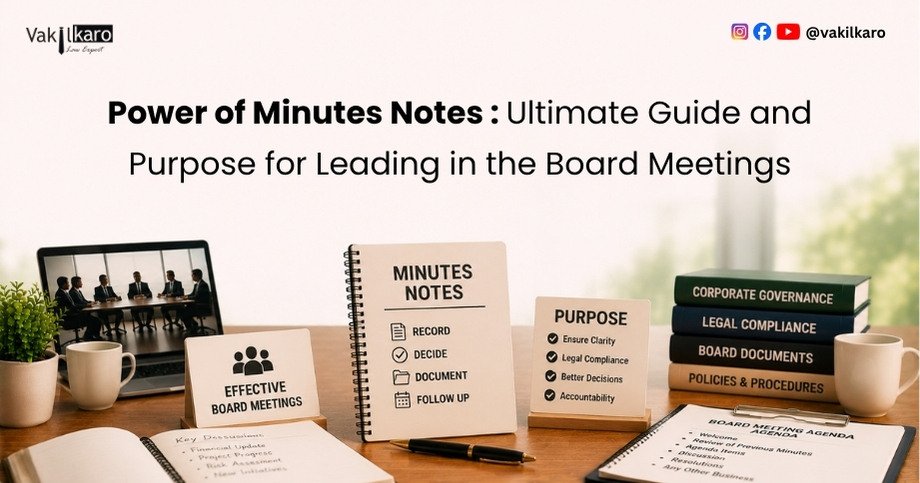
Board meetings are vital for the governance and compliance of NGOs in India, especially for those with Section 8 company registration. Regular meetings ensure transparency, accountability, and adherence to regulatory norms tied to NGO registration, 12A, and 80G certifications. This guide outlines the ideal frequency of board meetings and what must be documented in the minutes, such as financial decisions, compliance updates, and governance changes. Proper documentation ensures smooth operations and is crucial for retaining tax exemptions under 12A and 80G registrations. Build strong governance, starting with your boardroom practices.
Key Takeaways
- This guide outlines the ideal frequency of board meetings and what must be documented in the minutes, such as financial decisions, compliance updates, and governance changes.
- One of the most critical aspects of governance is conducting board meetings at regular intervals and meticulously documenting the minutes of these meetings.
- Among these, one of the most essential governance practices is the regular conduct of board meetings and the accurate documentation of their minutes.
- In this blog, we’ll break down how often board meetings should be held, what should be included in their minutes, and how all of this ties into broader regulatory expectations for NGOs in India, with a special focus on Section 8 company registration and compliance with 12A and 80G provisions.
- Regular board meetings with well-documented minutes contribute to: Increased donor confidence, by showcasing transparency and responsible governance.
The Importance of Regular Board Meetings and Proper Documentation for NGOs
For Non-Governmental Organizations (NGOs) in India, especially those registered as Section 8 companies, maintaining strong governance is key to long-term success and legal compliance. One of the most critical aspects of governance is conducting board meetings at regular intervals and meticulously documenting the minutes of these meetings. This practice not only promotes transparency and accountability but is also essential to comply with various legal and regulatory requirements, including those related to NGO registration, 12A registration, and 80G certification.
Board meetings provide a platform for directors and trustees to review strategic goals, monitor ongoing programs, approve financial matters, and ensure the organization stays aligned with its core mission. For Section 8 companies under the Companies Act, 2013, it is mandatory to hold at least two board meetings annually, with no more than 180 days between each. Trusts and societies, although not bound by the same statutory frequency, are strongly advised to follow similar best practices, particularly if they hold or seek 12A and 80G exemptions.
Equally important is the proper recording of meeting minutes. These minutes serve as the official record of decisions and must include the date, time, venue, attendees, key discussions, financial approvals, and any resolutions passed. These records are often reviewed by regulatory authorities during audits or while renewing 12A and 80G registrations. Poor documentation or infrequent meetings can lead to compliance issues, delays in approvals, or even cancellation of tax benefits.
Adopting a disciplined approach to board meetings and minute-keeping strengthens the NGO’s governance framework, enhances donor trust, and positions the organization for long-term sustainability. For any NGO—whether newly registered or well-established—prioritizing boardroom practices is a fundamental step toward achieving transparency and operational excellence.
Running a Non-Governmental Organization (NGO) in India goes far beyond the drive to create social impact or address pressing community issues. While passion and purpose are at the heart of every NGO, operating effectively within the legal framework is equally critical to the sustainability and credibility of the organization. NGOs in India—whether registered as trusts, societies, or Section 8 companies—must adhere to a variety of statutory requirements that ensure accountability, transparency, and lawful use of funds. Among these, one of the most essential governance practices is the regular conduct of board meetings and the accurate documentation of their minutes.
Board meetings are not just internal discussions; they are legally recognized events where crucial decisions are made, from strategic planning and budgeting to program approvals and compliance checks. Documenting these meetings through well-maintained minutes serves as a formal record of the NGO’s decision-making process and helps establish a clear audit trail—something that is especially important when the organization seeks or maintains 12A registration (for income tax exemption) and 80G certification (which allows donors to claim tax deductions). These registrations are not one-time approvals—they require ongoing compliance and transparency, which is often evaluated through governance records like board meeting minutes.
For NGOs registered under Section 8 of the Companies Act, 2013, these practices are not just recommended—they are mandatory. The law prescribes specific timelines and formats for holding board meetings and maintaining minutes. Even for trusts and societies, which may not be governed by company law, adopting these best practices is critical for organizational integrity and eligibility for various funding opportunities, both domestic and international.
In this blog, we’ll break down how often board meetings should be held, what should be included in their minutes, and how all of this ties into broader regulatory expectations for NGOs in India, with a special focus on Section 8 company registration and compliance with 12A and 80G provisions.
Understanding NGO Registration in India
Before we delve into the intricacies of board meetings and their documentation, it's essential to understand the broader framework of NGO registration in India. NGOs—or Non-Governmental Organizations—can take various legal forms depending on their objectives, structure, and operational preferences. The legal route chosen significantly influences the governance, compliance requirements, and eligibility for tax benefits or government recognition.
In India, NGOs can be registered under three primary legal frameworks:
- The Societies Registration Act, 1860:
Societies are typically formed by a group of individuals united by a common charitable, literary, cultural, or scientific purpose. They are governed by a managing committee or governing body, and must follow the rules laid out in their Memorandum of Association and Bye-laws. Each state has its own registrar of societies, and compliance varies slightly across states.
- The Indian Trusts Act, 1882:
Trusts are generally formed when a settlor transfers property or assets to trustees with the intent that they be used for a specific charitable or religious purpose. This form is simpler to establish and manage but may lack the robust governance framework seen in other models. Trusts are often preferred by families or small groups focusing on philanthropic activities.
- Section 8 of the Companies Act, 2013:
Section 8 companies are the most regulated and professionally structured form of NGO in India. They are governed by the Ministry of Corporate Affairs (MCA) and enjoy the credibility of being incorporated under the Companies Act. These companies are explicitly formed for the promotion of charitable objectives such as education, social welfare, environmental conservation, the promotion of art, science, and more. Unlike private limited companies, Section 8 companies must reinvest all profits into their charitable objectives—distribution of profits to members is strictly prohibited.
Due to their formal structure, Section 8 companies are required to maintain high standards of governance, including regular board meetings, statutory filings, and detailed accounting. These features make Section 8 registration particularly appealing to institutional donors, CSR partners, and international funding bodies, who often prefer working with professionally managed and compliant organizations.
To maximize their legal and financial efficiency, NGOs—regardless of their registration type—can also apply for tax exemptions under the Income Tax Act:
- 12A Registration: Grants exemption from paying income tax on the organization’s surplus or income. It is a prerequisite for availing other tax-related benefits.
- 80G Registration: Enables donors to claim deductions on the donations they make to the NGO, thereby incentivizing philanthropy.
Obtaining and maintaining both 12A and 80G registrations is crucial for NGOs aiming to raise funds effectively, build trust with stakeholders, and ensure long-term financial sustainability. However, these registrations also come with compliance responsibilities—including proper record-keeping, regular board meetings, and transparent reporting practices—all of which we'll explore in detail in the next sections.
The Importance of Board Meetings in an NGO
Board meetings play a central role in the effective functioning and legal compliance of any Non-Governmental Organization (NGO). These meetings are not merely routine check-ins; they are structured forums where crucial decisions regarding the organization's vision, policies, operations, and compliance are made and recorded. For NGOs registered under the Section 8 of the Companies Act, 2013, these meetings are a statutory requirement and must adhere to specific legal provisions. However, even for NGOs registered as trusts or societies, regular board meetings are considered a hallmark of good governance and institutional integrity.
The Board of Directors or Governing Body in an NGO is entrusted with the highest level of responsibility—it is their duty to steer the organization in alignment with its mission, ensure responsible use of funds, and uphold the standards expected by regulators, funders, and the communities they serve. Board meetings provide a formal structure to exercise this oversight and leadership.
Here’s why board meetings are indispensable to NGOs:
Strategic Planning
Board meetings allow the leadership to assess the progress of ongoing programs, evaluate the impact of activities, and set future directions. It’s a time to brainstorm new initiatives, review performance metrics, and align efforts with the organization’s long-term goals.
Compliance Management
Legal and regulatory compliance is critical—especially for NGOs that wish to retain or apply for 12A and 80G registration, which offer vital tax benefits. Board meetings ensure that all filings, renewals, and compliance obligations are reviewed and acted upon in a timely manner.
Financial Oversight
The Board is responsible for approving budgets, reviewing financial reports, and ensuring transparent use of donations and grants. Key financial decisions—such as fund allocations, investments, and audit approvals—are taken during board meetings, helping the NGO maintain fiscal responsibility.
Transparency and Accountability
Documenting every decision taken during a board meeting in formal minutes creates a record of accountability. This transparency builds trust with stakeholders, donors, government authorities, and the public. It also ensures that future board members can access a reliable institutional memory.
Frequency of Board Meetings
As Per Section 8 Company Requirements
Under the Companies Act, 2013, which governs Section 8 company registration, the following guidelines apply:
- Minimum Number of Board Meetings: Every Section 8 company must hold at least one board meeting every six months and at least two board meetings in a year.
- Gap Between Meetings: There must not be more than 180 days between two consecutive board meetings.
This is more lenient than the general requirement for other private limited companies (which need to hold at least four meetings a year), considering the not-for-profit nature of Section 8 companies.
For Trusts and Societies
While there are no specific rules laid out in the Indian Trusts Act or the Societies Registration Act regarding the frequency of board meetings, it is generally recommended to follow the same best practices as Section 8 companies. Additionally, to maintain 12A and 80G registration, it is advisable to:
- Hold quarterly board meetings.
- Ensure annual general meetings (AGMs) are conducted.
- Document all resolutions and key decisions in the meeting minutes.
Regular meetings and well-maintained records showcase good governance, which is a key factor during scrutiny for 12A and 80G approval or renewal.
What Should Be Documented in the Minutes?
The minutes of board meetings serve as the official record of proceedings and are vital for both internal reference and external compliance.
Here’s a detailed list of what must be documented in the minutes:
Basic Details of the Meeting
- Date, time, and venue
- Mode of meeting (physical, virtual, or hybrid)
- List of attendees (including their names and designations)
- Quorum confirmation
Agenda of the Meeting
- The proposed agenda shared before the meeting
- Any new items added during the session
Discussions and Decisions
- Summary of discussions held on each agenda item
- Final resolutions passed
- Names of those who proposed and seconded each resolution
- Any dissent or objections raised
Financial Matters
- Approval of annual budget
- Review of financial statements
- Decisions on fund allocation or investment
- Discussions related to audits and accounting reports
Statutory Compliance
- Filing status of annual returns
- Renewal or application for 12A and 80G registration
- Legal or compliance updates
Programmatic Decisions
- Review of ongoing projects
- Approval of new initiatives or partnerships
- Grant proposals or funding decisions
Governance Issues
- Appointment or resignation of board members
- Delegation of authority
- Performance review of key executives
Signature and Authentication
- Minutes should be signed by the Chairperson and Secretary
- Dated and stored in a physical or digital format (as per organizational policy)
Best Practices for Drafting Minutes
To ensure your board meeting minutes are legally compliant and practically useful, follow these best practices:
- Be Clear and Concise: Use straightforward language. Avoid ambiguous statements.
- Stick to the Facts: Record what was discussed and decided—not personal opinions or debates.
- Chronological Order: Keep entries organized as per the meeting flow.
- Confidentiality: If sensitive issues were discussed, mark them as confidential.
- Timely Preparation: Draft minutes within 15 days of the meeting.
- Review and Approval: Share draft minutes with board members for feedback before finalization.
Importance of Proper Documentation for 12A and 80G Registration
If your NGO is seeking or has received 12A and 80G registration, the Income Tax Department may review your governance records during audits or renewal processes.
Some common queries during inspection include:
- How often are board meetings held?
- Are financial decisions properly approved?
- Are the minutes signed and stored systematically?
- Do the minutes reflect adherence to the organization’s objectives?
Improper or missing documentation can lead to denial, suspension, or cancellation of these crucial tax exemptions.
The Role of Digital Tools
In today’s digital world, managing compliance has become easier with tools designed for NGOs. These platforms can help you:
- Schedule and conduct virtual board meetings
- Share and archive minutes securely
- Maintain a compliance calendar for 12A, 80G, FCRA, CSR, etc.
- Generate reports and reminders
Utilizing these tools can significantly reduce the burden on NGO administrators and improve transparency.
Final Thoughts: Governance Begins in the Boardroom
Board meetings are far more than administrative obligations—they are the very foundation of sound governance and strategic direction in any Non-Governmental Organization (NGO). Whether your organization is in the early stages of NGO registration, or you're a well-established entity working diligently to uphold your 12A and 80G registrations, conducting regular and well-structured board meetings is a practice you cannot afford to overlook.
These meetings serve as the platform where leadership comes together to make informed decisions, evaluate organizational progress, address challenges, and set priorities for the future. They also act as a critical control mechanism, ensuring that your NGO operates within the legal framework and adheres to the highest standards of transparency and accountability.
For NGOs registered as Section 8 companies under the Companies Act, 2013, the importance of compliance is even more pronounced. The corporate nature of a Section 8 company imposes specific statutory requirements that demand timely, documented, and properly executed board meetings. Failing to meet these standards can jeopardize not only your legal standing but also your reputation among stakeholders and potential funders.
Regular board meetings with well-documented minutes contribute to:
- Increased donor confidence, by showcasing transparency and responsible governance.
- Easier audits and renewals, especially for compliance with 12A and 80G registrations.
- Stronger internal accountability, through formal approvals, evaluations, and reporting.
- Sustainable growth, as decisions are guided by collective leadership and aligned with the NGO’s mission.
To Summarize:
- Hold at least two board meetings annually for Section 8 companies—at intervals not exceeding six months.
- Maintain detailed records of each meeting, including attendees, agenda items, key discussions, and resolutions passed.
- Ensure that board decisions are clearly linked to financial planning and program implementation.
- Promote a culture of transparency, particularly in areas concerning regulatory compliance and donor relations.
If you’re planning to register your NGO as a Section 8 company, or apply for 12A and 80G tax exemptions, it’s crucial to embed strong governance practices into your organizational DNA—starting with the boardroom.
Well-conducted board meetings and accurate documentation are not just checkboxes—they’re your NGO’s roadmap to credibility, sustainability, and long-term impact.
Why Choose Vakilkaro for NGO Registration and Legal Services?
When it comes to navigating the legal and regulatory landscape of running an NGO or any business in India, having the right legal partner can make all the difference. Vakilkaro stands out as a trusted name in the legal tech space, providing streamlined, reliable, and affordable legal services for startups, NGOs, and established organizations alike.
Here’s why Vakilkaro is the preferred choice for thousands of clients across India:
✅ Expertise in NGO and Section 8 Company Registration
Vakilkaro has a dedicated team of legal professionals and chartered accountants with in-depth knowledge of NGO laws, including Section 8 company registration, societies, and trust formations. We ensure that your organization is structured correctly and set up for long-term success.
✅ End-to-End 12A & 80G Registration Support
From application drafting to document filing and responding to notices, we assist NGOs in obtaining and renewing 12A and 80G registrations, which are critical for tax exemption and donor trust.
✅ Comprehensive Legal Solutions Under One Roof
Whether you need help with FCRA registration, GST filings, trademark registration, drafting MOAs, or contract management, Vakilkaro offers a complete range of legal and compliance services—all under one platform.
✅ Affordable and Transparent Pricing
Vakilkaro believes in making legal services accessible. Our pricing is straightforward, with no hidden costs. Choose from fixed-fee packages that match your needs and budget.
✅ Personalized Service and Timely Delivery
Every client is unique. That’s why we assign dedicated professionals to guide you at each step—ensuring prompt communication, expert advice, and on-time submissions.
✅ Tech-Enabled Convenience
Our platform enables secure document uploads, real-time updates, digital signatures, and online consultations—so you can manage your legal needs from anywhere.
Partner with Vakilkaro and lay a solid legal foundation for your NGO or business. Whether you're registering a new organization, applying for 12A/80G, or ensuring ongoing compliance, we’re here to support your mission—every step of the way.
Official External Resources
Use these primary/official sources to verify rules, forms, fees, timelines and regulatory updates before publication.
Frequently asked questions
Power of Minutes Notes: Ultimate Guide and Purpose for Leading in the Board Meetings+
This guide outlines the ideal frequency of board meetings and what must be documented in the minutes, such as financial decisions, compliance updates, and governance changes. Among these, one of the most essential governance practices is the regular conduct of board meetings and the accurate documentation of their minutes.
