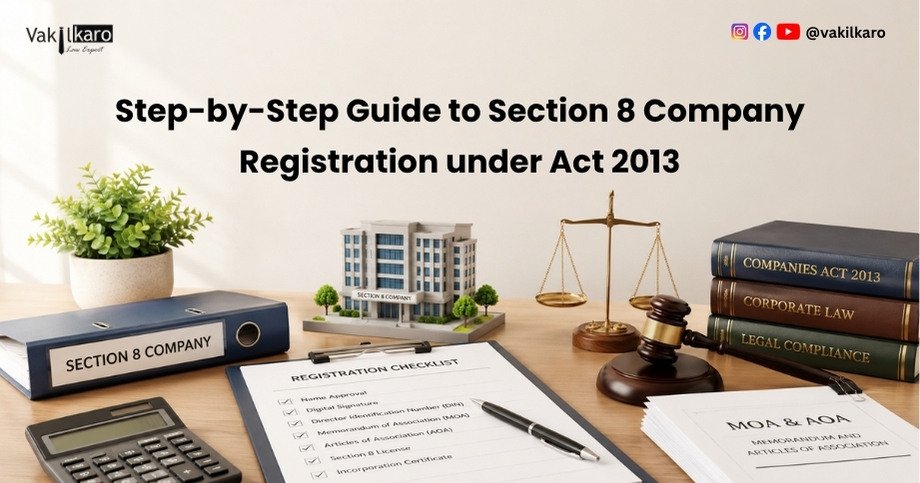
Registering a Section 8 company under the Companies Act, 2013 is a key step for establishing a credible, non-profit organization in India. This process includes choosing a unique name, obtaining a Digital Signature Certificate (DSC), acquiring a Director Identification Number (DIN), and drafting the Memorandum and Articles of Association (MoA and AoA). After name approval, incorporation documents are submitted to the Registrar of Companies (RoC), followed by applying for 12A and 80G registrations for tax exemptions. Maintaining compliance with annual filings, tax returns, and audits ensures the Section 8 company’s legal and operational standing, supporting its long-term success.
Key Takeaways
- Registering a Section 8 company under the Companies Act, 2013 is a key step for establishing a credible, non-profit organization in India.
- Understanding the Process of Section 8 Company Registration under the Companies Act, 2013 Registering a Section 8 company in India under the Companies Act, 2013 is a structured process designed for non-profit organizations aiming to promote charitable or social welfare activities.
- One of the most popular and credible ways to establish a non-profit organization is through Section 8 company registration under the Companies Act, 2013.
- Section 8 of the Companies Act, 2013, allows the registration of a company with the purpose of promoting a charitable cause or social welfare.
- Conclusion Registering a Section 8 company under the Companies Act, 2013 is an essential step for non-profit organizations looking to legally establish themselves in India.
Understanding the Process of Section 8 Company Registration under the Companies Act, 2013
Registering a Section 8 company in India under the Companies Act, 2013 is a structured process designed for non-profit organizations aiming to promote charitable or social welfare activities. The registration not only ensures legal recognition but also provides the organization with various benefits, including credibility and limited liability. Here’s a breakdown of the process involved.
The first step in registering a Section 8 company is selecting a suitable and unique name for your organization. The name should reflect the NGO's goals and include terms such as “Foundation” or “Association.” It’s essential to ensure that the name isn’t already in use. The Ministry of Corporate Affairs (MCA) offers an online tool for verifying the name’s availability.
Next, you must obtain a Digital Signature Certificate (DSC) for all directors, as electronic signatures are required during the registration process. Along with the DSC, a Director Identification Number (DIN) is necessary. This unique number is assigned to individuals intending to act as directors in the company and is valid for life.
The core documents, such as the Memorandum of Association (MoA) and Articles of Association (AoA), must be drafted to define the company’s objectives, structure, and internal governance. These documents should be in compliance with the Companies Act and should specifically mention the non-profit nature of the organization.
Once these documents are in place, the name approval application is submitted via the MCA’s RUN service. Upon approval, the incorporation documents are filed with the Registrar of Companies (RoC) using the SPICe+ form, which includes the MoA, AoA, identity proof of directors, and other necessary documentation.
After receiving the Certificate of Incorporation from the RoC, the next critical step is applying for 12A and 80G registrations. These registrations grant tax exemptions to the organization and enable donors to claim tax deductions for their contributions.
Finally, post-registration compliance, such as filing annual financial statements, tax returns, and holding board meetings, ensures the Section 8 company remains legally compliant. This systematic process establishes a robust foundation for your non-profit to thrive and achieve its social impact goals.
Starting a non-profit organization in India involves several legal requirements to ensure compliance with the law. One of the most popular and credible ways to establish a non-profit organization is through Section 8 company registration under the Companies Act, 2013. This legal structure offers higher credibility compared to other forms like trusts or societies, primarily because it is registered as a company. In this comprehensive guide, we will walk you through the step-by-step process for Section 8 company registration, including the necessary paperwork, compliance requirements, and how to obtain 12A and 80G registration for tax exemptions.
What is Section 8 Company Registration?
Section 8 of the Companies Act, 2013, allows the registration of a company with the purpose of promoting a charitable cause or social welfare. These companies are not intended for profit distribution to their members. Instead, they operate for the advancement of education, religion, science, social welfare, sports, and other charitable objectives. A Section 8 company enjoys the benefits of a company, such as limited liability and greater legal standing.
The primary advantage of a Section 8 company over a Trust or Society is its legal credibility and its flexibility in operations, particularly when working on a national or international scale. The process of Section 8 company registration is rigorous, but it is the best option for those looking for a formal and well-recognized non-profit organization.
Why Choose Section 8 Company Registration?
A Section 8 company is ideal for those looking to run large-scale charitable activities or who want to set up a socially responsible enterprise. Key benefits include:
- Credibility: Being a registered company provides higher credibility.
- Tax Exemption: A Section 8 company can apply for 12A and 80G registration to avail of tax exemptions and allow donors to claim deductions.
- Limited Liability: The liability of the members is limited, ensuring that they are not personally liable for the company’s debts.
- Flexibility: Section 8 companies are allowed to generate revenue, which can be reinvested into their charitable work.
Step-by-Step Process for Section 8 Company Registration
Step 1: Choose the Name of Your Section 8 Company
The first step in the process is to choose a unique and meaningful name for your Section 8 company. The name should reflect the objectives of your NGO and should include words like “Foundation,” “Association,” “Society,” or “Institute.” It is essential to ensure that the name is not similar to an existing company or trademark.
To check the availability of the name, you can use the MCA Name Reservation Tool. This tool helps verify whether your desired name is already taken. If your name is unique, you can proceed to the next step.
Step 2: Obtain Digital Signature Certificate (DSC)
A Digital Signature Certificate (DSC) is required for signing electronic documents during the registration process. It is mandatory for the directors of the company to obtain DSCs to file the necessary forms online.
The DSC can be obtained from government-approved agencies. This step is crucial as the Ministry of Corporate Affairs (MCA) mandates the submission of documents digitally.
Step 3: Obtain Director Identification Number (DIN)
Along with the DSC, the Director Identification Number (DIN) is also a requirement for the directors of the company. A DIN is a unique identification number allotted by the MCA to an individual who intends to be a director of a company. This number is valid for a lifetime.
DIN can be obtained by submitting Form DIR-3 along with the necessary documents, including identity proof, address proof, and a passport-sized photograph. If the director is already registered with the MCA, a new DIN may not be necessary.
Step 4: Draft the Memorandum of Association (MoA) and Articles of Association (AoA)
The Memorandum of Association (MoA) and Articles of Association (AoA) are the two essential documents that outline the objectives, structure, and governance of the company.
- MoA: The MoA defines the fundamental objectives of the company. In the case of a Section 8 company, the MoA must clearly specify the charitable or social welfare objectives of the company. The MoA also includes details like the name of the company, registered office address, and the powers of the company.
- AoA: The AoA defines the internal rules and regulations for the management of the company. This document specifies the rights and duties of directors, the process of decision-making, and other operational guidelines.
Both documents must be drafted in compliance with the Companies Act, 2013, and must align with the company’s charitable purpose. It is crucial to ensure that these documents are legally sound, as they will be scrutinized by the Registrar of Companies (RoC).
Step 5: Apply for Name Approval
Once the MoA and AoA are drafted, the next step is to apply for the approval of the company name. This is done through the RUN (Reserve Unique Name) service on the MCA portal. The application for name approval is submitted along with a brief description of the company’s objectives.
It typically takes about 1-2 days for the name to be approved, provided there are no objections. Once the name is approved, you can proceed with filing the incorporation documents.
Step 6: File the Incorporation Documents
After obtaining name approval, the next step is to file the incorporation documents with the RoC. This is done using the SPICe+ form (Simplified Proforma for Incorporating Company Electronically). The following documents need to be submitted:
- MoA and AoA
- Form INC-9 (declaration by the first directors)
- Identity and Address Proof of directors
- Proof of the registered office address (utility bill, rent agreement, etc.)
- Affidavit and consent from directors and subscribers
The SPICe+ form also requires the payment of the prescribed government fees, which vary depending on the authorized share capital and state of registration.
Once the documents are submitted, the RoC will verify the details. If everything is in order, the RoC will issue a Certificate of Incorporation. This certificate signifies that your Section 8 company is now legally recognized.
Step 7: Apply for 12A and 80G Registration
After the successful registration of the Section 8 company, the next step is to apply for 12A and 80G registration. These registrations are crucial for availing tax exemptions under the Income Tax Act, 1961.
- 12A Registration: Section 12A provides exemption from income tax for charitable organizations. To obtain 12A registration, you need to submit an application to the Income Tax Department along with the required documents, such as the company’s registration certificate, MoA, and AoA.
- 80G Registration: Section 80G allows donors to claim tax deductions on their contributions to the NGO. To obtain 80G registration, you need to submit a separate application to the Income Tax Department, along with the NGO’s registration certificate, MoA, and AoA.
Both of these registrations ensure that your NGO is eligible for tax exemptions, making it an attractive option for donors who wish to claim deductions on their donations.
Step 8: Comply with Ongoing Compliance Requirements
Once your Section 8 company is registered and 12A and 80G registrations are obtained, there are ongoing compliance requirements to keep the company in good standing:
- Annual Filings: A Section 8 company must file annual financial statements with the RoC, including a balance sheet, profit and loss account, and auditor’s report.
- Tax Filings: The company is required to file annual income tax returns and other tax-related filings to maintain its tax-exempt status.
- Board Meetings: Section 8 companies must hold regular board meetings and annual general meetings (AGMs). The minutes of these meetings must be documented and submitted to the RoC.
- Audits: The company is also required to have its financials audited by a qualified auditor.
These compliance requirements are essential to maintaining the Section 8 company’s legal and financial standing.
Conclusion
Registering a Section 8 company under the Companies Act, 2013 is an essential step for non-profit organizations looking to legally establish themselves in India. This registration offers significant advantages, such as legal credibility, limited liability, and the ability to operate on a national or international scale. More importantly, it provides a robust legal framework that enables the organization to focus on its core charitable objectives while being compliant with the law.
The process itself, while detailed, is straightforward if approached systematically. Each step, from selecting a unique name for the company to drafting the Memorandum of Association (MoA) and Articles of Association (AoA), and finally submitting the necessary applications to the Ministry of Corporate Affairs (MCA), plays a critical role in ensuring that the Section 8 company is established correctly. Additionally, obtaining the necessary 12A and 80G registrations ensures that the organization can access tax exemptions and offers donors the benefit of tax deductions, which can encourage more contributions and support for the NGO’s activities.
It’s important to recognize that this process is not only about filing forms and submitting documents; it requires careful attention to detail. The MoA and AoA must be drafted in compliance with the law, and the company’s charitable purpose should be clearly stated to avoid any issues with the Registrar of Companies (RoC). Any errors or omissions in the registration process could lead to unnecessary delays or rejection, which can hinder the smooth launch of your NGO.
Given the complexities involved, it’s always advisable to consult with legal and accounting professionals who specialize in NGO registration. These experts can guide you through the entire process, ensuring that every step is completed accurately and in compliance with legal requirements. Additionally, professional help can save you time and resources by preventing mistakes that could lead to costly delays.
Ultimately, completing Section 8 company registration and obtaining 12A and 80G approvals will equip your NGO with the tools it needs to thrive and make a meaningful impact in society. With legal recognition, tax exemptions, and a structured compliance system in place, your NGO can focus on its mission of driving social change and community development, knowing that it is operating within the legal framework set by India’s non-profit sector.
Why Choose Vakilkaro for Section 8 Company Registration and Legal Services?
Vakilkaro offers expert guidance for Section 8 company registration, NGO registration, and tax exemptions under 12A and 80G registration. Their experienced legal team ensures a smooth, efficient process, handling everything from document preparation to government filing. With clear, affordable pricing and a customer-first approach, Vakilkaro provides reliable, end-to-end services to help your non-profit comply with all legal requirements. They offer personalized support, ensuring your NGO’s success while focusing on its mission. Choose Vakilkaro for hassle-free legal services and ongoing compliance support that empower your non-profit to thrive.
Official External Resources
Use these primary/official sources to verify rules, forms, fees, timelines and regulatory updates before publication.
Frequently asked questions
Step-by-Step Guide to Section 8 Company Registration under Act 2013+
Registering a Section 8 company under the Companies Act, 2013 is a key step for establishing a credible, non-profit organization in India. Understanding the Process of Section 8 Company Registration under the Companies Act, 2013 Registering a Section 8 company in India under the Companies Act, 2013 is a structured process designed for non-profit organizations aiming to promote charitable or social welfare activities.
