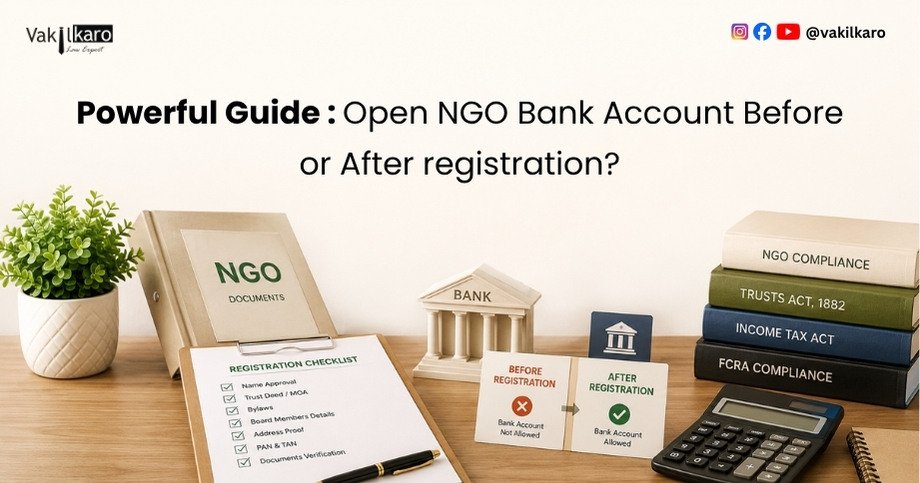
Opening a bank account for your NGO is crucial for transparency and financial management. While it’s possible to open an account before full registration, it’s generally advised to wait for official registration under NGO registration, Section 8 company registration, or similar processes. Having proper 12A and 80G registrations ensures tax-exempt status and allows donors to claim tax benefits. Opening a bank account after registration enhances credibility, financial oversight, and donor confidence. Ensure you meet the legal requirements and provide the necessary documents, including your registration certificate, PAN card, and board resolution, before approaching the bank.
Key Takeaways
- However, a common question arises: when is the right time to open a bank account for your NGO—before or after registration?
- The Importance of Registering Your NGO Before Opening a Bank Account While it is technically possible to open a bank account for your NGO before completing its formal registration, it is generally advisable to wait until the organization is fully registered.
- Opening a Bank Account Before Registration Technically, it is possible to open a bank account for your NGO even before completing the formal registration process, but there are several caveats to consider: 1.
- Section 8 Company Registration If you are registering your NGO as a Section 8 company under the Companies Act, 2013, you can open a bank account only after receiving the Certificate of Incorporation.
- While it is possible to open a bank account before formal registration, it is generally advisable to wait until the organization is fully registered as an NGO or Section 8 company and has secured 12A and 80G registration.
Opening a Bank Account for Your NGO: Best Practices and Timing
Starting a Non-Governmental Organization (NGO) involves several key steps, one of which is opening a bank account. This account is essential for managing the funds, donations, and grants that support the organization’s mission. However, a common question arises: when is the right time to open a bank account for your NGO—before or after registration?
The Importance of Registering Your NGO Before Opening a Bank Account
While it is technically possible to open a bank account for your NGO before completing its formal registration, it is generally advisable to wait until the organization is fully registered. The reason for this is simple: without formal registration, an NGO does not have legal recognition as a nonprofit entity. This can lead to challenges in opening a bank account in the name of the NGO. Banks typically require proof of legal status before allowing the opening of an account. This proof usually comes in the form of your NGO’s registration certificate or incorporation documents, such as a trust deed, memorandum of association, or Section 8 company registration certificate.
Benefits of Opening a Bank Account After Registration
Once the NGO is formally registered, whether as a trust, society, or Section 8 company, it gains legal recognition. This allows the organization to open a bank account under its official name, which is crucial for maintaining transparency, credibility, and financial accountability. Furthermore, having a registered NGO helps in securing important tax exemptions like 12A and 80G registration, which are essential for operating with tax-exempt status. These registrations not only protect the NGO’s legal standing but also enable donors to claim tax deductions for their contributions.
Enhancing Transparency and Donor Trust
Opening a bank account after registration ensures that funds are managed properly and are used exclusively for charitable purposes. This practice strengthens public trust and encourages donor confidence. By adhering to proper legal procedures and ensuring the organization is fully registered, NGOs can effectively manage their finances, stay compliant with regulations, and continue their work without jeopardizing their financial integrity.
Starting a Non-Governmental Organization (NGO) is an exciting and impactful journey. NGOs in India are crucial players in tackling social issues such as poverty, education, healthcare, and environmental sustainability. As part of the NGO's foundation, managing finances responsibly and ensuring proper bank account management is critical for maintaining transparency, accountability, and legal compliance.
One of the common questions for NGOs is: Can I open a bank account before or after registration? In this blog, we will discuss the legal requirements for opening a bank account for your NGO, the different stages of the registration process, and how they relate to your ability to open a bank account. We will also touch upon the importance of proper registration under NGO registration, Section 8 company registration, and securing 12A and 80G registration under the Income Tax Act.
The Importance of Opening a Bank Account for Your NGO
A bank account is essential for an NGO to conduct its financial operations efficiently. It allows you to manage donations, grants, and other financial transactions while maintaining proper records for auditing and reporting purposes. A dedicated bank account ensures that funds are used for their intended purpose and supports your NGO’s financial transparency, which is key to maintaining public trust and legal compliance.
In India, NGOs are required to open a separate bank account for their operations, which cannot be mixed with personal accounts. This is especially important for organizations that wish to maintain tax-exempt status, as it helps track the inflow and outflow of funds, especially donations and grants.
Opening a Bank Account Before Registration
Technically, it is possible to open a bank account for your NGO even before completing the formal registration process, but there are several caveats to consider:
Using the NGO’s Name for the Bank Account
Before registering an NGO, there is no formal legal entity under which the bank account can be opened. For example, if you are starting the process of setting up a trust, society, or Section 8 company, you are not yet considered a legal entity. As a result, banks may not allow you to open a bank account in the name of the NGO unless you have completed the registration.
However, in some cases, if you have an NGO registration application that is in process or if you have a Section 8 company registration acknowledgment from the Registrar of Companies, certain banks may allow you to open an account temporarily for operational purposes, with the understanding that the formal registration is pending.
Temporary Bank Account for Seed Funding
In some cases, banks might allow you to open a temporary account under the name of the founder or one of the board members while awaiting the formal registration. This can help in collecting initial donations or grants that might be required to complete the registration process.
However, it's important to note that these temporary accounts are subject to specific limitations. For example, you may not be able to accept large donations or receive funds from government grants until the NGO has been officially registered. Moreover, any funds raised in this manner will be under the personal name of the individual who holds the account, which can be problematic when it comes to accountability and transparency.
Opening an Account for Trusts or Societies
If your organization is registering as a trust or society, some banks may require the trust deed or society's memorandum of association before allowing the opening of a bank account. In such cases, you can approach the bank with documents that prove you are in the process of registering the trust or society and expect formal registration soon.
Challenges and Risks
Opening an account before the formal registration can create several challenges:
- Lack of credibility: Without formal registration, the bank may not recognize the organization as a legitimate non-profit, which could pose a challenge if you want to accept substantial donations.
- Lack of financial oversight: As the account will be in the name of an individual or temporary name, this could raise concerns about financial transparency and accountability.
For these reasons, it is generally advisable to wait for formal registration before opening an account.
Opening a Bank Account After Registration
The preferred approach for most NGOs is to wait until the organization is formally registered before opening a bank account. Here are the main steps and benefits of doing so:
NGO Registration
The first step in the registration process is obtaining formal NGO registration. This could be in the form of a trust deed (for trusts), a memorandum of association (for societies), or incorporation under the Companies Act, 2013 (for a Section 8 company registration). A registered entity is a legal entity, which makes it eligible to open a bank account in its name.
Banks typically require proof of legal status when opening an account for an NGO. This proof can come in the form of your registration certificate. This helps banks establish that the organization is officially recognized and legally compliant, ensuring proper oversight of funds.
Section 8 Company Registration
If you are registering your NGO as a Section 8 company under the Companies Act, 2013, you can open a bank account only after receiving the Certificate of Incorporation. This confirms the company is now a recognized legal entity, which means that the NGO can open an account under its official name. A Section 8 company registration is typically used by NGOs that want to benefit from corporate governance, operate under a clear structure, and use the company form for better credibility and legal protection.
12A and 80G Registration
To maximize the tax benefits for your NGO, you should apply for 12A registration and 80G registration under the Income Tax Act. These registrations provide your NGO with tax-exempt status (under 12A) and allow donors to claim tax deductions (under 80G). Having these registrations also strengthens your NGO's credibility, ensuring that the funds flowing through your bank account are used transparently for charitable purposes.
- 12A Registration: This allows your NGO to be exempted from income tax on income generated from its operations, provided the income is used exclusively for charitable purposes.
- 80G Registration: This gives your donors tax deductions for donations made to your NGO, which can be a significant motivating factor for donor contributions.
Banks typically require 12A and 80G certificates when NGOs want to open a bank account, as it verifies that the organization is properly registered for tax exemption purposes.
Better Financial Transparency and Credibility
Opening a bank account after registration ensures that your NGO operates with financial integrity and transparency. Since your NGO will be legally registered, both the organization and the individuals managing it will be held accountable. With Section 8 company registration, for instance, your NGO must adhere to strict corporate governance norms, including having an audited financial statement, which enhances the trust placed in your NGO by donors, regulators, and the public.
Furthermore, opening the bank account after registration ensures that all financial transactions are properly documented, and the NGO’s funds can be used exclusively for its charitable purposes, which is a critical compliance aspect under 12A and 80G registration.
Donor Confidence
For most donors, especially those contributing larger sums, knowing that your NGO has proper registration and a tax-exempt status is critical. When your NGO has Section 8 company registration, 12A registration, and 80G registration, donors can feel assured that their contributions will be used for the intended charitable purposes and that they can claim tax benefits for their donations. This transparency and credibility are essential for attracting and retaining donors.
Key Points to Consider Before Opening a Bank Account for Your NGO
Opening a bank account for your NGO is a crucial step in ensuring the financial transparency and legal compliance of the organization. However, there are several key points to consider before you proceed with this process. Here’s a deeper look into the essential factors that need your attention before opening an NGO bank account:
Legal Status of the NGO
Before opening a bank account for your NGO, it's vital to ensure that your organization has obtained the appropriate legal status. Without proper registration, the NGO will not be considered a legal entity, and banks will not allow you to open an account in its name. In India, an NGO can be registered as a trust, society, or Section 8 company under the Companies Act, 2013. Each structure has its own process and documentation requirements, so it’s essential that you complete this registration process before approaching a bank.
For example, an NGO registered under Section 8 of the Companies Act will have more credibility, especially for donor funding, as it can be treated similarly to a non-profit company. Likewise, having an NGO registration or a trust deed confirms your organization's legal standing and allows you to open a bank account without complications. Furthermore, the registration process enables your NGO to be eligible for tax exemptions such as 12A and 80G, which can further enhance the organization’s credibility and donor trust.
Documents Required to Open the Bank Account
Once your NGO is legally registered, you need to gather the necessary documents to open a bank account. Typically, banks will require:
- Registration Certificate: This is proof that your NGO is legally registered, whether as a trust, society, or Section 8 company.
- Memorandum of Association (MOA) or Trust Deed: Depending on the legal structure of your NGO, the MOA (for Section 8 companies) or the trust deed (for trusts) outlines the objectives and governance structure of your NGO.
- PAN Card of the NGO: The Permanent Account Number (PAN) is essential for tax purposes and is required for opening a bank account.
- Board Resolution: The governing body or board of the NGO must pass a resolution authorizing the opening of the bank account. This ensures that the decision is officially recorded and backed by the NGO’s leadership.
- Proof of Identity and Address: This can include documents such as Aadhaar cards, passports, or utility bills that verify the identity and address of the NGO’s representatives.
Ensure that you have all these documents in place to avoid delays when approaching the bank.
Bank’s Specific Requirements
While most banks will have similar documentation requirements, it’s important to understand that each bank may have slightly different criteria for opening an NGO account. It’s advisable to reach out to your preferred bank and confirm their specific requirements. Some banks may ask for additional documentation, such as:
- List of Board Members: Some banks may request a list of the governing members of your NGO, especially if it is a Section 8 company or a trust.
- Non-Profit Certification: In some cases, banks may also require a letter certifying that the organization is non-profit and operating for charitable purposes.
- Particular Signatories: Banks may have specific protocols regarding who can be designated as the signatories for the NGO account, which is an important aspect to clarify before opening the account.
It's also helpful to inquire about the bank’s policies on transaction limits, fees, and any additional services they offer for NGOs. Understanding these factors will ensure that the NGO’s financial transactions are handled smoothly and in accordance with the legal requirements.
Conclusion
Opening a bank account for your NGO is a critical step in ensuring that your organization operates transparently and manages its finances legally. While it is possible to open a bank account before formal registration, it is generally advisable to wait until the organization is fully registered as an NGO or Section 8 company and has secured 12A and 80G registration. This approach ensures that the bank account is opened in the NGO's legal name and that the funds can be used for their intended charitable purposes, without jeopardizing your tax-exempt status or donor confidence.
By ensuring proper registration and compliance, your NGO can focus on its social mission, raise funds efficiently, and maintain its financial integrity. If you need assistance with NGO registration, Section 8 company registration, or obtaining 12A and 80G registration, consulting legal experts like Vakilkaro can help streamline the process and ensure that you meet all legal requirements to operate your NGO successfully.
Official External Resources
Use these primary/official sources to verify rules, forms, fees, timelines and regulatory updates before publication.
Frequently asked questions
Powerful Guide: Open NGO Bank Account Before or After registration?+
However, a common question arises: when is the right time to open a bank account for your NGO—before or after registration? Section 8 Company Registration If you are registering your NGO as a Section 8 company under the Companies Act, 2013, you can open a bank account only after receiving the Certificate of Incorporation.
