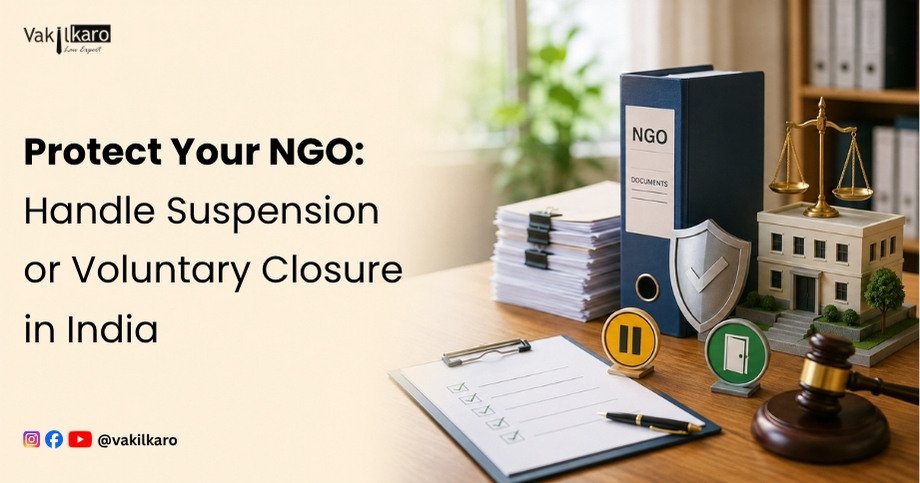
When an NGO becomes inactive or decides to close, it must follow a legal process for temporary suspension or voluntary closure. This process varies based on its structure—trust, society, or Section 8 company—and requires compliance with 12A and 80G tax exemptions. Trusts and societies may notify authorities about suspending activities, while Section 8 companies can apply for dormant status. For closure, assets must be distributed, liabilities settled, and final accounts submitted. Engaging legal experts like Vakilkaro ensures proper handling of these transitions, preserving the NGO’s compliance and donor trust, and facilitating smooth winding-up or suspension procedures.
Key Takeaways
- When an NGO becomes inactive or decides to close, it must follow a legal process for temporary suspension or voluntary closure.
- Impact on 12A and 80G Registrations: Explore how suspension or closure affects an NGO’s tax-exempt status, and the steps to take to preserve or cancel 12A and 80G registrations.
- Voluntary Closure of an NGO When suspension is insufficient, NGOs may opt for complete winding up: 4.1 Trusts Trustee Consent: All trustees must agree via a formal resolution.
- Conclusion: Navigating NGO Inactivity, Suspension, or Closure with Careful Compliance Handling the inactivity of an NGO, whether through a temporary suspension or voluntary closure, is a process that demands careful consideration, planning, and legal compliance.
- Vakilkaro specializes in NGO registration, Section 8 company matters, and tax exemption compliance, and can guide you through the complex process of suspension or closure.
Navigating Inactivity and Closure: Legal Pathways for NGOs in India
Non-Governmental Organizations (NGOs) may face periods of inactivity or decide to wind down operations entirely. Whether due to funding constraints, leadership changes, or strategic realignments, pausing or closing an NGO involves a formal legal process that varies according to its registration structure—be it a trust under the Indian Trusts Act, a society under the Societies Registration Act, or a Section 8 company under the Companies Act. Throughout this process, maintaining or properly relinquishing 12A and 80G tax exemptions is crucial to protect the organization’s financial integrity and donor confidence.
For NGOs structured as trusts or societies, temporary suspension typically begins with a formal resolution passed by trustees or the general body, respectively. The organization must then notify the relevant state authority—either the Charity Commissioner for trusts or the Registrar of Societies—providing an updated annual report and reasons for the hiatus. Concurrently, a written intimation to the Income Tax Department can help preserve 12A and 80G registrations, granting extensions for compliance filings during the suspension period.
Section 8 companies benefit from a centralized mechanism: they can apply to the Ministry of Corporate Affairs for “dormant status” under Section 455 of the Companies Act. After board and shareholder resolutions, filing the prescribed forms with the MCA, and paying applicable fees, the company can officially pause its operations, reducing routine compliance burdens while retaining its Section 8 company registration and associated tax benefits.
When a complete voluntary closure is warranted, NGOs must settle all liabilities, distribute remaining assets to other charitable entities, and submit final audited accounts. Trusts and societies file their dissolution deeds with state authorities; Section 8 companies follow a structured winding-up procedure via the MCA, including creditor approvals and liquidator appointments. The final step in every closure is notifying the Income Tax Department and applying to cancel 12A and 80G registrations, ensuring that the NGO’s tax records are properly closed.
Engaging specialized legal advisors, such as those at Vakilkaro, can streamline both suspension and closure, safeguarding compliance, preserving donor trust, and ensuring that the NGO’s legacy is responsibly managed.
Non-Governmental Organizations (NGOs) play a critical role in India’s socio-economic landscape, addressing key community challenges, fostering social development, and improving lives across the country. Whether providing essential services, advocating for marginalized communities, or driving national development programs, NGOs are at the forefront of societal change. However, like any organization, NGOs face challenges that can impact their operational capacity. These challenges may stem from various factors, including financial constraints, leadership transitions, strategic shifts, or even external factors such as natural disasters or global crises. In such cases, an NGO might experience periods of inactivity, during which its programs may slow down or come to a halt.
When an NGO becomes inactive, it is crucial to understand the legal processes that ensure the organization remains compliant with Indian laws, preserves its status, and upholds its tax-exempt benefits. Whether the organization is planning a temporary suspension of operations or a voluntary closure, it is important to follow the legal procedures that govern such transitions. Adhering to regulatory guidelines ensures that the NGO can either pause its operations without penalty or properly wind up, maintaining its integrity and preserving stakeholder trust.
This guide will cover the essential processes an NGO must follow when it becomes inactive, whether through temporary suspension or permanent closure. It will address the following topics:
- Common Causes of NGO Inactivity: Understand the reasons why NGOs might face periods of dormancy, from funding shortages to leadership changes.
- Legally Recognized Statuses for Inactive NGOs: Learn the official classifications available for inactive organizations under Indian law, including dormant status and temporary suspension.
- Process for Temporarily Suspending NGO Activities: Discover how NGOs can pause operations legally, including the necessary approvals and filings required.
- Steps for Voluntary Closure and Dissolution: Understand the formal procedure for winding down an NGO, from settling liabilities to distributing assets.
- Impact on 12A and 80G Registrations: Explore how suspension or closure affects an NGO’s tax-exempt status, and the steps to take to preserve or cancel 12A and 80G registrations.
- Post-Closure Compliance and Record-Keeping: Learn the legal obligations for maintaining records and filing final documents after the NGO ceases its operations.
- Best Practices and Expert Resources: Get insights into best practices to ensure a smooth transition and how consulting with legal experts like Vakilkaro can guide you through the process.
By following these processes and ensuring compliance, NGOs can safely navigate periods of inactivity or closure. Whether opting for a temporary pause or a complete wind-down, it is crucial to manage this transition effectively to protect the organization’s legal standing, preserve donor trust, and minimize any negative impacts.
Why NGOs Become Inactive?
Before diving into suspension and closure protocols, it’s helpful to recognize why NGOs enter periods of dormancy:
- Funding Challenges: Loss of grants or donor fatigue can stall projects.
- Leadership Changes: Board resignations or management turnover can leave gaps.
- Strategic Reorientation: Revisiting mission focus might require a pause.
- Regulatory Non-compliance: Failure to file returns or meet audit requirements may force operational halt.
- External Factors: Natural disasters, public health crises, or security concerns.
Regardless of cause, inactivity without legal steps can jeopardize an NGO’s registration and tax-exempt status. Planning for suspension or closure avoids penalties and reputational damage.
Recognized Statuses for Inactive NGOs
2.1 Dormant or Inactive Status
Unlike companies, trusts and societies lack a formal “dormant” classification. Section 8 companies under the Companies Act, 2013, can obtain Dormant Company status by filing Form MGT-14 and a declaration of inactivity with the Ministry of Corporate Affairs (MCA). This relieves them from certain compliance, such as holding board meetings, though annual returns (Form MGT-7) and financial statements (AOC-4) still require filing, unless fully exempted by an EGM resolution.
2.2 Suspension of Activities
Some state Registrars allow societies or trusts to notify a “temporary suspension” of activities through an official letter and revised annual report. However, there is no pan-India statutory mechanism; procedures vary across states.
Temporary Suspension of NGO Activities
3.1 For Trusts
- Board Resolution: Convene a trustees’ meeting and pass a resolution to suspend operations, specifying duration.
- Inform Registrar/Charity Commissioner: Submit the resolution, an updated annual report, and reasons for suspension.
- Notify Income Tax Department: Write to the Assessing Officer to inform about halted activities, requesting extension of filing deadlines for 12A and 80G returns.
- Freeze Banking Transactions: Coordinate with bank to restrict new incoming funds, while maintaining records of existing balance.
3.2 For Societies
- General Body Meeting (GBM): Pass a special resolution for suspension (two-thirds majority).
- File with Registrar: Attach GBM minutes, amended annual report, and a cover letter requesting temporary inactivity acknowledgment.
- Tax Authority Intimation: Notify the Income Tax Department to avoid penalties for late ITR-7 and Form 10B filings.
3.3 For Section 8 Companies
- Board and EGM Resolutions: Pass a board resolution and special resolution in EGM for marking the company as dormant.
- MCA Filings: File Form MGT-14, DIR-3 KYC (for directors), and Form INC-22 for change of registered office, if closing locations.
- Apply for Dormant Status: Under Section 455 of the Companies Act, file Form MSC-1 and pay prescribed fees to obtain the dormant certificate.
- Income Tax Intimation: Submit revised financials to retain 12A and 80G registrations.
Voluntary Closure of an NGO
When suspension is insufficient, NGOs may opt for complete winding up:
4.1 Trusts
- Trustee Consent: All trustees must agree via a formal resolution.
- Settlement of Liabilities: Clear loans, pay pending bills, and audit accounts.
- Distribution of Assets: Distribute remaining assets to another charitable trust or society with similar objectives.
- File Dissolution Deed: Submit to the Registrar/Charity Commissioner along with audited final accounts.
- Tax Authority Closure: Inform the Income Tax Department and submit final ITR-7 with enclosures to cancel 12A and 80G.
4.2 Societies
- Special Resolution: Obtain at least three-fourths member approval in a GBM to dissolve.
- Settlement and Distribution: Pay liabilities, then transfer assets according to the MoA.
- Dissolution Application: File the dissolution form and special resolution with the Registrar.
- Tax Department Finalization: Submit audited statements and apply for removal of 12A/80G status.
4.3 Section 8 Companies
- Board Resolution: Propose voluntary winding up under Section 248 (strike-off) or Section 271 (liquidation).
- MCA Filings: File Form MGT-14, INC-28 (notice to ROC), and consent letters from directors.
- Creditors’ & Shareholders’ Meeting: Obtain ‘No Objection’ from creditors; pass special resolution for winding up.
- Appointment of Liquidator: File Form CRA-2 and publish notice in Gazette & newspapers.
- Final Accounts & Audit: Liquidator prepares statement; file final returns and ROC documents.
- Tax Closure: File final ITR-7, Form 10BB (audit report), and apply for cancellation of 12A/80G.
Impact on 12A and 80G Registrations
Maintaining or canceling tax exemptions is critical:
- Temporary Suspension: Income Tax Department may grant extensions; file Part A of Form 10BB annually even if inactive.
- Voluntary Closure: Must submit final audited statements, Form 10BB, and an application for cancellation of certificates.
- Donor Communication: Inform donors about the NGO’s inactive status and transfer or refund of unutilized funds.
Post-Closure Compliance and Record-Keeping
- Preserve Records: Maintain account books, audited statements, and minutes for at least eight years.
- Bank Account Closure: Close all bank accounts after settlement and keep bank statements for records.
- Statutory Document Retention: Retain certificates of registration, dissolution deeds, and tax filings.
- Prevent Misuse: Ensure the NGO’s name and PAN are not used post-closure by imposters.
Best Practices and Resources
- Legal Consultation: Engage firms like Vakilkaro for expert guidance on suspension and closure.
- Digital Management: Use cloud-based tools for record maintenance and compliance reminders.
- Stakeholder Updates: Regularly communicate with donors, staff, and beneficiaries about status changes.
- Compliance Calendar: Track deadlines for filings, audits, and dissolution steps.
- Transparent Accounting: Audit final accounts meticulously to avoid disputes.
Conclusion: Navigating NGO Inactivity, Suspension, or Closure with Careful Compliance
Handling the inactivity of an NGO, whether through a temporary suspension or voluntary closure, is a process that demands careful consideration, planning, and legal compliance. NGOs often operate in dynamic environments, and situations such as funding shortages, changes in leadership, or strategic realignments can lead to periods of dormancy. During these times, the organization’s ability to manage its legal and financial responsibilities is crucial to maintaining its credibility, reputation, and compliance with regulatory authorities.
The process of temporarily suspending operations or completely closing down involves several key steps. These steps vary depending on the legal structure of the NGO, whether it is a trust, society, or Section 8 company. Each structure has its own set of procedures, from passing resolutions to informing the authorities, filing necessary forms, and ensuring that any donor funds or assets are managed properly. Additionally, NGOs must be mindful of their tax-exempt status under the 12A and 80G provisions of the Income Tax Act, which requires careful handling to avoid jeopardizing these benefits.
By following a structured process for suspension or closure, NGOs can avoid legal pitfalls that might arise from improper procedures. Clear communication with stakeholders—including donors, beneficiaries, and regulatory authorities—is essential throughout this process. Proper documentation, timely filings, and maintaining transparency with donors and tax authorities will ensure that an NGO’s activities are wound down or paused with minimal complications. It is crucial to respect the legacy of the NGO’s mission and its contributions to society, even in its final stages.
If your NGO is considering suspension or dissolution, it’s highly advisable to consult with legal experts like those at Vakilkaro. Vakilkaro specializes in NGO registration, Section 8 company matters, and tax exemption compliance, and can guide you through the complex process of suspension or closure. With professional guidance, you can ensure that your NGO's transition is smooth, compliant, and respects the integrity of its mission. Proper legal assistance helps safeguard the NGO’s legacy and ensures that the contributions made during its active years continue to have a lasting impact on society.
Official External Resources
Use these primary/official sources to verify rules, forms, fees, timelines and regulatory updates before publication.
Frequently asked questions
Protect Your NGO: Handle Suspension or Voluntary Closure in India+
When an NGO becomes inactive or decides to close, it must follow a legal process for temporary suspension or voluntary closure. Voluntary Closure of an NGO When suspension is insufficient, NGOs may opt for complete winding up: 4.1 Trusts Trustee Consent: All trustees must agree via a formal resolution.
