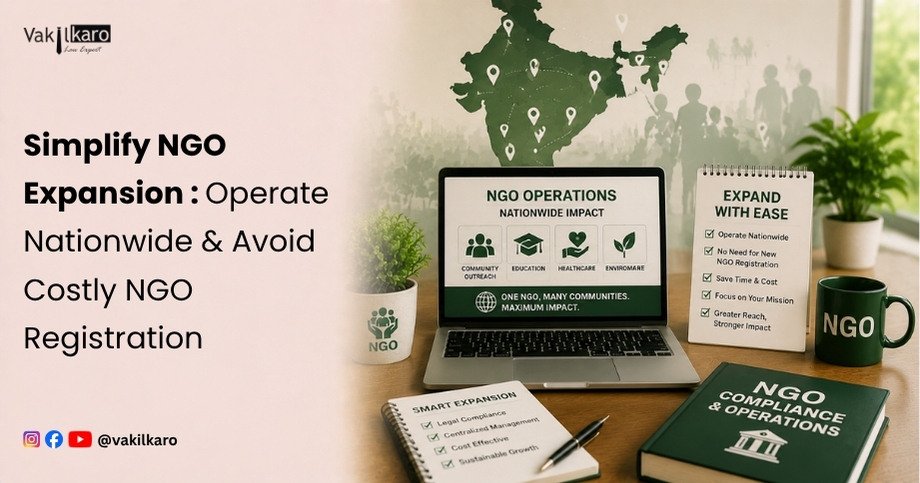
Wondering if your NGO can operate across multiple states with one registration? This blog answers your key question: Can I operate my NGO in multiple states or must I register separately in each one? Learn how different NGO registration structures—Trusts, Societies, and Section 8 company registration—affect your expansion strategy. We’ll also explore how central certifications like 12A and 80G registration apply nationwide, making multi-state compliance easier. From registration rules to best practices, this guide helps you plan a compliant and scalable NGO operation while ensuring seamless donor engagement and legal efficiency across India’s diverse regulatory landscape.
Key Takeaways
- Wondering if your NGO can operate across multiple states with one registration?
- Learn how different NGO registration structures—Trusts, Societies, and Section 8 company registration—affect your expansion strategy.
- This central registration grants them pan-India operability, meaning a Section 8 company can operate across any number of states without needing separate state-level NGO registration.
- If you’re at the helm of an NGO, one of the most common and crucial questions that may arise is: Can I operate my NGO across multiple states with a single registration, or is it mandatory to register separately in each state?
- Each form of NGO registration in India—trust, society, or Section 8 company—comes with its own rules and limitations, especially when it comes to interstate expansion.
Expanding Your NGO Across India: Do You Need Separate Registrations in Each State?
In India, NGOs play a critical role in advancing social welfare, and as they grow, many aim to expand their operations across state borders. A common question arises for NGO founders and administrators: Can a single registration allow operations in multiple states, or is separate registration required in each location? The answer depends largely on the legal structure under which the NGO is registered.
There are three main types of NGO registrations in India—Trusts, Societies, and Section 8 companies. Trusts and Societies are typically governed by state-specific legislation. Therefore, if a Trust or Society wants to begin activities in a different state, it generally needs to register separately in that state or seek recognition of its existing registration, depending on the local authority’s rules. This process can involve submitting official documents like the Trust deed or Society’s Memorandum of Association, along with board approvals and compliance paperwork.
In contrast, Section 8 companies, registered under the Companies Act, 2013, are centrally governed by the Ministry of Corporate Affairs (MCA). This central registration grants them pan-India operability, meaning a Section 8 company can operate across any number of states without needing separate state-level NGO registration. To establish branches or offices in other states, only a board resolution and a notification to the Registrar of Companies is required—making expansion much more streamlined.
Moreover, key tax-related registrations like 12A and 80G, which allow NGOs to avail tax exemptions and offer tax benefits to donors, are applicable nationwide once granted. These central registrations are not limited by geography, provided the organization maintains proper compliance, including timely filings and consolidated financial reports.
In conclusion, while Trusts and Societies often face state-level limitations, Section 8 companies offer a simpler, centralized path to multi-state operations, making them ideal for NGOs with national ambitions.
Non-Governmental Organizations (NGOs) form the backbone of India’s development sector, working tirelessly across domains such as education, healthcare, environment, poverty alleviation, and social justice. These organizations, driven by community service and public welfare, often expand their activities across state boundaries to maximize their impact and reach marginalized populations more effectively.
If you’re at the helm of an NGO, one of the most common and crucial questions that may arise is: Can I operate my NGO across multiple states with a single registration, or is it mandatory to register separately in each state? This query becomes especially important if your NGO holds Section 8 company registration, or has secured 12A and 80G registration for income tax exemption and donor credibility.
Understanding the legal and procedural framework around NGO operations in India is vital for growth, sustainability, and regulatory compliance. The ability to operate in more than one state not only broadens your organizational footprint but also increases opportunities for funding, partnerships, and community impact. However, this expansion must be supported by the correct legal status and documentation.
This blog aims to provide a comprehensive overview of the legal landscape surrounding NGO registration in India and its implications for multi-state operations. We will examine the three major legal structures available to NGOs—Trusts, Societies, and Section 8 companies—and evaluate their applicability for pan-India work. Additionally, we’ll explore the procedures for extending operations to other states, especially for trusts and societies, and understand how 12A and 80G registrations interact with this process.
Finally, we will outline essential operational, financial, and compliance practices to ensure that your NGO not only remains legally sound but also efficient and transparent in its expanded activities. Whether you're planning to scale or already operating in multiple regions, this guide will serve as a roadmap for informed decision-making.
By the end of this guide, you’ll have a clear roadmap to expand your NGO’s footprint while maintaining compliance and operational efficiency.
Legal Structures for NGOs in India
When starting or expanding an NGO in India, selecting the appropriate legal structure is the first and most critical step. The structure not only defines your organization’s legal standing but also determines the level of regulatory flexibility, especially when planning to operate across multiple states. There are three primary forms of NGO registration in India: Trusts, Societies, and Section 8 Companies. Each structure comes with distinct regulatory authorities, legal implications, and operational limitations.
1.1 Trusts
Governing Law: Indian Trusts Act, 1882
Registration Authority: Local Charity Commissioner or Registrar of Trusts
Trusts are often considered the most straightforward form of NGO registration in India. Created through a trust deed, a trust involves one or more trustees managing assets or funds for charitable or religious purposes. This form is typically suited for activities centered around property management, donations, or community service.
However, trusts are bound by state-specific regulations. They are registered under the authority of the respective state government, which means their operational scope is usually limited to that state. If a trust wishes to operate in another state, it must comply with that state’s trust registration rules—essentially undergoing a separate registration process.
1.2 Societies
Governing Law: Societies Registration Act, 1860
Registration Authority: State Registrar of Societies
Societies are membership-based organizations formed for the promotion of literature, science, the arts, or charitable activities. They are governed under a state-specific version of the Societies Registration Act, and each state has its own registrar.
While societies allow more collaborative decision-making through their elected bodies, they too are subject to state jurisdiction. A society registered in one state cannot automatically operate in another. It must either re-register in the new state or ensure its Memorandum of Association allows for interstate operations and is accepted by the concerned registrar. This requirement makes multi-state expansion slightly more complex for societies.
1.3 Section 8 Companies
Governing Law: Companies Act, 2013
Registration Authority: Ministry of Corporate Affairs (MCA)
A Section 8 company offers the most robust structure for NGOs aspiring to operate at a national level. Governed by central legislation and registered through the Ministry of Corporate Affairs, Section 8 companies are ideal for NGOs with structured operations and long-term goals.
The biggest advantage of this model is pan-India validity. Once you obtain Section 8 company registration, your organization is legally empowered to operate in all Indian states without the need for additional registrations. This centralized approach simplifies administration and legal compliance, especially for NGOs that also plan to apply for 12A and 80G registration to avail tax exemptions and donor benefits.
In summary, if you’re aiming for broad geographic outreach with centralized compliance, a Section 8 company is the most efficient legal vehicle. Trusts and societies, while viable for localized initiatives, require more effort for multi-state expansion. Therefore, understanding these distinctions is crucial when laying the legal groundwork for your NGO's growth.
Multi-State Operation: Trusts vs Societies vs Section 8 Companies
- Trusts and Societies: Must register in each state where they wish to commence operations.
- Section 8 Companies: One central registration suffices for nationwide operations.
Registering an NGO in Additional States
Expanding your NGO’s reach to multiple states can significantly enhance its impact, but the process of registering in additional states depends heavily on the legal structure under which the organization operates. Whether you are a trust, society, or Section 8 company, understanding the specific procedural requirements for multi-state expansion is essential for maintaining compliance and operational efficiency.
3.1 For Trusts
Trusts operate under state-level laws and are registered with the Charity Commissioner or Registrar of Trusts in each respective state. This means that even if a trust is already registered in one state, it must undergo a separate registration process in any new state where it wants to begin operations.
Steps to Register a Trust in a New State:
- Locate the State Charity Commissioner: First, determine which department or authority oversees the registration of charitable trusts in the target state. This could vary by state.
- Prepare Trust Deed and Board Resolution: Submit a notarized copy of the trust deed along with a board resolution passed by the trustees authorizing the expansion into the new state.
- Submit Application and Documents: Complete the required application form and submit it along with documents such as photo IDs of trustees, address proof, and any other documents mandated by that state.
- Approval and Confirmation: Upon approval, your trust will be legally recognized to operate within that state, allowing you to establish local branches or conduct projects there.
3.2 For Societies
Since societies are also regulated by state authorities under the Societies Registration Act, 1860, they face similar restrictions when attempting to operate across state boundaries.
Steps to Register a Society Branch in a New State:
- Review Memorandum & Bye-laws: Ensure your society’s governing documents allow for the creation of branches in other states. If not, amendments may be necessary before proceeding.
- File a Branch Application: Submit an application to the Registrar of Societies in the new state. This should include certified copies of the MOA (Memorandum of Association), bye-laws, list of current office bearers, and audited financial statements.
- Registrar’s Approval: After verifying the documentation, the Registrar will issue approval. The new branch will then be officially registered and can function as an extension of the parent society.
3.3 For Section 8 Companies
One of the key advantages of registering your NGO as a Section 8 company is its centralized, pan-India legal status under the Companies Act, 2013. This means that once a Section 8 company is registered through the Ministry of Corporate Affairs (MCA), it is free to operate across the country without the need for additional state registrations.
Steps to Operate in a New State:
- Board Resolution: Pass a board resolution to establish a new office or branch in the chosen state.
- Update ROC Records: File the necessary updates with the Registrar of Companies (ROC), notifying them of the new address.
- Local Compliance: Obtain any state-specific operational licenses like FSSAI (for food distribution), GST registration, or municipal permissions, depending on your area of activity.
Understanding the Impact of 12A and 80G Registrations on Multi-State NGO Operations
For any Non-Governmental Organization (NGO) in India, 12A and 80G registrations are among the most critical certifications granted by the Income Tax Department. These registrations offer significant benefits in terms of tax exemptions and donor incentives, helping NGOs build financial sustainability and trust. Understanding how these certifications interact with multi-state operations is essential for legal compliance and effective expansion.
12A Registration: Income Tax Exemption for NGOs
The 12A registration exempts NGOs from paying income tax on the surplus or receipts they accumulate through donations and grants. It allows the organization to utilize funds more effectively for charitable purposes without the burden of taxation.
- Applicability: The 12A certificate is tied to the legal identity of the NGO (trust, society, or Section 8 company), not to its physical location. Once obtained, this exemption applies across all states in which the NGO operates.
- Compliance Requirement: To maintain this exemption, the NGO must submit annual financial statements, including income and expenditure reports, and audit reports to the Income Tax Department.
80G Registration: Encouraging Donations Through Tax Benefits
The 80G registration allows donors to claim a tax deduction for the amount donated to a registered NGO. This acts as a powerful incentive for individuals and corporates to contribute to the organization, thereby boosting fundraising potential.
- National Validity: Like 12A, the 80G certificate is also centrally issued and remains valid for operations across India. There is no need to apply for separate 80G approval in each state where the NGO operates.
- Donor Reporting: The NGO must issue 80G donation receipts that follow the prescribed format and maintain records of all donations received, regardless of the state where funds are collected.
4.1 Multi-State Filings and Reporting
When an NGO operates in multiple states, it’s important to ensure that its 12A and 80G benefits are not jeopardized due to reporting lapses or discrepancies. Here's what multi-state NGOs must keep in mind:
- Unified Filing: Despite having branches in different states, the NGO files a single consolidated return under its PAN (Permanent Account Number) with the central tax authority.
- State-Wise Data: The consolidated annual report should include breakdowns of income and expenditure by state, especially if significant funds are raised or disbursed across different locations.
- Transparency and Audit Readiness: Proper documentation of branch-level operations, combined with a central accounting system, is essential for maintaining transparency and preparing for audits by tax authorities.
Operational and Compliance Best Practices
- Unified Governance: Even for multi-state trusts or societies, maintain a central governing board and standardized policies.
- Centralized Accounting: Use digital accounting tools to capture branch transactions centrally.
- Consistent Reporting: Prepare consolidated annual reports covering all states to simplify 12A/80G renewals.
- Local Partnerships: Engage local staff or volunteers familiar with state regulations to ensure smooth operations.
- Compliance Calendar: Track state-specific and central filing deadlines for annual returns, audits, and registrations.
Case Studies and Examples
6.1 Trust Expanding to Multiple States
A charitable trust registered in Maharashtra successfully registered in Karnataka and Tamil Nadu by submitting trust deed copies, board resolutions, and local trustee IDs. The trust then aligned its program budgets to state-specific development needs while reporting consolidated figures under its 12A and 80G filings.
6.2 Section 8 Company with Pan-India Reach
An education-focused Section 8 company started in Delhi and launched centers in Uttar Pradesh and Rajasthan. With a single central registration, it only updated its MCA21 records for new office addresses and obtained necessary local licenses, avoiding repeated state-level NGO registration hassles.
Conclusion: Expanding Your NGO with Confidence and Compliance
Navigating the legal and operational landscape of running an NGO in multiple states can be challenging—but with the right understanding and structure, it’s absolutely achievable. Each form of NGO registration in India—trust, society, or Section 8 company—comes with its own rules and limitations, especially when it comes to interstate expansion.
For trusts and societies, state-specific regulations require you to register separately in each new state of operation. This process demands additional documentation, fees, and compliance with local laws. On the other hand, Section 8 companies, governed by the Companies Act, 2013 and registered centrally with the Ministry of Corporate Affairs (MCA), offer a major strategic advantage: they can operate across the country without needing additional state-level registrations. This makes them a preferred choice for NGOs aiming for pan-India reach.
However, regardless of your legal structure, compliance is key. Maintaining 12A and 80G registrations, which provide tax exemptions and boost donor confidence, hinges on your NGO’s ability to maintain centralized governance, transparent financial systems, and timely statutory filings. These certifications are issued at the national level and apply throughout India—but they must be supported by clean records, consolidated reporting, and an effective audit trail, especially if you're operating branches in multiple locations.
To make the most of your expansion efforts, adopt best practices such as:
- Setting up a central accounting system
- Standardizing governance protocols
- Aligning your Memorandum of Association with multi-state goals
- Ensuring accurate, state-wise financial disclosures in your annual filings
By understanding these legal nuances and implementing smart operational strategies, your NGO can grow beyond borders—delivering impact nationwide while remaining compliant, credible, and mission-driven.
Why Choose Vakilkaro for Your NGO and Legal Compliance Needs?
Navigating the legal landscape of NGO registration, compliance, and multi-state operations can be complex—but with Vakilkaro, you have a trusted partner by your side.
Vakilkaro is a one-stop platform offering expert legal, compliance, and business registration services tailored specifically for NGOs, Section 8 companies, trusts, and societies. Whether you're looking to register your NGO, expand into new states, or maintain crucial 12A and 80G certifications, Vakilkaro ensures a seamless, transparent, and efficient experience.
Here's why thousands of NGOs choose Vakilkaro:
✅ Expertise in NGO Laws and Structures
Vakilkaro's legal professionals specialize in Indian NGO laws, including Section 8 company registration, trust formation, society registration, and foreign contribution regulations. This ensures your organization is set up and maintained according to the latest legal standards.
✅ End-to-End Services
From initial NGO registration to acquiring 12A and 80G registrations, Vakilkaro handles the entire lifecycle. Need help filing ROC forms, managing annual reports, or preparing for audits? We've got you covered.
✅ Pan-India Operations Support
Planning to operate your NGO across multiple states? Vakilkaro helps you navigate state-specific compliance, open new branches, and update central records—especially crucial for trusts and societies that require separate registrations in each state.
✅ Digital and Transparent Process
Vakilkaro combines legal expertise with digital convenience. Track your application, get updates, and communicate with experts—all through a user-friendly dashboard.
✅ Affordable Pricing & Timely Delivery
Vakilkaro offers cost-effective packages with no hidden charges, making professional legal support accessible to NGOs of all sizes. Plus, deadlines are met without compromising on quality.
Choose Vakilkaro to focus on your mission—while we take care of your legal foundation. Let us help you stay compliant, credible, and ready to make a bigger impact.
Official External Resources
Use these primary/official sources to verify rules, forms, fees, timelines and regulatory updates before publication.
Frequently asked questions
Simplify NGO Expansion: Operate Nationwide & Avoid Costly NGO Registration+
Learn how different NGO registration structures—Trusts, Societies, and Section 8 company registration—affect your expansion strategy. This central registration grants them pan-India operability, meaning a Section 8 company can operate across any number of states without needing separate state-level NGO registration.
