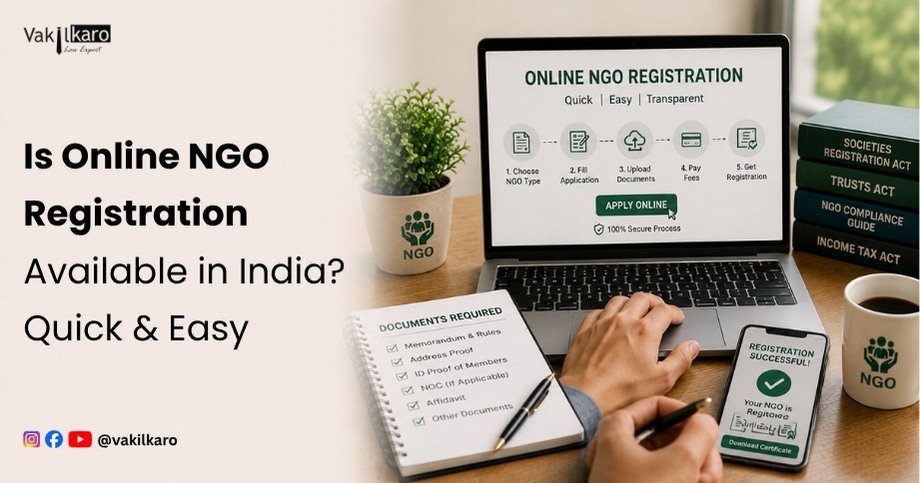
In today’s digital era, setting up a non-governmental organization (NGO) in India is easier than ever, thanks to online registration options. Whether your cause is education, healthcare, or social development, you can now start your NGO journey from the comfort of your home. While Section 8 company registration is fully online through the Ministry of Corporate Affairs, Society and Trust registrations vary by state and may still require offline steps. After NGO registration, you can also apply online for 12A and 80G registration to enjoy tax benefits and attract donors. This blog guides you through the complete digital NGO setup process.
Key Takeaways
- One of the first questions individuals and groups ask when starting an NGO is whether online registration is available.
- In conclusion, while online NGO registration is fully available for Section 8 companies, the process for Trusts and Societies may involve some offline steps.
- Yes, online NGO registration is available —especially if you're opting for a Section 8 company.
- So, while online NGO registration is fully available for Section 8 companies, it is only partially available for Trusts and Societies.
- Vakilkaro Can Help With Online NGO Registration While the government portals are available for public use, the legal jargon, documentation, and compliance steps can be overwhelming.
Simplifying the Process of Online NGO Registration in India
In the digital age, forming a non-governmental organization (NGO) in India has become increasingly convenient, especially for those passionate about social causes like education, health, and the environment. One of the first questions individuals and groups ask when starting an NGO is whether online registration is available. The good news is, yes, online NGO registration is possible, with the process primarily streamlined for Section 8 companies. However, registration for Trusts and Societies still varies based on the state in which you are registering.
The online registration process is fully available for Section 8 companies, which are governed by the Companies Act of 2013. This structure is preferred for NGOs aiming to maintain a transparent and professional image, and it allows for complete online registration through the Ministry of Corporate Affairs (MCA) portal. This involves obtaining digital signatures, applying for director identification numbers (DIN), reserving a unique name, and submitting the necessary documents such as the Memorandum and Articles of Association (MOA and AOA).
On the other hand, Trusts, which are governed by the Indian Trusts Act of 1882, are generally required to follow an offline process for registration, although some states may provide limited online facilities for document submission or appointment booking. Societies, under the Societies Registration Act of 1860, have a hybrid process. While some states have fully digitized their registration systems, others may still require physical visits.
After completing the basic NGO registration, you can apply for tax exemptions through 12A and 80G registrations. Both of these processes are now fully available online through the Income Tax Department’s e-filing portal. These registrations provide NGOs with the benefits of income tax exemption and enable donors to claim tax deductions on their contributions.
In conclusion, while online NGO registration is fully available for Section 8 companies, the process for Trusts and Societies may involve some offline steps. Nonetheless, the growing trend toward digitalization in India ensures that starting an NGO is becoming simpler and more accessible for social entrepreneurs across the country.
In today’s digital age, many individuals and groups looking to make a social impact are turning to the idea of forming a non-governmental organization (NGO). Whether it’s for environmental protection, education, rural development, or health initiatives, NGOs play a vital role in shaping a better society.
But one of the first questions that aspiring changemakers ask is: Is online NGO registration available in India? The short answer is yes — the Indian government has made it increasingly convenient to register NGOs through online portals and digital processes. However, the actual steps involved depend on the type of NGO you want to form, such as a Trust, Society, or Section 8 company.
This blog takes a deep dive into the online NGO registration process in India, discusses the various types of NGOs, and explains how Section 8 company registration, 12A registration, and 80G registration play crucial roles in making your NGO fully compliant and tax-exempt.
Understanding NGO Registration in India
Before we explore the online aspect of registration, it’s important to understand the three main legal structures for NGOs in India:
Trust
A Charitable Trust is created under the Indian Trusts Act, 1882 (or applicable state-specific laws). It is managed by trustees and commonly used for educational, medical, or religious purposes. While some states may have partial online facilities, trust registration is still largely an offline process in most places.
Society
A Society is registered under the Societies Registration Act, 1860. It requires at least seven members and is usually formed for cultural, literary, or charitable objectives. Online registration facilities vary from state to state. Some states like Maharashtra and Delhi have partially digitized the society registration process.
Section 8 Company
A Section 8 Company is incorporated under the Companies Act, 2013, and must use its income solely for charitable objectives. It is governed by the Ministry of Corporate Affairs (MCA), and Section 8 company registration can be completed entirely online via the MCA portal. This structure is often considered the most transparent and professionally credible form of NGO in India.
Is Online NGO Registration Available?
Yes, online NGO registration is available—especially if you're opting for a Section 8 company. Here's how the online process works for each type:
Online Section 8 Company Registration
The process is completely digital and managed via the MCA (Ministry of Corporate Affairs) portal. Here’s a step-by-step breakdown:
- Obtain Digital Signature Certificates (DSC) for the directors.
- Apply for Director Identification Number (DIN).
- Reserve a unique name using the RUN (Reserve Unique Name) service.
- Prepare and file incorporation documents such as Memorandum of Association (MOA) and Articles of Association (AOA).
- Apply for the license under Section 8 through SPICe+ Form on the MCA portal.
- Obtain PAN and TAN simultaneously upon incorporation.
This process typically takes 20–30 working days if all documents are in order. Since it’s digital, you can complete everything from the comfort of your home or office.
Online Society and Trust Registration
- Trusts still require physical documentation and submission at the local Sub-Registrar’s office in most states. Some states may allow online appointment booking and form submission, but the process is largely manual.
- Societies have varying levels of digitization depending on the state. States like Delhi have online registration systems, while others may require offline steps.
So, while online NGO registration is fully available for Section 8 companies, it is only partially available for Trusts and Societies.
12A and 80G Registration: Available Online?
Once your NGO is registered, the next step is to apply for 12A and 80G registration for tax exemptions. The good news? These processes are now completely online.
12A Registration
- 12A registration provides income tax exemption to NGOs.
- The application is made using Form 10A on the Income Tax Department’s e-filing portal.
- You must submit documents such as NGO registration certificate, PAN, MOA/AOA or Trust Deed, and activity reports.
80G Registration
- 80G allows donors to claim tax deductions for donations made to your NGO.
- This too is applied for using Form 10A or 10AB, depending on the type and age of the NGO.
- You must maintain a transparent donation and utilization record to retain this registration.
Both 12A and 80G registration must be renewed periodically and require proper accounting and governance.
Benefits of Online NGO Registration
With digital processes in place, online NGO registration — especially for Section 8 companies — offers several benefits:
Time-Saving
No need for repeated physical visits to government offices. Most documentation can be uploaded digitally.
Transparency
Digital portals ensure your applications are trackable and processed under set timelines.
Wider Reach
A digitally-registered NGO gains more trust from donors, especially if it's a Section 8 company with 12A and 80G registration.
Easier Access to Funding
Online presence and proper compliance (including FCRA registration later on) makes it easier to receive grants, CSR funding, and foreign donations.
Documents Required for Online NGO Registration
The documents required may vary slightly based on the structure of the NGO. However, some commonly required documents include:
- PAN of the NGO
- Aadhaar and PAN of trustees or directors
- Address proof of the registered office
- Electricity bill/rent agreement (if applicable)
- MOA and AOA (for Section 8)
- Trust Deed (for Trust)
- Society’s Rules and Regulations (for Society)
- Passport-size photographs of members
Make sure these documents are scanned and saved in the prescribed format for online upload.
Can I Register an NGO Myself Online?
Yes, if you have a clear understanding of the requirements and processes, you can handle online NGO registration yourself—especially for a Section 8 company. The MCA website is user-friendly and includes FAQs and guides.
However, given the technical nature of legal compliance, most NGOs prefer hiring professionals like Vakilkaro or other legal experts to avoid errors, delays, or rejections.
Section 8 Company vs Trust vs Society: Which is Best for Online Registration?
If online convenience, transparency, and growth potential are your priorities, Section 8 company registration is the best route.
Next Steps After Successful Online NGO Registration
Once you’ve completed the online registration of your NGO — whether as a Trust, Society, or Section 8 company — the journey doesn’t end there. Several crucial steps must be taken immediately afterward to ensure your NGO is legally compliant, financially transparent, and ready to operate effectively. Here’s a detailed look at what comes next:
- Apply for PAN and TAN:
Just like any legal entity in India, your NGO must have a Permanent Account Number (PAN) and Tax Deduction and Collection Account Number (TAN) issued by the Income Tax Department. PAN is necessary for financial transactions and filing income tax returns, while TAN is required if your NGO is responsible for deducting tax at source (TDS).
- Open a Dedicated Bank Account:
With your PAN in place, the next step is to open a bank account in the name of the NGO. This account will be used for all financial transactions, including donations, grants, and operational expenses. Ensure that the account is opened with proper resolutions and documentation, as banks have strict compliance norms for NGOs.
- Apply for 12A and 80G Registration:
To gain tax-exempt status and offer tax benefits to donors, your NGO should apply for 12A registration (for income tax exemption) and 80G registration (to allow donors to claim tax deductions). Both applications can be made online through the Income Tax e-filing portal. These are essential for enhancing donor trust and increasing fundraising opportunities.
- Register on NGO Darpan Portal:
To be eligible for government funding, CSR partnerships, or collaborations with public sector units, your NGO must be listed on the NGO Darpan portal maintained by NITI Aayog. Registration on this portal increases your visibility and credibility in the nonprofit ecosystem.
- Maintain Proper Accounts and Records:
Once operational, your NGO must keep accurate and up-to-date financial records, including receipts, expenses, annual reports, and audit statements. This not only ensures transparency but is also a legal requirement for maintaining 12A and 80G status and applying for FCRA in the future.
- Begin Fundraising and Outreach Activities:
With legal formalities in place, it’s time to launch your programs and raise awareness. You can start seeking donations, writing grant proposals, forming partnerships, and running campaigns that align with your NGO’s mission. Make sure to build an online presence through a website and social media to reach a wider audience.
Taking these steps will lay a solid foundation for your NGO’s long-term growth, compliance, and impact.
Common Mistakes to Avoid During Online NGO Registration
- Choosing the wrong legal structure for your objectives
- Uploading incorrect or incomplete documents
- Not aligning your objectives with legal terminology
- Missing compliance steps after registration
- Ignoring 12A and 80G registration for tax benefits
Proper guidance can help you avoid these mistakes and build a strong foundation for your NGO.
Vakilkaro Can Help With Online NGO Registration
While the government portals are available for public use, the legal jargon, documentation, and compliance steps can be overwhelming. That’s where Vakilkaro steps in.
Vakilkaro offers:
- Complete Section 8 company registration
- NGO registration (Trust/Society)
- 12A and 80G registration
- PAN, TAN, and bank account setup
- Compliance support for income tax, GST, and FCRA
Vakilkaro’s experts help streamline your NGO’s journey—from idea to execution—ensuring you stay focused on your mission.
Conclusion
So, is online NGO registration available? Yes, especially for Section 8 companies. With the right guidance and legal support, you can establish and run your NGO entirely through digital platforms. While trust and society registrations still involve some offline steps, the Indian government is making efforts to improve digitization across all sectors.
Whether you want to serve underprivileged children, fight climate change, or create a community impact project, starting with proper NGO registration, followed by Section 8 company registration (if applicable), and obtaining 12A and 80G registration will help you build a legitimate, sustainable, and trusted organization.
If you're ready to take the next step and need help navigating the legal maze, consider reaching out to Vakilkaro to make your online NGO registration process smooth and successful.
Official External Resources
Use these primary/official sources to verify rules, forms, fees, timelines and regulatory updates before publication.
Frequently asked questions
Is Online NGO Registration Available in India? Quick & Easy+
In conclusion, while online NGO registration is fully available for Section 8 companies, the process for Trusts and Societies may involve some offline steps. Yes, online NGO registration is available —especially if you're opting for a Section 8 company.
