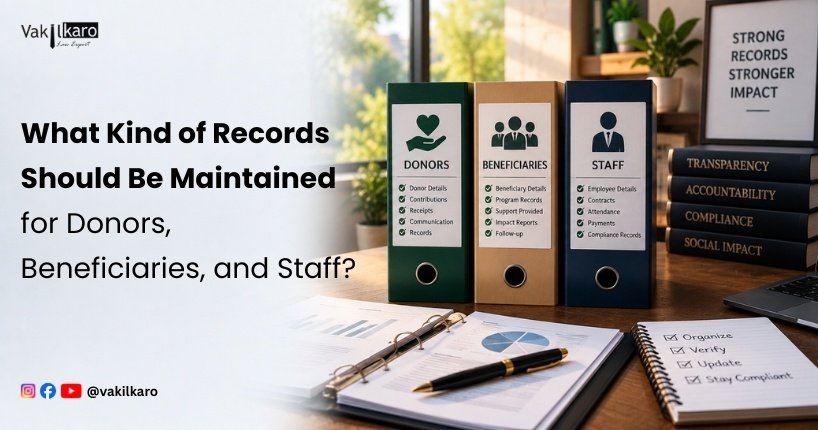
Managing an NGO in India requires more than just a passion for social change—it demands strong compliance practices and transparent operations. Record-keeping is a vital part of this, especially for NGOs registered under the Indian Trusts Act, Societies Registration Act, or as a Section 8 company. Proper documentation of donors, beneficiaries, and staff is essential for ensuring compliance with 12A and 80G registration requirements, which allow tax exemptions and boost donor confidence. In this blog, we explore the types of records every NGO must maintain and how these contribute to regulatory compliance, transparency, and the sustainable growth of your organization.
Key Takeaways
- Proper documentation of donors, beneficiaries, and staff is essential for ensuring compliance with 12A and 80G registration requirements, which allow tax exemptions and boost donor confidence.
- Essential Record-Keeping Practices for NGOs: Donors, Beneficiaries, and Staff Effective record-keeping is a cornerstone of transparency and legal compliance for any Non-Governmental Organization (NGO).
- In conclusion, consistent and detailed record-keeping for donors, beneficiaries, and staff not only helps an NGO fulfill its mission efficiently but also ensures it stays compliant with various regulatory frameworks.
- This blog delves into the specifics of what kind of records an NGO should maintain for its three primary stakeholder groups—donors, beneficiaries, and staff.
- They assist with proper record-keeping for donors, beneficiaries, and staff, ensuring smooth audits and legal compliance.
Essential Record-Keeping Practices for NGOs: Donors, Beneficiaries, and Staff
Effective record-keeping is a cornerstone of transparency and legal compliance for any Non-Governmental Organization (NGO). Whether your NGO is registered as a trust, society, or a Section 8 company under the Companies Act, 2013, maintaining accurate and organized records is both a legal obligation and a best practice. This becomes particularly crucial when your organization holds 12A and 80G registrations, which provide income tax exemptions and encourage donor contributions through tax-deductible donations.
For donor management, it’s essential to keep detailed records that include names, contact information, the mode and amount of donations, and receipts issued. These documents serve as proof of financial transactions and are critical during audits or while renewing 12A and 80G certifications. Clear communication records with donors also build trust and increase donor engagement by showing how their contributions make an impact.
Beneficiary records are equally important. These should include personal identification, eligibility assessments, services provided, and progress reports. Keeping such documentation ensures accountability in delivering services and helps demonstrate the NGO’s effectiveness. It also satisfies due diligence requirements from regulatory bodies and donors alike.
Staff records form another key component of an NGO’s administrative responsibilities. Detailed files should include employment contracts, payroll records, attendance logs, performance evaluations, and training records. For Section 8 companies, which operate under strict corporate governance norms, maintaining proper HR documentation is essential to stay compliant with labor laws and tax regulations.
In conclusion, consistent and detailed record-keeping for donors, beneficiaries, and staff not only helps an NGO fulfill its mission efficiently but also ensures it stays compliant with various regulatory frameworks. Proper documentation supports transparency, strengthens donor trust, and secures the organization’s legal standing—particularly vital for those with 12A and 80G registration.
Running a Non-Governmental Organization (NGO) in India is a noble pursuit, but it comes with a set of responsibilities that go beyond social service. NGOs are expected to operate with a high level of transparency, efficiency, and accountability. These expectations are not only ethical but also embedded within the legal framework that governs NGOs, particularly those registered under the Indian Trusts Act, 1882, the Societies Registration Act, 1860, or the Companies Act, 2013 as a Section 8 company.
Among the many operational and compliance tasks, maintaining comprehensive and accurate records stands out as one of the most critical. Good record-keeping ensures that the NGO can demonstrate the legitimacy of its operations, maintain donor trust, evaluate the effectiveness of its programs, and fulfill regulatory requirements. It plays a direct role in sustaining tax exemptions granted under 12A registration and in securing the confidence of donors who benefit from 80G tax deductions.
This blog delves into the specifics of what kind of records an NGO should maintain for its three primary stakeholder groups—donors, beneficiaries, and staff. Each group requires a tailored approach to documentation, and failure to maintain these records can lead to operational inefficiencies, loss of tax benefits, or even legal penalties. We will also explore how these records support an NGO’s broader obligations under NGO registration, 12A and 80G registration, and other compliance frameworks.
In essence, strong record-keeping is not just a back-office function—it is a strategic tool that reinforces transparency, builds organizational credibility, and ensures long-term sustainability. Whether you’re just starting out or managing an established NGO, understanding and implementing sound record-keeping practices is key to making a lasting impact.
The Importance of Record-Keeping for NGOs
Records are the backbone of an NGO’s transparency and accountability. They provide the evidence needed to show that the organization is operating in compliance with applicable laws and regulations. This is particularly important for NGOs that are registered under specific legal frameworks such as a Section 8 company registration or those applying for tax exemptions through 12A and 80G registrations.
The necessity of maintaining proper records extends across various aspects of the NGO’s operations, from financial management to personnel administration, donor relationships, and beneficiary support. For NGOs to retain their 12A and 80G status (which provide tax exemptions and benefits for donors), it is essential to keep detailed and up-to-date records in line with the requirements set by regulatory authorities.
Donor Records:
For NGOs, maintaining detailed records for each donor is essential for several reasons, especially when the NGO has 12A and 80G registration.
Types of Records for Donors:
- Donor Details: Keep a record of each donor’s personal or organizational details, such as their full name, address, contact information, and type of contribution. This helps the NGO track individual donors and ensure proper acknowledgment.
- Donations Received: Record the date, amount, and mode of donation (whether it was a one-time donation, recurring donation, or in-kind contribution). It is critical to document these details for maintaining financial transparency and for providing donors with proper receipts for tax deduction claims.
- Receipts and Acknowledgment: For NGOs with 80G registration, it is essential to issue donation receipts that are compliant with tax regulations. These receipts should include the donor’s details, the amount donated, the NGO’s 12A or 80G registration number, and the date of the donation. These records must be kept for at least five years for audit and tax purposes.
- Tax Deductibility: For donations eligible for tax benefits, such as those that qualify for deductions under 80G registration, ensure that each donation is recorded with its corresponding tax-deductibility certificate. This will be necessary for both the donor and the NGO during tax filings and audits.
- Communication and Engagement: Track communication with donors, including thank-you notes, updates on how their funds are being used, and other engagement activities. This shows that the NGO values donor contributions and keeps them informed about the impact of their support.
Why Donor Records Matter:
- Audit Compliance: Maintaining accurate donor records is a key component of maintaining 12A and 80G registration. In case of an audit by the Income Tax Department, your NGO must provide clear evidence of the donations received and their usage.
- Transparency: Keeping proper records increases transparency, which is essential in fostering trust with donors. Donors are more likely to contribute to organizations that clearly demonstrate where and how their funds are being used.
- Tax Filing and Claims: Donor records are necessary for both the NGO’s and donors’ tax filings. Proper documentation ensures that both the NGO and its donors can comply with tax laws, ensuring the 12A and 80G registrations are not at risk.
Beneficiary Records:
As an NGO, the ultimate goal is to provide meaningful support to those in need. However, it is vital to maintain proper records for beneficiaries to ensure that the NGO’s activities are conducted with full transparency, accountability, and in line with legal and ethical standards.
Types of Records for Beneficiaries:
- Beneficiary Identification: Each beneficiary's personal details must be collected and stored, including their name, age, gender, address, and any other relevant information. This helps the NGO track who has received services and ensures that the resources are distributed fairly.
- Eligibility and Needs Assessment: Keep a record of the criteria used to select beneficiaries, as well as any needs assessments that were conducted. This ensures that the NGO’s programs are designed and executed based on genuine need.
- Services or Aid Provided: Record the specific services, aid, or benefits that were provided to each beneficiary. This includes health care, education, food, housing, etc., and helps track the impact of the NGO’s work.
- Progress and Outcomes: Track the progress of beneficiaries, whether they’ve completed a program, received a specific service, or achieved certain milestones. This type of record helps assess the effectiveness of the NGO’s programs.
- Consent and Confidentiality: Ensure that proper consent forms are signed by beneficiaries, especially for sensitive information. NGOs must also maintain the confidentiality of beneficiary data, adhering to privacy regulations.
Why Beneficiary Records Matter:
- Accountability: These records help demonstrate that the NGO is delivering on its mission and ensuring that aid is reaching the intended recipients. It also shows the impact of the organization’s work over time.
- Regulatory Compliance: Proper documentation of beneficiary services can be required by government agencies, especially if the NGO is applying for grants or funding. Regulatory bodies will expect to see evidence of who has benefited from the programs and services.
- Impact Measurement: Keeping detailed beneficiary records allows the NGO to measure and demonstrate its impact, which is important for future funding opportunities and 12A/80G compliance.
Staff Records:
The human resources of an NGO are its most valuable asset. Therefore, maintaining proper staff records is not only essential for organizational management but also for compliance with labor laws and tax regulations.
Types of Records for Staff:
- Personal Information: Maintain a file for each staff member with their personal details, such as full name, address, contact information, emergency contacts, and position held.
- Employment Contracts: Ensure that employment contracts, including job roles, salary, benefits, and terms of employment, are well-documented. This provides clarity for both the staff member and the organization and protects the rights of both parties.
- Payroll and Tax Records: Keep records of salary payments, deductions, and tax filings for each employee. NGOs must comply with Indian labor laws, and it’s especially important if the NGO is a Section 8 company since the company is required to follow tax regulations for all employees.
- Leave and Attendance Records: Keep track of attendance, leave taken, and any absences to ensure transparency and fairness in managing staff benefits.
- Performance Evaluations and Feedback: Maintaining performance evaluations helps assess staff progress, provide feedback, and plan for professional development. This can also support decisions on promotions or raises.
- Training and Development: Record any training or professional development programs attended by staff. This can enhance staff retention and development, and it shows that the NGO is investing in its human resources.
Why Staff Records Matter:
- Compliance with Labor Laws: Proper staff records ensure compliance with labor laws, including salary payments, working hours, and benefits, especially for Section 8 companies that may have stricter requirements.
- Internal Audits: Staff records are necessary for internal audits and regulatory scrutiny, especially when the NGO is subject to funding audits or financial reviews. These records help demonstrate good governance and the efficient use of resources.
- Human Resource Management: Proper documentation helps the organization manage its workforce more efficiently. It ensures smooth operations and supports the NGO’s growth and sustainability.
Conclusion: The Critical Role of Record-Keeping in NGO Success
In the ecosystem of Non-Governmental Organizations (NGOs), maintaining detailed and organized records is far more than a bureaucratic formality—it is a foundational pillar of responsible and impactful management. Regardless of whether your NGO is registered under the Indian Trusts Act, the Societies Registration Act, or operates as a Section 8 company under the Companies Act, 2013, the discipline of record-keeping is central to your credibility and effectiveness.
Accurate records are not only necessary to meet legal and regulatory standards but are also key to upholding transparency and accountability. For NGOs that have obtained 12A and 80G registrations, the stakes are even higher. These certifications allow organizations to benefit from income tax exemptions and offer donors the advantage of tax deductions. However, these benefits are contingent upon the NGO’s ability to maintain and present well-documented evidence of donations received, services provided, and governance standards followed.
Donor records support tax compliance and strengthen donor relationships by showcasing how contributions are utilized. Beneficiary records highlight the social impact of the organization and demonstrate that aid is being directed where it is most needed. Staff records, meanwhile, ensure that the NGO is adhering to labor laws and promoting fair and efficient human resource practices.
Ultimately, good record-keeping is about more than compliance—it is a strategic tool that reinforces the NGO’s mission, builds stakeholder confidence, and promotes long-term sustainability. By establishing clear documentation practices, NGOs position themselves for greater operational success, increased funding opportunities, and continued legal standing. In a sector where transparency and trust are vital, consistent and thorough documentation is not optional—it is essential to making a lasting and meaningful difference.
Why Choose Vakilkaro for NGO and Legal Services?
Vakilkaro is your trusted partner for all legal and compliance needs, especially for NGOs. Whether you need help with Section 8 company registration, NGO registration, or obtaining 12A and 80G certifications, Vakilkaro offers expert, affordable, and reliable services.
They assist with proper record-keeping for donors, beneficiaries, and staff, ensuring smooth audits and legal compliance. With transparent pricing, online convenience, and end-to-end legal solutions—including tax filings, ROC compliance, and business registrations—Vakilkaro saves you time and effort.
Choose Vakilkaro for personalized support, legal expertise, and peace of mind.
Official External Resources
Use these primary/official sources to verify rules, forms, fees, timelines and regulatory updates before publication.
Frequently asked questions
What Kind of Records Should Be Maintained for Donors, Beneficiaries, and Staff?+
Proper documentation of donors, beneficiaries, and staff is essential for ensuring compliance with 12A and 80G registration requirements, which allow tax exemptions and boost donor confidence. Essential Record-Keeping Practices for NGOs: Donors, Beneficiaries, and Staff Effective record-keeping is a cornerstone of transparency and legal compliance for any Non-Governmental Organization (NGO).
